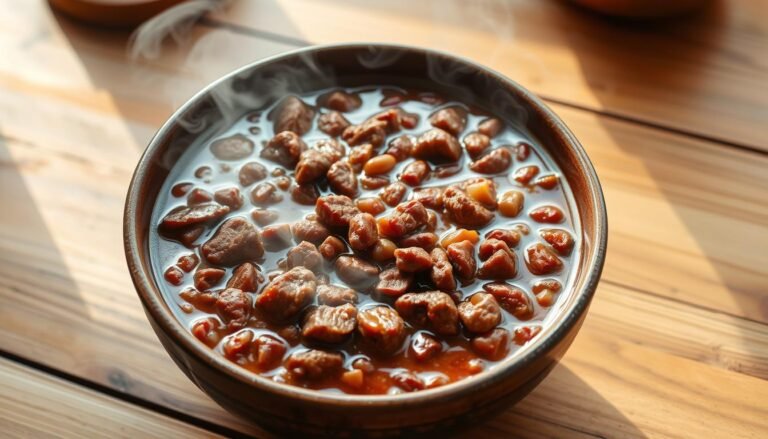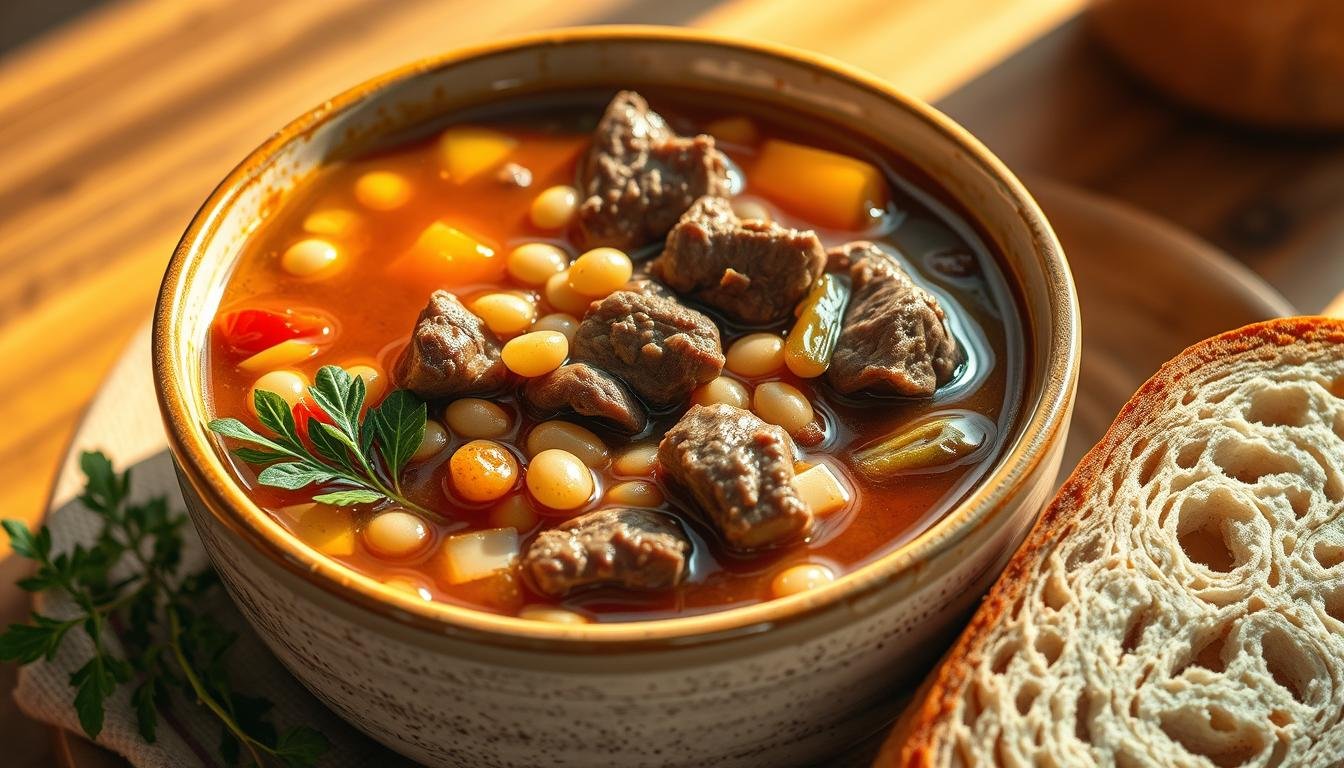
Scotch Broth (Beef and Barley)
Ever wondered why a simple Scottish soup can warm your soul and fill your belly? Scotch broth is more than just a beef and barley soup. It’s a journey through Scottish tradition and comfort food history.
This hearty soup has deep roots in Scottish countryside kitchens. Farmers and shepherds needed big meals to keep them warm on long, cold days. Scotch broth is a symbol of Scottish culinary genius, turning simple ingredients into a rich, nourishing dish.
Tasting authentic Scotch broth is like tasting generations of cooking wisdom. The mix of tender beef, pearl barley, and fresh veggies creates a flavor symphony. It speaks directly to your taste buds and hunger.
Key Takeaways
- Scotch broth is a traditional Scottish comfort food
- The soup combines beef, barley, and fresh vegetables
- Each bowl tells a story of Scottish culinary heritage
- Perfect for cold days and hearty appetites
- A nutritious and satisfying meal with deep cultural roots
What Makes Scotch Broth a Traditional Scottish Dish
Scotch broth is a key part of Scotland’s culinary history. It shows the country’s rich food culture. This soup was made to feed families well, using what was available locally.
It’s a story of survival and clever use of ingredients. Scottish food culture values ingredients that can grow in tough conditions. Barley, root veggies, and cheap meats are at the heart of this soup.
Scotch broth is more than food; it connects people to Scotland’s farming past. It started in farm kitchens, where cooks made the most of simple ingredients. Soon, it became a favorite in homes and restaurants across Scotland.
Scotch broth shows the cleverness of Scottish cooks. They made big, filling meals with what they had. This soup is a symbol of Scottish cooking: it’s hearty, practical, and rooted in the land.
Essential Ingredients for Perfect Scotch Broth (Beef and Barley)
To make a true Scotch Broth, start with the right ingredients. Choose top-notch beef and barley for a soup that’s both flavorful and filling.
Root vegetables like carrots, turnips, and leeks are key. They add depth and nutrients to your broth. Carrots sweeten it, while turnips add a unique earthy taste that pairs well with beef.
Pearl barley is a must in your beef and barley soup. It makes the soup thick and chewy. Choose plump, uniform pearl barley for even cooking and flavor absorption.
For the beef, pick tougher cuts like chuck or shin. These cuts get tender and flavorful during slow cooking. Quality ingredients make a big difference in your meal.
Choosing the Best Cuts of Beef for Your Broth
Choosing the right beef cuts is key to a delicious Scotch Broth. The best cuts are tough but full of flavor. They become tender and rich during slow cooking.
Chuck roast is a top pick for its rich marbling. This marbling breaks down beautifully, adding depth to your broth.
Shin beef is another great choice for Scotch Broth. It has lots of connective tissue that melts into the broth. This creates a complex flavor that’s perfect for traditional Scottish soups.
Look for beef with visible fat and connective tissue. These are important for a rich broth. Trim excess fat but keep some for flavor. Your goal is to get meat that’s tender and adds depth to your soup.
Pro tip: Ask your local butcher for the best cuts for Scotch Broth. They can suggest options that will make your soup amazing. Remember, patience is key. It turns these cuts into a culinary masterpiece.
Understanding Different Types of Barley for Your Soup
Choosing the right barley is key for a great Scotch Broth. Pearl barley is the top pick for its smooth texture. It blends well into your broth.
Pot barley is a heartier option with a chewier feel. It keeps more of its bran, adding a nutty taste. Home cooks love it for its extra nutrition and texture.
Barley types cook at different speeds. Pearl barley cooks fast and gets soft. Pot barley takes longer to get tender.
Want to try something new? Hulled barley is a nutritious choice. It’s minimally processed and firmer, adding depth to your soup.
Each barley type adds something special to your soup. Try different ones to find your perfect Scotch Broth.
Step-by-Step Preparation Method
Making Scotch Broth needs patience and focus. Start with a big, heavy pot for simmering. First, prepare the beef by trimming and cutting it into small cubes.
Begin by browning the beef in olive oil. This step adds a deep flavor to your broth. After searing the meat, remove it and set it aside. Then, sauté the onions, carrots, and celery until they’re soft and smell good.
Put the beef back in the pot and add your stock or water. Add pearl barley to thicken the broth. Let it simmer on low heat for 1-2 hours, stirring now and then.
Season the broth with salt, pepper, and herbs like thyme or parsley. Taste and adjust the seasoning as needed. Slow cooking is key to a rich Scotch Broth flavor.
Secret Tips for Rich and Flavorful Broth

Making a standout Scotch Broth is more than just a recipe. Professional chefs use special tips to make a simple broth into a feast. They focus on quality ingredients and techniques that boost the flavor.
Roasting beef bones before simmering is a key trick. It caramelizes the bones, adding deep flavors to your soup. Roast the bones at 425°F for 45 minutes until they’re golden brown.
Umami-rich ingredients like tomato paste or Worcestershire sauce add depth. A small amount can change the flavor a lot. Start with a tablespoon to see the difference.
Skimming the broth while it cooks is another pro move. It makes the broth clear and removes bad stuff. Use a fine mesh skimmer to take off foam and fat. This makes the broth look better and taste cleaner.
Seasoning is an ongoing task. Keep tasting and adjusting salt, pepper, and herbs as you go. Aim for a balanced flavor where every ingredient stands out.
Common Mistakes to Avoid When Making Scotch Broth
Making Scotch Broth can be tricky. Many home cooks face mistakes that ruin the dish’s flavor and texture. Knowing common errors helps you make a perfect, hearty meal every time.
One big challenge is cooking meat and vegetables right. Overcooking veggies makes them mushy, while undercooking leaves them raw. To avoid this, add root veggies like carrots and parsnips early. This way, they soften without falling apart.
Barley can also be a problem. If it doesn’t cook long enough, it stays tough. Always cook barley for 30-40 minutes to get it tender.
Seasoning is key to avoiding bland Scotch Broth. Start with a little salt and herbs, then taste and adjust. This method prevents too much salt and lets flavors develop fully.
Lastly, watch out for too much fat in your broth. Skimming off fat during cooking keeps your dish from being greasy. If there’s too much fat, let the soup cool and remove it before serving.
Serving Suggestions and Accompaniments
Learning how to serve Scotch Broth can make your meal special. Traditional Scottish cuisine pairs well with this soup. These pairings can turn your meal into a memorable experience.
Scottish bread is key to enjoying your Scotch Broth. Try serving rustic sourdough, oatcakes, or warm buttermilk bread. These breads offer a nice contrast to the soup’s richness and help soak up the flavors.
A light side salad with fresh greens and tangy vinaigrette is great. It balances the soup’s strong flavors. Adding fresh parsley or chives on top adds color and flavor.
Choosing the right drink can also enhance your meal. A Scottish ale pairs well with the soup’s hearty taste. For wine lovers, a full-bodied red like Cabernet Sauvignon complements the beef and vegetables.
Garnishing your Scotch Broth can make it look and taste better. A dollop of sour cream, fresh herbs, or extra virgin olive oil can elevate your soup. It turns a simple dish into a gourmet delight.
Storage and Reheating Guidelines

Keeping your homemade Scotch Broth fresh is important. Always use airtight containers to keep it fresh. Refrigerate it within two hours of cooking to stop bacteria from growing.
It’s safe to store it in the fridge for 3-4 days. This way, you can enjoy it later without worrying about its quality.
Freezing your soup is a great idea for later meals. Cool it down completely before putting it in freezer-safe containers. Make sure to leave some space at the top, as it will expand when frozen.
With proper storage, your soup can stay good for 4-6 months in the freezer. This is a fantastic way to save your delicious Scotch Broth for future meals.
When reheating, be careful to keep the soup’s texture and taste. If it’s been in the fridge, warm it up slowly in a pot. Stir it now and then to avoid scorching.
If it’s frozen, thaw it in the fridge overnight first. Then, reheat it by adding a bit of water or broth if it’s too thick.
Here’s a tip: Freeze your Scotch Broth in individual portions. This makes reheating easier and helps avoid quality loss from repeated freezing and thawing.
Nutritional Benefits and Dietary Information
Scotch Broth is more than a tasty meal; it’s a nutritional powerhouse. It’s a healthy soup recipe that’s rich in protein. This makes it great for your overall health. The mix of lean beef, hearty barley, and fresh veggies offers a balanced meal.
A serving of Scotch Broth has about 15-20 grams of protein. This is perfect for keeping muscles strong and helping them recover. The beef gives high-quality protein, and barley adds lots of fiber. These ingredients help you feel full and satisfied for a long time.
Scotch Broth is also packed with vitamins and minerals. Carrots and celery add vitamins A and C, and potassium. Barley brings B-complex vitamins and minerals like selenium and manganese. This soup can be adjusted to fit different dietary needs.
For those with special diets, there are ways to modify the recipe. Using lean beef cuts can lower fat, and vegetable broth makes it vegetarian. You can also control salt levels to watch your sodium intake. This makes Scotch Broth a great choice for many nutritional goals.
Modern Variations and Adaptations
Scotch Broth has grown beyond its old roots. It now inspires cooks to try new things. Today’s kitchens turn this classic Scottish soup into a dish for everyone.
Vegetarian Scotch Broth is now a favorite. It swaps beef for lentils, mushrooms, and tempeh. This keeps the soup’s hearty feel but is healthier. Chefs add different veggies and legumes to make it their own.
Scotch Broth has also traveled the world. Korean versions add gochujang for spice. Mediterranean ones use olive oil and herbs. These changes show how versatile the soup is.
Thanks to instant pots and slow cookers, making Scotch Broth is simpler. You can try new ingredients and methods. Whether you stick to the old ways or like to try new things, Scotch Broth is full of possibilities.
Conclusion
Your journey into homemade Scotch Broth has been a fun trip through traditional Scottish recipes. This soup is more than food; it’s a link to Scottish heritage and family traditions. These traditions have been passed down for generations.
Now, you know how to make a real Scotch Broth. You’ve learned about choosing the right beef and understanding barley. This knowledge lets you turn simple ingredients into a delicious, warming dish.
When you cook this classic soup, think of it as an art of love and creativity. Every pot of Scotch Broth you make will be special, showing your own style while keeping the recipe’s essence. It’s perfect for a cozy evening or sharing with family and friends.
Enjoy the process of cooking, try new flavors, and relish every bite of your homemade Scotch Broth. Your cooking journey is just starting, and there are many tasty adventures ahead!