Party Veggie Pinwheel Platter
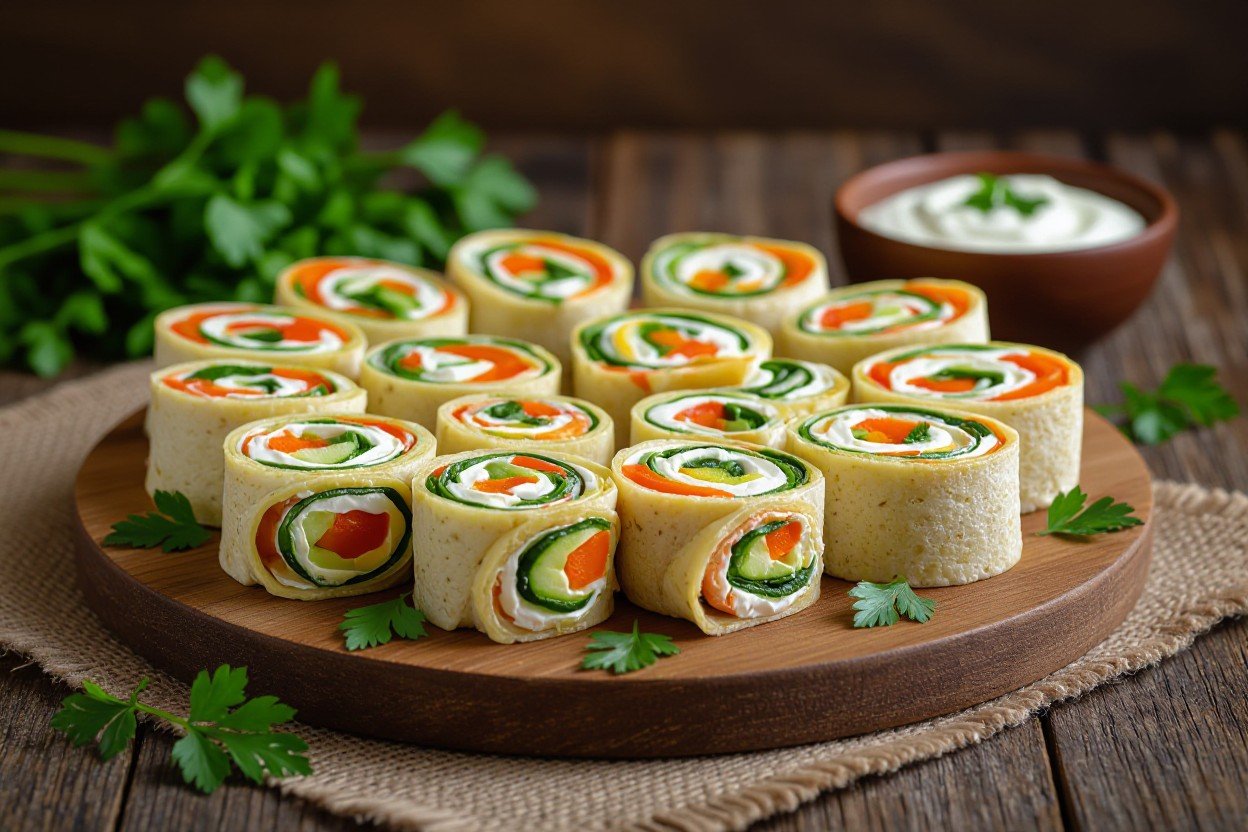
It’s time to elevate your party spread with a colorful and nutritious Party Veggie Pinwheel Platter that will impress your guests. These delightful appetizers combine cream cheese, fresh vegetables, and soft tortillas rolled into perfect spirals that are both visually stunning and delicious. You’ll find this recipe incredibly versatile, allowing you to customize the fillings based on your preferences and dietary needs. Whether you’re hosting a birthday celebration, holiday gathering, or casual get-together, your veggie pinwheels will disappear quickly from the platter. They’re easy to prepare ahead of time, making your entertaining stress-free and enjoyable.
Key Takeaways:
- Party veggie pinwheels are colorful, bite-sized appetizers made by spreading cream cheese or hummus on tortillas, layering with fresh vegetables, rolling tightly, and slicing into rounds
- These pinwheels can be prepared 24 hours in advance and stored wrapped in the refrigerator, making them a convenient make-ahead option for entertaining guests
- The platter offers versatility in ingredients and flavors, allowing you to customize with different spreads, vegetables, herbs, and tortilla types to suit dietary preferences and taste preferences
Ingredients
The beauty of veggie pinwheels lies in their flexibility, allowing you to customize based on what’s fresh at your market and your guests’ preferences. You’ll need approximately 8-10 large flour tortillas or flatbreads to create enough pinwheels for a party of 12-15 people. Each tortilla yields about 8-10 slices, giving you roughly 80-100 bite-sized pieces. Plan on 5-7 pinwheels per guest for a standard appetizer spread, though you might want to increase this if they’re the main attraction at your gathering.
Your ingredient list divides into three main categories: fresh vegetables for crunch and color, spreads for flavor and binding, and wraps as your foundation. Shopping a day ahead ensures everything stays crisp, though you’ll want to assemble these no more than 4-6 hours before serving to prevent sogginess. The total prep time runs about 30-40 minutes once you have all components ready, making this an efficient option even when you’re hosting on short notice.
Fresh Vegetables
Bell peppers in red, yellow, and orange provide the most visual impact when sliced into thin strips—aim for pieces about 1/4 inch wide and 3-4 inches long. You’ll need about 2-3 medium peppers total to cover your entire batch. Carrots work best when julienned or shredded using the large holes of a box grater, giving you that satisfying crunch without overpowering other flavors. One large carrot or two medium ones should suffice. Cucumber adds refreshing moisture, but you must remove the seeds first by cutting it lengthwise and scooping them out with a spoon before slicing into thin strips.
Baby spinach or spring mix creates your green layer—you’ll use about 2-3 cups total, distributing a thin, even layer across each tortilla. Fresh herbs like basil, cilantro, or dill elevate the flavor profile significantly; a handful of roughly chopped leaves scattered throughout makes a noticeable difference. Red onion adds a sharp bite when sliced paper-thin—use a mandoline if you have one, and soak the slices in cold water for 10 minutes to mellow the intensity. Shredded purple cabbage contributes both color and texture, though you’ll want to pat it dry with paper towels since excess moisture can make your pinwheels soggy.
Spreads and Wraps
Cream cheese forms the traditional base for most pinwheel recipes, and you’ll need 16 ounces (two standard packages) softened to room temperature for easy spreading. Mixing in 2-3 tablespoons of ranch seasoning powder transforms plain cream cheese into something far more interesting, or you can blend in fresh herbs, garlic powder, and a squeeze of lemon juice for a homemade version. Hummus serves as an excellent dairy-free alternative that pairs beautifully with Mediterranean-inspired vegetable combinations—roasted red pepper hummus adds extra color and flavor depth.
Your choice of wrap significantly affects both taste and structural integrity. Standard 10-inch flour tortillas are the most forgiving for beginners and hold together well when sliced. Spinach or tomato-basil flavored tortillas add an extra dimension of color that shows through in your finished pinwheels, creating those eye-catching spiral patterns. Whole wheat tortillas offer more fiber but can be slightly more prone to cracking, so you’ll want to bring them to room temperature before working with them. Lavash flatbread creates thinner, more delicate pinwheels that feel a bit more sophisticated, though they require gentler handling during the rolling process.
The spread-to-vegetable ratio matters more than you might think—you need enough spread to act as “glue” that holds everything together, but too much makes your pinwheels slide apart when sliced. Aim for about 1/4 cup of spread per tortilla, spreading it all the way to the edges in a thin, even layer using an offset spatula or butter knife. The spread creates a moisture barrier between the tortilla and vegetables, which is why you should never skip this step or apply it too sparingly, even if you’re watching calories.
Preparation Tips
Your tortillas need to reach room temperature before you start working with them, which takes about 15-20 minutes on the counter. Cold tortillas from the refrigerator crack and tear when rolled, ruining the spiral effect you’re aiming for. Spread your cream cheese mixture in a thin, even layer right to the edges—aim for about 1/8 inch thickness using an offset spatula or the back of a spoon. This ensures every bite has flavor without overwhelming the vegetables.
You’ll want to prepare your pinwheels at least 2 hours before serving, though they taste even better when made 4-6 hours ahead. The resting time allows the cream cheese to firm up and helps the tortillas seal properly, making them much easier to slice cleanly. Store your rolled tortillas tightly wrapped in plastic wrap in the refrigerator, seam-side down to prevent them from unraveling. Recognizing that moisture is your enemy here, pat your vegetables completely dry with paper towels before adding them to prevent soggy pinwheels.
Slicing Techniques
A serrated knife works best for cutting pinwheels because it saws through the tortilla without squashing your carefully arranged vegetables. Wipe your blade clean between each cut—this simple step prevents the cream cheese from dragging and creating messy, uneven slices. Cut each rolled tortilla into 1-inch sections using a gentle sawing motion rather than pressing down, which compresses the filling and distorts the spiral pattern.
Start by trimming off both ends of your rolled tortilla first—these end pieces rarely look presentable and are better enjoyed as your chef’s snack. You should get 8-10 perfect pinwheels from each 10-inch tortilla. For the cleanest cuts, place your rolled tortilla seam-side down and make your first cut directly in the middle, then work outward from there. This technique gives you more control and helps maintain the round shape of each pinwheel.
Assembly Steps
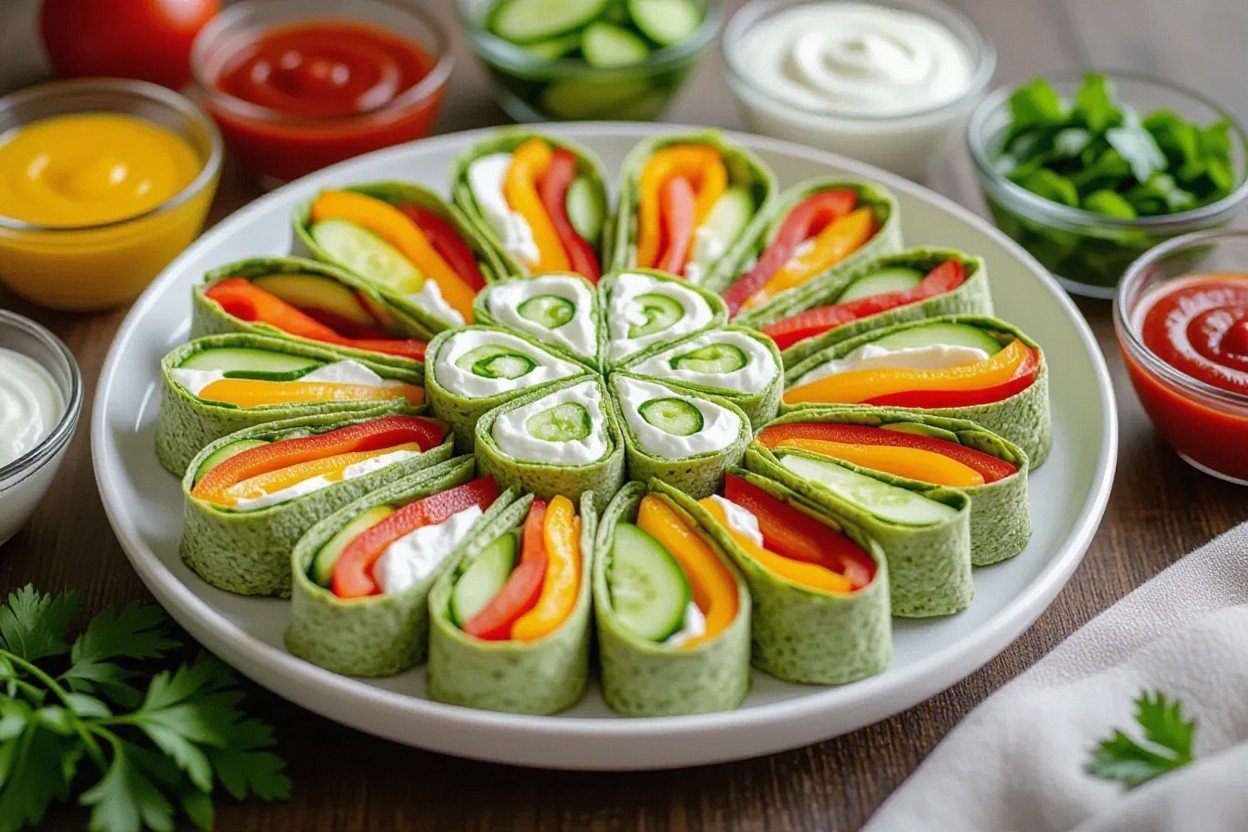
Choose a large, flat platter or cutting board as your base—you’ll need at least 14-16 inches of space to create an impressive display. Start by placing your pinwheels in concentric circles, beginning from the outer edge and working inward. Alternate colors as you go: place a spinach tortilla pinwheel next to a sun-dried tomato one, then follow with a plain flour tortilla version. This creates natural visual interest without requiring any artistic skill.
Stand some pinwheels on their sides in the center of your platter to add height and dimension to your arrangement. Fill any gaps between pinwheels with fresh herb sprigs like parsley, dill, or basil—these add pops of green and make your platter look professionally styled. Cherry tomatoes, small radishes, or baby carrots tucked into empty spaces also work beautifully as edible garnishes.
Your final presentation benefits from a light dusting of paprika or everything bagel seasoning sprinkled over the top of select pinwheels. This adds texture and draws the eye to different areas of your platter. You can also drizzle a small amount of balsamic glaze in a decorative pattern around the edges for an upscale touch that takes just seconds to execute.
Variations
You can transform these pinwheels into endless flavor combinations by swapping out the base ingredients and fillings. Try using sun-dried tomato wraps for a Mediterranean twist, or opt for spinach tortillas to add an extra boost of greens without changing the flavor profile. The cream cheese base works beautifully with additions like fresh dill, garlic powder, or even a tablespoon of pesto mixed in. For a Southwestern version, blend in taco seasoning with the cream cheese and add black beans, corn, and diced jalapeños to your vegetable mix.
Temperature variations also create distinctly different experiences with the same basic recipe. Serving your pinwheels chilled straight from the refrigerator gives them a refreshing, crisp quality that works perfectly for summer gatherings. Alternatively, you can lightly toast the assembled wraps in a panini press for 2-3 minutes before slicing, which creates a warm appetizer with slightly melted cheese and caramelized edges. This heated version pairs exceptionally well with ranch or chipotle dipping sauces.
Vegan Options
Your vegan guests will appreciate pinwheels made with plant-based cream cheese alternatives, which have improved dramatically in texture and taste over the past few years. Brands like Kite Hill and Miyoko’s offer cultured cashew-based spreads that provide the same tangy richness as dairy cream cheese. You can also create your own spread by blending soaked raw cashews with lemon juice, nutritional yeast, and a pinch of salt until completely smooth. Add roasted red peppers or fresh herbs to this base for extra depth of flavor.
Hummus serves as another excellent vegan binding agent that brings protein and a different flavor dimension to your pinwheels. A thick, well-drained hummus works best to prevent the wraps from becoming soggy. Layer it with roasted vegetables like eggplant, zucchini, and bell peppers, then add fresh spinach and thinly sliced cucumbers. These heartier vegetables stand up well without dairy-based spreads and create satisfying pinwheels that appeal to all your guests, not just those following plant-based diets.
Gluten-Free Alternatives
Gluten-free tortillas have come a long way from their cardboard-like predecessors, with options made from almond flour, cassava, or brown rice now offering flexibility and taste comparable to wheat versions. Siete brand almond flour tortillas work particularly well for pinwheels because they’re pliable and don’t crack when rolled tightly. You’ll want to let gluten-free wraps sit at room temperature for 10-15 minutes before assembling, as they can be more fragile when cold. Spread your filling all the way to the edges to help seal any potential weak spots in the tortilla.
Collard green leaves provide a completely grain-free option that adds a fresh, slightly peppery taste to your platter. Blanch large collard leaves in boiling water for 30 seconds, then immediately transfer them to ice water to maintain their bright green color and make them more pliable. Pat them completely dry before spreading your filling, and trim the thick center stem to make rolling easier. These wraps offer a lighter alternative with only 11 calories per leaf compared to 120-150 calories in a standard flour tortilla.
Rice paper rounds, typically used for Vietnamese spring rolls, create delicate pinwheels with a unique translucent appearance that showcases the colorful vegetables inside. Dip each round in warm water for just 5-10 seconds until softened, then lay flat on a damp towel while you work. The key is not to oversoak them, as they’ll continue to soften as you add your fillings and will become too sticky if left too wet.
Serving Suggestions
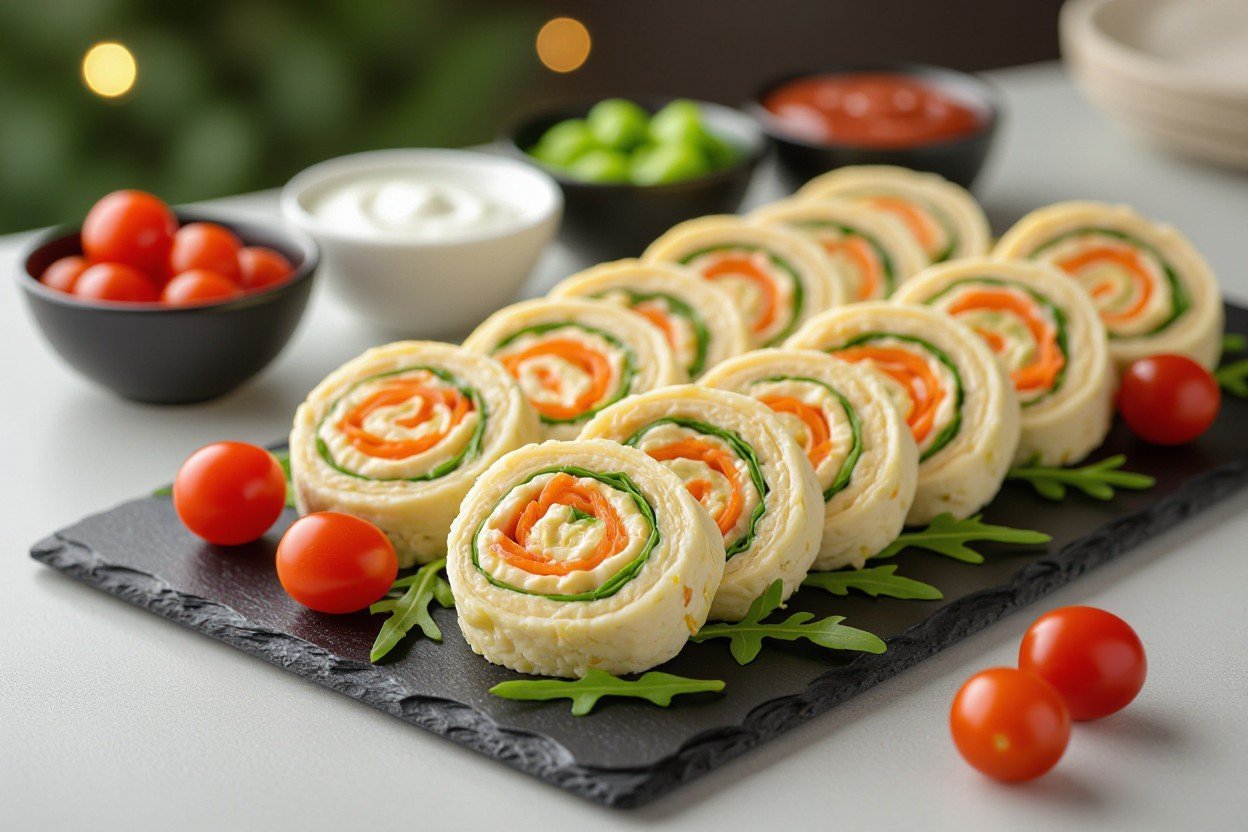
Your veggie pinwheels deserve a presentation that matches their vibrant colors and fresh flavors. The spiral pattern naturally creates visual interest, so arrange them strategically on your serving platter to maximize their appeal. Cut each pinwheel at a slight diagonal rather than straight across—this simple technique increases the surface area of each piece and showcases the colorful layers more dramatically. For a standard 10-inch tortilla, you’ll get approximately 20-24 pinwheels when sliced into ½-inch pieces, which serves 8-10 guests as an appetizer.
Temperature matters significantly for these appetizers. Serve them chilled at 40°F or below, bringing them out of the refrigerator no more than 30 minutes before guests arrive. The cream cheese base firms up when cold, helping the pinwheels hold their shape and preventing the filling from squeezing out when guests pick them up. If you’re hosting an outdoor event, place your platter over a bed of ice or use a chilled serving tray to maintain freshness throughout your gathering.
Presentation Ideas
Transform your platter into a stunning centerpiece by arranging pinwheels in concentric circles, starting from the outer edge and working inward. Alternate between different colored wraps—spinach, tomato, and plain tortillas—to create a rainbow effect that draws the eye. Place a small bowl of fresh herbs or edible flowers in the center as a focal point, and tuck sprigs of fresh dill, parsley, or microgreens between the pinwheels to add height and dimension. You can also stand some pinwheels on their sides to showcase the spiral pattern from different angles.
For larger gatherings, create a tiered display using cake stands or elevated serving pieces at varying heights. Group pinwheels by color family on each tier—all green vegetables on one level, red peppers and tomatoes on another. Garnish the platter edges with cherry tomatoes, cucumber slices, or baby carrots to reinforce the fresh vegetable theme. Clear glass or white ceramic platters work best as they don’t compete with the colorful pinwheels and make the presentation feel clean and sophisticated.
Pairing with Dips
While veggie pinwheels are delicious on their own, offering complementary dips elevates them from simple appetizer to impressive party fare. Ranch dressing remains the most popular choice, with 42% of Americans naming it their favorite dip according to food industry surveys. Position 2-3 small bowls of different dips around your platter—classic ranch, hummus, and a zesty salsa verde create a trio that appeals to various taste preferences. Each dip adds moisture and flavor contrast to the cream cheese base without overwhelming the fresh vegetables inside.
Greek yogurt-based dips work exceptionally well because their tangy profile cuts through the richness of the cream cheese filling. Mix Greek yogurt with fresh herbs like dill and chives, or create a roasted red pepper version by blending yogurt with jarred peppers and garlic. These lighter options typically contain 60-70% fewer calories than traditional sour cream dips while providing protein that helps guests feel satisfied. Place toothpicks near the dip bowls so guests can easily spear their pinwheel and dip without using their fingers.
Consider the flavor profile of your pinwheels when selecting dips. If you’ve included Mediterranean ingredients like olives and feta, offer tzatziki or baba ganoush alongside. For Southwestern-style pinwheels with black beans and corn, serve chipotle aioli or a lime-cilantro crema. You can prepare most dips up to three days in advance and store them in airtight containers, making your party prep even more manageable.
Nutritional Benefits
Health Advantages of Vegetables
Your veggie pinwheel platter delivers an impressive array of vitamins and minerals with every colorful bite. Bell peppers alone provide 169% of your daily vitamin C needs in just one cup, while the spinach or kale in your tortilla wraps contributes significant amounts of vitamin K, iron, and folate. Carrots bring beta-carotene to the table, which your body converts to vitamin A for eye health and immune function. The cream cheese base, when mixed with fresh herbs, adds calcium and protein to balance out the vegetable content.
Each pinwheel contains roughly 45-60 calories, making them a guilt-free option compared to traditional party appetizers like pigs in a blanket or cheese-stuffed mushrooms that can pack 150+ calories per piece. The fiber content from the vegetables and whole wheat tortillas helps you feel satisfied longer, reducing the temptation to overindulge in heavier options at your gathering. Studies show that starting meals with vegetable-based appetizers can reduce overall calorie consumption by up to 20% throughout the event.
Balancing Your Platter
Your platter achieves nutritional balance by incorporating vegetables from different color groups, each offering unique phytonutrients. Red tomatoes and peppers provide lycopene, orange carrots deliver carotenoids, purple cabbage offers anthocyanins, and green cucumbers contribute chlorophyll and silica. This rainbow approach ensures you’re getting a broad spectrum of antioxidants that work synergistically in your body. The protein from cream cheese or hummus-based spreads stabilizes blood sugar levels, preventing the energy crashes associated with carb-only snacks.
You can adjust the nutritional profile based on your guests’ dietary needs by swapping ingredients strategically. Using Greek yogurt instead of cream cheese increases protein content from 2g to 6g per serving while reducing fat. Whole grain or spinach tortillas add 3-4g of fiber per wrap compared to white flour versions. For guests managing sodium intake, you’ll want to rinse canned vegetables and opt for fresh herbs over seasoning packets, keeping sodium under 100mg per pinwheel.
The ideal platter maintains a 3:1 ratio of vegetables to spread, ensuring you’re maximizing nutrient density without sacrificing flavor or texture. This balance means each pinwheel slice contains approximately three tablespoons of fresh vegetables, meeting nearly half a serving of your daily vegetable requirements in just two pieces.
Common Mistakes
Ingredient Selection
Your tortillas can make or break the entire platter, yet many home cooks grab whatever’s on sale without considering moisture content and flexibility. Stale or overly dry tortillas will crack when you roll them, leaving you with broken pinwheels that fall apart on the serving tray. Look for tortillas with at least two weeks before their expiration date, and choose spinach or tomato-flavored varieties that are naturally more pliable than plain flour ones. Store-brand tortillas often contain less fat, which means they’re more prone to tearing during the rolling process.
The vegetables you select need to have low moisture content, or they’ll turn your pinwheels into a soggy mess within hours. Tomatoes are the biggest culprit here—if you must include them, remove all seeds and pulp, then pat the flesh completely dry with paper towels. Fresh mozzarella, while delicious, releases water as it sits and will make your cream cheese mixture runny. Opt for block mozzarella or pre-shredded cheese instead. Bell peppers should be sliced paper-thin; thick chunks create air pockets that prevent tight rolling and cause the pinwheels to unravel when sliced.
Preparation Errors
Spreading your cream cheese mixture too thick might seem generous, but anything more than a quarter-inch layer will squish out the sides when you roll, creating a messy workspace and uneven pinwheels. You’ll also end up with an overwhelming cream cheese flavor that masks the vegetables entirely. The opposite problem occurs when you spread too thin near the edges—your pinwheels won’t seal properly and will unroll on the platter. Aim for consistent coverage that extends all the way to three edges but leaves a half-inch border on the edge where you’ll complete the roll.
Rolling too loosely creates pinwheels that fall apart when sliced, while rolling too tightly squeezes out the filling and tears the tortilla. Apply firm, even pressure as you roll, tucking in any vegetables that try to escape. Many people make the mistake of slicing their pinwheels immediately after rolling, which guarantees squashed, misshapen pieces. The rolls need at least two hours of refrigeration time to firm up—this allows the cream cheese to set and helps the tortilla conform to its new shape.
Your knife technique matters more than you might think when it comes to clean, professional-looking slices. A serrated knife will tear the tortilla and drag the filling out of place. Instead, use a sharp chef’s knife that you wipe clean between each cut. Sawing back and forth creates ragged edges, so use a single downward motion for each slice. Cut your rolls into three-quarter-inch to one-inch pieces—anything thinner will topple over on the platter, while thicker pieces become difficult to eat in one or two bites.
To Wrap Up
Ultimately, your party veggie pinwheel platter represents one of the most versatile and crowd-pleasing appetizers you can serve at any gathering. You’ve learned how these colorful spirals combine fresh vegetables, creamy spreads, and soft tortillas into convenient, bite-sized portions that appeal to health-conscious guests and food enthusiasts alike. The beauty of this dish lies in your ability to customize it according to your preferences, dietary requirements, and seasonal vegetable availability. Whether you opt for classic combinations like spinach and cream cheese or venture into more adventurous territory with hummus and roasted peppers, you’re creating an appetizer that delivers both visual impact and satisfying flavor.
As you prepare your veggie pinwheels for your next event, you’ll appreciate how they check all the boxes for successful party food: they’re make-ahead friendly, easy to transport, simple to serve, and require no utensils for your guests. You can prepare them hours in advance, allowing you to focus on other hosting duties while they chill in your refrigerator. The presentation possibilities are endless—you can arrange them on platters in eye-catching patterns, pair them with complementary dips, or garnish them with fresh herbs for added elegance. By mastering this recipe, you’ve added a reliable, nutritious, and impressive option to your entertaining repertoire that will serve you well for years to come.
Printable Recipe Card
Want just the essential recipe details without scrolling through the article? Get our printable recipe card with just the ingredients and instructions.