Keto Roasted Veggie Plate
Keto roasted vegetables offer a flavorful, low-carb foundation for a satisfying plate that supports your dietary goals. This guide explains how to choose high-fat, low-carb veggies, season and roast for maximum texture, and pair with healthy fats and proteins so you can build a balanced, nutrient-dense meal.
Understanding Keto Diet
What is a Keto Diet?
You follow a high-fat, moderate-protein, very-low-carbohydrate eating pattern designed to shift your metabolism from glucose to fat-derived ketone bodies; typical macronutrient targets are roughly 70-75% fat, 20-25% protein and 5-10% carbs, which usually translates to about 20-50 grams of net carbs per day. When your daily carb intake stays in that range and glycogen stores deplete, your liver ramps up production of beta-hydroxybutyrate (BHB) and acetoacetate, and you enter nutritional ketosis within roughly 2-4 days depending on activity and prior diet.
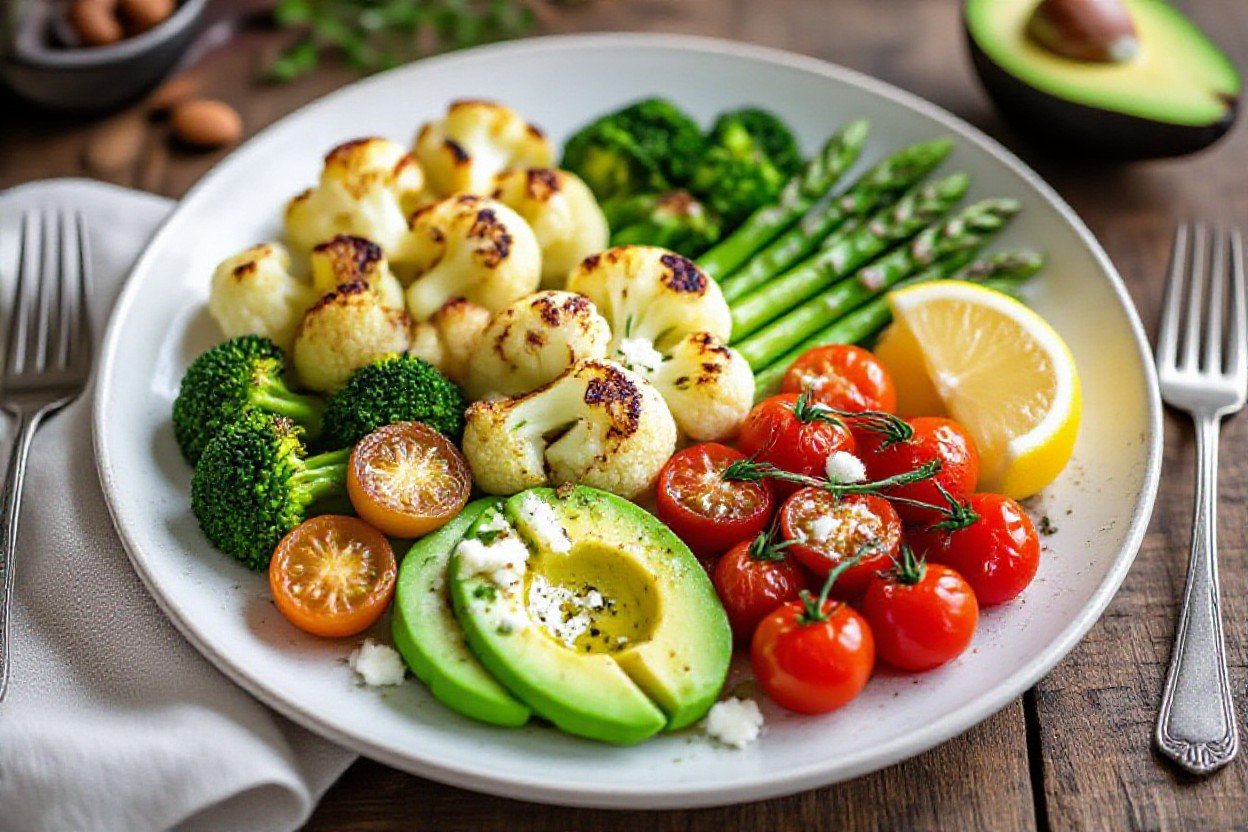
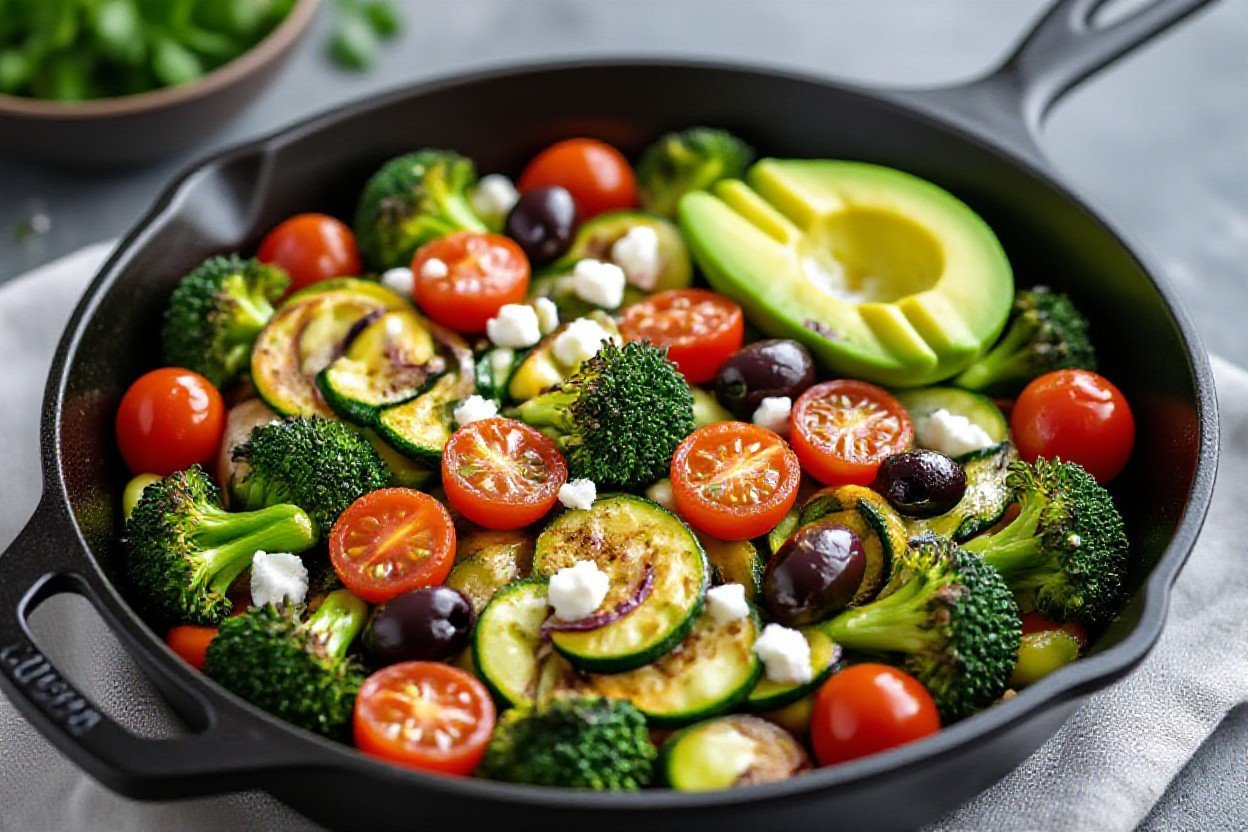
You’ll replace starchy sides and grains with foods like avocado, fatty fish, olive oil, nuts, high-fat dairy and nonstarchy vegetables such as broccoli, cauliflower and zucchini – exactly the kinds of roasted veggies featured on this plate. The approach has medical roots: clinicians adopted ketogenic therapies for pediatric epilepsy in the 1920s, and today the same metabolic principles are applied both therapeutically and for metabolic health and body-composition goals.
Benefits of a Keto Diet
You can expect faster initial weight reduction because depleting glycogen causes significant water loss, then a steadier decline in fat mass driven by lower insulin and increased fat oxidation; many people report meaningful body-weight changes within the first 4-12 weeks. Beyond weight, your blood lipids often improve in characteristic ways – triglycerides typically fall and HDL cholesterol frequently rises – while fasting glucose and insulin measures commonly decline, which is why clinicians sometimes use keto approaches to help manage type 2 diabetes.
You may also notice cognitive and energy benefits once adapted: BHB serves as an efficient brain fuel and can stabilize energy swings during long, low-intensity activity. Athletes and endurance enthusiasts often report sustained energy on long rides or hikes when they maintain ketosis, and clinical evidence supports neurological benefits in seizure control and emerging research explores BHB’s anti-inflammatory and mitochondrial-supporting effects.
Practical examples reinforce these effects: in real-world pilot studies and case series, people with medication-resistant epilepsy have seen substantial seizure reductions, and short-term metabolic trials show significant drops in fasting insulin and improvements in triglyceride/HDL ratios within weeks; if you track biomarkers and performance metrics you’ll be able to quantify how the diet affects your own glucose, ketone levels and training output.
Choosing the Right Vegetables
Focus on vegetables that give you bulk, fiber, and variety without blowing your carb allowance: aim for roughly 5-10 g net carbs from the veggie plate if you’re keeping daily carbs under 25-30 g. Combine a dense crucifer like cauliflower (about 3 g net carbs per 100 g) with a softer option like zucchini (≈2 g net per 100 g) so you get contrasting textures and even roasting times; cut sizes to match cooking time and avoid over-charring sweeter pieces. If you want more color, add a moderate amount of bell pepper or cherry tomatoes, but limit portions since those add 3-4 g net carbs per 100 g.
Be selective about roots and tubers: things like carrots, beets, and sweet potatoes can quickly push a plate over your carb target (carrots ~7 g net per 100 g, beets ~7-8 g net, sweet potato ~17 g net), so reserve them for higher-carb days or tiny garnish portions. Instead, prioritize vegetables that maintain structure when roasted and soak up fat-Brussels sprouts, asparagus, eggplant, and mushrooms deliver savory depth while keeping net carbs low and satisfying your macro goals.
Low-Carb Vegetables for Keto
Cauliflower, broccoli, and Brussels sprouts are staples: cauliflower gives about 3 g net carbs per 100 g, broccoli ~4 g net, and Brussels sprouts ~5 g net, making them ideal bulk components. You can roast cauliflower florets at 425°F (220°C) for 20-25 minutes to get a nutty exterior without losing too much moisture, while halved Brussels sprouts take 20-30 minutes for crisp outer leaves. Zucchini and summer squash work well for quick-roast batches-zucchini averages ~2 g net per 100 g-so add them later in the pan to prevent sogginess.
Asparagus, spinach, mushrooms, and eggplant round out the low-carb roster: asparagus (~1.8 g net/100 g) and spinach (~1.4 g net/100 g) are high in vitamins K and A, while mushrooms (~2.3 g net/100 g) and eggplant (~3 g net/100 g) add umami and mouthfeel. Pairing a crucifer with a tender green and a meaty mushroom gives you a plate that’s nutritionally dense and texturally interesting without exceeding 8-10 g net carbs per serving when portions are controlled.
Nutritional Value of Roasted Veggies
Roasted low-carb vegetables deliver more than fiber and low net carbs: they’re concentrated sources of micronutrients-broccoli contains roughly 89 mg vitamin C per 100 g, cauliflower about 48 mg, and leafy greens supply substantial vitamin K (spinach ≈480 µg per 100 g raw). These vegetables also provide potassium (spinach ~550 mg/100 g) and folate, which support electrolyte balance and cell function while you’re on a ketogenic plan. Fiber in these vegetables (typically 1-4 g per 100 g depending on the veg) slows digestion and blunts glucose response, helping you maintain ketosis.
Cooking method affects nutrient availability: roasting preserves more minerals and phytonutrients than boiling, and the caramelization that develops at higher temps enhances flavor so you’re less tempted to add high-carb sauces. Adding a source of fat-1 tablespoon of olive oil adds about 14 g fat and ~120 calories-improves absorption of fat-soluble vitamins (A, K, E) and increases satiety, making your roasted veggie plate both nutritionally efficient and aligned with keto macros.
For optimal nutrient retention and flavor, cut vegetables uniformly and roast at higher heat for a shorter time-200-220°C (400-425°F) for 15-30 minutes depending on size-and avoid overcooking to preserve vitamin C and water-soluble phytonutrients. If you want to maximize certain compounds like sulforaphane from crucifers, lightly crushing or chopping before roasting and serving soon after cooking helps preserve those bioactives while still delivering the browned, savory notes that make roasted vegetables so satisfying on keto.
Preparing Your Veggie Plate
Divide your plate to balance texture and fat: aim for about 1½-2 cups of non-starchy roasted vegetables per serving, a small mound of leafy greens, and a fat source such as 1-2 tablespoons of olive oil, 2 tablespoons of full‑fat dressing, or one‑third of an avocado. Place the warm roasted vegetables where they’ll sit against the greens so steam wilts them slightly without making the salad soggy, and add proteins (3-4 ounces of grilled chicken, salmon, or a poached egg) to one side if you want a more complete meal.
Use contrast to make the plate interesting – a mix of caramelized, crisp, and creamy elements works best. For meal prep, roast larger batches (3-4 pounds) and store in airtight containers for up to 4 days; reheat on a sheet pan at 400°F for 6-8 minutes to restore crisp edges, or refresh cold by tossing roasted vegetables with a bright dressing and fresh herbs.
How to Roast Vegetables
Preheat the oven to 400-425°F (200-220°C) depending on how much browning you want; higher heat (425°F) gives faster caramelization. Cut vegetables into uniform pieces so they finish at the same time – for example, broccoli florets about 1-1½ inches, cauliflower similar size, halved Brussels sprouts, and ½‑inch thick zucchini slices. Toss roughly 1-2 tablespoons of oil per pound of vegetables with about ¾-1 teaspoon kosher salt per pound and a few grinds of black pepper.
Spread in a single layer on a rimmed sheet pan with at least a little space between pieces so air circulates. Roast times vary: asparagus 10-15 minutes, zucchini 12-15 minutes, bell peppers 15-20 minutes, broccoli 20-25 minutes, cauliflower 25-30 minutes, Brussels sprouts 20-25 minutes (at 400°F). Stir or flip once halfway through; if using convection, cut times by roughly 15-20% and check earlier.
Seasoning and Flavoring Options
Start with a solid base of salt and pepper (about ¾-1 teaspoon kosher salt per pound) and build from there. Garlic powder (½-1 teaspoon per pound), smoked paprika (½ teaspoon), or a pinch of red pepper flakes add depth, while a tablespoon of grated Parmesan or 1-2 tablespoons of nutritional yeast per 4 cups delivers savory umami without carbs.
Finish with bright elements after roasting: 1 teaspoon lemon juice per serving, 1-2 tablespoons chopped fresh herbs (parsley, cilantro, dill), or a drizzle of vinaigrette made with 1 tablespoon vinegar to 3 tablespoons oil. For richer plates, fold in 1-2 tablespoons of butter or toasted nuts (almonds, pine nuts) for texture and extra fat.
For a practical example: toss 1 pound halved Brussels sprouts with 1 tablespoon olive oil, ¾ teaspoon kosher salt and ½ teaspoon black pepper, roast at 400°F for 20-25 minutes, then finish with 1 tablespoon lemon juice and 2 tablespoons grated Parmesan – that combination yields balanced fat, acid, and umami while keeping carbs low (about 6-8 g net carbs per cup of sprouts).
Serving Suggestions
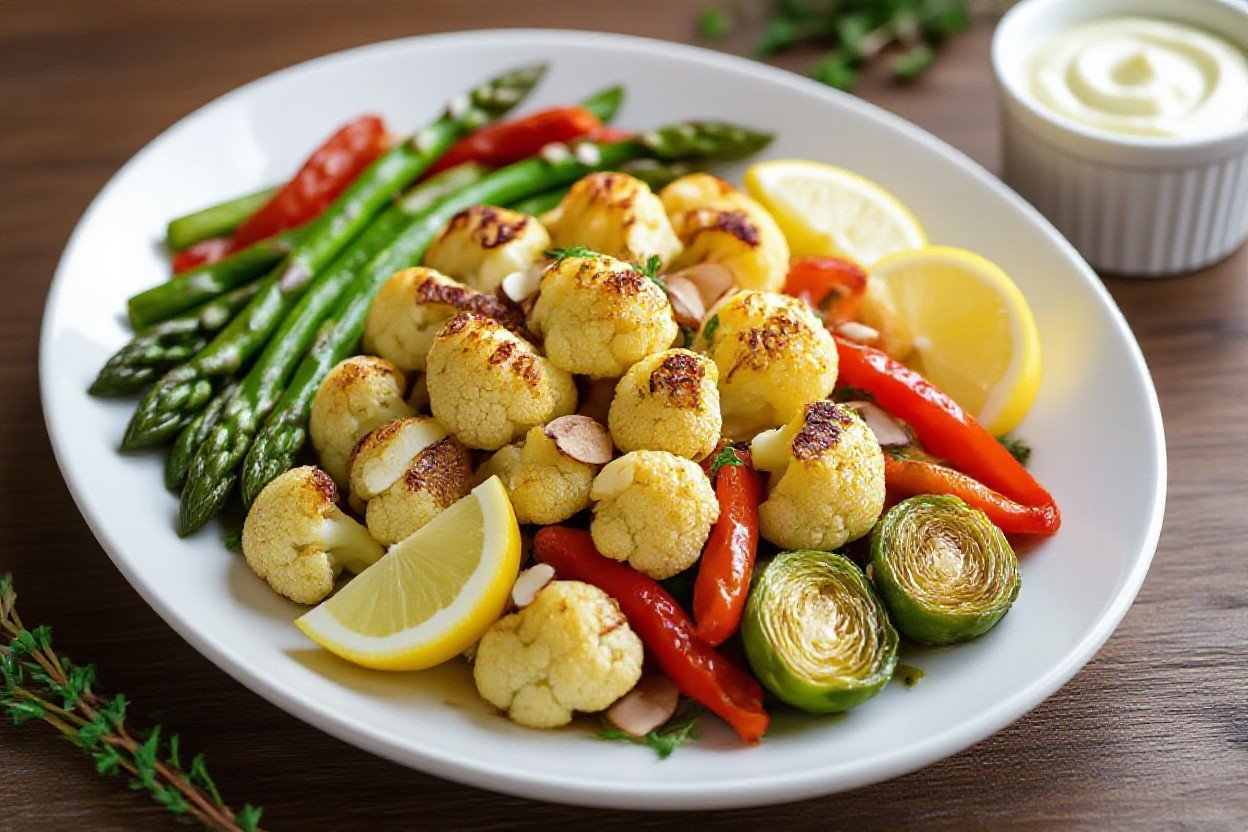
You can plate the roasted veggie medley as a composed meal by balancing volume and macros: aim for 1-2 cups (about 150-300 g) of roasted vegetables, 4-6 oz (115-170 g) of protein, and 1-2 tablespoons of added fat. That combination typically delivers roughly 20-40 g protein and 15-35 g fat per plate, which fits many ketogenic meal targets while keeping the veggies front-and-center for fiber and micronutrients.
For make-ahead meals, roast a large sheet pan and portion into airtight containers; reheating at 350°F (175°C) for 8-10 minutes restores texture better than microwaving. Finish each portion just before serving with a squeeze of lemon or a teaspoon of flavored oil to lift the flavors without adding significant carbs.
Pairing with Protein
Match the veg textures and flavors to your protein: robust, charred Brussels or cauliflower pair well with pork belly or a 4-6 oz ribeye (about 25-30 g protein per 4 oz) because the fattier meat echoes the caramelized edges; tender zucchini and roasted cherry tomatoes complement a 4 oz fillet of salmon (roughly 22 g protein and 10 g fat per 3-4 oz) or a 4-6 oz grilled chicken thigh. You can also use shellfish – 3 oz of shrimp supplies ~20 g protein – for quicker cook times that keep the veggies crisp.
Beyond the cut, aim for 20-40 g protein per meal: roughly a 4-6 oz cooked portion of most meats achieves this. Dressings and sauces matter too – a tablespoon of herb butter or aioli (about 11-14 g fat) adds richness and helps meld flavors; chimichurri or pesto brings bright herbs and an extra 1-2 tablespoons of olive oil, increasing satiety without pushing carbs.
Incorporating Healthy Fats
Toss your vegetables in 1-2 tablespoons of extra-virgin olive oil before roasting – 1 tablespoon contains ~14 g fat – to promote even browning and higher fat content per serving. Avocado makes a straightforward topper: half an avocado adds roughly 12-15 g monounsaturated fat and 6-7 g fiber, boosting creaminess and keeping net carbs low.
To add crunch and variety, sprinkle 1 oz (about 28 g) of toasted nuts or seeds – such as almonds or walnuts – which provide ~14-18 g fat and 4-6 g protein per ounce. Use small amounts of concentrated fats for finishing: 1 teaspoon of high-quality olive oil (≈4.5 g fat) or a tablespoon of ghee (≈11 g fat) will increase flavor impact without changing portion structure dramatically.
When building dressings, follow a roughly 3:1 oil-to-acid ratio for a keto-friendly vinaigrette: for example, 3 tablespoons of olive oil mixed with 1 tablespoon of lemon juice and a pinch of salt gives you about 42 g of fat across the dressing, enough to flavor several plates while keeping carbs minimal; alternatively, compound herb butter or a spoonful of tahini can be used sparingly to add both mouthfeel and nutrient density.
Storage and Reheating Tips
You should cool roasted vegetables to room temperature within two hours, then transfer them to the refrigerator to keep quality and safety in check. Aim for storage at or below 40°F (4°C); most roasted low‑carb veggies remain good for 3-4 days in an airtight container, while freezing extends shelf life up to about 2 months with minimal texture loss.
When you plan ahead, portioning into single‑meal containers saves time and avoids repeated reheating that degrades texture and flavor. Use clear labeling with dates so you can use the oldest batches first and avoid guesswork.
Proper Storage Methods
If you want crispness to survive storage, choose glass or BPA‑free airtight containers and line bottoms with a paper towel to absorb excess moisture-this reduces sogginess for items like roasted broccoli and Brussels sprouts. For mixed plates, keep denser roots (turnips, radishes) separate from delicate items (zucchini, asparagus) to prevent the soft ones from collapsing in the same container.
Freezing works well when you flash‑freeze on a tray first: spread pieces in a single layer on parchment, chill until firm (about 1-2 hours), then transfer to vacuum‑seal or heavy‑duty freezer bags; frozen roasted veggies maintain best quality for ~8 weeks. Thaw overnight in the fridge before reheating, or reheat from frozen using higher heat and a bit more time for even results.
Best Practices for Reheating
To restore roasted texture, reheat in a 400°F (200°C) oven on a rimmed sheet pan for 8-12 minutes, tossing once halfway so edges crisp evenly; spread food in a single layer to avoid steaming. If you prefer stovetop speed, warm a nonstick or cast‑iron skillet over medium‑high heat and sauté for 3-6 minutes with 1 teaspoon of avocado or olive oil per serving to revive caramelized surfaces.
Use an air fryer at 350°F (175°C) for 5-7 minutes to re‑crisp small batches-shake the basket halfway. Only use the microwave for quick reheats (20-30 second bursts) when texture is less important; cover loosely to retain moisture but stop early to prevent rubbery results.
For frozen portions, preheat the oven to 425°F (220°C) and bake 12-18 minutes from frozen, turning once; this higher starting temperature helps evaporate surface moisture and prevents the soggy middle that low‑temperature reheats can cause. Broiling for the last 1-2 minutes can provide a final char, but watch closely to avoid burning.
- Store in airtight glass containers at 40°F (4°C) or below; use within 3-4 days or freeze up to 2 months.
- Flash‑freeze on a tray before bagging to preserve texture and prevent clumping.
- Reheat on a sheet pan at 400°F for 8-12 minutes or in an air fryer at 350°F for 5-7 minutes to restore crispness.
- After cooling leftovers for no more than 2 hours, label with the date and use FIFO (first in, first out).
Final Words
On the whole, the Keto Roasted Veggie Plate gives you a reliable, flavorful way to increase nonstarchy vegetables while keeping net carbs low; by prioritizing options like zucchini, cauliflower, broccoli, and asparagus and finishing with ample healthy fats (olive oil, avocado, or grated hard cheese) you maintain satiety and a proper keto macronutrient profile. You should season boldly, roast until caramelized for depth, and portion according to your daily carb target so the plate supports keto goals without sacrificing texture or taste.
For practical use, batch-roast trays for easy meals, pair the plate with a protein or a high‑fat dressing to hit your targets, and log portions to keep your daily net carbs in check; doing so makes the dish a versatile staple that supports long‑term adherence and culinary variety on your keto plan.