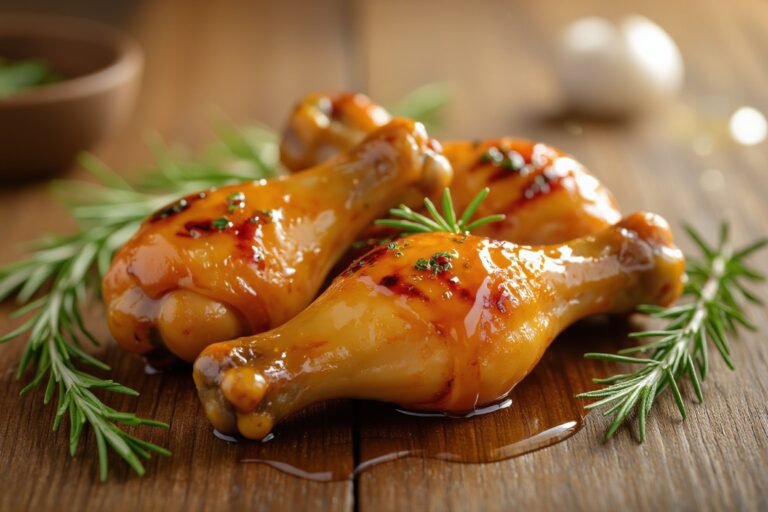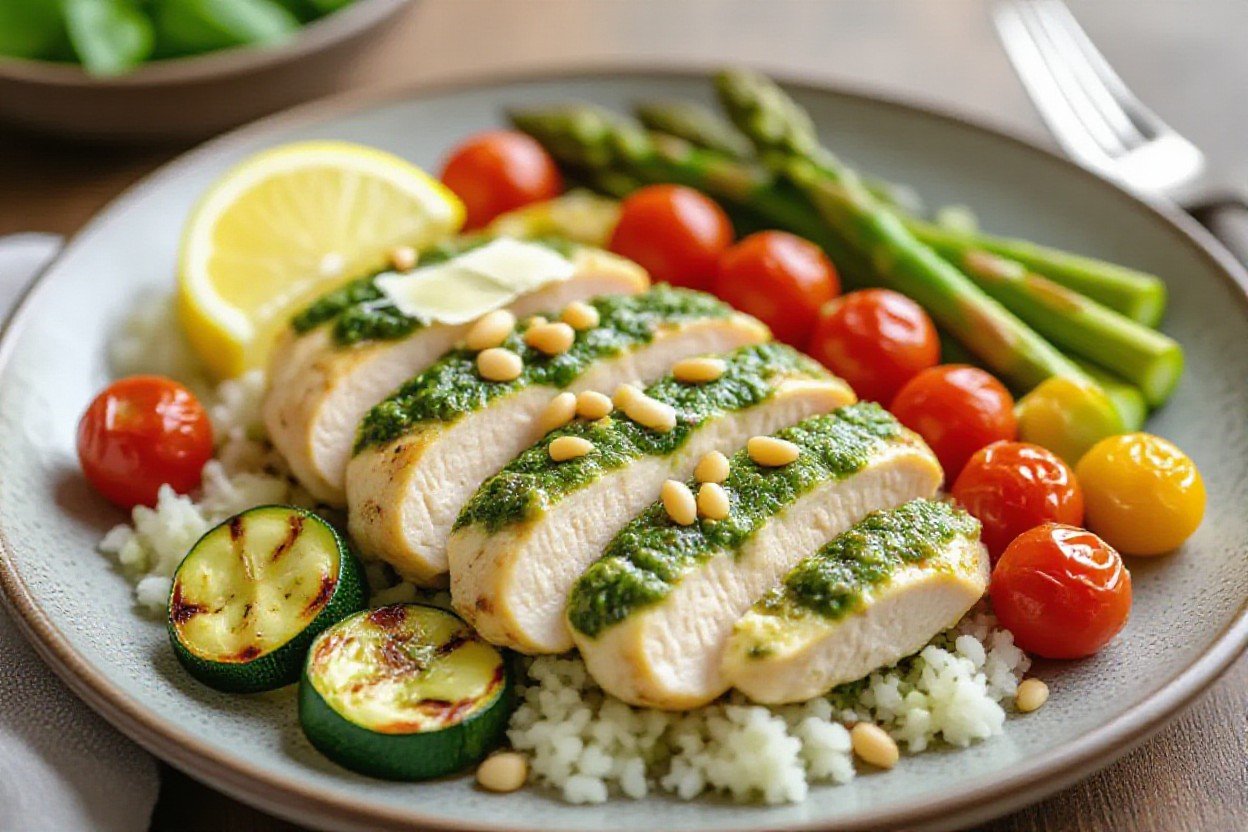
Keto Pesto Chicken And Veggies
Pesto transforms simple chicken and low-carb vegetables into a satisfying, nutrient-dense meal you can make quickly while staying within your ketogenic goals. You’ll learn how to balance fats, protein, and fiber, choose the right ingredients, and use efficient cooking methods so your Keto Pesto Chicken And Veggies stay flavorful, tender, and perfectly seasoned every time.
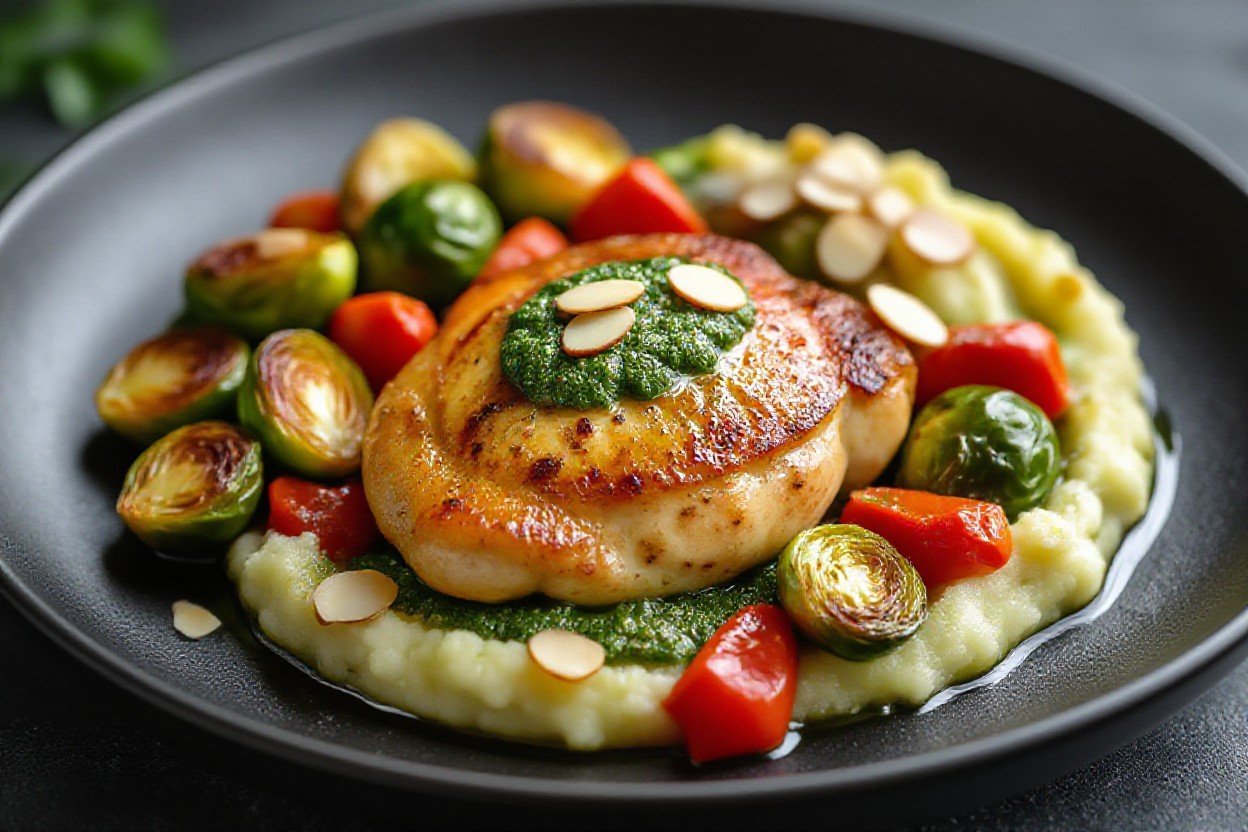
Understanding the Keto Diet
When you shift your eating pattern toward keto, the goal is to force the body to rely on fat-derived ketone bodies as a primary fuel. Most people need to limit net carbohydrates to roughly 20-50 grams per day to enter nutritional ketosis; many enter within 2-4 days, though it can take up to a week if you begin with high glycogen stores or elevated stress hormones. Clinically, nutritional ketosis is defined by blood beta‑hydroxybutyrate levels of about 0.5-3.0 mmol/L, which is the target range for metabolic adaptation and many therapeutic applications.
Your macro distribution will shift markedly: fat typically provides about 70-75% of total calories, protein around 20-25% (kept moderate to avoid gluconeogenesis excess), and carbs about 5-10%. For example, on a 2,000 kcal plan aiming for 70% fat / 20% protein / 10% carbs you’d consume roughly 155 g fat, 100 g protein, and ~50 g carbs; many therapeutic regimens tighten carbs further to 20-30 g/day depending on goals and medical supervision.
Principles of Ketosis
Ketosis occurs when reduced insulin levels permit sustained lipolysis and hepatic ketogenesis; fatty acids are converted in the liver to acetoacetate and beta‑hydroxybutyrate, with beta‑hydroxybutyrate being the dominant circulating ketone you can measure. Your brain, which normally uses glucose, will progressively oxidize ketones for up to 60-70% of its energy needs after full adaptation, while gluconeogenesis supplies the remaining small glucose requirement for red blood cells and certain tissues (roughly tens of grams per day).
To monitor adaptation you can use blood ketone meters (gold standard), breath acetone analyzers (convenient but less precise), or urine ketone strips (useful early but decline as you adapt). Practical signs that you’re in ketosis include sustained ketone readings ≥0.5 mmol/L, reduced post‑meal blood glucose excursions, and often a reduction in appetite driven by stable ketone-mediated satiety signals.
Benefits of a Keto Diet
You’ll often see rapid initial weight loss-commonly 2-4 kg in the first two weeks-largely from glycogen depletion and associated water loss, followed by steadier fat loss; many people achieve 5-10% total body weight reduction over 3-6 months when adherence is strong. Controlled trials generally show greater short-term weight reduction versus low‑fat approaches, partly because keto tends to suppress appetite and improve adherence for many individuals.
Metabolic changes are prominent: you can expect lower fasting glucose and insulin levels, improved triglycerides and higher HDL, and in many cases reduced medication needs for type 2 diabetes under medical supervision. Clinically, the ketogenic dietary pattern has proven therapeutic value-classic ketogenic protocols can reduce seizure frequency by ≥50% in a substantial proportion of children with drug‑resistant epilepsy-although LDL cholesterol may rise in a subset of people, so lipid monitoring is important.
Beyond weight and standard metabolic markers, you may notice cognitive and energy effects: several studies and patient reports describe clearer mental focus and sustained low‑intensity endurance performance after 2-12 weeks of adaptation, while high‑intensity, glycogen‑dependent efforts can remain impaired unless strategic carbohydrate timing is used. You should also plan for electrolyte management and periodic lab checks to monitor lipids, liver and kidney markers, and micronutrient status if you adopt keto long term.
Pesto Sauce: A Keto-Friendly Option
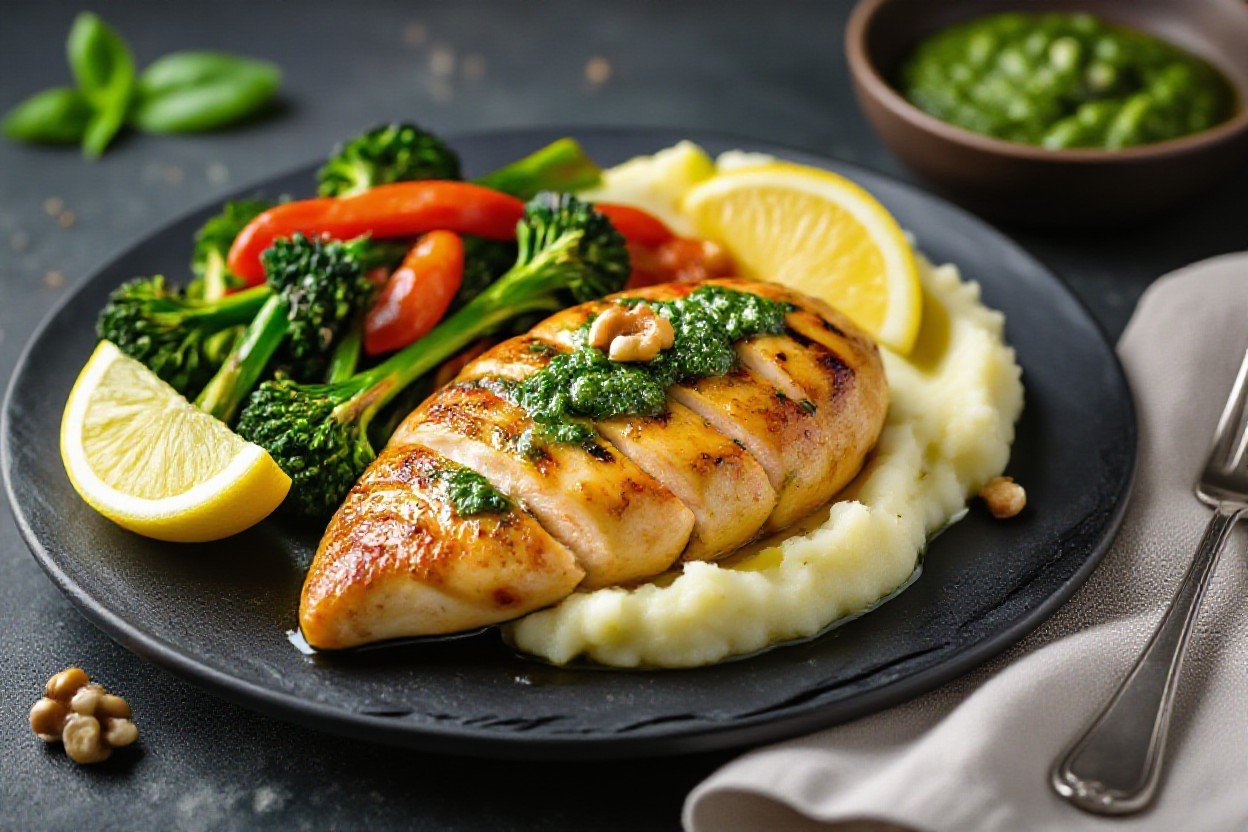
Pesto gives you concentrated flavor with minimal carbs, so a little goes a long way-plan on 1-2 tablespoons per serving to coat chicken and veggies without pushing your carb count. You can use it as a marinade, a finishing sauce, or stirred into roasted vegetables; its fat content helps the meal feel satisfying and supports ketosis while adding the basil-garlic-Parmesan profile that pairs especially well with grilled or pan-seared chicken.
Ingredients for Keto Pesto
For a standard, keto-friendly batch that yields about 1 cup, blend 2 packed cups fresh basil leaves, 1/2 cup nuts (pine nuts, walnuts, or almonds), 1/3 cup freshly grated Parmesan (or 1/4 cup nutritional yeast for dairy-free), 2-3 garlic cloves, 1/2 teaspoon fine salt, 1-4 tablespoons lemon juice to taste, and 1/2 cup extra-virgin olive oil or avocado oil. You’ll get a bright, fatty sauce that’s low in carbs-use the oil volume to adjust thickness and mouthfeel.
If you need to cut costs or change macros, swap half the basil for baby spinach or arugula (up to 1 cup) to stretch the batch without adding carbs. Toasting walnuts or pine nuts for 3-5 minutes deepens flavor, and if you’re meal-prepping, refrigerate up to 5-7 days or freeze in ice-cube trays (single-serving 1-2 tablespoon cubes) for about 3 months.
Homemade vs Store-Bought Pesto
Making pesto at home takes about 5-10 minutes in a food processor and gives you control over oil quality, nut choice, and salt-one homemade cup usually costs $5-10 depending on nuts, and you can avoid added sugars or vegetable oils. Store-bought jars offer convenience and consistent texture, but you should read labels: some brands add sugars, starches, or cheaper seed oils that dilute fat quality and raise carbs slightly, which matters when you’re tracking macros closely.
When you pick a jar, look for a simple ingredient list that starts with basil, olive oil, nuts, cheese, garlic, and salt; avoid items listing sugar, maltodextrin, modified starch, or soybean/canola oil. Typical opened-jars keep 7-14 days in the fridge per the label, and portion control matters because pesto is calorie-dense (roughly 70-90 kcal per tablespoon), so freeze extra homemade portions in measured cubes to keep servings consistent.
Preparing the Chicken
You should trim excess fat and silver skin, then pat the pieces dry so the pesto and oil adhere and you get a proper sear; excess moisture steams the surface instead of browning it. If pieces vary in thickness, pound thicker portions to an even ¾-1 inch so cooking times are predictable and you avoid overcooking thinner areas.
Brining or a short marinade changes texture and seasoning: a quick brine of 1 tbsp salt per cup of water for 30 minutes firms and seasons breasts, while marinating in pesto for 30 minutes to 4 hours infuses fat-soluble flavors-avoid overnight acidic marinades if you don’t want mushy texture. Use an instant-read thermometer to guide doneness rather than relying on timing alone.
Choosing the Right Cut of Chicken
You’ll choose boneless skinless breasts when you want lean protein and a quick cook time-breasts go from pan to plate in about 8-12 minutes total (roughly 4-6 minutes per side for a 1-inch piece). For more forgiving, flavorful results that suit keto better, opt for bone-in or boneless thighs; the extra fat keeps them moist and they tolerate slightly longer cooking without drying out.
If presentation matters, bone-in, skin-on thighs deliver both crisp skin and rich flavor when roasted at higher heat (425°F/220°C for 25-35 minutes). Conversely, thin-cut cutlets or butterflied breasts are ideal for fast stovetop cooking and for stuffing or slathering with pesto before finishing-adjust technique to cut: thicker pieces benefit from finishing in the oven, thinner ones cook entirely on the stovetop.
Cooking Techniques for Juicy Chicken
You can brine, pound, or sous-vide to maximize juiciness: a 30-minute brine firms meat, pounding evens thickness so heat distributes uniformly, and sous-vide at 140°F (60°C) for 1-2 hours yields consistently tender breasts that you finish with a quick sear for color. For stovetop-to-oven methods, sear over medium-high heat 3-5 minutes per side for thin pieces or 6-8 minutes per side for 1-inch breasts, then transfer to a 375°F (190°C) oven for 8-12 minutes until the internal temp reaches 165°F (74°C).
Reverse searing also works: roast at 275°F (135°C) until the internal temperature reads about 140-145°F (60-63°C), then sear in a hot pan 1-2 minutes per side to create a crisp exterior while keeping the center juicy. For thighs, target a slightly higher finish-175-185°F (79-85°C)-to break down connective tissue and unlock tenderness; bone-in thighs at 425°F usually need 25-35 minutes depending on size.
Always rest the chicken 5-10 minutes tented under foil after cooking so carryover cooking evens out the temperature (internal rises ~3-5°F) and juices redistribute; slice against the grain and apply pesto during the last minute of cooking or immediately after resting to preserve bright basil flavor without burning it on high heat.
Selecting Vegetables for Keto
You should prioritize nonstarchy, nutrient-dense vegetables that keep net carbs low while adding volume and texture to your pesto chicken plate; aim for roughly 1-2 cups of nonstarchy veg per meal so you can allocate 5-10g net carbs to vegetables if your daily carb target is 20-30g. Tracking net carbs (total carbs minus fiber) helps: 1 cup raw spinach is about 1g net, 1 cup cauliflower rice ~3g net, and 1 cup broccoli florets ~4g net, so you can combine portions to stay within your meal carb budget.
Pick vegetables that suit the cooking method for this recipe-roast cauliflower and broccoli for a nutty texture, quickly sauté zucchini and spinach so they don’t wilt into mush, or grill asparagus for char and bite; small additions like 1/4 cup cherry tomatoes bring sweetness but should be used sparingly. You’ll get the best results when you plan portions and cooking time together so the veggies complement the pesto-coated chicken without pushing total carbs over your limit.
Low-Carb Vegetable Options
Spinach and other leafy greens are your go-to base (raw spinach ~1-2g net per 100g), while cauliflower and zucchini are versatile: cauliflower riced or roasted (~2-3g net/100g) stands in for grains, and zucchini (spiralized or sliced, ~2-3g net/100g) makes a great noodle alternative. Broccoli provides structure and flavor at about 4g net per 100g, asparagus sits around 1.5-2g net per 100g, and mushrooms are usually 2-3g net per 100g-Brussels sprouts and bell peppers are fine in moderation (Brussels ~5g net/100g), but you’ll want to watch portions.
Use small, targeted swaps to keep meals interesting: a bed of spinach topped with sliced zucchini and a few roasted cauliflower florets keeps net carbs low while adding color and mouthfeel; olives and artichoke hearts are low-carb garnishes that pair well with pesto. Measuring cups or a simple food scale for new recipes makes it easy to calculate net carbs per plate and avoid surprises.
Nutritional Benefits of Keto Vegetables
You get more than fiber when you choose nonstarchy vegetables: leafy greens supply high levels of vitamin K and A, broccoli delivers vitamin C (about 89 mg per 100g) and sulforaphane, and zucchini contributes potassium (roughly 260 mg per 100g) plus B vitamins. These micronutrients support blood clotting, immune function, and electrolyte balance-important when you’re reducing carbs and water weight can shift sodium and potassium levels.
Fiber from these vegetables-typically 2-4g per 100g depending on the veg-slows carbohydrate absorption and feeds beneficial gut bacteria, which helps satiety and steady blood glucose levels. In practice, combining a cup of mixed nonstarchy veg with your pesto chicken can add 3-6g of fiber to a meal, helping you feel fuller longer without pushing net carbs too high.
Because many of the key vitamins in greens and colorful veg are fat-soluble or have increased bioavailability with fat, pairing them with your pesto (olive oil and pine nuts or cheese) enhances nutrient uptake; research indicates adding dietary fat can increase carotenoid absorption by roughly 2-3x, so the olive oil in your pesto not only tastes good but helps you absorb vitamins A, K and other antioxidants more effectively.
Combining Ingredients
Aim to balance pesto quantity, chicken weight, and vegetable mass so flavors meld without one element overpowering the others. For example, using about 1/2 cup pesto for 1 lb (450 g) of boneless chicken and 2 cups of mixed vegetables typically yields an even coating and bright basil flavor; increasing pesto beyond 3/4 cup per pound can mask the natural sweetness of roasted zucchini or charred bell pepper. Pay attention to particle size-cut chicken into 1-1.5 inch pieces and vegetables into 1/2-1 inch slices or florets so everything finishes within a single 20-25 minute roast or a 12-15 minute air-fry cycle.
Sequence matters: toss chicken and firmer vegetables (broccoli, carrots) with pesto first, then add quick-cooking items (asparagus, thin zucchini) later or reserve a portion of pesto to add at the end. Adjust salt sparingly since commercial pesto often contributes 150-300 mg sodium per tablespoon; if you make your own, test with 2 tablespoons per pound and scale up as needed. Use an instant-read thermometer to verify chicken reaches 165°F (74°C) and rely on visual cues-light charring and tender-crisp texture-to time vegetable doneness.
Mixing Pesto with Chicken and Veggies
When you mix, work in a large bowl so every piece gets coated: for 1 lb (450 g) diced chicken plus 2 cups of vegetables, start with 1/2 cup pesto and add up to 2 tablespoons more only if needed. If pesto is very thick, thin it with 1-2 teaspoons of olive oil or a squeeze of lemon to improve spreadability; conversely, add 1 tablespoon grated Parmesan or a tablespoon of almond flour to thicken overly watery pesto for better cling. In tests, cutting zucchini into 1/2-inch rounds and broccoli into 1-inch florets ensured even roasting alongside 1-inch chicken cubes without overcooking either element.
Toss chicken and sturdier veggies (broccoli, bell pepper) together first so they can marinate for 15-30 minutes-up to 2 hours if you have time-then fold in delicate items (asparagus, cherry tomatoes) just before cooking to keep them intact. Reserve 2 tablespoons of pesto to finish the dish; adding it in the final 1-2 minutes of cooking or right after plating preserves the fresh basil aroma and bright color that heat tends to dull.
Cooking Methods for the Final Dish
For oven-roasting, preheat to 425°F (220°C) and arrange the pesto-coated chicken and vegetables on a single-layer sheet pan; roast for 18-25 minutes depending on piece size, flipping once at the halfway mark to promote even browning. Smaller 1-inch chicken pieces will reach 165°F (74°C) in about 18-20 minutes, while bone-in thighs can take 30-40 minutes-add 10-15 minutes to cook times for larger or bone-in cuts. Spread items at least 1/2 inch apart so steam doesn’t accumulate; use convection if available to shorten time by about 10% and increase caramelization.
On the stovetop, sear chicken in a hot cast-iron skillet for 3-4 minutes per side over medium-high heat, then add vegetables and reduce to medium; cover for 6-10 minutes until chicken hits 165°F and veg are tender-crisp. For an air fryer, set 400°F (200°C) and cook 12-15 minutes, shaking halfway-this method produces crisper edges in less time. Add pesto in the last 1-3 minutes of cooking or immediately after removing from heat to avoid darkening the basil and oil; in trials, dishes finished with a reserved 1-2 tablespoons of fresh pesto scored higher on aroma and perceived freshness.
Monitor variables: thickness, bone presence, and vegetable moisture will change timing-thicker chicken medallions (1.5 inches) need 5-8 additional minutes in the oven, and very wet vegetables lower surface temperature and increase cook time. If you plan to reheat leftovers, store in the fridge up to 3-4 days and reheat at 325°F (160°C) until the internal temperature returns to 165°F (74°C) to keep chicken juicy; alternatively, refresh by tossing briefly in a hot skillet with 1 tablespoon fresh pesto to revive flavor and texture.
Serving Suggestions
Pairing with Keto-Friendly Side Dishes
You can keep the plate firmly keto by pairing the pesto chicken with low-carb vegetables that complement the herb-forward sauce. For example, 1 cup of cauliflower mash runs around 4-6 g net carbs and provides a creamy base that soaks up pesto; 1 cup of zucchini noodles typically contains about 2-3 g net carbs and lends a light, springy texture; shirataki noodles are effectively 0-1 g net carbs if you want a noodle-like option. Aim for 4-6 oz of cooked chicken per person so your plate balances protein and veg without unnecessary carbs.
When composing sides, think in terms of macros and contrast: pair a 6 oz portion of pesto chicken with 1 cup cauliflower mash and 6 roasted asparagus spears (about 2 g net carbs) to keep total plate carbs under roughly 8-10 g while delivering plenty of fiber and fat from the pesto. You can add 1-2 tablespoons of extra olive oil or butter to raise fat content for satiety. Use the following quick mix-and-match ideas:
- Cauliflower mash (1 cup ≈ 4-6 g net carbs) with parsley and lemon zest for brightness.
- Zucchini ribbons tossed in 1 tsp olive oil and garlic (1 cup ≈ 2-3 g net carbs).
- Arugula salad with 1 tbsp lemon vinaigrette (virtually negligible carbs per 1 cup).
- This keeps a single plate well within typical keto targets of under 20-30 g net carbs per day when combined with other meals.
Presentation Tips for the Dish
You should slice the chicken into 1/2-inch medallions before plating to showcase the herb crust and to make portioning obvious; arrange the medallions fanned across the plate so each bite mixes pesto, chicken, and vegetable. Add color contrasts like roasted cherry tomatoes (4-6 tomatoes ≈ 3 g net carbs) and a few microgreens; they raise visual appeal with minimal carbs. Warm plates for about 20-30 seconds in the microwave or a minute in a low oven so the pesto stays glossy rather than congealed.
Serve family-style for relaxed gatherings or plate individually for a more refined presentation: place a 1-cup ring of cauliflower mash in the center, lean 3-4 chicken medallions against it, and scatter roasted broccolini or asparagus to one side for height. Garnish with 1 tablespoon toasted pine nuts and a thin lemon wheel to add texture and acidity-pine nuts add a subtle crunch without pushing carbs noticeably higher.
For restaurant-style finishing, spoon 1-2 teaspoons of warm pesto over the chicken right before serving and wipe the rim of the plate with a clean towel to keep edges pristine; use contrasting colors-deep green pesto, bright lemon, and ruby tomatoes-to guide the eye and make portions look larger without increasing calories. This final touch elevates perceived value and encourages slower, more mindful eating.
- Use shallow bowls or wide-rimmed plates to contain juices and create a focal point.
- Stack vegetables to add vertical height rather than crowding the plate flat.
- Drizzle a teaspoon of high-quality olive oil in a thin arc for shine and mouthfeel.
- This creates a finished plate that looks intentional and appetizing while staying keto-friendly.
Final Words
With this in mind, you can confidently make Keto Pesto Chicken and Veggies a reliable part of your meal plan: the high-fat, low-carb profile supports ketosis while the pesto and vegetables deliver flavor and micronutrients, and simple techniques-searing the chicken, roasting the vegetables, finishing with fresh basil and Parmesan-ensure consistent results every time.
As you refine the recipe, focus on ingredient quality, proper seasoning, and balancing fats and greens so your meals stay satisfying without excess carbs; with minor swaps (zucchini for cauliflower, walnut pesto for pine nuts) you can tailor macros and flavors to suit your goals while keeping preparation efficient for weeknight cooking.