Keto Cauliflower Steaks
Many home cooks turn to cauliflower steaks as a hearty, low-carb alternative that lets you enjoy bold flavors without derailing your ketogenic goals. You will learn how to choose a firm head, slice steaks for optimal texture, season strategically, and roast to a golden crust so your meals stay satisfying and aligned with your macros.
What are Cauliflower Steaks?
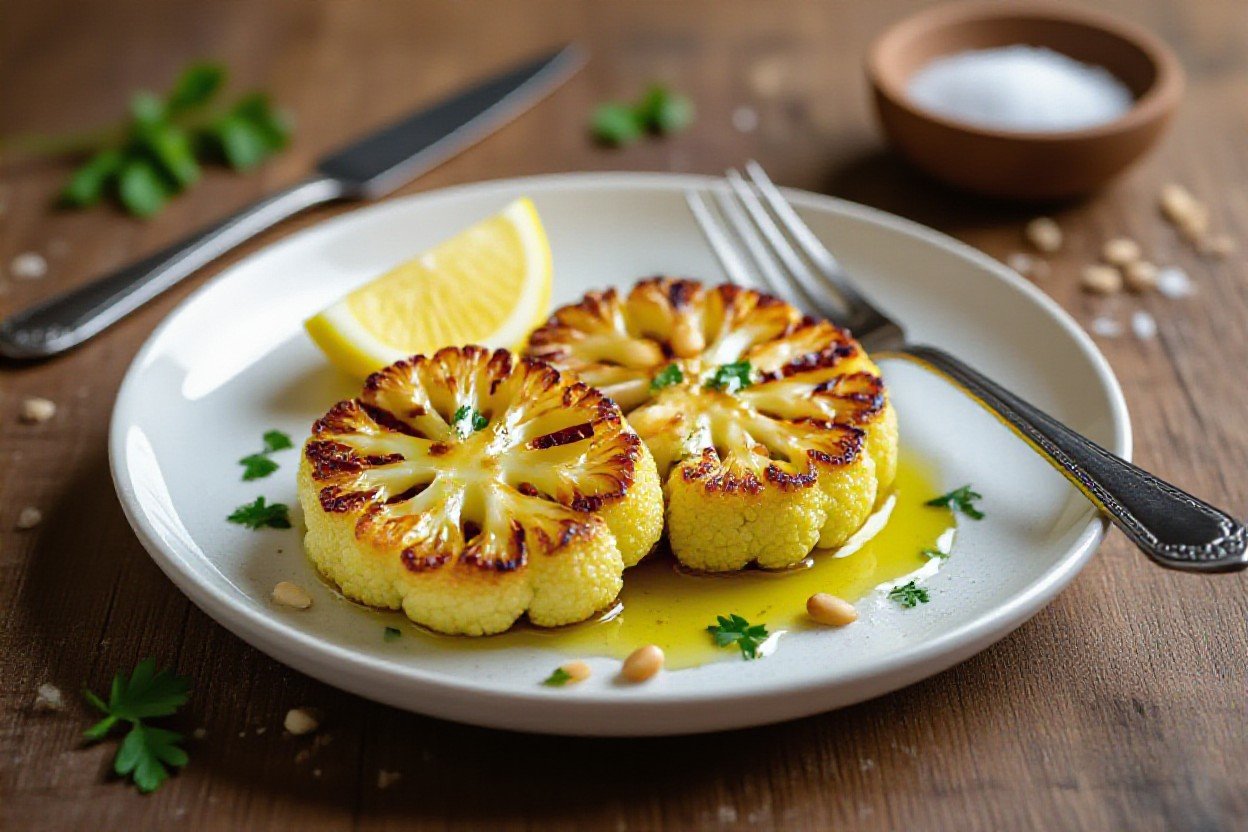
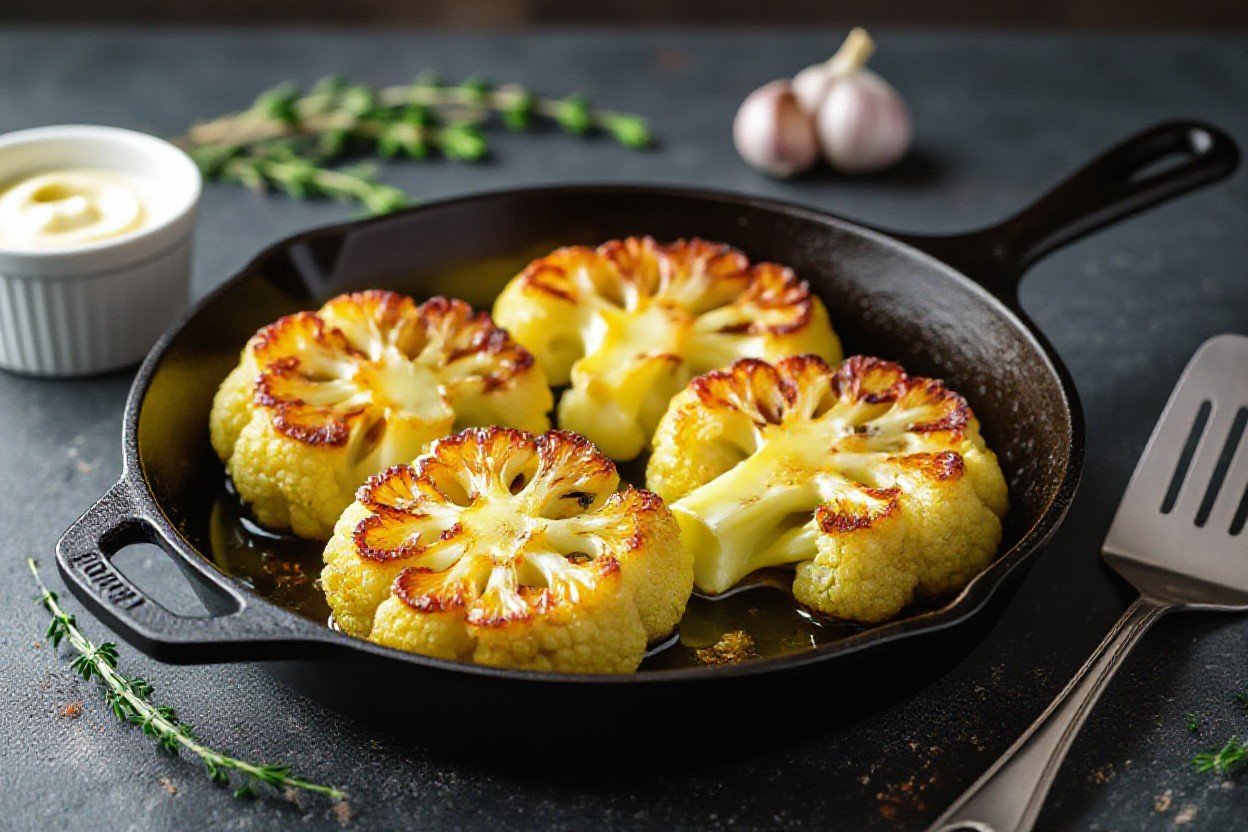
You slice a cauliflower head straight through the core into thick, steak-like slabs-typically ¾ to 1¼ inches-so the florets stay attached and you get a hearty, grillable piece. A medium head usually yields 2-3 steaks; you’ll trim the outer leaves and cut from top to bottom so each slab holds together for roasting, pan-searing, or grilling.
When you cook them at high heat the exposed florets caramelize and the core softens, giving a meaty texture that stands up to bold sauces and toppings. Try roasting at 425°F (220°C) for 20-25 minutes, flipping once, or searing 3-4 minutes per side to develop a brown crust while keeping the center tender.
The Nutritional Benefits of Cauliflower
Per 100 grams, cauliflower provides roughly 25 calories, about 5 g total carbohydrates and ~2 g fiber (net carbs ≈3 g), plus roughly 2 g protein and negligible fat-numbers that make it a low-calorie, low-carb base for many dishes. You’ll also get about 48 mg of vitamin C per 100 g and a range of phytochemicals such as glucosinolates and sulforaphane, which contribute antioxidant and anti-inflammatory effects in several studies.
Because it’s low in calories but relatively high in fiber, you can use cauliflower to increase meal volume and satiety without blowing your macros. For example, one cup of cauliflower “rice” (~100 g) has about 25 calories versus ~200 calories and ~45 g carbs in one cup of cooked white rice, so swapping saves roughly 175 calories and ~40 g of carbs per serving.
How Cauliflower Steaks Fit into the Keto Diet
You can build a keto-friendly plate around a cauliflower steak by keeping the portion and toppings in mind: a single large steak (about 150 g) tends to contain roughly 4-5 g net carbs, so pairing it with high-fat additions lets you hit a 70-75% fat macro target while keeping total carbs under common keto thresholds (usually 20-30 g net per day). Top with 2 tablespoons of compound butter or a tablespoon of olive oil and a sprinkle of grated Parmesan to add 200+ kcal and 20-25 g of fat with imperatively zero carbs.
Meal prep is straightforward-you can roast a batch of steaks and store them 3-4 days in the fridge without losing texture, then reheat under a broiler to re-crisp. Mixing in fatty garnishes like pesto, crumbled bacon, or a cashew-based cream keeps the meal satisfying and helps you meet daily fat goals while keeping protein moderate.
For an immediate macro example: a 150 g steak (~5 g net carbs) topped with 2 tbsp olive oil (≈27 g fat, 0 g carbs) and 1 oz shredded cheddar (≈9 g fat, <1 g carbs) yields a plate with roughly 5-6 g net carbs and ~36 g fat-an easy way to design a single-meal contribution to a 1,500-2,000 kcal ketogenic day without overshooting carbs.
Preparing Your Cauliflower Steaks
Selecting the Right Cauliflower
Pick a head that feels heavy for its size and measures about 1 to 2 pounds; that range typically yields two to three full center-cut steaks plus useful florets for sides. Seek tight, compact curds with a creamy white color and no brown spots or soft areas around the core-those indicate age and higher water content, which makes the steaks fall apart during cooking.
If you want consistent steaks, choose a flatter, more cylindrical head rather than one with long, loose florets. You’ll get cleaner 3/4″-1″ slices from a dense core; a 2-pound cauliflower sliced at 3/4″ thickness usually produces 3 steaks and enough trim for a cup or more of cauliflower rice or breadcrumbs for crusting.
Tools and Ingredients Needed
Essential tools: a large sharp chef’s knife or a mandoline set to 3/4″-1″, a sturdy cutting board, a kitchen towel to stabilize the head, and either a 10-12″ cast-iron skillet or a rimmed baking sheet (18×13″ if you’re making multiple steaks). For roasting or broiling, use parchment or a wire rack on the sheet pan; for searing, preheat the cast iron. Optional but helpful: a small offset spatula, tongs, and a food processor to turn the trimmings into rice.
Core ingredients and suggested amounts for 2-3 steaks: 2-3 tablespoons avocado oil (smoke point ~520°F) or 2 tablespoons extra-virgin olive oil (smoke point ~375°F) if cooking at moderate heat, 1 teaspoon kosher salt, 1/2 teaspoon black pepper, 1 teaspoon garlic powder, and 1 teaspoon smoked paprika. For finishing, plan on 1-2 tablespoons melted butter or ghee (ghee smoke point ~450°F) or 2 tablespoons nutritional yeast or finely grated Parmesan for a savory crust.
Choose avocado oil or ghee when you want higher-heat searing to get a deep caramelized crust; reserve olive oil or butter for oven roasting at 400-425°F where their lower smoke points won’t burn. If you’re using a mandoline, clamp the head and slice steadily to maintain 3/4″ thickness; if you only have a knife, turn the stem up and make a straight downward cut through the core to keep the steak intact.
Cooking Methods for Cauliflower Steaks
If you slice your cauliflower into 3/4-1 inch steaks, heat control becomes the determining factor for texture: thinner steaks take 8-12 minutes total, while thicker cuts need 20-30 minutes depending on method. Practical adjustments like patting the steaks dry, brushing both sides with 1-2 teaspoons of olive oil, and salting 10-15 minutes before cooking will help surface browning and speed moisture loss so you get a crisp exterior without a soggy center.
Choosing between direct high heat and indirect, slower heat changes the final bite: direct heat gives fast charring and a firmer chew, whereas indirect or lower oven temperatures produce uniformly tender centers. You should plan for a 5-minute resting period after cooking so residual heat evens out the texture and any added fats (butter, ghee, or grated Parmesan) meld into the florets.
Grilling
Preheat the grill to medium-high, about 400-450°F (204-232°C), and oil the grates to prevent sticking. Place steaks directly on the grates and cook 6-10 minutes per side for 3/4-1 inch steaks; aim for visible grill marks and a toothpick-tender center. If you want a smoky finish, add soaked wood chips or use a pellet grill set to 400°F for 8-12 minutes per side.
When you use indirect heat, sear the steaks over direct flame for 2-3 minutes per side then move them to a cooler zone to finish for another 6-10 minutes-this prevents burning while allowing thicker steaks to cook through. For more even results, press lightly with a spatula only once after the first 3-4 minutes on each side, and baste with a garlic-herb butter in the final 2 minutes to boost fat and flavor for keto profiles.
Roasting
Set your oven to 425°F (220°C); with convection on, reduce time by about 10-15 percent. Arrange steaks on a rimmed baking sheet lined with parchment, spacing them at least 1 inch apart to avoid steaming, and brush each with 1-2 teaspoons olive oil. Roast 20-30 minutes, flipping halfway, until edges are deeply caramelized and the center yields to a fork.
Finishing touches elevate the dish: sprinkle 1-2 tablespoons grated Parmesan or 1 teaspoon smoked paprika over each steak in the last 5 minutes for extra fat, umami, and color. You can also add chopped bacon or 1 tablespoon melted ghee per steak before the final 3 minutes under the broiler-2-3 minutes under high broil produces an appetizing crust without overcooking the interior.
For faster roasting without sacrificing texture, blanch steaks for 2-3 minutes in boiling water then shock in ice water to halt cooking; this cuts oven time to 12-15 minutes and intensifies caramelization. If you prefer very thick steaks (1.5 inches), lower the oven to 375°F and roast 30-40 minutes, checking tenderness with a skewer; rest the steaks 5 minutes under a foil tent to let juices redistribute before serving.
Flavor Combinations and Seasonings
Herbs and Spices
You can treat cauliflower like a blank canvas and build distinct profiles with simple ratios: for a smoky roast use 1 tsp smoked paprika + 1/2 tsp garlic powder + 1/4 tsp chili flakes per head; for Mediterranean notes try 1 tsp dried oregano + 1/2 tsp lemon zest + 1/2 tsp sea salt. Fresh, robust herbs such as thyme and rosemary withstand 425°F (220°C) roasting for 20-25 minutes, while delicate herbs-parsley, cilantro, basil-are best sprinkled on after roasting to preserve volatile aromatics.
If you prefer spice blends, za’atar (2 tsp per head) and curry powder (1 tbsp for a whole cauliflower) both penetrate the florets when massaged with 2 tbsp olive oil. You should salt to taste-about 1/2-1 tsp kosher salt for a medium head-and finish with 1-2 tsp acid (lemon juice or vinegar) to lift flavors; acid increases perceived saltiness, so you can often use slightly less salt overall.
Sauces and Toppings
You’ll get the biggest impact from a single bold sauce: pesto (blend 2 cups packed basil, 1/2 cup grated Parmesan, 1/2 cup olive oil, 1/4 cup pine nuts, 1 clove garlic) spooned at 1-2 tbsp per steak, chimichurri (1 cup parsley, 1/4 cup oregano, 3 tbsp red wine vinegar, 1/2 cup olive oil) at 1-3 tbsp, or an avocado crema (1 avocado + 2 tbsp sour cream + 1 tbsp lime juice) for about 2-3 tbsp. Most homemade, oil- or fat-based sauces add roughly 1-3 g net carbs per 1-2 tbsp, making them keto-friendly when you control portions.
Topping choices change texture and visual appeal: crumble 2 tbsp feta or 1-2 tbsp grated Parmesan over a steak, sprinkle 1 tbsp toasted pine nuts or sliced almonds for crunch, or add 1 tbsp capers for brine. You can also make a Parmesan crisp by spreading 1/4 cup grated Parmesan into 2-3 small rounds and baking at 400°F (205°C) for 5-7 minutes; use one crisp per steak as a crunchy garnish.
When pairing, match intensity: use a bright chimichurri or lemon-tahini for herbed profiles, a smoky romesco or garlic-butter for paprika-forward steaks, and a cooling avocado crema for spicy or curried versions. Sauces like pesto and chimichurri keep well-pesto 5-7 days refrigerated, chimichurri 4-5 days-so make 1-2 small batches ahead and portion 1-2 tbsp per steak to keep macros and flavors balanced.
Serving Suggestions
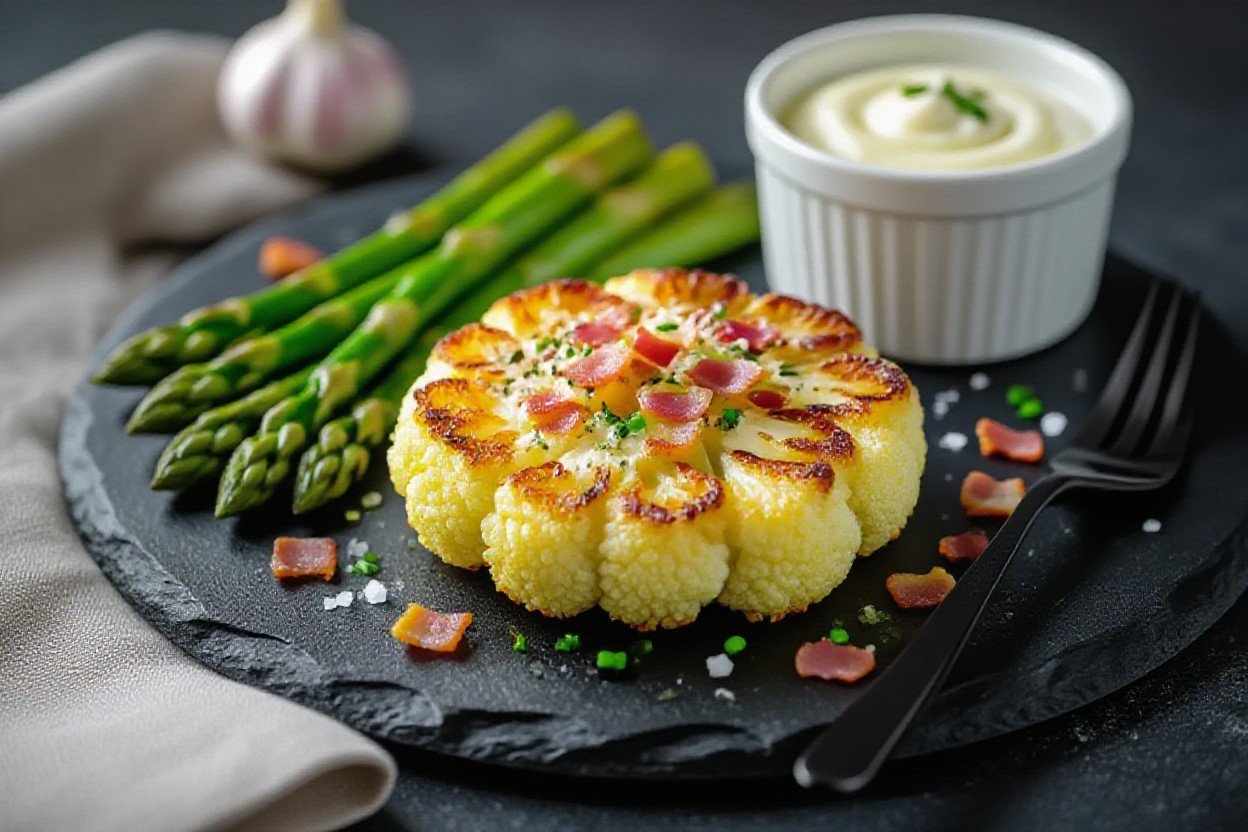
Serve cauliflower steaks hot and slightly charred for the best texture: slice the head into 1-1.5 inch steaks, roast at 400°F (200°C) for 20-25 minutes, then broil 2-3 minutes to caramelize the edges. You can also grill over medium-high heat for 6-8 minutes per side; this gives a smoky crust while keeping the center tender.
Finish with a fat and acid to lift flavors-1 tablespoon of ghee or 2 tablespoons of extra-virgin olive oil plus a squeeze of lemon brightens the dish and adds about 100-200 calories from fat, keeping a typical serving under 10 g net carbs (a 150 g steak contributes roughly 4-6 g net carbs). Scatter 2 tablespoons (about 15-30 g) of grated Parmesan or a tablespoon of toasted pine nuts for texture and an extra 3-6 g of protein per serving.
Pairing with Proteins
Pair cauliflower steaks with 4-6 oz (113-170 g) portions of fatty fish like salmon-one 4 oz fillet delivers roughly 22-25 g protein and 10-15 g fat-or with grilled ribeye (6-8 oz) if you want a richer plate. Leaner options such as 4 oz chicken breast give about 26 g protein and keep total meal fat adjustable by adding 1 tablespoon olive oil (14 g fat) for satiety.
For plant-based pairings, seared halloumi (50 g yields ~10 g protein) or 125 g tempeh (around 19 g protein) work well; top with a herb vinaigrette or chimichurri to add 1-2 tablespoons of healthy oil and flavor without pushing carbs above typical keto targets. You can also pair with 3-4 oz of pork belly or grilled lamb chops for higher-fat, lower-carb profiles that align with stricter keto macros.
Creating a Complete Meal
Build a balanced plate by aiming for 20-40 g protein, 25-60 g fat, and under 10 g net carbs per meal: for example, one cauliflower steak (150 g), a 4 oz salmon fillet, half an avocado, and a tablespoon of olive oil yields about 30 g protein, ~45 g fat, and 6-8 g net carbs. Mixing textures-creamy avocado, crisp rocket, and a charred steak-keeps the meal satisfying while meeting keto targets.
If you’re meal-prepping, roast 4-6 steaks at once and store in airtight containers for 3-4 days; reheat in a 375°F oven for 8-10 minutes or in an air fryer at 350°F for 6 minutes to restore crispness. Portion proteins into 4-6 oz servings and add dressings or sauces (2 tablespoons each) at the time of serving to control macros and freshness.
Add a simple side salad of 2 cups mixed greens (about 2 g net carbs) tossed with 1 tablespoon apple cider vinegar, 1 tablespoon olive oil, and 1 oz toasted walnuts (about 18 g fat) to round out the meal-this combination boosts fiber and micronutrients while keeping your total carbs low and fats high enough to maintain ketosis.
Common Mistakes to Avoid
Overcooking or Undercooking
If your steaks are cut 3/4″-1″ thick, roast them at 425°F (220°C) for about 20-25 minutes, flipping once at roughly 10-12 minutes; thinner slices finish much faster and thicker ones need more time. Overcooking for 30 minutes or more will collapse the floret structure and turn the center mushy, while undercooking leaves a stringy, fibrous core that tastes raw. In a kitchen test, 1″ steaks roasted 22 minutes developed a crisp, caramelized exterior and a tender but intact center-the sweet spot you should aim for.
Use texture, not temperature, to gauge doneness: a paring knife should slide into the center with gentle resistance and the outer edges should be browned. If you’re short on time, parboil or microwave the head for 2-3 minutes to soften the core before slicing; alternatively sear 2-3 minutes per side in a hot pan and finish in the oven for 8-10 minutes. Also avoid overcrowding the sheet pan-leave about 1″ between steaks so hot air can circulate and prevent steaming.
Improper Seasoning
Season both sides evenly rather than sprinkling salt only on the tops; for a 1″ steak use roughly 1/2 teaspoon kosher salt and 1/4 teaspoon freshly ground black pepper per steak, plus about 1 tablespoon oil to help spices adhere and promote browning. Skipping the exposed core and stem area is a common mistake-those sections absorb less flavor unless you rub them well. In trials, evenly oiled and salted steaks produced consistent caramelization and far better mouthfeel than unevenly seasoned pieces.
Timing matters: add delicate fresh herbs (parsley, chives, microgreens) and citrus (a squeeze of 1/2 teaspoon lemon juice) after cooking to preserve brightness, while sturdier spices-smoked paprika, garlic powder, 1 teaspoon nutritional yeast or 1 tablespoon grated Parmesan-can go on before roasting. Avoid piling on heavy sauces that mask cauliflower’s mild flavor; instead boost umami with 1 tablespoon of grated cheese, a dusting of smoked salt, or a light drizzle of garlic‑infused oil after roasting.
For technique, choose a high‑smoke‑point oil like avocado for searing (about 1 tablespoon per steak) and reserve butter for finishing to add richness without burning. You can also brine briefly-1 teaspoon salt per cup of water for 15-20 minutes-to improve seasoning penetration if you plan to roast thicker steaks. Keep toppings controlled on keto servings: 1 tablespoon of tahini or aioli per steak adds fat and flavor without overwhelming the vegetable.
Final Words
The Keto cauliflower steak is a versatile, satisfying low‑carb centerpiece that lets you enjoy hearty texture without derailing your macros; you can sear or roast to develop caramelized edges, season boldly, and add fats like olive oil, butter, or grated cheese to boost satiety while keeping net carbs low.
You can make these steaks a regular part of your meal plan by varying thickness and cooking method, pairing them with high‑quality proteins and keto‑friendly sauces, and using simple storage and reheating techniques to preserve texture, ensuring your meals stay both convenient and flavorful as you maintain your dietary goals.