Keto Beef Stroganoff Meatballs
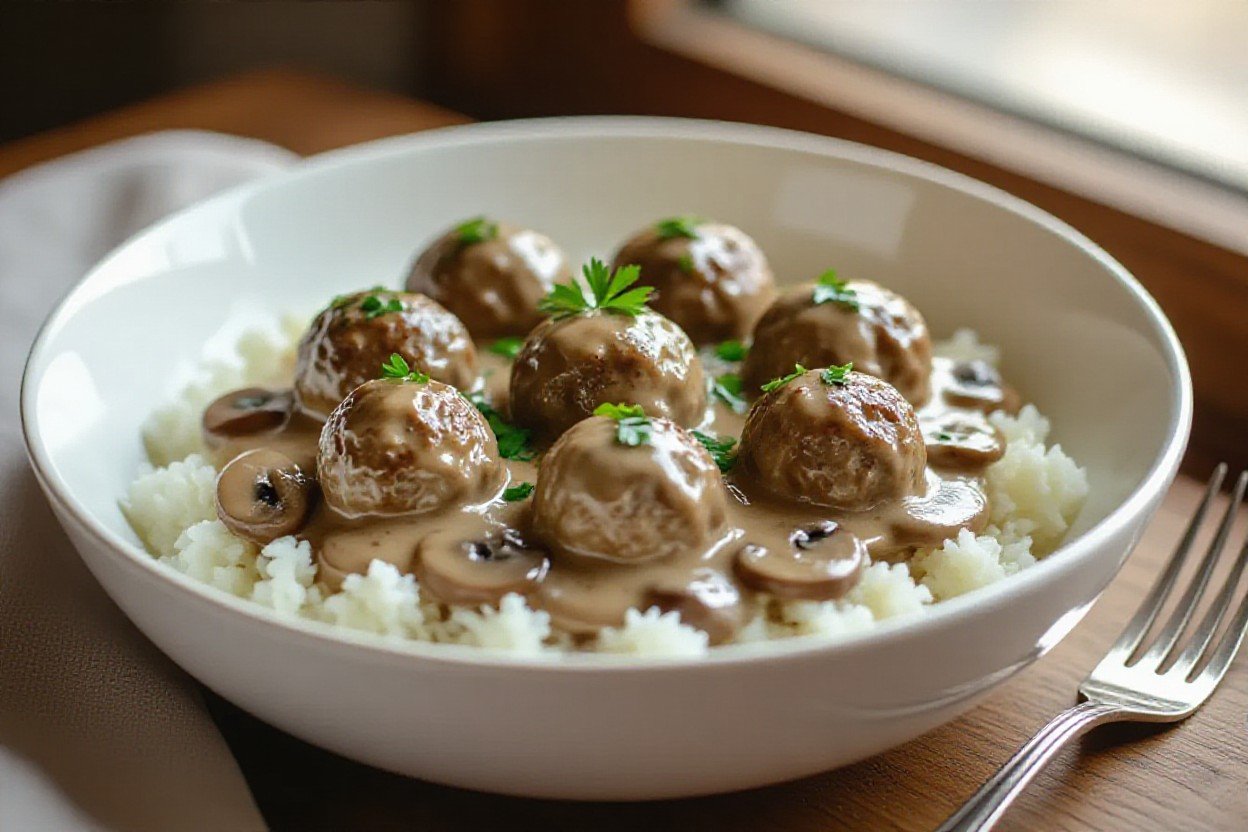
Keto Beef Stroganoff Meatballs combine rich, savory beef meatballs with a creamy, low-carb mushroom sauce so you can enjoy classic comfort without gluten or starches. You’ll learn how to master seasoning, searing, and a sour cream-thickened sauce that keeps macros in check while delivering bold flavor. Follow straightforward steps to make meal prep efficient and tailored to your carb goals.
Ingredients
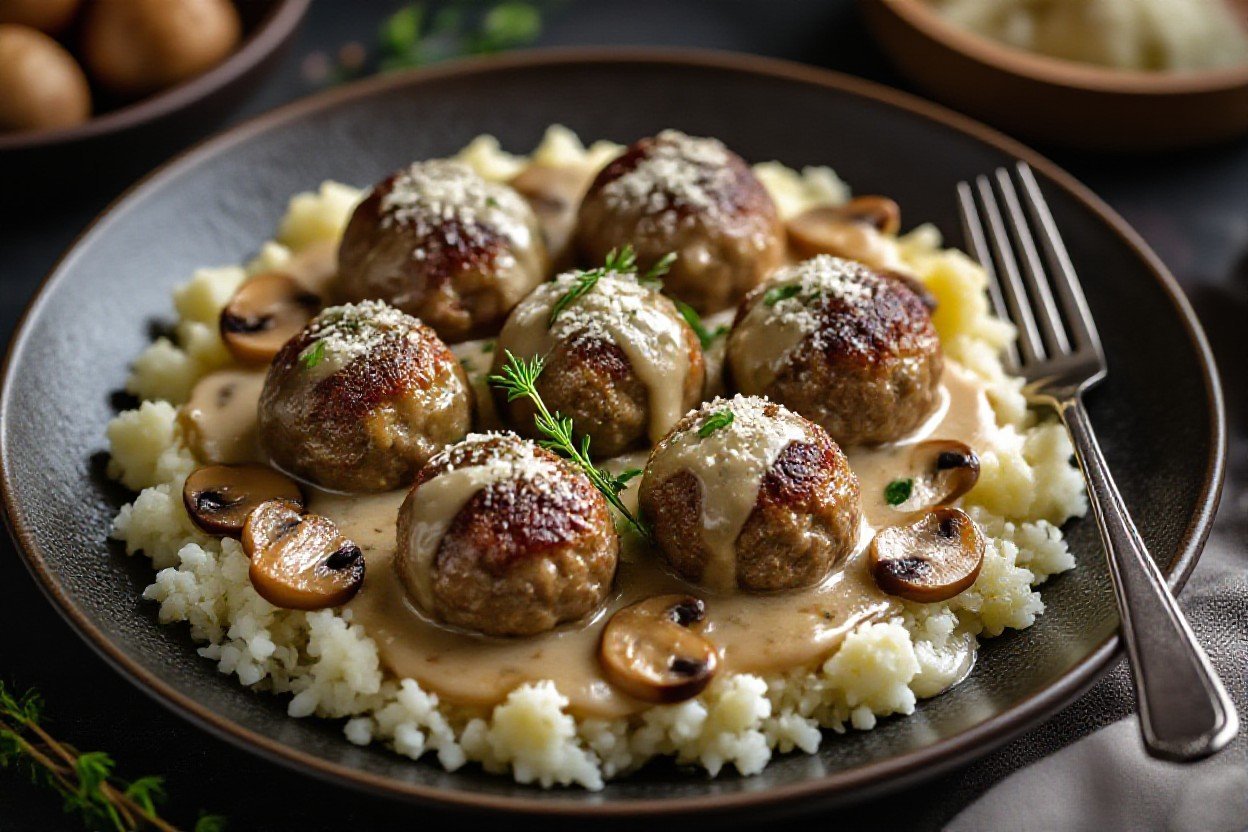
You’ll split the list into two focused groups: meatball ingredients and sauce ingredients so you can prep separately. For the meatballs plan on 1 lb ground beef (80/20) as the base, optionally combined with 1/2 lb ground pork for extra juiciness, 1 large egg, 1/2 cup almond flour, 1/4 cup finely chopped onion, 1/4 cup grated Parmesan, 1 tsp garlic powder, 1 tsp salt and 1/2 tsp black pepper.
For the stroganoff sauce gather 8 oz cremini mushrooms (sliced), 1 small onion, 2 garlic cloves, 1 cup beef broth, 1 cup heavy cream, 1/2 cup sour cream (optional), 2 tbsp Worcestershire sauce, 1 tbsp Dijon mustard, 2 tbsp butter, and 1/4-1/2 tsp xanthan gum if you want a thicker keto-friendly finish. Finish items: fresh parsley or chives for garnish and zucchini noodles or cauliflower mash to serve.
Meatball Components
You should prioritize fat content and binders: 80/20 ground beef gives the best browning and flavor, while adding 50% pork (½ lb per lb beef) raises moisture. Use 1/2 cup almond flour and one large egg per 1-1.5 lb meat mixture to bind without gluten; 1/4 cup grated Parmesan adds umami and helps the exterior crisp when searing or baking.
Handle the mix gently – combine until just uniform with about 20-30 strokes by hand and form 1.5-inch meatballs (you’ll get roughly 18-20 meatballs from 1-1.5 lb). Cook them by searing in 2 tbsp oil for 2-3 minutes per side then finishing in a 375°F oven for 8-10 minutes, or simmer them directly in the sauce for 12-15 minutes until an internal temperature of 160°F is reached.
Stroganoff Sauce Ingredients
Start the sauce with aromatics and a flavorful liquid: 8 oz sliced cremini mushrooms provide dense mushroom flavor, paired with 1 small diced onion and 2 crushed garlic cloves. Use 1 cup beef broth as the savory base, 1 cup heavy cream for keto-friendly richness, and 1/2 cup sour cream if you want tang and silkiness; add 2 tbsp Worcestershire and 1 tbsp Dijon to deepen the savory profile.
Fat and thickening choices matter for texture: cook the mushrooms in 2 tbsp butter (plus 1 tbsp olive oil if needed), reduce the broth a few minutes to concentrate flavor, then whisk in cream. For a thicker sauce without flour use 1/4-1/2 tsp xanthan gum sprinkled in while whisking off heat, or stir in 1-2 oz cream cheese for an ultra-creamy finish; season with salt and black pepper to taste.
Choose low-sodium beef broth to control salt and note that this sauce yields about 2-2.5 cups of finished sauce – with the ingredient amounts above you’re making roughly four servings, which works out to about 3-4 g net carbs per serving depending on whether you use sour cream; store refrigerated for up to 3 days and reheat gently to prevent curdling.
Preparation
Prep your mise en place: measure 1.5 lb (680 g) ground beef, 1/4 cup almond flour, 1 large egg, 1 tsp garlic powder, 1 tsp onion powder, 1 tsp kosher salt and 1/2 tsp black pepper, and finely chop 8 oz (225 g) cremini or button mushrooms plus one shallot. Get a digital thermometer ready, line a baking sheet with parchment, and preheat the oven to 375°F (190°C) if you plan to finish the meatballs in the oven after searing.
Slice mushrooms to about 1/4-inch thickness so they brown evenly, and mince garlic right before cooking to preserve aroma. Keep your sour cream (1/2 cup) and 2 tbsp heavy cream or cream cheese at hand and at near-room temperature so they incorporate into the hot sauce without separating.
Making the Meatballs
Combine the ground beef, almond flour, egg, 1 tbsp chopped parsley, and the seasoning in a bowl; use a light hand-mix until just combined to avoid dense meatballs. Form 1¼-inch meatballs (you should get roughly 18 from 1.5 lb of beef) by rolling between your palms; wetting your hands with cold water helps the mixture not stick.
Sear the meatballs in 2 tbsp butter or oil over medium-high heat, turning to brown all sides, about 2-3 minutes per side, then finish in the oven 10-12 minutes at 375°F until internal temperature reaches 160°F (71°C). Alternatively, after searing you can transfer them directly to the simmering stroganoff sauce for a 7-8 minute finish-use a thermometer to confirm doneness.
Preparing the Stroganoff Sauce
Start the sauce in the same pan to capture the fond: add 1 tbsp butter and the sliced mushrooms and shallot over medium-high heat, cooking 6-8 minutes until deeply browned, then add 2 cloves minced garlic and cook 30 seconds. Deglaze with 1/2 cup dry white wine or beef broth, scraping the pan, then add 1 cup beef broth, 1 tbsp Dijon mustard, and 1 tbsp Worcestershire; bring to a simmer and reduce 5-7 minutes to concentrate flavor.
Lower the heat and stir in 1/2 cup sour cream and 2 tbsp heavy cream or cream cheese off the heat to avoid curdling, then return briefly to low heat-do not boil. If you need to thicken, whisk 1/8-1/4 tsp xanthan gum into 1 tbsp cold water and drizzle slowly while whisking until you reach the desired viscosity; alternatively simmer 3-5 minutes to reduce the sauce.
When you add the meatballs back, nestle them into the sauce and simmer gently 4-6 minutes so they absorb the sauce and reach a safe internal temp of 165°F (74°C) if previously undercooked; finish with 1 tbsp chopped parsley and adjust seasoning with up to 1/2 tsp more salt and a few grinds of black pepper. For storage, the sauce keeps 3-4 days refrigerated and reheats gently over low heat with a splash of broth; if using sour cream, temper it by whisking in a few tablespoons of hot sauce before stirring back into the pan to prevent splitting.
Cooking Instructions
After shaping and chilling your meatballs, preheat your oven to 375°F (190°C) if you plan to finish them in the oven, or heat a 12-inch skillet over medium-high heat for stovetop finishing. If your recipe yields about 18 meatballs, work in two batches to avoid crowding: overcrowding drops pan temperature and prevents a proper sear, so leave at least 1/2 inch between each ball. Use an instant-read thermometer to check doneness-aim for an internal temperature of 160°F (71°C) for beef.
If you want extra browning and a faster finish, sear first then roast: sear 3-4 minutes per side until deep golden, then transfer to the oven for 8-10 minutes. Alternatively, bake straight through for 12-15 minutes at 400°F (205°C) on a parchment-lined sheet for hands-off cooking; smaller 1-inch meatballs will finish in the lower end of those ranges, while 1 1/4-1 1/2-inch balls need a few more minutes.
Cooking the Meatballs
When shaping, use a 1-tablespoon scoop or roll into 1-1.25 inch balls to get 18-22 meatballs from 1.5 pounds of beef mixture-wet your hands lightly to prevent sticking. Chill the formed meatballs on a tray for 10-15 minutes; this helps them hold together during searing and reduces shrinkage, especially when your mixture contains almond flour or grated cheese as binders.
For stovetop searing, heat 1 tablespoon butter plus 1 tablespoon olive oil in a 12-inch skillet until shimmering, then add meatballs and brown without crowding, about 3-4 minutes per side. If finishing in the skillet, lower heat to medium-low, cover loosely, and cook an additional 6-8 minutes, turning once, until the center reaches 160°F. If you prefer oven-only cooking, arrange on a sheet and bake 12-15 minutes at 400°F, then quickly brown under the broiler for 1-2 minutes if desired.
Combining the Sauce and Meatballs
Use the same skillet juices to build your stroganoff sauce: add 1 tablespoon butter, sauté 8 ounces sliced mushrooms and one finely chopped shallot for 4-6 minutes until browned, then stir in 1 clove minced garlic for 30 seconds. Deglaze with 1/2 cup dry white wine or beef broth, scraping up browned bits, and reduce by half over medium heat-this usually takes 3-4 minutes and concentrates flavor without diluting the sauce.
Once the pan is deglazed and reduced, stir in 1 cup heavy cream and 1 tablespoon Dijon mustard, then simmer gently for 4-6 minutes until the sauce coats the back of a spoon; if you need extra thickness, whisk in 1/8 teaspoon xanthan gum or simmer 1-2 minutes longer. Remove the skillet from direct heat before you add 1/2 cup sour cream-temper the sour cream by whisking a few spoonfuls of hot sauce into it first, then fold it in to prevent curdling; return meatballs to the skillet and simmer on low for 5-7 minutes to meld flavors and finish cooking.
Allow the assembled meatballs and sauce to rest off heat for 5-10 minutes before serving so the sauce can thicken slightly; this also lets residual carryover heat bring any slightly under-temp centers to a safe 160°F. If reheating leftovers, warm gently over low heat with a splash of broth to loosen the sauce, and store in an airtight container for 3-4 days in the fridge.
Serving Suggestions
Serve the meatballs hot and plan portions based on appetite: aim for 3-6 meatballs per person – if you end up with 24 meatballs, that translates to about 4-6 per plate. Spoon roughly 1/3 to 1/2 cup of the stroganoff sauce over each portion so every bite stays saucy without becoming watery, and let the meatballs rest 3-5 minutes off the heat to redistribute juices.
For make-ahead meals, cool completely before dividing into airtight containers; store in the refrigerator up to 4 days or freeze up to 3 months. Reheat gently in a skillet over medium-low with a splash of broth for 5-7 minutes until the internal temperature reaches 165°F (74°C), or microwave covered 90-120 seconds per serving; if frozen, thaw overnight or reheat covered at 350°F (175°C) for 20-25 minutes.
Pairing Options
Keep the meal low-carb by pairing with cauliflower mash (1 cup riced cauliflower ≈ 3-4 g net carbs) or zucchini noodles (about 3 g net carbs per cup). You can also serve sautéed green beans with garlic or roasted Brussels sprouts – a 1-cup serving of roasted Brussels provides fiber and about 6 g total carbs – to add contrast in texture and color.
If you choose wine, select a dry red such as Pinot Noir or Merlot (typical bottles 12-14% ABV) and pour a modest 4-6 oz to complement the beef without overpowering the creamy sauce. For non-alcoholic options, try iced herbal tea, sparkling water with lemon, or a warm cup of beef bone broth to echo the savory flavors while keeping carbs minimal.
Garnishes and Toppings
Add brightness with 1 tablespoon of chopped fresh parsley or chives per serving to cut through the richness and give visual contrast on the plate. A dollop of full-fat sour cream or crème fraîche (about 1 tablespoon) per portion brings tang and silkiness while keeping the dish keto-friendly.
Layer in texture and umami with 1-2 tablespoons of crispy bacon bits or 1 tablespoon of toasted almond slivers per serving, and finish plates with 1 tablespoon grated Parmesan for salty depth. Small accents like 1 teaspoon Dijon mustard whisked into the sauce or 1-2 drops of truffle oil at the end can elevate the flavor profile without adding carbs.
Prepare garnishes ahead: crisp bacon stores 3 days in the fridge or 1 month frozen, and chopped herbs keep up to 4 days wrapped in a damp paper towel. For quick crunch, thinly slice one shallot and fry in 1-2 tablespoons of butter for 3-4 minutes until golden, then drain; to give the sauce a glossy finish, whisk 1-2 teaspoons of cold butter into the warm sauce just before plating.
Nutritional Information
Caloric Breakdown
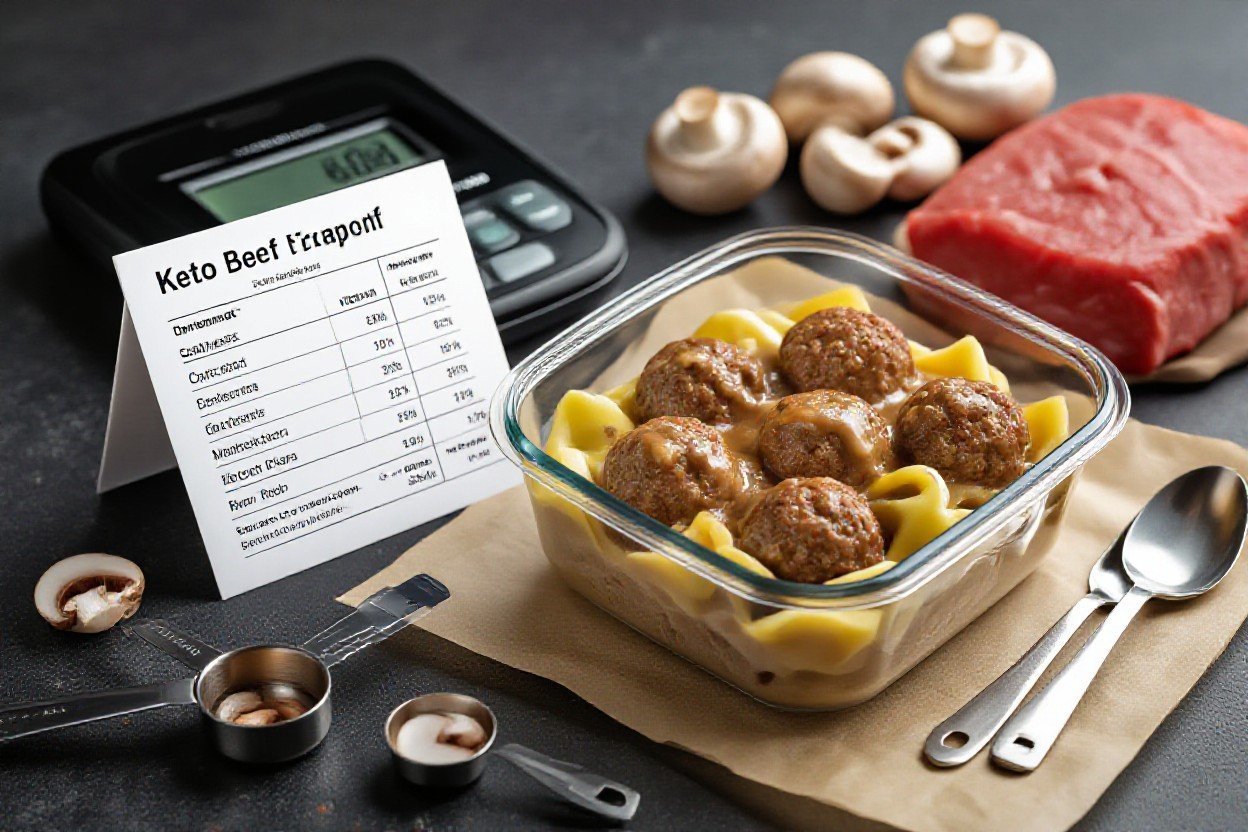
Per serving (assuming the recipe yields four portions) you’re getting roughly 460 kcal: about 36 g fat, 28 g protein, and 6 g net carbs (approximately 8 g total carbs with ~2 g fiber). That energy comes predominantly from fat – roughly 324 kcal from fat, 112 kcal from protein, and 24 kcal from carbohydrates, which gives a clear picture of why this dish fits a ketogenic framework.
If you scale portions or tweak the sauce, calories shift predictably: removing 2 tablespoons of heavy cream cuts roughly 100 kcal and about 11 g fat from the batch, while dividing the same total into six portions reduces the per-serving calorie load to about 307 kcal. Practical swaps like using a lighter topping or serving size let you fine-tune intake without changing the core flavors.
Macronutrient Composition
The macronutrient split sits at about 70% fat, 24% protein, and 6% carbs by calories, which aligns with typical keto ratios. In concrete terms you’ll see ~36 g fat, ~28 g protein, and ~6 g net carbs per serving, so the dish supplies ample fat to sustain ketosis while keeping carbohydrates low enough for most low-carb plans.
If you want to adjust the profile for different goals, small ingredient swaps make a measurable difference: for a 500 g batch of ground beef, switching from 80/20 to 90/10 roughly reduces total recipe fat by ~50 g and increases protein by ~15 g – translating to about -12.5 g fat and +3.8 g protein per serving (4 portions). Conversely, adding 2 tablespoons of butter to the sauce adds ~23 g fat (~207 kcal) to the recipe, or about +5.8 g fat and +52 kcal per serving, giving you straightforward levers to shift the balance.
For practical tracking, this meal leaving you with ~6 g net carbs per serving lets you allocate the rest of your daily carb allowance (commonly under 20-30 g on keto) to snacks or sides, and the 28 g protein helps meet general targets; if you aim for a specific protein target like 1.2-1.6 g/kg body weight, adjust ground beef leanness or add an extra meatball to reach your personal goal without blowing your carb limit.
Tips for Success
Use 80/20 ground beef for juicier meatballs and weigh one or two test balls before shaping the batch so you nail portion size; a 1.5-2 oz (45-60 g) meatball cooks evenly and fits well on a spoon for saucing. When mixing, blend ingredients with about 10-12 gentle strokes to combine without compacting the meat, chilling the formed meatballs for at least 30 minutes before searing to help them hold shape. Aim to brown in a hot pan 2-3 minutes per side then finish in a 375°F oven for 10-14 minutes or until the internal temp reaches 160°F.
- Use a thermometer to avoid overcooking – 160°F internal for beef.
- Cook in batches so the pan stays hot; overcrowding causes steaming.
- For a faster weeknight method, brown and then simmer in sauce for 12-15 minutes instead of baking.
- Thicken the sauce with 1/8-1/4 tsp xanthan gum per cup to avoid extra carbs from starches.
Perceiving subtle differences in texture and seasoning will help you tweak binder amount, salt level, and cooking time for consistent results.
Ingredient Substitutions
If you need to swap binders, crushed pork rinds work well as a zero‑carb substitute for almond flour – use roughly a 1:1 volume swap (for example, 1/4 cup crushed pork rinds in place of 1/4 cup almond flour). You can also add 1 extra large egg per pound of meat to improve cohesion when cutting back on dry binders; eggs add moisture and protein without significant carbs. For a chewier bite, mix 90/10 beef with 80/20 in a 1:1 ratio to balance juiciness and structure.
For the sauce, replace sour cream with equal parts full‑fat Greek yogurt only if you omit high heat – otherwise prefer heavy cream or a combo of 2 tbsp cream cheese plus 1/4 cup heavy cream to get tang and silkiness while keeping carbs low. Swap soy sauce for coconut aminos 1:1 for a gluten-free option, and use 1/8-1/4 tsp xanthan gum per cup as a no‑starch thickener so you maintain a glossy sauce without adding 10-20 g of carbs from flour or cornstarch.
Common Mistakes to Avoid
Overworking the meat is a frequent issue: when you mix too long the meat proteins tighten and meatballs turn dense. Gentle handling – fold ingredients until just combined and form meatballs with light pressure – keeps them tender. Also, using very lean beef (95/5) without compensating with extra fat or moisture often yields dry results; stick to 80/20 or add 1-2 tbsp olive oil or grated onion per pound if you choose leaner meat.
Another misstep is boiling the sauce after adding dairy; high heat causes separation and a grainy finish. Pull the pan off direct heat before whisking in sour cream, cream cheese, or yogurt and stir for 1-2 minutes to integrate; when using xanthan gum, sprinkle it in while whisking to avoid clumping and start with 1/8 tsp per cup, adding more sparingly until you reach desired thickness.
For practical limits, keep dry binders modest – about 2-4 tbsp almond flour or 1/4 cup crushed pork rinds per pound of meat – and always check the meatball’s internal temp (160°F) rather than relying on time alone; doing so prevents under- or overcooking and ensures the texture you aimed for.
Conclusion
Presently you have a satisfying, low-carb take on a classic comfort dish that delivers rich beef flavor, creamy mushroom sauce, and keto-friendly macros without sacrificing texture or depth. By focusing on quality ground beef, almond- or coconut-based binders, and a heavy cream or cream-cheese sauce, you keep your net carbs low while maximizing protein and healthy fats, so your meals stay both flavorful and aligned with your dietary goals.
You can adapt this recipe to fit your meal prep routine and taste preferences by adjusting herbs, using grated Parmesan for extra umami, or simmering the sauce longer for a silkier finish; store leftovers in an airtight container for 3-4 days and reheat gently to preserve sauce texture. With simple swaps and portion control, this dish becomes a reliable, versatile option for your low-carb rotation that supports consistency and variety in your keto plan.
Printable Recipe Card
Want just the essential recipe details without scrolling through the article? Get our printable recipe card with just the ingredients and instructions.