Keto Beef Burrito Bowl
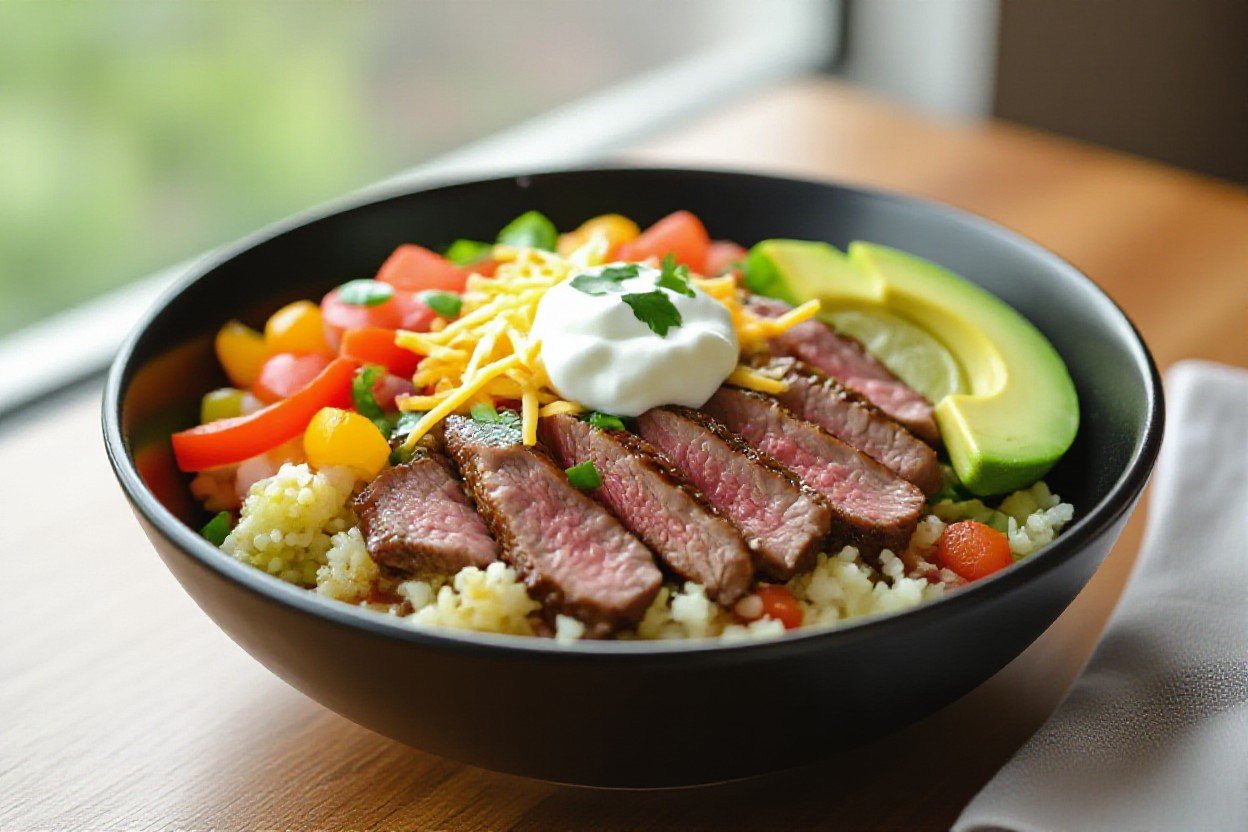
You can enjoy a satisfying, low-carb meal with this Keto Beef Burrito Bowl that pairs seasoned ground beef with cauliflower rice, fresh avocado, shredded cheese, salsa and lime; you’ll get high protein, healthy fats and minimal carbs while learning quick pantry swaps, portion guidance and meal-prep tips to keep your macros on track and flavors bold.
Ingredients
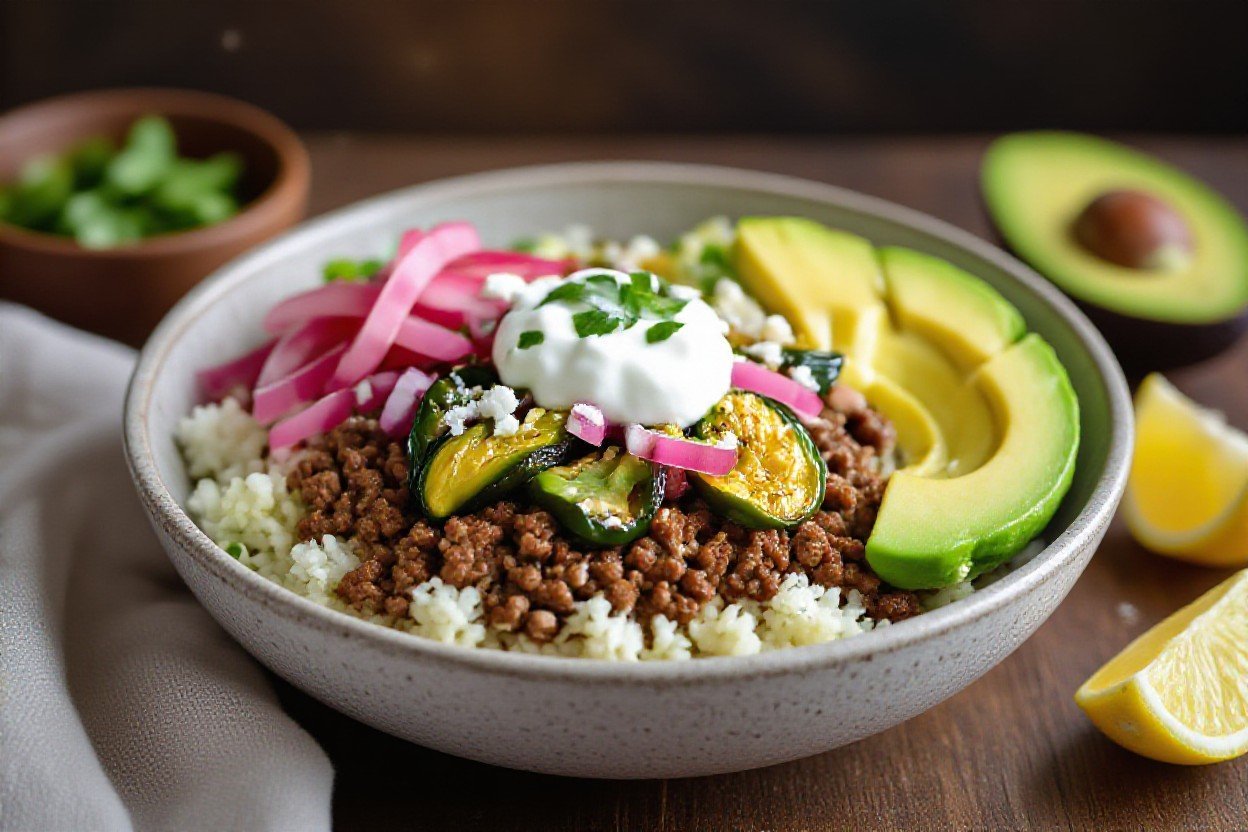
You’ll assemble a short list of high-fat, moderate-protein, and low-carb components: 1 lb (450 g) ground beef (80/20 for flavor or 90/10 if you want less fat), 3 cups (about 300 g) cauliflower rice, 2 tbsp avocado oil, 1 medium onion (optional), 2 cloves garlic, 1 tsp ground cumin, 1 tsp chili powder, and salt and pepper to taste. Add finishing elements that carry both fat and flavor-1 ripe avocado, 1/2 cup shredded cheddar, and 2 tbsp sour cream-so a single serving (4 oz beef, 1 cup cauliflower rice, and toppings) typically lands in the ~8-12 g net carb range depending on your topping choices.
Aim to keep quantities consistent across servings: 4 oz (113 g) cooked beef per bowl, 1 cup cauliflower rice, and 2-3 tbsp total of high-fat toppings will help you predict calories and macros. You can swap cauliflower rice for 1.5 cups shredded cabbage or 1 cup zoodles if you need an even lower-carb base-cauliflower rice provides roughly 3 g net carbs per cup while shredded cabbage is closer to 2 g net carbs per cup.
Essential Ingredients
You should prioritize the protein and the low-carb base: 1 lb ground beef yields four 4-oz servings and supplies about 24-28 g protein per serving when using 80/20. For the base, use 3 cups cauliflower rice (about 270-300 g bulk) to serve four; that’s roughly 3-4 g net carbs per 1-cup serving and gives you the familiar “rice” texture without the carbs. Season aggressively with 1 tsp cumin, 1 tsp chili powder, and 1 tbsp lime juice to balance the richness.
Choose your fat sources deliberately: 2 tbsp avocado oil or olive oil for cooking, plus high-fat toppings like avocado or cheddar to hit ketogenic ratios. If you prefer leaner meat, supplement with 1-2 tbsp butter or ghee per pan to maintain mouthfeel. You can also brown the beef with 1/2 cup chopped bell pepper or 1/4 cup tomato for extra flavor-note that 1/4 cup tomato adds about 1.5-2 g net carbs.
Optional Toppings
You can customize bowls with shredded cheddar (1/4 cup ≈ 1 g carbs), 2 tbsp sour cream (≈1 g carbs), 1/2 avocado (≈2 g net carbs), pico de gallo (1/4 cup ≈ 2-3 g net carbs), pickled jalapeños, sliced black olives, chopped cilantro, and lime wedges. For crunch, use thinly sliced radishes or 2 tbsp toasted pepitas; both add negligible carbs but alter texture significantly. A spoonful of sugar-free salsa or 1-2 tbsp guacamole is another low-carb way to add acidity and fat.
You’ll want to manage portions of higher-carb toppings: 1/4 cup corn or beans instantly adds 15-20 g net carbs, so avoid those if staying under a strict 20 g daily limit. Tie topping choices to your macro goals-opt for more cheese and avocado if you need extra fat, or increase herbs and lime for flavor without impacting carbs.
When you mix and match, track how each add-on shifts the bowl’s macros: for example, adding 1/4 cup shredded cheddar and 2 tbsp sour cream increases fat by roughly 14-16 g and adds about 2 g net carbs combined, while swapping cheddar for 2 tbsp olive tapenade changes the flavor profile and can add 6-8 g fat with near-zero carbs. If you have dairy sensitivity, replace cheese and sour cream with an extra 1/2 avocado plus chopped cilantro and lime for the same creamy mouthfeel without lactose.
Preparation Steps
Set up the mise en place: preheat a heavy skillet to medium‑high (about 375°F/190°C), chop one small onion and mince 2 cloves garlic, and measure spices – 1 tsp cumin, 1 tsp chili powder, 1/2 tsp smoked paprika and 1 tsp salt. Portion 1 lb (450 g) ground beef for four servings, pulse cauliflower into rice (about 1½ cups per bowl), and have toppings ready: shredded cheddar, avocado, lime wedges, cilantro and sour cream.
Warm bowls in the oven (150°F/65°C) or briefly with hot water to keep components hot when assembling. When you cook, follow an order that optimizes flavor and texture: sauté onion 3-4 minutes, add garlic 30 seconds before the beef, brown the meat 6-8 minutes and finish by deglazing the pan with 1/4 cup beef broth or 2 tbsp lime juice to lift the fond.
Cooking the Beef
Heat a 10-12 inch cast‑iron or heavy sauté pan over medium‑high heat, add 1 tbsp neutral oil and the chopped onion; cook until translucent, about 3-4 minutes. When you add the ground beef, break it into 1‑inch pieces and avoid overcrowding the pan – sear in two batches if needed to get good browning and Maillard flavor.
After the beef is browned (about 6-8 minutes), tilt the pan and spoon off excess fat until roughly 1-2 tbsp remain for flavor. Deglaze with 1/4 cup beef broth or water and simmer 2-3 minutes so spices meld; ensure ground beef reaches 160°F (71°C). One pound (450 g) cooked this way will yield approximately four 4‑oz (115 g) portions of beef suitable for individual bowls.
Assembling the Bowl
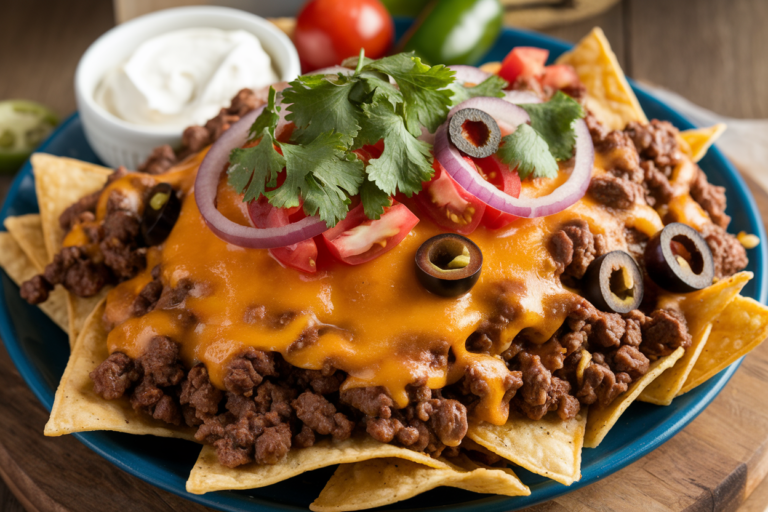
Start each bowl with 1½ cups warm cauliflower rice, then mound about 4 oz (115 g) of the cooked beef in the center. Layer toppings strategically: add 1/4 cup shredded cheddar, half a sliced avocado, 2 tbsp pico de gallo and a tablespoon of sour cream so each bite gets fat, acid and creaminess.
To preserve texture and temperature contrasts, place fresh garnishes last so greens stay crisp and avocado keeps its color. Finish with a squeeze of lime, 1 tbsp chopped cilantro and 1-2 tsp crushed pork rinds or 2 tbsp toasted pepitas for a crunchy element that balances the soft beef and rice.
For meal prep, pack beef and cauliflower rice together and store fresh toppings separately in airtight containers; refrigerate up to 3-4 days. Reheat beef and rice in the microwave for 90-120 seconds or in a skillet for 3-4 minutes until steaming, and add avocado and crema just before serving; if freezing, freeze only the cooked beef (not avocado) for up to 2 months.
Nutritional Information
Macronutrient Breakdown
Typical servings of this keto beef burrito bowl land in the 500-700 kcal range, depending on portion sizes; you can expect roughly 35-60 g fat, 25-45 g protein, and 5-10 g net carbohydrates per bowl. For a concrete example: a bowl made with 4 oz cooked ground beef, 1 cup cauliflower rice, 1/2 avocado, 1 tbsp olive oil, 1/4 cup shredded cheese and 2 tbsp sour cream typically provides about 600 kcal, ~45 g fat, ~35 g protein, and ~6 g net carbs.
If you need to shift the macros, small swaps make big differences: adding 1 tbsp olive oil increases fat by ~14 g (≈120 kcal), while increasing beef from 4 oz to 6 oz raises protein by roughly 20-25 g. You can lower carbs further by cutting salsa or swapping to extra leafy greens, and boost satiety without many carbs by adding an extra 1/2 avocado (~7 g fiber, ~10-12 g monounsaturated fat).
Health Benefits of the Ingredients
High-quality beef supplies complete protein and bioavailable iron and B12, which support muscle maintenance and energy metabolism – a 3-4 oz cooked portion typically gives you about 20-30 g protein and around 2-3 mg of heme iron. Avocado delivers monounsaturated fats and potassium (half an avocado contains roughly 450-500 mg potassium and about 6-7 g fiber), so you get sustained energy, improved satiety, and electrolyte support that helps offset sodium when you’re eating low-carb.
Cauliflower and leafy bases add fiber and vitamin C (one cup cauliflower rice contributes approximately 2-3 g fiber and close to 40-50 mg vitamin C), helping digestion and immune function without knocking you out of ketosis. Olive oil and full‑fat dairy contribute healthy fats and fat‑soluble vitamins; in practice those fats help stabilize blood glucose and support absorption of carotenoids from any peppers or tomatoes you include.
Beyond single nutrients, the ingredient mix supports common keto goals: keeping net carbs under ~10 g per meal helps maintain ketone production for most people, while 25-35 g of protein per meal supports muscle protein synthesis and recovery. You should also watch sodium from sauces and opt for whole spices or a low‑sodium salsa if you’re tracking blood pressure or fluid balance.
Variations and Modifications
Vegetarian Alternatives
You can swap the beef for firm tofu, tempeh, paneer, or hearty mushrooms and keep the bowl keto-friendly by focusing on low-carb bases and high-fat toppings. Firm tofu typically contains about 2 g net carbs per 100 g, so using 150 g of tofu adds roughly 3 g net carbs; tempeh runs higher (around 8-10 g total carbs per 100 g), so treat it more like a moderate-carb option and check labels. Replace rice with cauliflower rice (about 3 g net carbs per cup) and bulk the fats with half an avocado (≈2 g net carbs, ~10-12 g fat), 1 tbsp olive oil, and 30 g cheddar (≈0.5-1 g carbs) to keep the bowl under ~10 g net carbs while hitting satiating fat targets.
For a sample vegetarian keto bowl, combine 1 cup riced cauliflower (3 g net carbs), 150 g pan-seared firm tofu (≈3 g net carbs), ½ avocado (≈2 g net carbs), 1 tbsp olive oil, 30 g shredded cheddar, and a tablespoon of toasted pepitas for crunch-total net carbs around 8-9 g and a macro split that leans heavy on fat and moderate protein. If you want even richer texture and more calories per serving, add 2 tbsp sour cream or 1 oz cream cheese to a cilantro-lime crema; each adds roughly 4-8 g fat and only 1-2 g net carbs depending on the product.
Flavor Enhancements
Spike the bowl with bold, low-carb accents to elevate every bite: a chili-lime marinade (2 tbsp olive oil, juice of 1 lime, 1 tsp smoked paprika, 1 tsp ground cumin, ½ tsp chipotle powder, 1 clove garlic crushed) brightens meat or tofu without adding carbs, while a cilantro-lime crema (½ cup sour cream, ¼ cup chopped cilantro, 1 tbsp lime juice, pinch of salt) delivers creamy acidity-one tablespoon of crema contains roughly 25-35 kcal and under 1 g net carbs. You can also add umami with 1 tsp anchovy paste or 1 tbsp coconut aminos in a glaze; both punch up savory notes without the sugar found in many store salsas.
To get more depth, bloom whole spices in a dry skillet for 30-60 seconds before grinding-toasted cumin and coriander release vital oils that make a 1 tsp dose taste 30-50% more aromatic. Acid is your balancing tool: a squeeze of lime or 1-2 tsp apple cider vinegar will cut through 10-20 g of fat in a bowl and sharpen flavors, so use it strategically when adding heavy elements like crema, melted cheese, or avocado oil dressings.
Serving Suggestions
Accompaniments
Pair your burrito bowl with low-carb bases and bright, acidic toppings to balance the richness of the beef: 1 cup cauliflower rice (≈3 g net carbs) or a crunchy shredded cabbage slaw work well, while pickled jalapeños, lime wedges, and a spoonful of pico de gallo add acidity without many carbs. Add one-half avocado for creaminess-about 10-12 g fat and roughly 2 g net carbs per half-to boost satiety, or sprinkle 1 oz cheddar (≈9 g fat, 7 g protein, <1 g carbs) or crumbled cotija for a salty finish.
For keeping the bowl under 10 g net carbs, skip beans and tortillas and stick to 1 cup cauliflower rice, 4 oz cooked beef, 2 tbsp guacamole, and 1 oz cheese-this combo typically lands in the 400-600 kcal range with ~30-40 g fat and ~25-35 g protein depending on beef fat content. You can also offer a cilantro-lime crema (full‑fat sour cream thinned with lime and chopped cilantro) in 1-2 tbsp portions so diners control added fats and flavor intensity.
Meal Prep Ideas
Batch-cook 1-2 lb (450-900 g) ground beef seasoned with taco spices; 1 lb cooked yields about four 4-6 oz portions suitable for meal prep. Portion into four containers with 1 cup cauliflower rice and a separate small container of toppings-keep guacamole or sliced avocado out of the fridge containers until day of serving to avoid browning. Store refrigerated for 3-4 days; reheat the bowl in the microwave for 2-3 minutes or on the stovetop for 4-5 minutes, stirring once to heat evenly.
Freeze cooked beef and cauliflower rice separately in airtight containers or vacuum bags for up to 2-3 months; thaw overnight in the fridge then reheat thoroughly before adding fresh toppings. Label containers with the date and portion size so you can rotate older meals first and avoid freezer burn-using 1‑cup or 8‑oz portion sizes simplifies tracking calories and macros during the week.
For an ultra-fast routine assemble four grab‑and‑go bowls: 1 cup cauliflower rice, 4 oz seasoned beef, 2 tbsp guacamole, and ¼ cup shredded cheese per container; each serving generally provides a high-fat, moderate-protein meal that fits ketogenic targets and takes under 30 minutes to portion once the beef is cooked.
Common Mistakes to Avoid
Cooking Errors
Overcooking the beef is one of the fastest ways to dry out your bowl-aim for an internal temperature of 160°F (71°C) for ground beef and use an instant‑read thermometer to check; 1 lb (450 g) of 80/20 ground beef typically takes about 7-9 minutes to brown in a hot skillet. If you use 90/10 lean meat you’ll need to add fat or a finishing oil because that leanness strips juiciness, whereas 80/20 gives flavor and a silky mouthfeel that suits keto macros better.
Cauliflower rice problems are common too: if you overcrowd the pan or start with wet riced florets you’ll steam instead of brown, producing a soggy base. Pulse a medium head of cauliflower into roughly rice‑sized pieces, squeeze out excess moisture, then sauté over high heat 5-7 minutes in 1 tbsp oil (or roast at 400°F/200°C for 12-15 minutes) to get the right texture; cook in batches so each piece can caramelize.
Ingredient Substitutions
Swapping out high‑carb components without considering texture or hidden carbs can sabotage your macros. White rice has roughly 45 g carbs per cooked cup, while riced cauliflower has about 3 g net carbs per cup-so if you want a closer mouthfeel, roast your cauliflower with 1 tbsp olive oil and a pinch of salt at 400°F (200°C) for 12-15 minutes to develop a nuttier flavor. Also check salsas and store‑bought guacamole: some brands add sugar or stabilizers, turning a supposedly keto topping into 3-5 g extra carbs per serving.
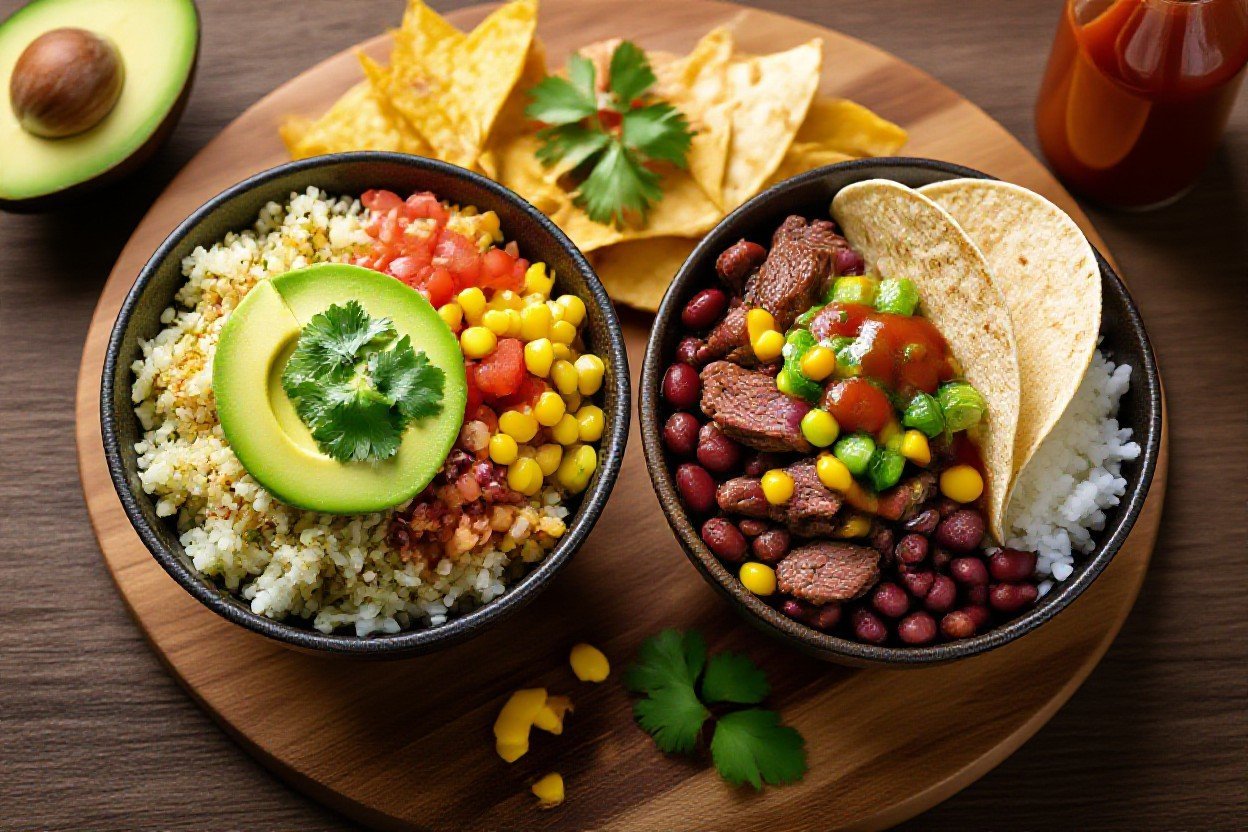
Choosing replacements for beans and tortillas requires number‑minded swaps: a half‑cup of black beans delivers ~15-20 g net carbs, so instead use sautéed mushrooms, extra cheese, or a half‑cup of riced zucchini (about 2-3 g net carbs) for bulk. For wraps, a standard 6″ flour tortilla has ~22-25 g carbs, whereas low‑carb commercial tortillas can range from 3-8 g net carbs and homemade cheese shells (2 tbsp shredded cheese baked until crisp) provide 0-1 g carbs per shell-pick the option that matches your daily carb target.
When you substitute, read labels and compare grams: watch for maltodextrin, cane sugar, or dextrose in spice blends and condiments which can add small but cumulative carbs-if you track macros, those 2-4 g sneaks per serving matter. You can also adjust portion sizes (for example, 2 tbsp sour cream = ~1 g carb and 5 g fat) and log each swap in your tracker so the bowl still fits your daily targets.
Conclusion
So the Keto Beef Burrito Bowl gives you a satisfying, low-carb meal that delivers protein and healthy fats while keeping carbs minimal. You can customize toppings and portions to hit your macros: swap cauliflower rice for traditional rice, add avocado and cheese for fat, and brighten the bowl with lime, cilantro, and fresh salsa. Choosing quality beef and confident seasoning ensures bold flavor without added carbs.
You can batch-cook the beef and cauliflower rice to save time, portion meals for consistent tracking, and refrigerate prepared bowls for 3-4 days or freeze components for longer storage. If you need to adjust calories or satiety, tweak oil, toppings, and protein amounts; with these simple swaps and portion control, the bowl becomes a reliable, adaptable option for your ketogenic plan.
Printable Recipe Card
Want just the essential recipe details without scrolling through the article? Get our printable recipe card with just the ingredients and instructions.