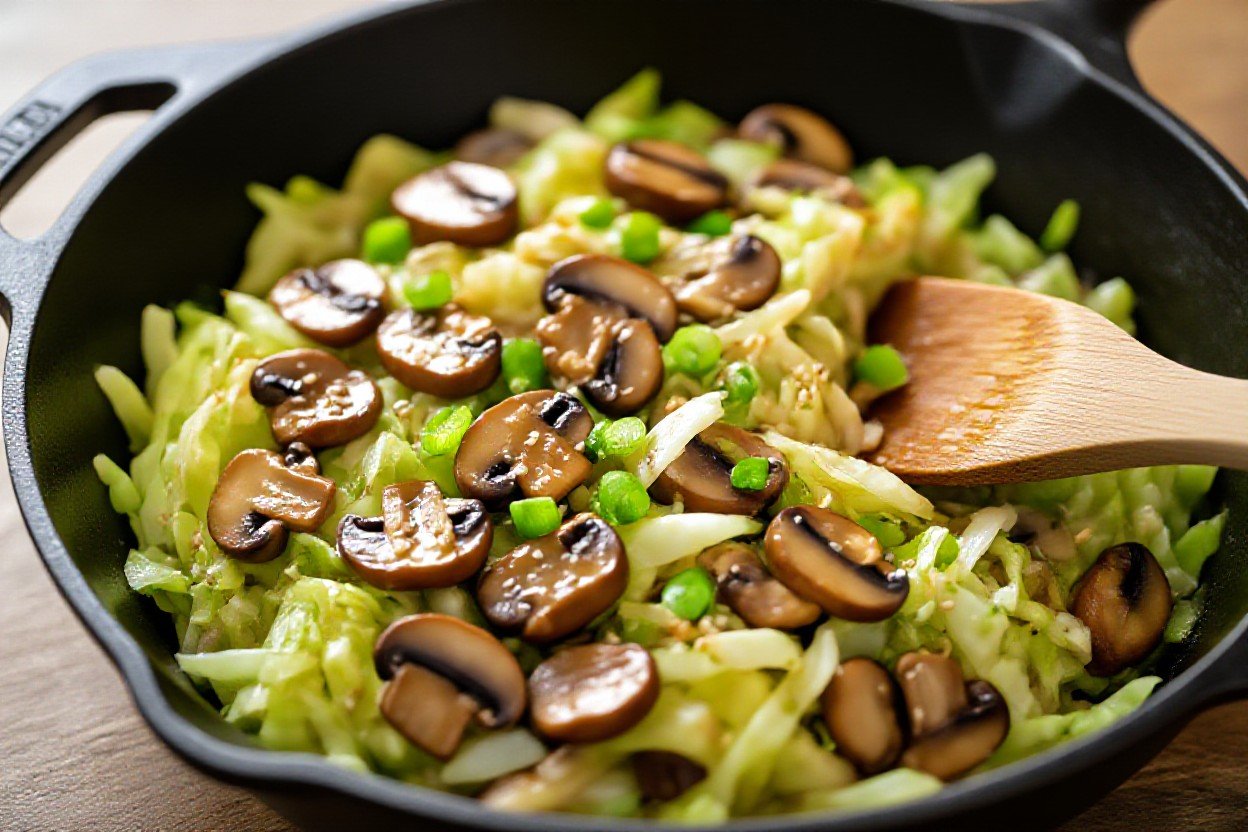
Keto Cabbage And Mushroom Stir Fry
Over a quick, low-carb weeknight meal, Keto Cabbage And Mushroom Stir Fry teaches you to maximize flavor while minimizing carbs; this guide shows your steps to crisp-tender cabbage, savory mushrooms, balanced seasoning and optimal fats for ketosis, plus timing tips and variations to keep your meals satisfying and sustainable.
Ingredients
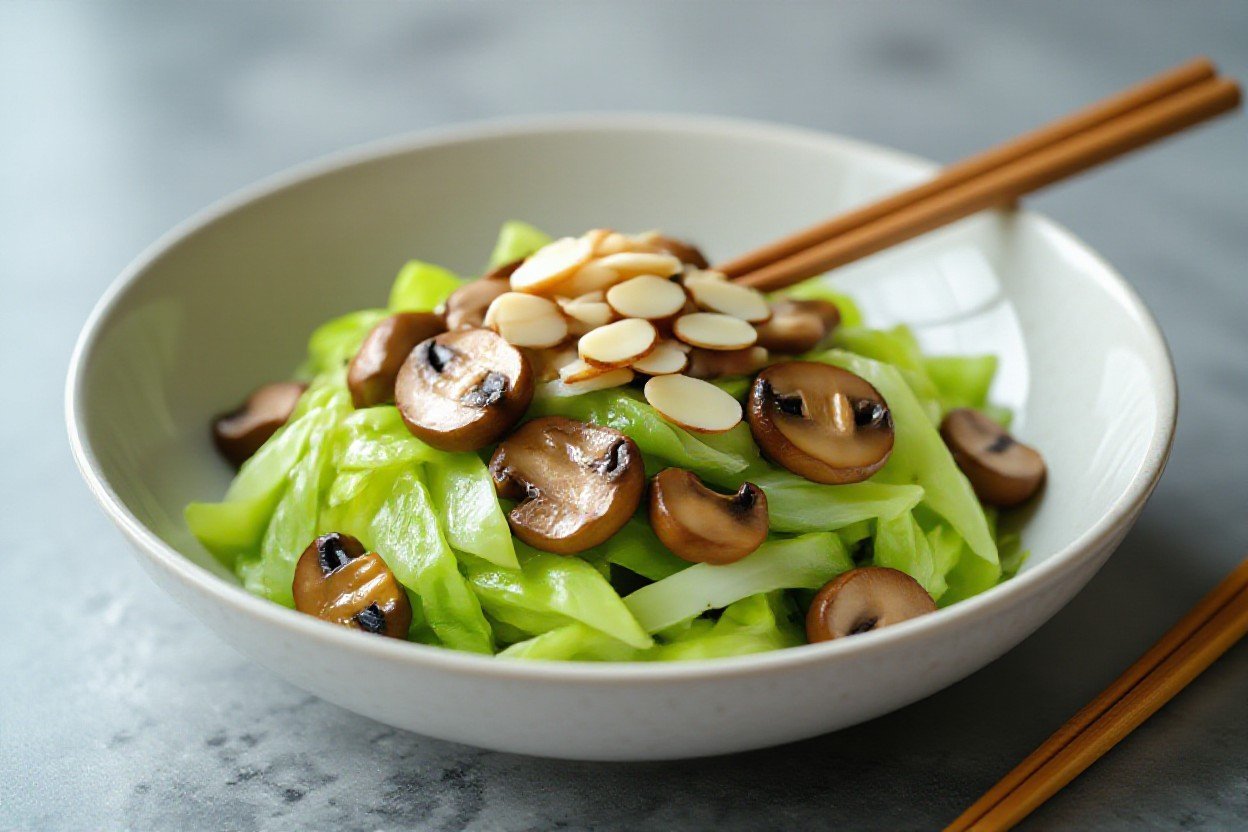
This recipe is built around 4 cups shredded green or Napa cabbage (about 300-350 g) and 8 oz (225 g) mushrooms, sliced-these two form the bulk of the dish. You’ll also want 2 tbsp avocado or neutral oil for high-heat frying, 2-3 scallions sliced, 2 cloves garlic minced, and 1 tbsp grated fresh ginger to layer aromatics. For seasoning use 1-2 tbsp tamari (or 2 tbsp coconut aminos if you prefer a milder, slightly sweeter profile), 1 tsp fish sauce for depth, 1 tbsp rice vinegar or lime juice for brightness, and 1 tsp toasted sesame oil to finish.
Quantities here make 2-3 main-dish servings; scale linearly for larger batches (double the veg, increase sauces by about 1.5x to avoid oversalting). You can swap cremini for shiitake or oyster mushrooms for different textures, and choose Napa cabbage if you want a softer, faster-cooking result-expect a total cook time of roughly 8-10 minutes once the pan is hot.
Key Vegetables
Shred the cabbage thin (about 1/8-inch ribbons) so it wilts quickly and absorbs sauce-4 cups shredded equals approximately half a small head of green cabbage or one small Napa. For mushrooms, 8 oz (225 g) sliced gives a meaty bite without overpowering the cabbage; baby bella/crimini offer a robust, savory base while shiitake adds an umami-forward note. Sear mushrooms first for 5-7 minutes until they brown and release liquid, then add cabbage so you get caramelization without sogginess.
Scallions, garlic and ginger play a disproportionate role in the final flavor: use 2-3 scallions (whites and greens separated), 2 cloves garlic, and 1 tbsp fresh ginger. If you want more bulk without many carbs, stir in 1 cup baby spinach or 1 cup thinly sliced bok choy at the end-both wilt in under 1 minute and add micronutrients without changing the keto profile significantly.
Additional Flavorings
For frying and seasoning choose 2 tbsp avocado oil for the initial sear, 1-2 tbsp tamari (or 2 tbsp coconut aminos) for saltiness, and 1 tsp fish sauce if you use it-go light with fish sauce since a little goes far. Finish with 1 tsp toasted sesame oil and 1 tbsp rice vinegar or freshly squeezed lime juice to balance the savory notes; add 1/4-1/2 tsp red pepper flakes or 1 small sliced chili if you want heat.
When you build the dish, add aromatics (garlic/ginger) after the mushrooms have started to brown so they don’t burn; once the cabbage goes in, pour the tamari/coconut aminos and rice vinegar, toss for 1-2 minutes until the cabbage is tender-crisp, then remove from heat and drizzle sesame oil. Salt sparingly-tamari and fish sauce supply concentrated sodium-then garnish with the green parts of the scallions and 1 tsp toasted sesame seeds per serving.
For substitutions: use low-sodium tamari or dilute coconut aminos with a splash of water if you want milder salt, and cut fish sauce to 1/2 tsp if you’re sensitive to its potency. If you need additional umami without extra sodium, add 1-2 tsp mushroom powder or 1 tsp miso dissolved in a tablespoon of warm water (stir in at the end); for heat alternatives try 1/4 tsp cayenne or a drizzle of sugar-free chili crunch.
Preparation
You should slice the cabbage into 2-3 mm ribbons for even wilting; a small green cabbage (about 700 g) will yield roughly 6 cups sliced, which is ideal for 3-4 servings when paired with 225 g (8 oz) mushrooms. Cut cremini or shiitake into 6 mm (1/4 inch) slices so they brown quickly without disintegrating, and pat them very dry-excess moisture causes steaming instead of caramelization. Mince 2 cloves garlic and 1 tbsp fresh ginger, and have 2 tbsp tamari, 1 tbsp rice vinegar, and 1 tsp toasted sesame oil measured out before you heat the pan.
You’ll want to do a quick mise en place: set aromatics, sauces, salt and pepper in small bowls and portion out 2-3 tbsp high-smoke-point oil (avocado or refined coconut). If you prefer a firmer bite, use a mandoline set to 3-4 mm for the cabbage; for a softer result, go thinner. Allow the pan to preheat for 2-3 minutes on medium-high while you finish prep so the first vegetables hit a properly hot surface.
Cooking Techniques
Always cook in batches to avoid overcrowding-8 oz of mushrooms should be seared in two quick batches for a deep brown color, about 4-6 minutes per batch on medium-high heat. Use 375-425°F (190-220°C) as a target pan surface temperature if you have an infrared thermometer; otherwise, heat until oil shimmers and moves freely. Push browned mushrooms to the side, add aromatics to the cleared space for 30-45 seconds to bloom flavors, then deglaze with 2 tbsp broth or water to lift fond before tossing in the cabbage.
When you add the cabbage, stir-fry for 3-5 minutes to wilt while retaining some crunch, adjusting time depending on ribbon thickness-thinner cabbage takes closer to 2-3 minutes. Finish by adding the sauce and reducing for 1-2 minutes so it clings to the vegetables; a final 1 tbsp of ghee or butter will give a glossy finish and improve mouthfeel. Taste for seasoning and adjust sodium with tamari or a pinch of flaky salt, and sprinkle 1-2 tsp toasted sesame seeds for texture.
Essential Tools
You’ll get the best results with a 12-inch carbon-steel wok or a 12-inch stainless-steel skillet that holds roughly 3-4 quarts-both provide the hot, dry surface needed for browning. Use a sharp 8-inch chef’s knife for uniform slicing and a mandoline if you want precisely 2-4 mm ribbons; set the mandoline to 3 mm for balanced texture. Keep a good metal or bamboo spatula for high-heat tossing, and spare silicone tools if you use nonstick.
A few small accessories pay off: a salad spinner or clean kitchen towel to remove excess water from shredded cabbage, an instant-read thermometer to check pan temperature, and three to four small prep bowls for mise en place. You’ll also benefit from a microplane for finely grating ginger and a splatter guard if you’re sensitive to oil spatter while frying at high heat.
For longevity, maintain a carbon-steel wok by drying it immediately after cleaning and applying a light coat of neutral oil; this keeps the seasoning layer intact and improves nonstick performance over time. If you prefer less maintenance, a heavy-duty stainless skillet performs similarly for high-heat searing and requires only standard dishwashing and occasional polishing to remove discoloration.
Nutrition Information
Per typical serving of this stir fry (about 1 cup), you’re looking at roughly 200-240 kcal, 14-18 g fat, 6-8 g protein, and 8-10 g total carbs with about 3-5 g fiber – yielding approximately 4-6 g net carbs. These values assume 2 tablespoons of oil were used for four servings, a head of cabbage and 8 oz of mushrooms; swapping oils or adding protein will change the totals proportionally.
Because cabbage and mushrooms are both low in energy density, you can eat a generous volume and still keep carbs and calories in check. If you track macros, weigh your portions and log added ingredients (sesame oil, soy sauce, or extra nuts) to keep the net-carb target consistent with your daily keto allowance.
Macronutrient Breakdown
Fat drives most of the calories in this recipe: olive or avocado oil contributes roughly 14-16 g fat per serving when using 2 tbsp for four portions. Protein is modest from mushrooms and cabbage (about 6-8 g); adding 3-4 oz of chicken or firm tofu boosts protein by ~20-25 g per serving. Carbohydrates are primarily fiber-rich from cabbage – total carbs around 8-10 g with fiber near 3-5 g, producing net carbs in the 4-6 g range.
If you want to lower net carbs further, reduce any sweet sauces and increase healthy fats: an extra tablespoon of butter or avocado oil raises fat by ~11-14 g and keeps carbs minimal. For higher protein, pan-sear 100 g of chicken breast (adds ~31 g protein and ~165 kcal) without significantly affecting carbs, which is useful if you track protein targets for muscle maintenance.
Health Benefits
Cabbage supplies vitamins and fiber: 100 g raw cabbage contains about 36 mg vitamin C and roughly 76 µg vitamin K, supporting antioxidant defense and blood-clotting pathways; mushrooms add minerals such as selenium (~9 µg/100 g) and potassium (~300 mg/100 g), which help with electrolyte balance. Together they provide B-vitamins, polyphenols, and fiber that support digestion and micronutrient density while keeping calories low.
Beyond micronutrients, this stir fry aligns with keto goals by promoting satiety through healthy fats and fiber, helping you control post-meal blood-sugar spikes. The low net-carb profile also makes it appropriate for those managing insulin sensitivity or aiming for consistent ketosis without sacrificing vegetable intake.
More specifically, cabbage contains glucosinolates, compounds linked in some studies to phase‑II detoxification enzyme activity, while mushrooms are a source of ergothioneine and beta‑glucans that have antioxidant and immune‑modulating properties. Incorporating this dish regularly gives you a practical way to increase these phytonutrients on a low‑carb plan, supporting gut health, inflammation control, and long‑term nutrient adequacy.
Cooking Instructions
Step-by-step Guide
Begin by prepping: thinly slice about half a medium green cabbage (≈4 cups shredded) and trim 8 oz (225 g) mushrooms; mince 2 cloves garlic and grate 1 tsp fresh ginger. Heat 2 tbsp avocado oil in a large wok or heavy skillet over medium-high heat (roughly 375-400°F / 190-205°C) until the oil shimmers; preheating the pan for 1-2 minutes gives you the sear you want.
Sear the mushrooms for 4-5 minutes without crowding so they brown deeply, then add garlic and ginger and cook 20-30 seconds. Toss in the cabbage and stir-fry 3-4 minutes until it softens but still has some bite. Finish with 1-2 tbsp tamari (or coconut aminos), 1 tsp toasted sesame oil, and a 30-60 second toss; total active cook time should be about 10-12 minutes for optimal texture.
Quick Steps & Timings
| Step | Details & Timing |
|---|---|
| Prep | Slice cabbage into thin ribbons (~4 cups); slice mushrooms (8 oz); mince aromatics – 10-12 minutes |
| Preheat pan | Heat wok/skillet with 2 tbsp avocado oil to 375-400°F (190-205°C) – 1-2 minutes |
| Sear mushrooms | Cook 4-5 minutes until deeply browned; avoid stirring constantly |
| Add aromatics | Add garlic & ginger, cook 20-30 seconds until fragrant |
| Add cabbage | Stir-fry 3-4 minutes until tender-crisp; adjust heat to prevent burning |
| Finish & sauce | Stir in 1-2 tbsp tamari and 1 tsp sesame oil; toss 30-60 seconds and serve – total cook time ~10-12 minutes |
Tips for Perfect Stir Fry
You should use very high heat and a roomy pan so ingredients sear instead of steam; aim for a surface temperature near 375-400°F. Pat mushrooms dry with paper towels to promote Maillard browning-wet surfaces will steam and lengthen the cooking time by several minutes.
Manage timing by adding ingredients in stages: mushrooms first (4-5 minutes), aromatics briefly (20-30 seconds), then cabbage (3-4 minutes). If you want softer cabbage, blanch for 30 seconds in boiling water then shock in ice water before stir-frying, which can cut active skillet time in half.
- Use a high smoke-point oil (avocado oil at ~520°F) for sustained heat and fewer burnt flavors.
- Keep ingredients uniform in size so everything cooks in the same 3-5 minute window.
- Use 1-2 tbsp tamari for a single 4-serving batch to keep sodium in check while adding umami.
- This helps you retain crunch and avoid a watery, steamed finish.
When seasoning, add most of your salt-based sauce at the end to prevent the pan from flashing and burning the sugars; you can deglaze with 1-2 tbsp water or broth if fond is building too quickly. For a glossy finish that clings to the cabbage, whisk 1 tsp xanthan gum into the sauce for a light, keto-friendly thickening-use sparingly, about 0.25-0.5 g per batch.
- Toss in the sauce off-heat for a more even coating and to prevent scorching.
- Serve immediately on warm plates to preserve texture for the 5-10 minutes it will remain crisp.
- This approach ensures you get consistent results every time.
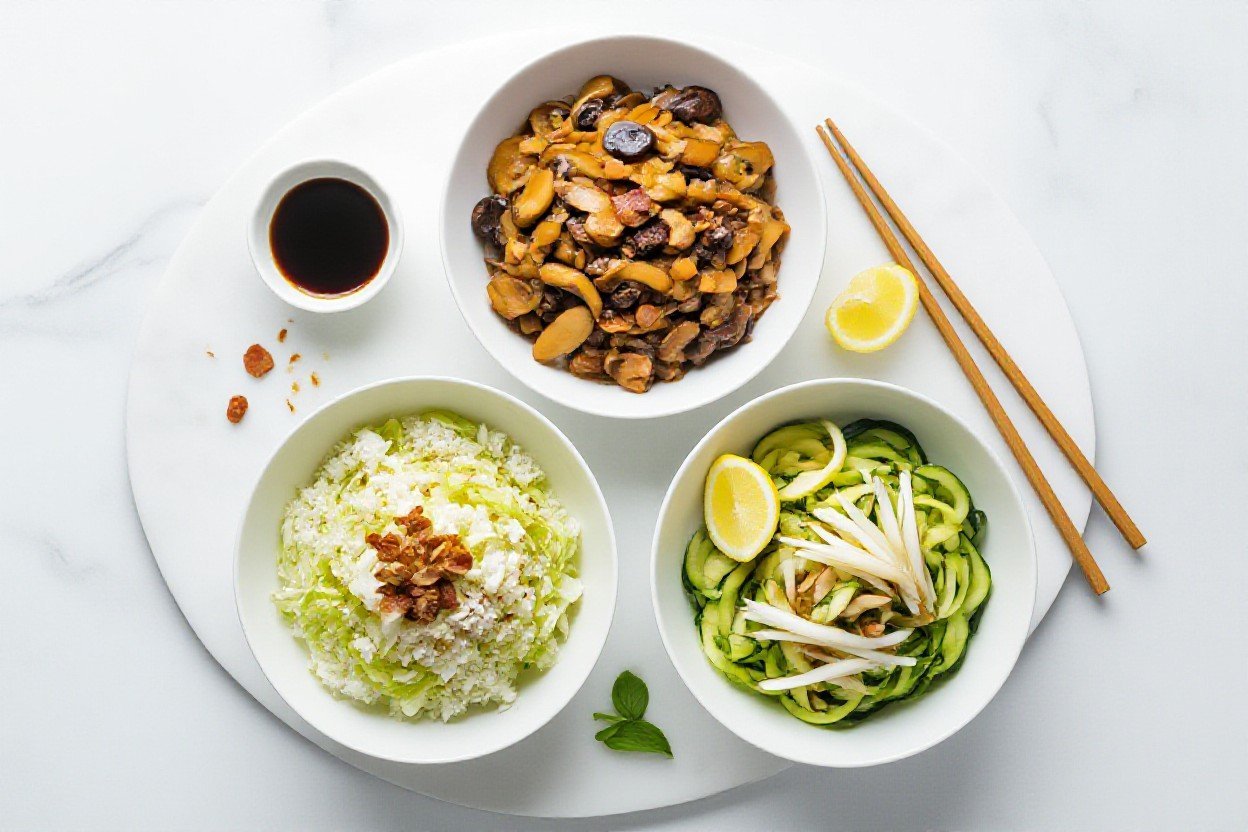
Variations and Substitutions
Alternative Ingredients
Swap mushrooms for 8 oz (225 g) of shrimp or thinly sliced chicken breast (6-8 oz/170-225 g) to raise the protein without changing technique; shrimp cooks in 2-3 minutes and keeps the stir‑fry fast. You can also press and cube 200 g firm tofu or use 6 oz (170 g) ground pork for a fattier, more savory profile that still fits a keto macronutrient split.
Choose your cabbage wisely: napa wilts faster and gives a sweeter note, while green or savoy hold texture longer-half a medium head (about 500-700 g) feeds 3-4 people when combined with mushrooms. If you want extra bulk with minimal carbs, add 1-2 cups cauliflower rice (roughly 100-200 g) or 1 cup shredded kohlrabi for crunch; both keep net carbs low while increasing volume and fiber.
Spicing It Up
You can dial heat precisely by starting with 1/4-1/2 tsp cayenne for mild, 1 tsp for medium, or 2 tsp+ for anything hotter, tasting as you go. Incorporate aromatics early-use 2 cloves minced garlic and 1 tbsp grated ginger sautéed for 30-45 seconds before adding cabbage so those flavors infuse the oil and coat every leaf.
Szechuan peppercorns provide numbing complexity rather than pure heat: toast 1/2 tsp whole peppercorns for 1 minute, grind and sprinkle 1/4-1/2 tsp toward the end to preserve the citrusy, tingling note. For saucing, replace sweet chili or gochujang (high in sugar) with 1-2 tbsp tamari plus 1 tsp chili flakes or 1 tbsp gochugaru; finish with 1 tsp toasted sesame oil and 1 tbsp rice vinegar to balance richness while keeping carbs low.
When layering spice, add hot elements in stages-start with fresh aromatics, add dried chilies or cayenne with the mushrooms so the oil carries the heat, then finish with a milder acidic or nutty component; this approach lets you reduce wasted heat and adjust intensity after a quick taste test.
Serving Suggestions
You can serve this stir fry as the centerpiece of a low-carb dinner or as a hearty side; aim for roughly 1 to 1.5 cups per person when it’s the main vegetable component alongside a 4-6 oz protein portion, or 1/2 cup per person when plated beside richer mains. For a complete keto plate, pair a serving with 1 cup of cauliflower rice (about 2-5 g net carbs depending on preparation) or a 100-150 g portion of shirataki noodles to keep the meal under 10 g net carbs total.
If you prepare it ahead, reheat gently to preserve texture: warm a nonstick skillet over medium and stir for 3-4 minutes until steaming, or microwave covered for 30-45 seconds at medium power for single portions. You should finish each plate within 5 minutes of reheating so the cabbage stays crisp-tender and the mushrooms retain their gloss and umami depth.
Pairing with Other Dishes
You’ll find the stir fry complements a wide range of proteins-try grilled salmon (4-6 oz), pan-seared pork chops (5 oz), or shredded rotisserie chicken (3-4 oz) for quick weeknight plates; each pairs well because the dish’s earthy mushrooms and bright cabbage cut through richer meats. Vegetarian options like sesame-tofu (100-150 g) or tempeh (75-100 g) also work, and adding a high-fat element such as 1-2 tablespoons of avocado or a 1-ounce portion of sliced almonds balances the meal for keto macros.
Side choices should focus on low-carb texture contrasts: cauliflower mash (1/2 cup) provides creaminess, while a simple cucumber-and-herb salad (about 1 cup) adds fresh crunch and acidity. For beverages, opt for dry white wines such as Sauvignon Blanc or a 6-8 oz glass of sparkling water with lime to keep sugar minimal and refresh the palate between bites.
Ideal Presentation
Plate the stir fry in a shallow, wide bowl to showcase the mix of shredded cabbage and sliced mushrooms; create a small mound in the center for height and tuck a few glossy mushroom caps on top to highlight their sear. Sprinkle 1 teaspoon of toasted sesame seeds and 1 tablespoon of thinly sliced scallions per serving for contrast, and finish with a 1/2 teaspoon drizzle of toasted sesame oil or chili oil if you want an aromatic hit.
Color contrast increases appetite appeal: add 3-4 thin radish slices or a few sprigs of microgreens per plate to introduce pops of red and green, and scatter a few flakes of sea salt across the mushrooms to catch the light. If serving family-style, transfer to a warm serving bowl and provide lemon or lime wedges so guests can add acid to taste.
Timing matters for appearance and texture-warm your plates in a low oven (about 140°F) for 5 minutes before plating, and serve within 5 minutes of finishing the dish so steam doesn’t wilt the garnishes; when you follow this routine, the colors remain vivid and the cabbage keeps its just-tender bite.
Summing up
Presently you can rely on the keto cabbage and mushroom stir-fry as a fast, nutrient-dense option that keeps your meals low in net carbs while delivering satisfying texture and umami. You can tailor your fat and protein to meet your macros by increasing oil, adding butter, or folding in cooked bacon, chicken, or tofu; cook over high heat without overcrowding to preserve cabbage crunch and let the mushrooms brown for depth, then brighten the dish with a splash of vinegar, lemon, or hot sauce to balance richness.
You should store leftovers in the refrigerator for 3-4 days and reheat gently over medium heat to minimize sogginess; freezing is possible but will change the cabbage’s texture. By using simple seasoning variations-sesame oil and tamari for an Asian profile, garlic and thyme for a European twist-you can keep this stir-fry a versatile, dependable component of your keto meal rotation that supports satiety and adherence to your goals.
Printable Recipe Card
Want just the essential recipe details without scrolling through the article? Get our printable recipe card with just the ingredients and instructions.