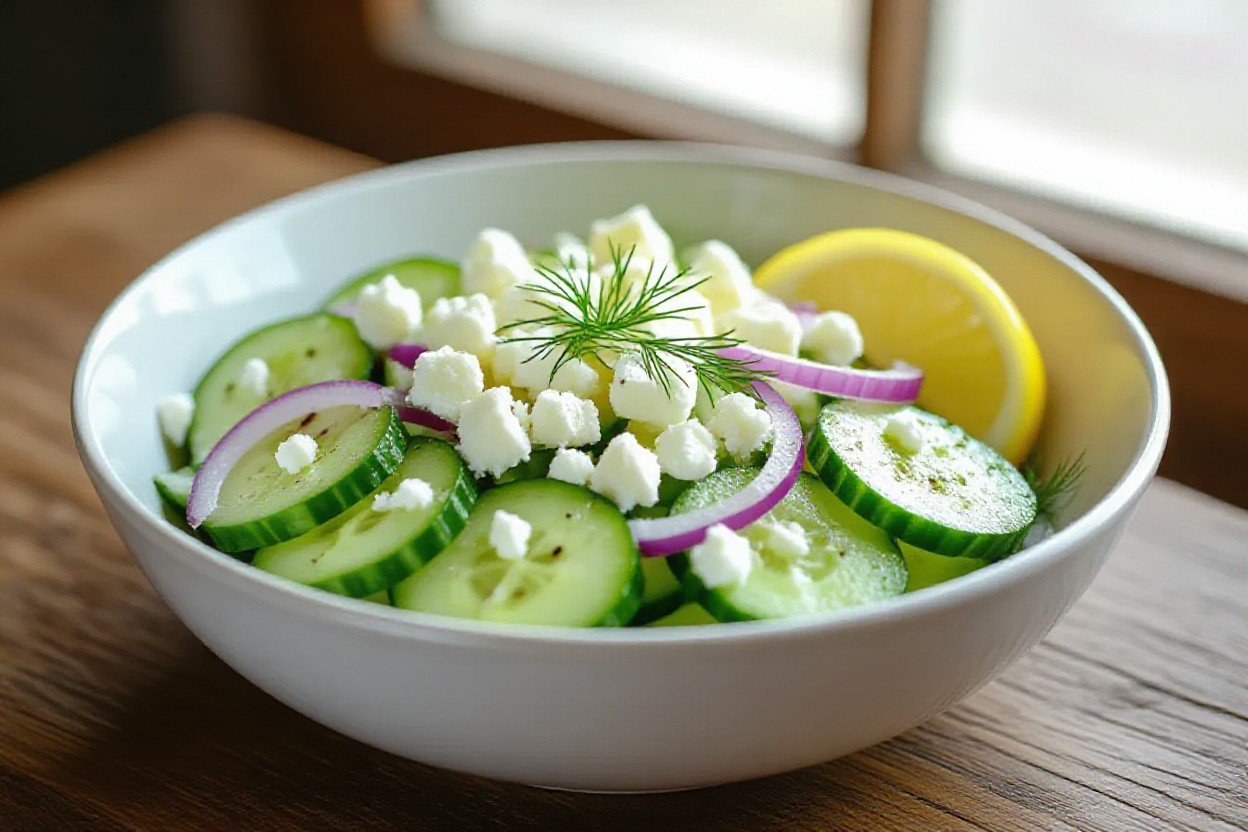
Keto Cucumber Feta Salad
Keto Cucumber Feta Salad offers a crisp, low-carb option that balances hydrating cucumber, tangy feta, and a zesty olive oil-lemon dressing; you’ll get satisfying fat and protein while keeping your carbs minimal, and with a few simple swaps you can scale it as a quick side or a light, diet-friendly lunch that supports ketosis.
Ingredients
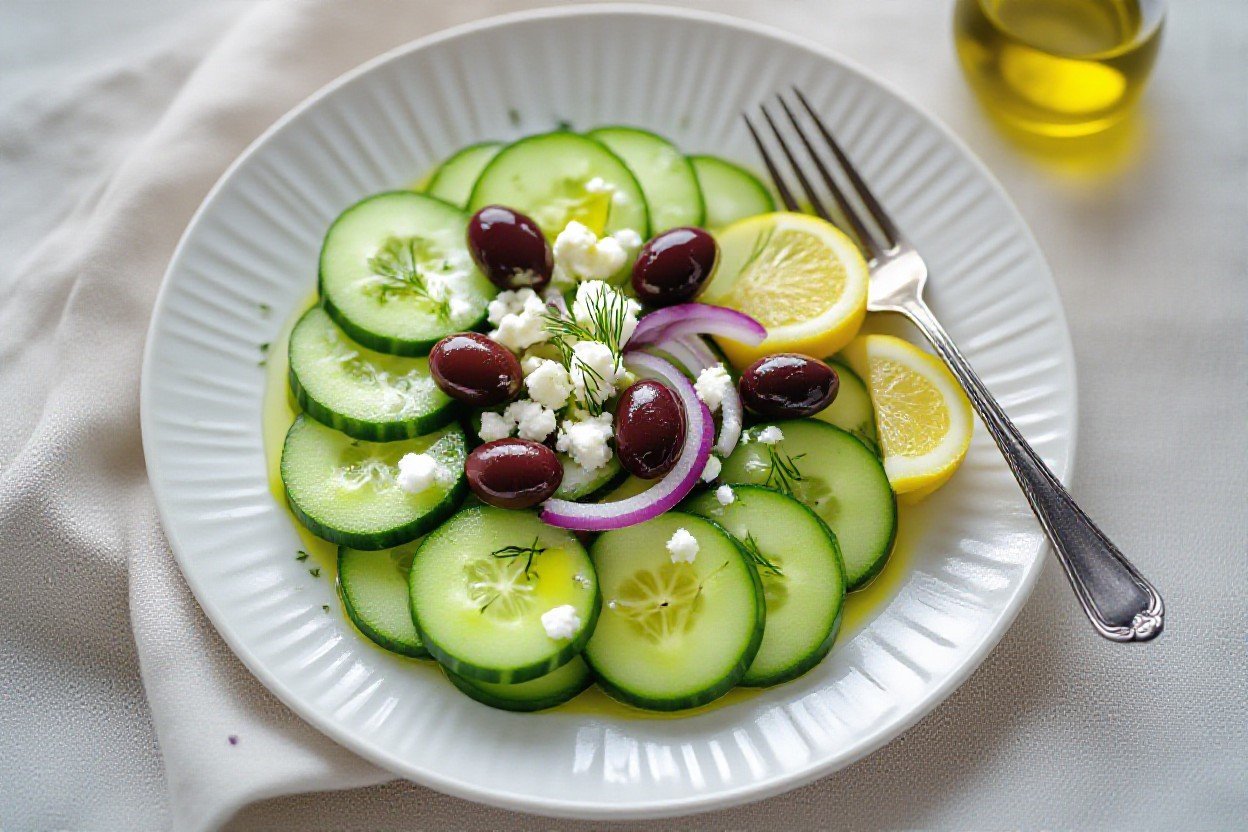
Fresh Cucumbers
You’ll want crisp English or Persian cucumbers for the best texture; two medium English cucumbers (about 400-500 g total) provide enough bulk for 4 servings while keeping the salad low in carbs. Slice them thin or cut into half-moons depending on how well you want the dressing to cling, and if you prefer fewer seeds, halve and scoop them before slicing.
If excess water is a concern, sprinkle roughly 1/2 teaspoon of kosher salt per cucumber over the slices and let them sit 10-15 minutes, then press or gently squeeze out the liquid and pat dry-this prevents dilution of the dressing and keeps the salad from getting watery when refrigerated.
Feta Cheese
Choose a block-style Greek feta (sheep or sheep-goat blend) for tang and firmness; 4 ounces (about 115 g) crumbled gives you a pronounced salty, creamy note and typical keto-friendly macros-an ounce (28 g) of feta usually contains approximately 75 kcal, ~6 g fat, ~4 g protein and about 1 g total carbs. Crumbling from a block preserves texture better than pre-crumbled varieties, which can be drier from added starches.
You can control sodium by rinsing brined feta briefly under cold water and patting dry, or by soaking for 5-10 minutes if the label indicates very high salt; after that, crumble and fold in at the end so it holds shape against the cucumbers.
For a creamier profile, substitute half the feta with 2 ounces (56 g) of ricotta salata or a soft goat cheese-both will slightly change the macros but enhance mouthfeel while still keeping the dish within typical keto fat-to-carb goals.
Additional Vegetables
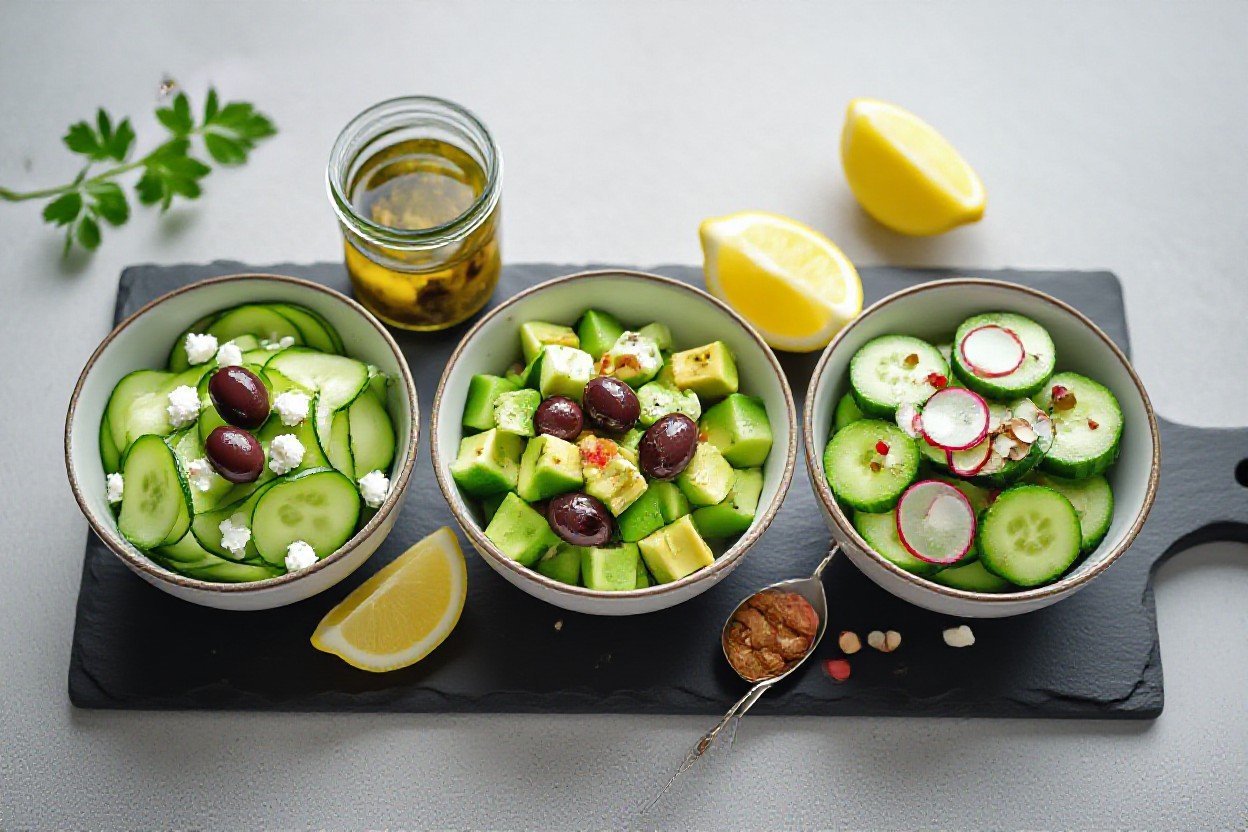
Add color and contrast with small amounts of low-carb vegetables: 8-12 halved cherry tomatoes (about 120 g) add sweetness and roughly 4-5 g total carbs, while 3-4 thinly sliced radishes (≈50 g) contribute peppery crunch at under 1-2 g net carbs. Use a few thin rings of red onion (15-20 g) sparingly for bite-onion flavor disperses quickly so a little goes a long way.
If you want additional crunch without spiking carbs, include 1/4 cup (about 30 g) diced cucumber-friendly bell pepper or 2 tablespoons toasted chopped walnuts for texture and extra fat; both are easy to portion so you stay within your daily carb limit.
When choosing additions, weigh ingredients: for example, 100 g of red bell pepper has ~6 g total carbs, while 100 g of radishes has roughly 2 g-this helps you decide quantities to match your personal carb target for the meal.
Dressing Components
Build a classic keto-friendly dressing with a 3:1 oil-to-acid ratio: for a salad serving 3-4 people, whisk 3 tablespoons extra-virgin olive oil with 1 tablespoon fresh lemon juice or red wine vinegar, 1 teaspoon Dijon mustard, one small grated garlic clove, 1/4 teaspoon fine sea salt and a generous grind of black pepper; add 1/2 teaspoon dried oregano or a tablespoon of chopped fresh herbs. Lemon juice contributes about 1 g carbs per tablespoon, so the dressing remains very low-carb.
Whisk or shake vigorously to emulsify, then toss with cucumbers and let sit 5-10 minutes so flavors meld; the oil provides the majority of calories and aligns with keto goals by increasing fat content without adding carbs.
If you prefer variations, swap lemon for 1 tablespoon apple cider vinegar, use infused olive oil for extra aroma, or add 1-2 teaspoons of chopped fresh dill or mint to amplify brightness without meaningful carbs-store any leftover dressing covered in the refrigerator for up to 3 days.
Preparation Steps
Start by laying out all ingredients and tools so you can move efficiently: a 2-3 quart mixing bowl, a sharp chef’s knife or mandoline, a cutting board, and a whisk or small jar for the dressing. Plan on about 10-15 minutes of active prep time and expect this recipe to yield roughly 4 side-dish servings; most of the work is precision chopping and a quick, well-balanced dressing.
Work in stages to maintain texture – chop, then chill the cucumbers briefly if you want extra crispness, make the dressing and then combine. That order helps keep the feta from breaking down and the cucumbers from becoming watery while you finish other components.
Chopping Ingredients
Slice 2 medium English cucumbers (about 10-12 oz each) into 1/8-1/4-inch rounds for a crisp bite; use a mandoline for uniformity if you have one. If using regular slicing cucumbers with large seeds, halve them lengthwise and scoop seeds with a spoon before slicing. Cut 1/4 small red onion into very thin half-moons (about 1/16-1/8-inch) so the onion distributes without overpowering each forkful.
Measure 4 oz (about 1 cup) of feta and crumble it by hand or with a fork into bite-sized pieces so it blends into the salad without clumping. Chop about 2 tablespoons (10-12 g) of fresh dill or parsley into a fine chiffonade and mince one small garlic clove (optional) to mix into the dressing; consistent piece size ensures even flavor in every bite.
Mixing the Salad
Whisk the dressing at a 3:1 oil-to-acid ratio: 3 tablespoons extra-virgin olive oil to 1 tablespoon red wine vinegar, plus 1 teaspoon lemon juice and 1/2 teaspoon Dijon mustard to help emulsify; season with 1/4-1/2 teaspoon fine salt and 1/8-1/4 teaspoon freshly ground black pepper. Combine the cucumbers, onion, and herbs in the bowl, pour about two-thirds of the dressing over them and gently toss using 8-10 strokes to coat without crushing the cucumbers. Add the 4 oz crumbled feta last and fold it in softly so it stays in visible clusters.
If you want extra control over moisture, after salting cucumbers lightly for 5-10 minutes, pat them dry with paper towel and then dress. Chill the dressed salad for 10-15 minutes to let flavors meld, but toss again just before serving; this keeps the texture lively and prevents the feta from turning uniformly creamy. For storing, keep dressing separate and consume within 24-48 hours – the cucumbers will gradually release water and the feta will soften over time.
Nutritional Benefits
On a typical serving-about 1 cup sliced cucumber (≈100 g), 1 oz feta (28 g) and 1 tablespoon olive oil-you’re looking at roughly 200-220 calories with about 4-5 g net carbs, ~10-12 g fat and 4-6 g protein. That macronutrient split favors ketosis by prioritizing fat while keeping carbohydrate load very low: the cucumber contributes minimal calories (≈16 kcal/100 g) and the feta supplies concentrated protein and fat that increase satiety.
Beyond macros, the salad delivers meaningful micronutrients: cucumbers add hydration and roughly 147 mg potassium per 100 g, while a single ounce of feta provides about 140 mg calcium and around 4 g protein. The olive oil contributes 1 tbsp (≈120 kcal) of monounsaturated fat, which supports lipid profiles and helps absorb fat‑soluble vitamins from any added herbs or vegetables.
Low-Carb Advantages
If you follow a 20 g/day net‑carb target, a serving of this salad uses roughly 4 g, leaving you about 16 g for other meals and snacks-so two servings still keep you under 10 g net carbs. Cucumbers have a low glycemic impact and, combined with the fat from feta and olive oil, the meal produces a slow, steady blood glucose response rather than sharp spikes.
You can leverage the salad as a flexible component in a keto day: pair it with 4-6 oz grilled salmon or chicken breast to hit protein goals while preserving carbs for a small serving of berries later. Eating two servings would give you approximately 8-10 g net carbs and 400-440 kcal, which makes portion control straightforward when you’re tracking macros.
Health Benefits of Feta and Cucumbers
Feta brings bone‑supporting calcium (≈140 mg/oz) and vitamin B12, plus about 4 g protein per ounce to help preserve lean mass during weight loss. Cucumbers are about 95% water, so you get low‑calorie hydration alongside modest amounts of vitamin K and potassium; together they support hydration, electrolyte balance and bone health without adding significant carbs.
Antioxidant compounds in cucumbers-flavonoids and tannins-offer anti‑inflammatory effects in small amounts, while the monounsaturated fats from olive oil help improve HDL levels when consumed in place of refined carbs. Be aware that feta is relatively high in sodium (often ~300 mg per ounce), so if you monitor sodium intake you’ll want to adjust portion sizes or rinse brined cheeses to lower surface salt.
Some traditional feta varieties are cultured and can contain live lactic acid bacteria, which may contribute to your gut microbial diversity-check labels for “live cultures” if this is a priority. Choosing full‑fat feta aligns with ketogenic energy needs and provides a denser source of fat and calcium compared with low‑fat alternatives, while opting for English or Persian cucumbers reduces peel bitterness and preserves more of the skin’s vitamin K content.
Variations of the Salad
Adding Proteins
You can turn this cucumber-feta base into a complete meal by adding 3-4 oz (85-115 g) of a cooked protein per serving; for example, 3 oz (85 g) grilled chicken breast provides about 25-26 g protein, a 3 oz (85 g) portion of canned tuna gives roughly 20-22 g, and 3 oz (85 g) salmon supplies about 20-22 g along with omega-3s. Toss sliced, chilled proteins into the salad for quick prep, or serve them warm on top to make the textures contrast-seared lemon-pepper chicken or warm garlic shrimp (3 oz ≈ 20 g protein) work especially well.
If you prefer plant-based options, use 100 g tempeh (≈19 g protein) or firm tofu (≈8 g per 100 g) that’s been pressed and pan-seared; both hold up to the feta’s brine. You can also add one or two hard-boiled eggs (≈6 g protein each) for extra richness without knocking you out of ketosis, and boost protein further with a yogurt-based dressing-1/4 cup Greek yogurt adds about 5-6 g protein while keeping carbs low.
Different Dressings
For a classic, ketogenic-friendly vinaigrette, emulsify 3 tbsp extra-virgin olive oil (≈120 kcal/tbsp) with 1 tbsp lemon juice (≈1 g carbs) and 1 tsp Dijon mustard; that 3:1 oil-to-acid ratio yields a rich coating without excess carbs. If you want creaminess, blend 1/4 cup plain Greek yogurt (≈5-6 g protein, 60 g) with 1 tbsp olive oil, 1 tsp apple cider vinegar, chopped dill, and a pinch of garlic powder-this gives you tang and body while adding about 2-3 g net carbs per 2 tbsp serving depending on the yogurt.
Another option is a feta-tahini dressing: pulse 2 oz (56 g) feta (≈8 g protein) with 1 tbsp tahini (≈3 g protein), 1 tbsp lemon juice, and 1 tbsp olive oil for a savory, Mediterranean-forward dressing that pairs directly with the salad’s flavors. Use red wine vinegar or sherry vinegar in small amounts (<1 g carbs per tsp) to brighten heavier dressings without adding sugar, and skip honey or maple to keep net carbs under 6-8 g per serving.
To get the most from homemade dressings, whisk or shake thoroughly to emulsify (a 30-60 second vigorous shake or 20-30 seconds of whisking), portion at 1-2 tbsp per serving to control calories, and store properly: oil-and-vinegar dressings last up to 10-14 days refrigerated, yogurt-based dressings about 4-7 days, and those with fresh herbs are best within 3-4 days-label jars with the date so you stay within safe freshness windows.
Serving Suggestions
Pairing with Main Dishes
Serve the salad chilled as a bright counterpoint to richer proteins: 4-6 oz (115-170 g) grilled salmon, 3-4 oz roast chicken thighs, or lamb kebabs work particularly well because the lemon and vinegar cut through fat while the feta adds savory depth. Try it alongside Mediterranean mains such as chicken shawarma, pan-seared cod, or pork tenderloin to keep the plate light and flavorful.
Plan roughly 1 cup (≈150 g) per person as a side, or 1/2 cup when offering multiple sides; the salad is low-carb (about 4-6 g net carbs per 1-cup serving), so it pairs naturally with keto mains. For a heartier meal, add a 3-4 oz portion of grilled tuna or halloumi on top to boost protein without adding starches.
Ideal for Meal Prep
For make-ahead lunches, pack the components separately: store 1-1.5 cups of cucumber and feta in airtight glass containers and keep the dressing in a 4-8 oz (120-240 ml) jar to prevent sogginess. Undressed, the cucumber and feta will stay crisp for 3-4 days refrigerated; once dressed, consume within 24-48 hours for best texture.
If you salt cucumbers to draw out moisture, let them sit for 10 minutes and then pat dry or strain to reduce excess liquid before storing; this step preserves crunch and prevents a diluted dressing. Portioning the salad at about 150-200 g per meal and packing a separate 3-4 oz protein compartment helps maintain consistent macros across multiple days.
You can keep fresh herbs like dill or mint separate and add them at serving to retain aroma, and placing a paper towel over the salad in the container will absorb extra moisture during storage; re-toss with the dressing right before eating to revive texture and flavor.
Common Mistakes to Avoid
You’ll see the salad fail most often when texture and balance are ignored: cucumbers are roughly 95% water, so if you don’t remove excess moisture and control the dressing amount the bowl becomes watery within 10-20 minutes. Test kitchens that cut dressing by about 25% found the salad stayed crisp for 30-45 minutes instead of turning soggy after 15. Also, uneven chopping or using pre-crumbled, heavily salted feta can make bites either bland or overpowering – aim for uniform pieces so every forkful has cucumber, herb, and cheese.
You should taste and adjust in stages rather than adding everything at once. Salt in small increments (¼ teaspoon at a time), toss, then reassess; the same goes for acid and oil – start lean and build. If you plan to serve later, keep the dressing separate or under-dress the salad so texture and flavors remain vibrant when plated.
Ingredient Quality
You benefit from choosing block feta over pre-crumbled versions: block feta typically has cleaner texture and fewer anti-caking agents, and draining 4-6 ounces on paper towels for 10-15 minutes reduces excess brine that would otherwise water down the salad. Select Persian or English cucumbers when possible – 4 cups thinly sliced is roughly 2 medium English or 6-8 Persian cucumbers – because they have thinner skins and fewer seeds, which helps maintain crunch and prevents extra moisture.
Extra-virgin olive oil and fresh herbs make a measurable difference: one tablespoon of a high-quality EVOO adds flavor depth that low-grade oil can’t replicate, and 1 tablespoon fresh dill or 1 tablespoon chopped mint (versus 1 teaspoon dried) delivers more aromatic lift per serving. If you use sea salt versus kosher, adjust by about 15-30% since grain size changes saltiness; start small and taste.
Overdressing the Salad
You can overload the bowl fast – olive oil is about 120 kcal and 14 g fat per tablespoon, so even on keto you want to control quantity for texture rather than calories alone. For 4 cups of sliced cucumber with 4 ounces of feta, begin with 1-2 tablespoons of dressing total (for example 1¾ tbsp oil + ½ tsp lemon), toss, then add more sparingly; recipe testing shows 3 tablespoons can make the salad soggy within 15 minutes, while 1-2 tablespoons kept it crisp for 30-45 minutes.
Emulsifying the vinaigrette (a pinch of Dijon or a quick whisk) helps the oil cling to the herbs and cheese instead of pooling, so you get flavor without saturating the cucumber. When preparing ahead, store dressing separately up to 5 days in the fridge and combine within 15-30 minutes of serving; if you must dress in advance, cut the dressing by half and dress again just before plating to restore brightness.
More on overdressing: you should account for moisture released by feta and salted cucumbers – drained feta still sheds brine and salted cucumbers will expel water after 5-10 minutes, so add dressing last and in stages. In trial runs, draining the cheese for 10 minutes and applying 50% less dressing extended crispness from under 20 minutes to nearly an hour; use measuring spoons (start with 1 teaspoon acid to 1 tablespoon oil per serving) and adjust only after a gentle toss.
Conclusion
On the whole, this Keto Cucumber Feta Salad gives you a refreshing, low‑carb option that balances crisp cucumber, briny feta, and bright acid for satisfying flavor with minimal effort. You can rely on its simplicity to fit into busy meal plans-use quality olive oil, full‑fat feta, and a splash of lemon or vinegar to keep fat and flavor high while carbs stay low, and adjust seasoning to suit your palate.
You should serve it alongside grilled proteins or as a light lunch, and you can extend freshness by storing the dressing separately and adding it just before eating; cucumbers will soften if dressed too long. For best results, slice or dice uniformly, chill briefly to meld flavors, and control portion size to match your daily macros while enjoying a versatile, nourishing salad.
Printable Recipe Card
Want just the essential recipe details without scrolling through the article? Get our printable recipe card with just the ingredients and instructions.