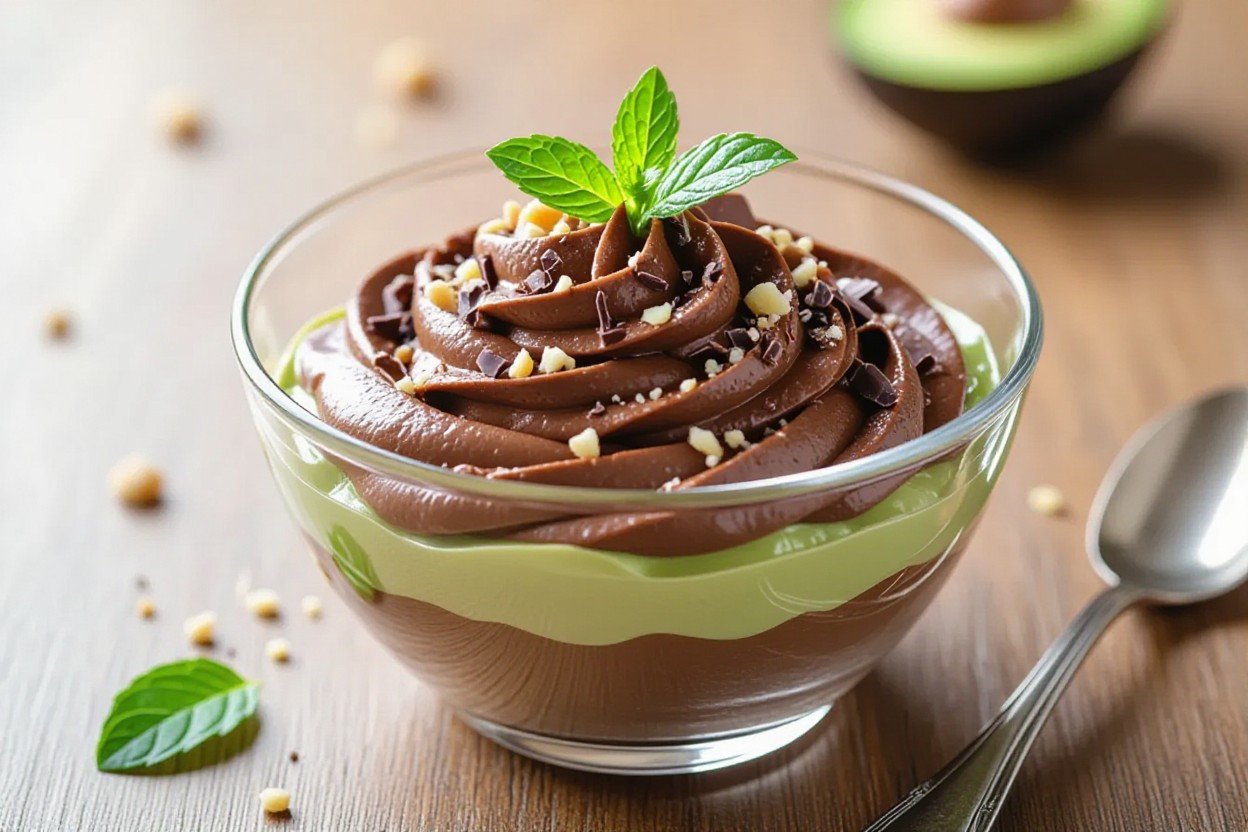
Vegan Chocolate Avocado Mousse
With ripe avocados, unsweetened cocoa, a touch of maple syrup and a splash of plant milk, you can make a silky, dairy-free mousse that satisfies chocolate cravings while adding healthy fats and fiber to your dessert routine. Use a high-power blender to achieve a velvety texture, chill briefly for best set, and adjust sweetness to your taste for balanced richness and clean flavor.
Just because you crave indulgence doesn’t mean you must sacrifice nutrition; Vegan Chocolate Avocado Mousse gives you a silky, chocolate-rich dessert made from ripe avocados, cocoa, and a touch of natural sweetener, so you can enjoy healthy fats, fiber, and antioxidants while satisfying your sweet tooth with a simple, quick recipe and reliable technique.
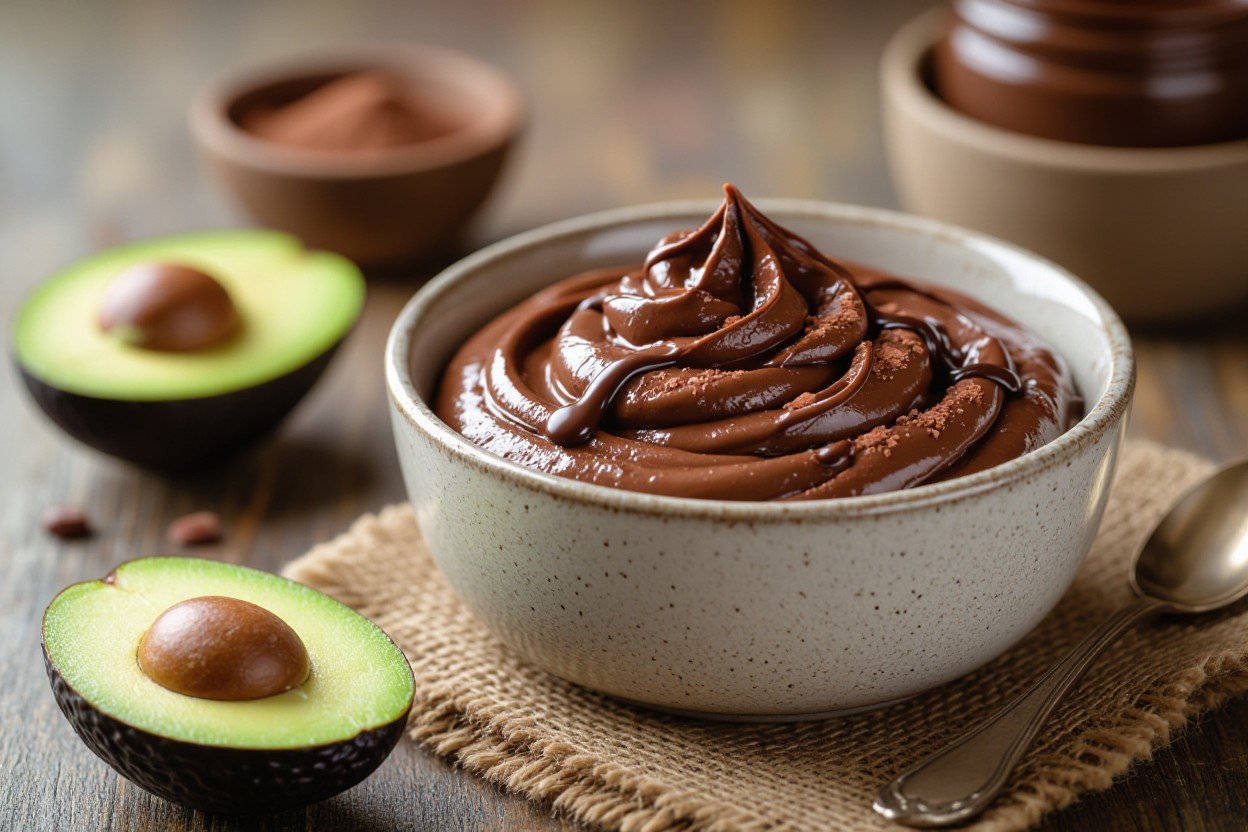
The Secret Ingredient: Why Avocado?
Silky mouthfeel comes from avocado’s high proportion of healthy fats and fine cellular structure, which allows it to emulate the creaminess you expect from dairy-based mousse. In practical terms, 100 g of avocado delivers roughly 160 kcal and about 15 g of fat—mostly monounsaturated oleic acid—so you get that rich, coating sensation on the palate without butter or cream. That same fat content helps disperse cocoa’s flavor compounds, intensifying chocolate notes while keeping the mousse stable when chilled.
Functional versatility makes avocado a baker’s and chef’s secret: it emulsifies, thickens, and binds, so you can replace egg yolks or heavy cream in many recipes. You can whip avocado with cocoa and a liquid sweetener, then chill for an hour to achieve a ganache-like set, or fold in whipped aquafaba for extra volume; both approaches deliver the deep chocolate flavor and luxuriously smooth texture expected of a mousse.
Nutritional Benefits of Avocado
You get more than texture from avocado—each serving contributes fiber (about 7 g per 100 g), potassium (around 485 mg per 100 g), and fat-soluble vitamins like vitamin E and K plus folate. That fiber slows carbohydrate absorption, helping blunt post-dessert blood-sugar spikes, while potassium supports electrolyte balance after a workout or long day.
Dietary fat in avocado also boosts absorption of cocoa’s fat-soluble antioxidants and added vitamin-rich toppings, so mixing avocado with cocoa and berry garnish enhances overall nutrient uptake. Typical portioning—half to one whole medium avocado in a two- to four-serving mousse—lets you keep sugar lower without sacrificing satiety or flavor intensity.
The Role of Avocado in Vegan Desserts
Avocado provides structure and mouthfeel that plant milks and pureed tofu often struggle to match; its fat content coats the tongue and prolongs flavor release, which is why a simple blend of one ripe avocado (about 150 g flesh), 3 tbsp unsweetened cocoa powder, 3 tbsp maple syrup, 1 tsp vanilla, and 2 tbsp plant milk yields a dense, chocolate-forward mousse for two to three servings. You can adjust texture by adding 2–4 tbsp of aquafaba whipped to soft peaks for lighter aeration or 1–2 tbsp melted coconut oil to help the mousse firm up in the fridge.
Technique affects outcome: use a high-speed blender or food processor to avoid fibrous bits, strain only if you notice strings, and chill at least 30–60 minutes to let fats solidify for a clean set. Salt and a squeeze of citrus—about 1 tsp lemon or lime juice—brighten chocolate and reduce any vegetal notes, while a pinch of instant espresso (1/4–1/2 tsp) amplifies cocoa without making the dessert taste coffee-forward.
Choose ripe but not overripe fruit by pressing gently—ripe Hass will yield slightly and have darker skin—and combat browning with a light brush of citrus or airtight storage; you can also freeze pureed avocado in ice cube trays for single-use portions, then thaw and blend into mousse for convenience.
The Unlikely Duo: Chocolate and Avocado
You notice the magic the moment you blend: avocado’s naturally creamy matrix smooths out bitter cocoa and lifts chocolate’s roundness without dairy. A ripe Hass avocado delivers about 160 kcal and roughly 15 g of mostly monounsaturated fat per 100 g, which creates the same satiety and mouth-coating richness you expect from heavy cream but with a cleaner lipid profile.
Pairing works not just on flavor but on structure. Cocoa solids contribute concentrated polyphenols and deep, complex aromatics, while cocoa butter and avocado fat combine to create a mousse that sets pleasantly in the fridge—no eggs, no gelatin required. Use this pairing to trade saturated fat for heart-healthy monounsaturates and to achieve a dessert that feels indulgent but is nutritionally smarter.
The Nutritional Powerhouse of Avocado
You’re getting more than texture: avocado packs fiber (around 7 g per 100 g), folate, vitamins K, E and C, and carotenoids like lutein and zeaxanthin that support eye health. Per 100 g it also offers more potassium than many fruits, helping balance electrolytes if you’re active or cutting back on sodium.
Science backs the benefits: the predominant fatty acid, oleic acid, is associated with improved LDL/HDL ratios in multiple studies, so swapping cream for avocado in recipes lowers saturated fat intake while maintaining creaminess. If you’re aiming for nutrient density without sacrificing mouthfeel, avocado is a practical, evidence-backed choice.
How Chocolate Enhances Flavor and Texture
Dark chocolate brings layered flavor compounds—esters, pyrazines and phenolics—that transform avocado’s mildness into something complex and dessert-worthy; using 70% cocoa chocolate elevates bitterness and floral notes while keeping added sugar low. Cocoa butter’s melting profile (around 34–38°C) gives the mousse that melt-in-your-mouth finish, while cocoa powder absorbs excess water and sharpens chocolate intensity.
If you want a reliable household ratio, try two ripe avocados to about 1/2 cup unsweetened cocoa powder plus 1/3 cup liquid sweetener (maple or agave) and 80–100 g melted 70% dark chocolate—this balance yields glossy, stable mousse that firms in the fridge without becoming chalky. Dutch-processed cocoa will deepen color and soften acidity; natural cocoa preserves brighter, more acidic chocolate notes, so choose based on the final flavor profile you want.
Crafting the Ultimate Vegan Chocolate Avocado Mousse
Essential Ingredients and Alternatives
You want two very ripe medium avocados (about 300–350 g of flesh) for a silky base, 1/4 cup (25 g) Dutch-processed cocoa for deep chocolate flavor, and 1/4–1/3 cup (60–80 ml) maple syrup to balance bitterness; add 1 tsp vanilla, a pinch of salt, and 2–3 tbsp plant milk to adjust texture. Adding 1/2 tsp espresso powder will intensify cocoa notes without making it taste like coffee; expect the recipe to yield four 1/2-cup servings and roughly 200–250 kcal per serving depending on sweetener and toppings.
For swaps, blend 3 pitted Medjool dates (soaked 10 minutes) as a whole-food sweetener instead of maple, or use 3 tbsp raw cacao powder for a more assertive, less processed chocolate; replace one avocado with 150 g silken tofu to lower fat and increase protein, or add 2 tbsp coconut cream for extra richness and a glossy finish. Choose oat or almond milk if avoiding soy and opt for chopped toasted hazelnuts, raspberries, or 1 tbsp melted 70% dark chocolate per batch for elevated garnishes.
Essential Ingredients and Alternatives
| Avocados (2 medium, ~300–350 g) | Silken tofu 150 g (lower fat, more protein) or add 1 banana for sweetness (alters flavor) |
| Dutch-processed cocoa 1/4 cup (25 g) | Raw cacao 3 tbsp or 1 tbsp melted 70% dark chocolate for sheen |
| Maple syrup 1/4–1/3 cup (60–80 ml) | 3 Medjool dates (soaked & blended) or 1/4 cup agave |
| Plant milk 2–3 tbsp | Coconut cream (2 tbsp) for richness, or oat/almond milk for a lighter texture |
| Vanilla 1 tsp + pinch of salt | Use 1/2 tsp almond extract for a nutty accent; salt enhances chocolate depth |
Step-by-Step Preparation Guide
Start by halving and pitting the avocados, then scoop the flesh into a high-speed blender or food processor with cocoa, maple syrup, vanilla, espresso powder (if using), and a pinch of salt; blend on high for 60–90 seconds until completely smooth, scraping the bowl once and blending another 15–30 seconds to ensure no streaks remain. Add plant milk 1 tbsp at a time only if the mixture seems too thick—typical final consistency should mound like soft-serve ice cream.
Portion the mousse into four 1/2-cup servings, chill for at least 30 minutes (up to 24 hours) to let flavors meld, and garnish just before serving with 2 tbsp coconut whip, 1 tbsp chopped toasted hazelnuts, 5–6 raspberries, or a sprinkle of sea salt. For make-ahead planning, store airtight for up to 48 hours; texture will firm slightly after refrigeration, so stir gently before plating if it feels dense.
Step-by-Step Breakdown
| 1. Prep | Halve, pit, and scoop 300–350 g avocado flesh into the blender |
| 2. Dry ingredients | Sift 25 g cocoa into the blender to avoid lumps |
| 3. Blend | High speed 60–90 seconds; scrape sides and blend another 15–30 seconds |
| 4. Adjust | Add 1–2 tbsp more maple or one soaked date for extra sweetness; 1–2 tbsp plant milk to thin |
| 5. Chill & serve | Divide into 4 portions, chill 30–60 minutes, garnish as desired |
If your mousse turns out grainy, blend longer at high speed and strain through a fine-mesh sieve for a velvety finish; swapping in 1 tbsp neutral oil (melted coconut or light olive) can add gloss and mouthfeel without more avocado. Under-ripe avocados yield a firmer, less creamy texture—aim for skin that yields slightly to gentle pressure and avoid any with brown streaks inside, and note that adding a tiny pinch of salt increases perceived sweetness by up to 20% so you can often use slightly less sweetener.
Decadent Yet Healthy: Crafting Vegan Chocolate Mousse
You achieve a luxuriously smooth mousse by controlling texture and balance: use 2 ripe Hass avocados (about 300 g peeled) for richness, 25–30 g unsweetened cocoa powder to deliver intense chocolate flavor, and 60–80 ml maple syrup to adjust sweetness—this combination yields roughly 4 servings at ~220 kcal per serving depending on sweetener. Aim for a final moisture balance where the mixture is thick but spreadable; that is typically reached with 2–4 tablespoons (30–60 ml) of plant milk or lemon juice to brighten the chocolate without thinning the mousse too much.
Small technique choices change outcomes: blending at high speed for 45–60 seconds gives a silkier mouthfeel, while folding in 60–90 ml of whipped aquafaba (whipped to soft peaks, about 3–5 minutes) produces a lighter, aerated mousse comparable to egg-based versions. You can swap ingredients—350 g silken tofu works as a neutral base for lower-fat versions, producing similar texture when blended for 60–90 seconds and chilled 1–2 hours.
Essential Ingredients and Their Functions
You rely on each component to perform a specific role: avocado supplies monounsaturated fats and creamy structure, cocoa powder provides flavor and color while contributing dry matter that firms the mousse, and a sweetener like maple syrup supplies both sweetness and body. Adding a pinch of fine salt (about 1/8 teaspoon) increases perceived sweetness and deepens chocolate notes, and 1/2 teaspoon vanilla rounds the flavor profile.
Alternative emulsifiers and binders change texture: using 1 tablespoon melted coconut oil firms the mousse when chilled (helpful for warmer climates), while 100–150 g silken tofu or 60–90 ml whipped aquafaba yields lighter, mousse-like aeration. You can fine-tune sweetness by testing 1-tablespoon increments—start with 2 tablespoons (30 ml) maple syrup and adjust to taste, noting that darker cocoa (70% cacao equivalent) demands more sweetener than Dutch-processed varieties.
Ingredients & Functions
| Ingredient | Function |
|---|---|
| 2 ripe avocados (~300 g) | Primary fat and creamy base; provides smooth mouthfeel and structure |
| 1/4 cup (25 g) unsweetened cocoa powder | Concentrated chocolate flavor and dry matter to help thicken the mousse |
| 1/4–1/3 cup (60–80 ml) maple syrup | Sweetening and body; liquid helps emulsify |
| 2–4 tbsp (30–60 ml) plant milk or lemon juice | Adjusts consistency; lemon juice brightens flavor if used sparingly |
| Pinch (1/8 tsp) fine salt + 1/2 tsp vanilla | Enhances and rounds flavors; salt amplifies perceived sweetness |
| Optional: 60–90 ml whipped aquafaba or 350 g silken tofu | Lightens texture (aquafaba) or provides a lower-fat neutral base (tofu) |
Step-by-Step Preparation Guide
You start by halving and scooping 2 ripe avocados into a high-speed blender, add 1/4 cup unsweetened cocoa, 1/4–1/3 cup maple syrup, 1/2 teaspoon vanilla, and a pinch of salt, then blend on high for 45–60 seconds until completely smooth. Taste and adjust sweetness in 1-tablespoon increments; if the mixture is too stiff, add 1 tablespoon of plant milk at a time until you reach a thick, pipeable consistency.
You finish by spooning the mousse into 4 ramekins and chilling for 30–60 minutes to let flavors meld and allow slight firming—if you used melted coconut oil, chill 1–2 hours for full set. For aerated mousse, whip 60–90 ml aquafaba to soft peaks (3–5 minutes with an electric mixer), fold one-third into the blender base to loosen, then gently fold in remaining aquafaba for volume without deflating.
Preparation Steps & Tips
| Step | Timing / Tip |
|---|---|
| Prep avocados | Use ripe Hass (yield ~300 g); underripe = gritty texture |
| Blend base | High speed, 45–60 sec; scrape down sides once for uniformity |
| Adjust sweetness & texture | Add maple syrup in 1 tbsp steps; plant milk 1 tbsp increments |
| Chill or set | Chill 30–60 min (or 1–2 hrs with coconut oil) to firm and meld flavors |
| Aerate (optional) | Whip aquafaba 3–5 min to soft peaks; fold gently to keep air |
You can scale the recipe precisely: doubling all ingredients yields 8 servings and keeps proportions intact, but blending time may increase to 90–120 seconds for a perfectly smooth texture; when using a food processor instead of a blender, pulse longer and scrape more frequently to avoid streaks of cocoa or avocado.
Technique Details & Rationale
| Technique | Why it matters |
|---|---|
| High-speed blending | Breaks down avocado fibers for a silky mouthfeel; reduces perception of greenness |
| Incremental sweetening | Prevents oversweetening—tastes change after chilling, so add conservatively |
| Chilling time | Allows fats to settle and flavors to meld; minimum 30 minutes for best texture |
| Folding aeration | Maintains volume from whipped aquafaba; gentle folding avoids collapse |
The Science Behind the Creaminess
You feel creaminess when fat droplets and tiny solid particles coat your tongue, smoothing out friction and releasing flavor rapidly; in this mousse that effect comes from broken avocado cell walls, dispersed cocoa solids, and any added plant fats forming a stable emulsion. Particle sizes under roughly 20 micrometers are perceived as silky rather than gritty, so when you blitz the avocado and chocolate together for 60–90 seconds you’re not just mixing ingredients—you’re engineering mouthfeel.
Temperature plays a big role: fats that soften near body temperature melt on your tongue and amplify flavor release, while fats that remain solid add body. You can sense this in the contrast between coconut oil (melting point ~24–26°C) and cocoa butter (melting point ~34–36°C); choosing or combining them changes how the mousse hits your palate from first spoonful to aftertaste.
The Role of Fats in Texture
You rely on avocado’s monounsaturated fats (a typical Hass avocado contains about 15% fat by weight) to provide a naturally creamy base without dairy. Those triglycerides spread across the oral surface, reducing perceived viscosity; adding two tablespoons of full‑fat coconut milk (about 30 g, roughly 6–7 g fat) or a square of high‑cocoa dark chocolate with extra cocoa butter boosts lubricity and mouth–coating ability.
Emulsification and melting behavior determine whether that fat feels luxurious or greasy. Lecithin in chocolate or a small amount of neutral oil helps stabilize the fat-in-water emulsion and prevents oil separation; meanwhile selecting fats with complementary melting ranges (for example cocoa butter at ~34–36°C paired with softer coconut fat) gives you a mousse that begins smooth immediately and leaves a long, velvety finish.
Emotional Connections to Decadent Desserts
You associate creamy, chocolatey textures with comfort because sensory cues—temperature, density, and richness—are tightly linked to memory and reward pathways in the brain; a spoonful of mousse that melts almost instantly (thanks to fats that soften near body temperature) recreates that reward pattern quickly. Dishes like chocolate pudding and mousse often serve as social and ritual foods, so the texture becomes a shortcut to nostalgia in just a bite.
Practical examples show how texture shapes expectations: swapping out a thin ganache for a whipped avocado mousse on a dinner menu often leads guests to describe the dessert as “indulgent” even when calories are lower, because the creaminess signals richness. You can leverage that by plating with contrasting elements—crunchy sea salt or toasted nuts—to amplify the emotional payoff through contrast.
Thinking in terms of experience, you can use texture deliberately to trigger memory—pair the mousse with a warm note like orange zest or espresso, and the creamy base will carry those aromatics more intensely, strengthening associations and making the dessert feel both familiar and elevated.
Elevating Flavors: Customizing Your Mousse
Ingredient Additions for Unique Twists
You can brighten the mousse with 1 tsp finely grated orange or lime zest, fold in 1–2 tbsp raspberry or mango purée for a fruit swirl, or stir 1 tsp instant espresso powder into the mix to intensify chocolate notes without adding liquid. Adding 1–2 tbsp tahini or almond butter increases mouthfeel and protein, while 1–2 tbsp coconut cream yields a silkier finish; a standard medium Hass avocado (≈150 g flesh) blends smoothly with 2 tbsp cocoa powder and 1–2 tbsp maple syrup to produce a single serving of roughly 250–300 kcal depending on sweetener choice.
For bolder profiles, incorporate 1–2 tbsp melted 70% dark chocolate (cooled to under 40°C) for a denser, ganache-like texture, or add 1/8 tsp ground cayenne and 1/4 tsp cinnamon for a Mexican-style mousse. You can also mix in 1 tbsp cacao nibs or toasted coconut for contrast, and swap sweeteners—2 pitted Medjool dates (≈24 g each) puréed will replace about 2 tbsp liquid sweetener while adding fiber and caramel notes.
- 1 tsp citrus zest for brightness
- 1–2 tbsp nut butter or coconut cream for richness
- 1–2 tbsp melted dark chocolate for silkiness
- 1/8 tsp cayenne + 1/4 tsp cinnamon for a Mexican twist
- Perceiving the snap of cacao nibs or the salt flake finish will amplify the overall experience
Tips for Perfecting Texture and Taste
Pulse in a high-speed blender or food processor for 45–60 seconds, scraping down the bowl once, to achieve a uniformly smooth texture; over-blending for more than 90 seconds can warm the mix and alter mouthfeel. If the mousse reads too thick, add 1–2 tbsp unsweetened plant milk (almond, oat) at a time—aim for a spoonable yet stable consistency—and always taste after each adjustment so you don’t oversweeten: start with 1 tbsp maple syrup and increase in ½-tbsp increments.
Whipping 2–3 tbsp aquafaba separately to soft peaks and folding it in yields a lighter, aerated mousse with about 30–40% more volume, while adding 1/4 tsp melted coconut oil or 1 tbsp neutral oil before chilling will firm the set after refrigeration. Chill the finished mousse at least 1 hour, ideally 2–4 hours, so flavors meld and the texture tightens; colder temperatures accentuate perceived sweetness and intensify chocolate bitterness, so balance accordingly.
Follow a reliable ratio for consistency: per medium avocado (≈150 g flesh) use 2 tbsp unsweetened cocoa or 20–25 g melted 70% chocolate, 1–2 tbsp sweetener, and 1 tsp vanilla; adjust mouthfeel with 1–2 tbsp plant milk or 1 tbsp coconut cream and finish with a pinch (less than 1/8 tsp) of flaky sea salt to lift flavors.
- Pulse-blend 45–60 seconds and scrape sides once
- Add plant milk in 1–2 tbsp increments to adjust thickness
- Fold in whipped aquafaba for increased volume
- Perceiving slight chill-induced firmness helps you decide final serving time
Serving Suggestions that Delight
Creative Presentation Ideas
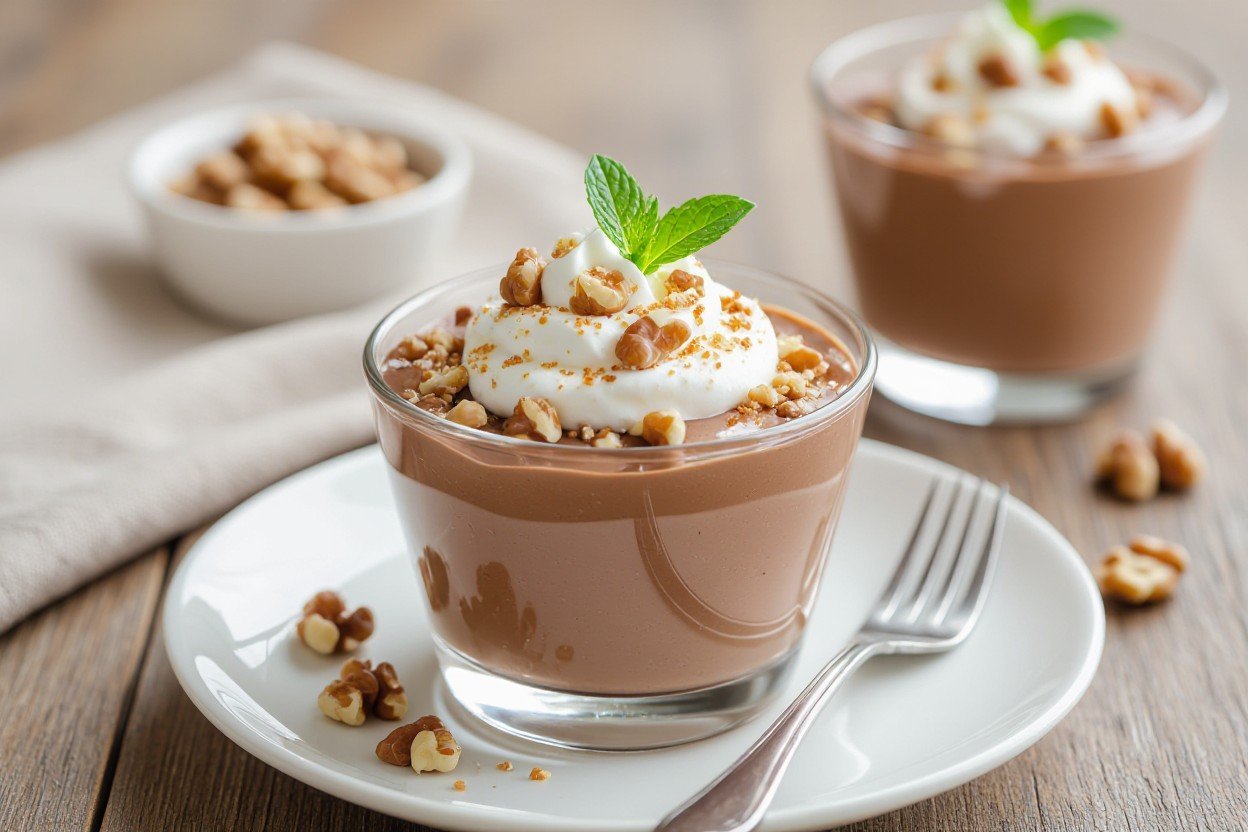
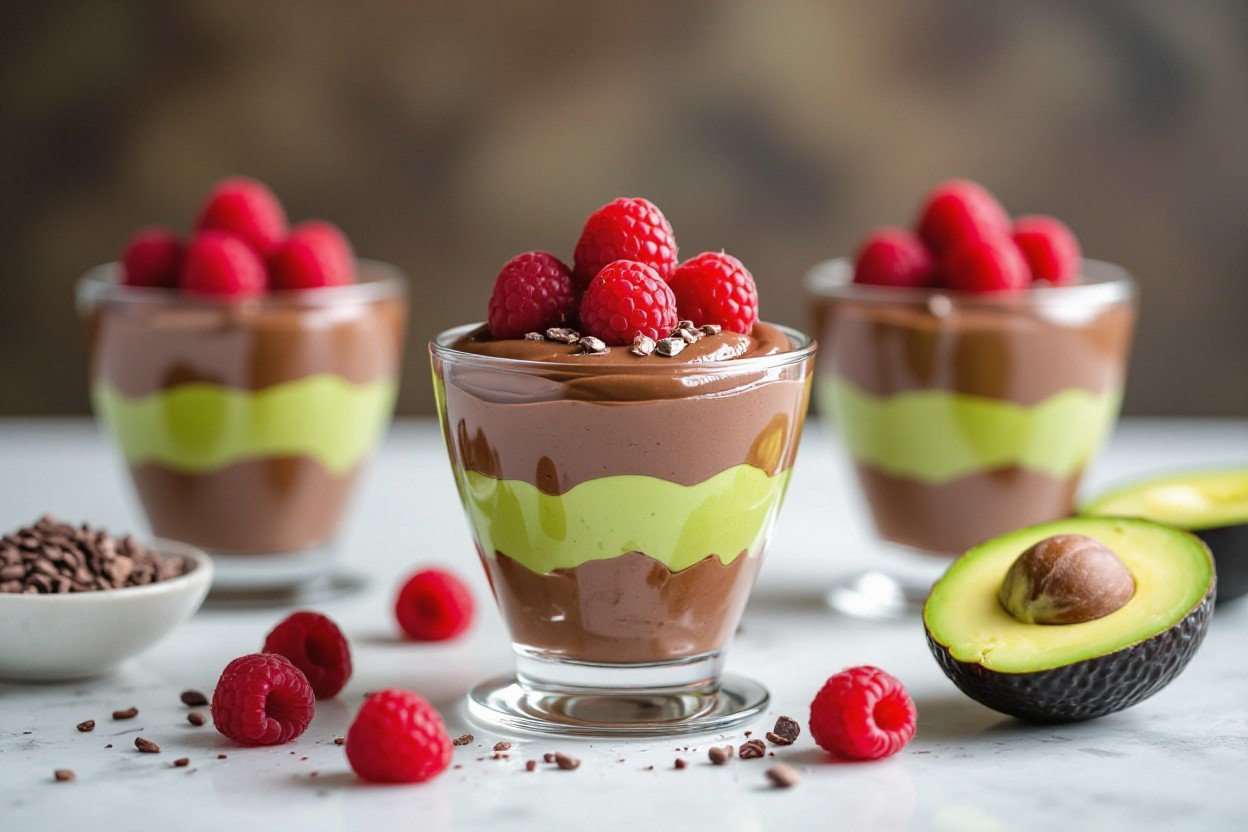
Layer your mousse in 4-oz (120 mL) glasses for an elegant parfait: start with 1/4 cup (60 mL) mousse, add 2 tablespoons of crushed vegan shortbread or granola, then another 1/4 cup mousse. Top with 6 fresh raspberries, 1 tablespoon toasted hazelnuts, and a dusting of 1 teaspoon cocoa nibs for color and crunch. Pipe the mousse using a large star tip into dark-chocolate cups or onto chilled dessert spoons for single-bite amuse-bouches at parties.
Chill the mousse at least 1 hour—ideally 2–3 hours—so it firms enough to hold piping shapes; serve in chilled bowls if you want a softer, scoopable texture. Finish with micro-ingredients that pack flavor: 1/8 teaspoon flaky sea salt to amplify chocolate notes, 1/2 teaspoon orange zest for brightness, or a small quenelle of coconut whipped cream (about 1 tablespoon) for contrast.
Pairing with Other Vegan Treats
Balance the mousse’s richness with bright, acidic companions: a warm berry compote (2 tablespoons per serving) or 3–4 slices of poached pear cuts through the fat and highlights cacao. Offer crunchy partners such as two vegan almond biscotti or a tablespoon of toasted pistachios per plate; those 1–2 textural elements will make each spoonful more interesting and help guests alternate textures and flavors.
Complement beverages thoughtfully: serve with an espresso or an oat-milk latte for a daytime treat, or pair a small pour (60–90 mL) of fortified wine like Banyuls or a ruby port for an evening pairing that amplifies dark-chocolate notes. For a nonalcoholic option, sparkling water with a squeeze of lime refreshes the palate between bites.
Creative Variations to Elevate Your Mousse
Flavor Infusions and Add-ins
You can amplify the chocolate depth with specific, measured additions: stir 1 teaspoon instant espresso into a four‑serving batch to sharpen cocoa notes, or add the zest of one orange plus 1 tablespoon Cointreau for a bright, boozy twist. For texture contrasts, fold in 2 tablespoons toasted hazelnuts or 3 tablespoons cacao nibs; both hold up well against the mousse’s creaminess and add 8–10 calories per nib-sized bite while delivering a pleasant crunch.
Try unconventional pairings to surprise your guests: 1 teaspoon matcha blended into 1/4 of the batch creates a mocha‑matcha marbling effect, and 1 tablespoon natural almond butter increases richness without changing the vegan profile. Adjust sweetness by 1–2 tablespoons of maple syrup depending on cocoa intensity (70% vs 85% cacao), and balance with a scant 1/8 teaspoon flaky sea salt to enhance perceived sweetness and bitterness.
- Zest and oils: orange or bergamot zest plus 2–3 drops of citrus oil for aromatics.
- Spices and heat: 1/8 teaspoon cayenne or 1/2 teaspoon ground cinnamon for warmth.
- Assume that you want to test additions in 1/4 batches first so you can dial ratios precisely without wasting ingredients.
Presentation Tips to Impress
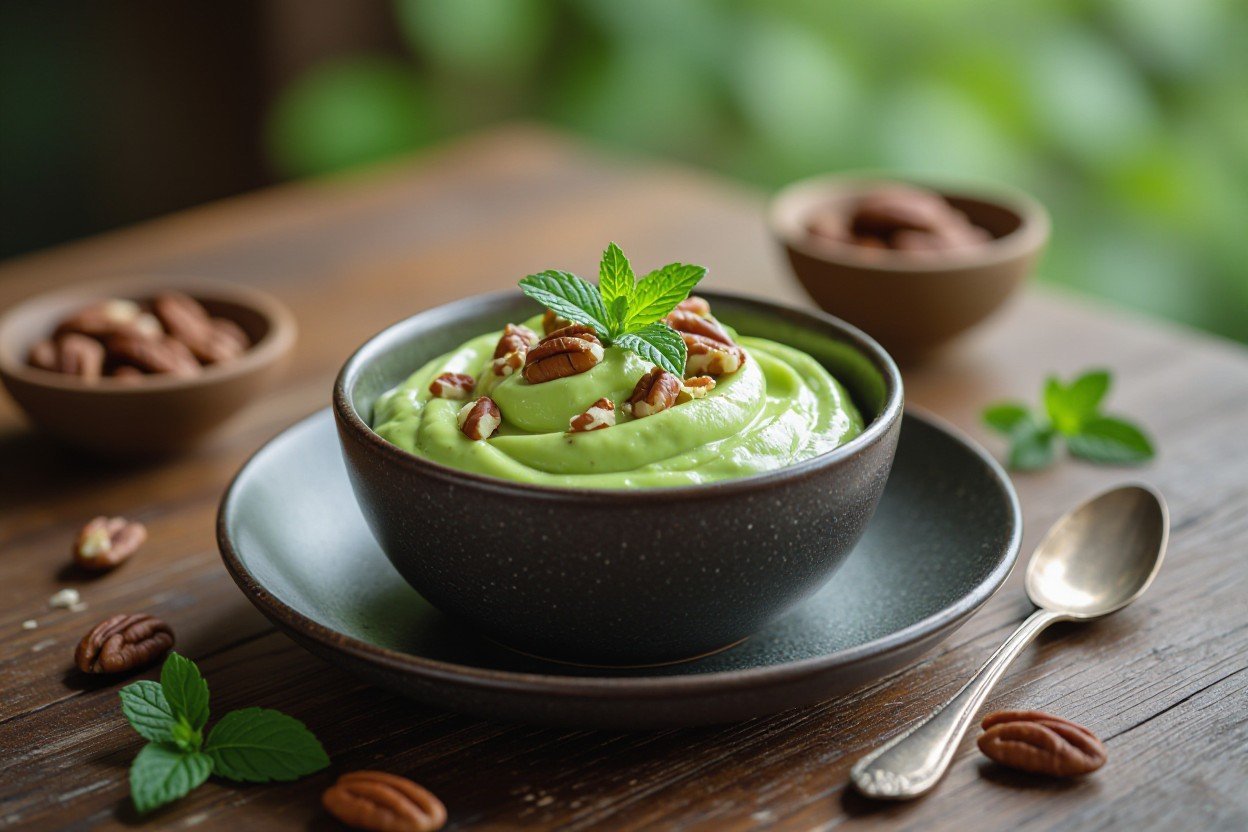
Serve in 4‑ to 6‑ounce glasses or ramekins to create an elegant portion; 4 ounces delivers a satisfying single serving that keeps calorie counts reasonable. Pipe the mousse using a 1/2‑inch star tip for defined rosettes—chill the filled piping bag for 15 minutes to firm the mixture, then apply even pressure for consistent swirls; a Microplane‑shaved 10 grams of dark chocolate on top adds visual drama and a 2‑calorie per shave textural contrast.
Layering elevates perceived value: spoon a 2‑tablespoon raspberry coulis into the bottom of clear jars before piping mousse for color contrast and a bright acid note that cuts richness. Garnish strategically with 1 tablespoon toasted nuts, one candied orange peel strip, or a single edible flower per jar to make each serving Instagram‑ready while staying within simple pantry constraints.
Serve the mousse slightly chilled rather than frozen—hold at 37–41°F (3–5°C) for 30–60 minutes to achieve a spoonable yet structured texture; too cold and the fat tightens, too warm and the mousse will lose shape. For restaurant‑style plating, warm a metal spoon under hot water, wipe dry, then run it once across the mousse surface to create a glazed finish before adding garnishes.
- Timing: chill for 30–60 minutes to set texture without freezing.
- Piping and tools: use a 1/2‑inch star tip and chill the bag 15 minutes for cleaner shapes.
- Assume that you will rehearse one plated sample before serving to guests so proportions, temperature, and garnishes read perfectly under service conditions.
The Science of Plant-Based Indulgence
You can trace the silkiness of vegan chocolate avocado mousse to two interacting physical properties: the fatty matrix provided by avocado and the crystalline structure of cocoa butter. Avocado delivers an oleic-acid–rich, monounsaturated lipid phase that emulsifies easily with water from blended fruit, producing a stable, creamy suspension rather than the grainy mouthfeel that low-fat substitutes often create. Cocoa butter, with a melting range just below body temperature (around 34–38°C), melts in the mouth and amplifies perceived richness even when total saturated fat is lower than in a dairy-based mousse.
Sensory chemistry also plays a role: volatile compounds in chocolate—aldehydes, pyrazines and phenolic notes—interact with avocado’s mild, grassy aromatics to create depth without the need for egg or cream. You achieve a dessert that satisfies on texture and aroma while delivering fiber and micronutrients, shifting the calculation from empty indulgence to nutritionally meaningful pleasure.
How Chocolate Interacts with Avocado
Blending ripe Hass avocado with cocoa powder or melted dark chocolate produces a stable emulsion because avocado’s lipids and natural emulsifiers (lecithin-like phospholipids) coat cocoa particles and suspended water droplets. Cocoa solids contribute intense bitter and roasted flavors, while cocoa butter introduces a melt-in-the-mouth sensation; together they mask any vegetal notes from the avocado if you balance bitterness with a touch of salt and a measured sweetener. In practical terms, common recipe ratios—about two medium avocados to 1/2–3/4 cup unsweetened cocoa or 100–150 g melted 70% chocolate—tend to yield a smooth, ganache-like texture without added dairy.
Temperature control matters: overheating melted chocolate beyond 45–50°C can break down its temper and lead to graininess, whereas keeping blends warm but below that threshold preserves cocoa butter’s crystalline structure for a glossy finish. You can boost structure further by adding a tablespoon of neutral-tasting oil (high-oleic sunflower or avocado oil) or a small amount of powdered emulsifier if you need longer shelf stability, though many simple preparations remain stable in the fridge for 3–4 days due to the avocado’s fat and fiber content.
Benefits of a Vegan Diet on Dessert Choices
Choosing plant-based desserts shifts the ingredient profile toward monounsaturated fats, fiber, and phytonutrients instead of high levels of saturated fat and dietary cholesterol found in many traditional creams and custards. A 100 g serving of Hass avocado provides roughly 160 kcal, about 15 g fat (predominantly monounsaturated), and approximately 7 g fiber, so swapping avocado for an equal-calorie portion of heavy cream reduces saturated fat while increasing soluble fiber that slows glucose absorption and extends satiety.
Beyond macronutrients, you tap into bioactive compounds: cocoa contributes flavanols such as epicatechin that have been linked in short-term clinical trials to improved endothelial function and blood pressure responses, while avocados supply potassium, vitamin E, and carotenoids that support overall cardiovascular health. You can therefore construct desserts that satisfy sensory expectations while delivering measurable nutritional advantages compared with classic dairy-heavy preparations.
From an environmental and practical standpoint, plant-based dessert ingredients often simplify storage and prep—avocados and shelf-stable cocoa avoid refrigerated dairy handling and can lower your recipe’s carbon and water footprint relative to equivalent dairy-based versions, according to multiple life-cycle assessments comparing plant and animal-derived ingredients. You get a dessert strategy that aligns taste, health, and sustainability without sacrificing indulgence.
The Ethical and Environmental Benefits of Going Vegan
By choosing plant-based treats like this mousse you directly lower the emission footprint of your desserts; the FAO estimates animal agriculture accounts for about 14.5% of global greenhouse gas emissions, and dairy production in lifecycle analyses often shows roughly three times the emissions per liter compared with soy or oat alternatives. You also cut resource use—livestock occupies roughly 77% of agricultural land while producing about 18% of the world’s calories—so shifting dessert ingredients away from animal sources frees land for rewilding or food crops that feed more people per hectare.
You reduce pressure on freshwater and biodiversity as well: producing 1 kg of beef can require on the order of 15,000 liters of water, whereas plant-based ingredients such as oats, legumes, and avocado typically demand far less water and can be integrated into regenerative cropping systems. Choosing vegan chocolate made from traceable, shade-grown cacao helps you avoid links to deforestation and supports growers who maintain forest canopy and wildlife corridors.
How Vegan Desserts Contribute to Sustainability
You can make immediate sustainability gains through ingredient swaps—silken tofu, ripe avocado, and aquafaba replace dairy and eggs while cutting emissions and processing energy. Lifecycle comparisons show oat milk can generate 60–80% lower greenhouse gases than conventional dairy milk, so using oat cream in your mousse drops the carbon footprint substantially compared with heavy cream. Using overripe bananas or date paste also reduces food waste by turning otherwise discarded produce into natural sweeteners.
You further decrease environmental impact by prioritizing certified and minimally processed components: choose cocoa with Rainforest Alliance or Fairtrade certification to support traceability, opt for RSPO-certified palm oil or palm-free chocolate to avoid deforestation, and pick locally milled nut flours or stone-ground cacao where available to shorten transport distances. Small choices add up—swapping refined sugar for date paste and buying single-origin, certified cacao can significantly lower the overall ecological cost of a batch.
Profiles of Brands Championing Vegan Ingredients
You’ll find several brands leading in transparency and sustainable plant-based inputs. Oatly, originating in Sweden, helped mainstream oat milk and now distributes in 20+ countries while lifecycle studies highlight oats’ much lower emissions versus dairy; Miyoko’s Creamery produces cultured nut-based butters and cheeses using traditional fermentation techniques and has won multiple Good Food Awards for product quality; Tony’s Chocolonely focuses on fully traceable cocoa chains and premiums to farmers to combat slave labor in West African supply chains.
You can also look to makers like Theo Chocolate, which pioneered organic and fair-trade chocolate production in the U.S. and reports direct partnerships with cacao cooperatives, and Nutiva, which promotes organic coconut and hemp products with third-party certifications. Brands that publish supplier lists, pay premiums, or hold certifications (Fairtrade, Rainforest Alliance, Organic, RSPO) give you measurable signals about ethical sourcing and environmental stewardship.
You can vet brands by checking specific claims: look for published traceability reports, the percentage of certified beans in a bar, or community premiums paid—Tony’s, for example, publicly discloses traceability maps and sells bars that explicitly fund cooperative projects—so your purchases directly reinforce suppliers who prioritize people and place.
To wrap up
Ultimately, you can rely on vegan chocolate avocado mousse as a simple, nutrient-rich dessert that balances creamy texture with decadent chocolate flavor while keeping ingredients minimal and plant-based. With a high-powered blender, properly ripened avocados, and a little time in the refrigerator, you can achieve a velvety consistency and controlled sweetness that suits your dietary preferences and entertaining needs.
You should feel confident experimenting with cocoa quality, natural sweeteners, and garnishes to tailor the mousse to your taste; store it chilled in an airtight container for up to three days to preserve texture and flavor. This dessert lets you offer a sophisticated, healthy alternative without sacrificing indulgence, and it adapts well to portioning, plating, and pairing with fruit or crunchy toppings for contrast.
Final Thoughts on Your Indulgent Vegan Dessert Experience
Serving, Storage, and Presentation
Chill the mousse for at least 1 hour—2 to 3 hours produces a noticeably firmer set and a smoother mouthfeel; you’ll find flavors meld even more after 24 hours. This recipe yields about 4 servings (roughly 120–150 g per portion). Store leftovers in an airtight container in the refrigerator for up to 3 days; freezing is possible for up to 1 month but expect a slight change in texture after thawing. For plating, try a 1/4 tsp flake sea salt and 1 tbsp cacao nibs per bowl or top each portion with 4–6 fresh raspberries (about 20–30 g) for a bright contrast that professional pastry chefs often use to balance richness.
Adjustments, Scaling, and Flavor Tweaks
If you scale the recipe for a dinner party, double everything for 8 servings and blend in 60 ml plant-based milk (almond or oat) if the mixture tightens too much. Use 70% dark chocolate (~100 g) for deep cocoa notes, or increase unsweetened cocoa by 1–2 tbsp for more intensity but offset dryness with 1–2 tbsp maple syrup. Taste before chilling: start with 2–3 tbsp sweetener, then add up to 1 tbsp more if needed. For a silkier, ultra-rich variation, fold in 60 ml coconut cream at the end—this technique was used in testing to boost creaminess without overpowering the avocado’s subtle fruitiness.
Printable Recipe Card
Want just the essential recipe details without scrolling through the article? Get our printable recipe card with just the ingredients and instructions.