Peruvian Chicken (Pollo a la Brasa)
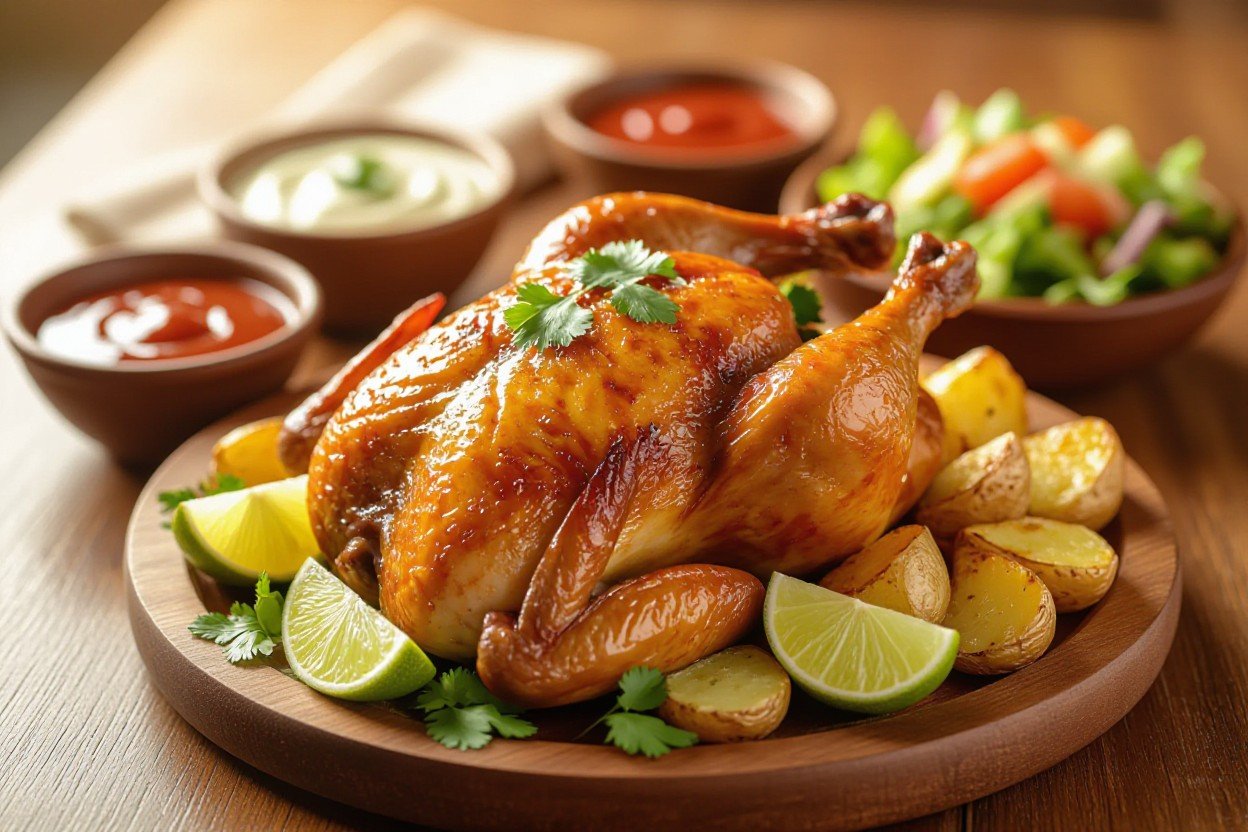
You’re about to discover one of Peru’s most beloved culinary treasures: Pollo a la Brasa. This iconic rotisserie chicken dish features marinated poultry slowly roasted over charcoal, creating crispy, golden skin and incredibly tender meat. What sets this dish apart is its unique marinade blend of soy sauce, garlic, cumin, paprika, and ají panca pepper, which infuses deep, complex flavors throughout. Traditionally served with French fries and vibrant green ají sauce, Pollo a la Brasa has become a national symbol of Peruvian cuisine since its creation in the 1950s, capturing hearts and taste buds worldwide.
Key Takeaways:
- Pollo a la Brasa is a Peruvian rotisserie chicken marinated in a distinctive blend of spices including cumin, paprika, garlic, and aji panca pepper, then slow-roasted over charcoal for a crispy skin and tender, flavorful meat.
- This national dish of Peru is traditionally served with french fries, fresh salad, and creamy aji verde (green sauce made with cilantro, jalapeños, and mayonnaise) which perfectly complements the smoky, spiced chicken.
- The cooking technique requires high heat and constant rotation to achieve the signature crispy, golden-brown exterior while keeping the inside juicy, making a rotisserie or grill the ideal cooking method for authentic results.
History of Pollo a la Brasa
Origins in Peru
The story begins in 1950 when Swiss immigrant Roger Shuler opened La Granja Azul (The Blue Farm) in the Chaclacayo district of Lima. Shuler had been experimenting with different cooking methods for chicken on his farm, and he developed a unique rotisserie system that combined European roasting techniques with Peruvian spices and ingredients. His innovation involved a specialized oven that rotated chickens over a wood-fired flame, allowing the meat to cook evenly while developing that distinctive crispy skin you’ll recognize today.
What started as a small restaurant quickly captured the attention of Lima’s residents. Shuler’s recipe featured a marinade that blended local ingredients like ají panca, huacatay (Peruvian black mint), and cumin with garlic and other spices. By the 1960s, other restaurants began adopting similar cooking methods, and pollo a la brasa transformed from a novel dish into a national phenomenon. The Peruvian government officially recognized the third Sunday of July as “Pollo a la Brasa Day” in 2010, cementing its status as a cornerstone of Peruvian cuisine.
Evolution of the Recipe
The original preparation method has undergone significant refinements since Shuler’s initial creation. Early versions relied exclusively on wood-fired ovens, which gave the chicken a distinct smoky flavor but proved difficult to standardize across different establishments. During the 1970s and 1980s, restaurants began transitioning to charcoal-fired rotisseries, which offered more consistent heat control while maintaining that characteristic char. The marinade recipes also evolved as chefs across Peru added their own regional touches—coastal versions might include more citrus, while highland preparations incorporated additional native peppers.
Modern pollo a la brasa establishments now use gas-powered rotisseries in many cases, though traditionalists still swear by charcoal. The cooking temperature typically ranges between 400-450°F, and your chicken will rotate for 60-90 minutes depending on its size. Contemporary recipes have also expanded the marinade components, with some chefs adding beer, vinegar, or soy sauce to create deeper flavor profiles. Despite these variations, the core elements remain consistent: whole chickens marinated in a spice blend dominated by Peruvian peppers, garlic, and cumin, then slow-roasted on a rotating spit.
You’ll find that each pollería (chicken restaurant) guards its specific marinade recipe as a closely held secret, leading to fierce debates among Peruvians about which establishment serves the most authentic version. This competitive spirit has actually elevated the dish’s quality across the board, as restaurants continuously refine their techniques to stand out. The accompaniments have also become standardized over time—your pollo a la brasa now arrives almost universally with crispy french fries and a selection of sauces, particularly the creamy ají amarillo sauce that has become inseparable from the dish itself.
Key Ingredients
The magic of Pollo a la Brasa starts with a carefully curated blend of spices and aromatics that create its distinctive flavor profile. You’ll need fresh garlic, cumin, paprika, black pepper, and the secret weapon: ají panca, a smoky Peruvian red pepper paste that gives the chicken its characteristic deep color and subtle heat. Soy sauce adds umami depth and helps tenderize the meat, while lime juice brightens the entire marinade. Many traditional recipes also incorporate huacatay (Peruvian black mint), though you can substitute with a combination of cilantro and mint if you can’t find it at your local Latin market.
The chicken itself deserves your attention—you’ll want to use whole birds weighing between 3 to 4 pounds for optimal results. This size ensures even cooking on the rotisserie while maintaining juicy meat under crispy, golden skin. Salt plays a dual role here: it seasons the meat while drawing out moisture from the skin, which becomes incredibly crisp during roasting. Dark beer or vinegar often appears in authentic recipes, acting as both a tenderizer and flavor enhancer that helps the marinade penetrate deeper into the meat.
Marination Process
Your marinade needs at least 12 hours to work its magic, though 24 hours produces even better results. Start by blending all your wet ingredients—garlic, ají panca, soy sauce, lime juice, oil, and beer—into a smooth paste before whisking in your dry spices. You’ll want to create a thick, pourable consistency that clings to the chicken rather than running off. Make several deep slashes in the thickest parts of the breast and thighs; these cuts allow the marinade to penetrate beyond the surface, ensuring flavor throughout every bite.
Place your chicken in a large resealable bag or non-reactive container, then massage the marinade thoroughly into every crevice, under the skin, and inside the cavity. The massage technique matters—spend at least five minutes working the marinade into the meat, paying special attention to getting it under the breast skin where it directly contacts the meat. Flip the chicken every 6 hours if possible, redistributing the marinade to ensure even coverage. Before cooking, let the chicken sit at room temperature for 30 minutes, which promotes even cooking and crispier skin.
Cooking Methods
Traditional Pollo a la Brasa cooks on a specialized rotisserie that spins the chicken over charcoal at temperatures between 400-450°F. The constant rotation ensures self-basting as the fat and juices drip down and around the bird, creating that signature crispy skin while keeping the interior moist. Your cooking time will typically run 60-75 minutes for a 3.5-pound chicken, though you’re looking for an internal temperature of 165°F in the thickest part of the thigh. The rotisserie’s continuous movement prevents hot spots and creates an even, mahogany-colored crust that’s the hallmark of properly cooked Pollo a la Brasa.
If you don’t own a rotisserie, your oven can produce impressive results with a few adjustments. Spatchcock your chicken by removing the backbone and flattening it completely, which reduces cooking time and maximizes skin exposure for better crisping. Position the chicken on a wire rack set over a baking sheet, then roast at 425°F for 45-55 minutes. Some home cooks achieve excellent results using a vertical roaster that mimics the rotisserie effect, allowing heat to circulate around the entire bird while fat drips away from the meat.
Outdoor grills offer another authentic option, particularly if you have a rotisserie attachment for your gas or charcoal grill. Set up indirect heat by placing coals or turning on burners on one side only, maintaining a steady temperature around 400°F. Your chicken rotates over the cooler zone while the surrounding heat cooks it evenly, and you can add wood chips for extra smokiness that echoes the charcoal flavor of street vendors in Lima. Baste the chicken every 20 minutes with leftover marinade (applied only in the first 40 minutes of cooking) to build up layers of flavor and enhance
Traditional Serving Suggestions
Accompaniments
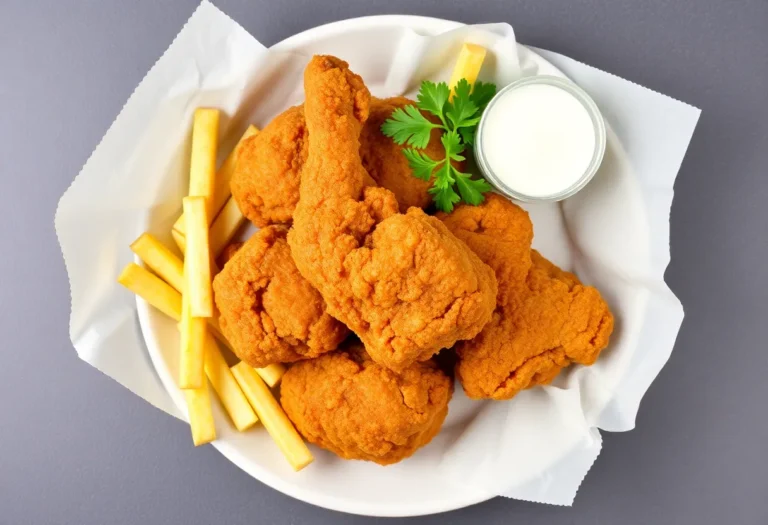
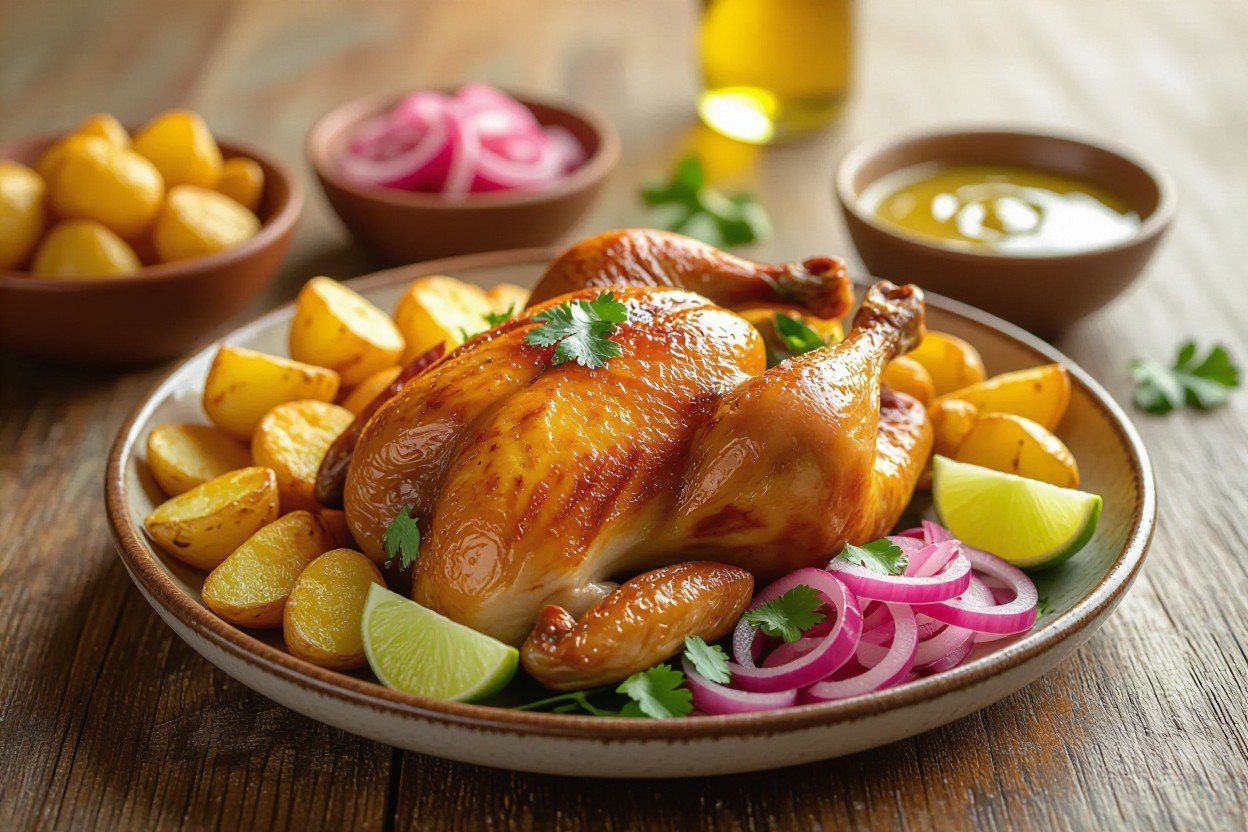
You’ll find that authentic Peruvian chicken arrives at your table with two crucial companions: ají verde (green chili sauce) and a generous portion of crispy french fries. The ají verde, made from blending fresh cilantro, jalapeños, garlic, mayonnaise, and a splash of lime juice, provides the perfect cooling contrast to the smoky, charred skin of the chicken. In Lima’s pollerías, servers typically bring at least two bottles of sauce per table—one green, one yellow (ají amarillo-based)—because you’ll quickly realize that this tangy, herbaceous condiment transforms every bite. The fries, cut thick and fried twice for maximum crispiness, serve as vehicles for soaking up the flavorful juices that pool beneath the chicken.
Your plate should also include a simple salad of crisp lettuce, sliced tomatoes, and red onions dressed lightly with lime juice and salt. Many establishments add a side of rice, though this varies by region and personal preference. You might also encounter tamal, a traditional corn-based side, or camote (sweet potato) slices at more traditional venues. The meal typically comes with a cold Inca Kola—Peru’s bright yellow, bubblegum-flavored soft drink that has outsold Coca-Cola in the country since the 1970s—though chicha morada (purple corn drink) offers a more traditional pairing.
Regional Variations
Different regions across Peru have developed their own interpretations of this national dish. In Arequipa, you’ll encounter versions that incorporate local rocoto peppers into the marinade, creating a spicier profile that reflects the southern city’s love of heat. Coastal areas, particularly in Trujillo, often serve their pollo a la brasa with yuca fries instead of potato, taking advantage of the cassava root that grows abundantly in the region. The northern city of Chiclayo has become famous for adding a touch of chicha de jora (fermented corn beer) to the marinade, which imparts a subtle sweetness and helps tenderize the meat even further.
Lima’s pollerías have evolved into sophisticated operations where you can choose your preferred level of char and request specific cuts of the chicken. Some neighborhoods have developed reputations for particular styles—San Miguel’s establishments tend toward crispier skin, while Miraflores spots often feature juicier, less-charred versions that appeal to international palates. The competitive pollo a la brasa scene in the capital has driven innovation, with some restaurants now offering organic, free-range birds or experimenting with wood varieties for smoking.
Outside major cities, family-run establishments in smaller towns maintain older preparation methods, sometimes using wood-fired ovens instead of gas or charcoal. These rural versions often feature smaller, locally-raised chickens that cook faster but deliver more concentrated flavor. You’ll notice that mountain communities in the Andes occasionally incorporate native herbs like huacatay (black mint) into their marinades, creating aromatic profiles distinct from the coastal classic.
Nutritional Information
A typical serving of Pollo a la Brasa (about 4 ounces of chicken with skin) delivers approximately 280-320 calories, making it a surprisingly reasonable choice for your main course. The exact caloric value shifts depending on which part of the chicken you’re enjoying—breast meat with skin clocks in at around 250 calories per serving, while a thigh portion reaches closer to 300 calories. You’ll find that removing the crispy skin reduces the calorie count by roughly 80-100 calories per serving, though many would argue you’re sacrificing the best part of the experience.
Caloric Content
Your plate of Pollo a la Brasa becomes a complete meal when you factor in the traditional accompaniments. The green aji sauce adds a modest 30-40 calories per two-tablespoon serving, while the creamy huancaína sauce contributes about 60-80 calories for the same amount. A side of crispy French fries adds another 200-250 calories, and the typical portion of white rice brings in 180-200 calories. A full traditional meal with all the fixings totals between 750-900 calories, positioning it squarely in the range of a satisfying, complete dinner.
The macronutrient breakdown works in your favor with this dish. Each serving provides 25-30 grams of high-quality protein, 15-20 grams of fat (with about 4-5 grams being saturated), and virtually zero carbohydrates in the chicken itself. The marinade’s spices and herbs contribute negligible calories while adding antioxidants and flavor compounds. You’re looking at a protein-forward meal that supports muscle maintenance and keeps you satisfied for hours after eating.
Health Benefits
Pollo a la Brasa offers substantial nutritional advantages beyond its impressive protein content. The chicken provides you with important B vitamins, particularly niacin (B3) and pyridoxine (B6), which support your energy metabolism and nervous system function. You’ll also benefit from selenium, a powerful antioxidant mineral that supports thyroid function and immune health—a single serving delivers about 40% of your daily selenium needs. The phosphorus content strengthens your bones and teeth, while the zinc supports your immune system and wound healing processes.
The traditional marinade ingredients amplify these health benefits considerably. Cumin aids your digestion and provides iron, while the garlic delivers allicin compounds known for their cardiovascular benefits and natural antimicrobial properties. The paprika and aji amarillo peppers contain capsaicin and carotenoids that may boost your metabolism and provide anti-inflammatory effects. Dark meat portions give you higher levels of iron and zinc compared to white meat, making them particularly valuable if you’re addressing deficiencies in these minerals.
Choosing Pollo a la Brasa over fried chicken preparations significantly reduces your intake of unhealthy trans fats and excess calories from deep-frying oils. The rotisserie cooking method allows much of the fat to drip away during the slow roasting process, resulting in a final product that’s lower in overall fat content while maintaining moisture and flavor. You’re getting the satisfaction of crispy-skinned chicken without the heavy, greasy feeling that often accompanies other preparation methods.
Popular Variations
Different Regions in Peru
You’ll find distinct interpretations of pollo a la brasa as you travel through Peru’s diverse regions. In Lima, where the dish originated in the 1950s at La Granja Azul, restaurants typically serve it with a heavier emphasis on the ají amarillo-based green sauce and crispy french fries. Head north to Chiclayo or Trujillo, and you’ll notice the chicken often comes with a spicier marinade incorporating more rocoto peppers, reflecting the region’s preference for heat. The coastal versions maintain the classic rotisserie preparation but may include local variations in the accompanying sauces, with some establishments adding fresh cilantro or huacatay (Peruvian black mint) to their green sauce recipes.
Mountain regions like Cusco and Arequipa have adapted the dish to incorporate Andean ingredients and cooking methods. You might encounter versions where the marinade includes chicha de jora (fermented corn beer) or where the chicken is served alongside traditional sides like choclo (large-kernel corn) and habas (fava beans) instead of the standard french fries. In Arequipa specifically, some pollerías add their region’s famous rocoto relleno sauce as an alternative condiment, giving you a volcanic kick that pairs beautifully with the smoky chicken. The altitude also affects cooking times, with restaurants at higher elevations adjusting their rotisserie temperatures and rotation speeds to achieve that perfect golden-brown skin.
International Adaptations
The global spread of Peruvian cuisine has transformed pollo a la brasa into an international phenomenon, particularly throughout the Americas. In the United States, you’ll find Peruvian chicken chains like Chicken Rico and Pio Pio serving millions of customers annually, with some locations adding coleslaw and American-style sides to appeal to local tastes. Miami’s large Peruvian community has made the city a hotspot for authentic preparations, while Los Angeles restaurants often fusion the concept with California’s fresh produce, creating salad-topped versions that maintain the traditional marinade but lighten the overall presentation. Japanese-Peruvian (Nikkei) restaurants have even created their own twist, incorporating soy sauce and sake into the marinade for an umami-rich variation.
European adaptations have taken creative liberties with the traditional recipe while respecting its core principles. In Spain, you’ll discover pollerías that use Spanish paprika alongside the traditional ají panca, creating a bridge between Peruvian and Spanish flavor profiles. London’s Peruvian restaurants have introduced the dish to British diners, often serving it with chimichurri as an alternative to green sauce to accommodate European palates more familiar with Argentine flavors. These establishments typically emphasize the free-range, organic aspects of their chicken to align with European food standards and consumer preferences.
Asian countries have embraced pollo a la brasa with particular enthusiasm, especially in Japan and South Korea where rotisserie chicken culture already thrives. Japanese versions often reduce the cumin intensity and add mirin to the marinade, creating a sweeter profile that appeals to local tastes. Korean adaptations sometimes incorporate gochugaru (Korean chili flakes) into the spice rub, and you’ll find restaurants serving it with pickled radish and kimchi instead of traditional Peruvian sides. These international variations demonstrate how the fundamental technique of slow-roasting marinated chicken transcends cultural boundaries while inviting regional interpretation.
Cooking Tips
You’ll want to maintain a consistent temperature of 350-375°F throughout the cooking process, as this range allows the chicken to develop that signature crispy skin while keeping the meat incredibly juicy. Most home cooks make the mistake of cooking at too high a temperature, which chars the exterior before the interior reaches the safe minimum of 165°F. Using a reliable meat thermometer inserted into the thickest part of the thigh gives you the most accurate reading and prevents overcooking.
Rotating your chicken every 15-20 minutes ensures even browning on all sides and helps render the fat beneath the skin properly. The marinade contains acidic components that tenderize the meat, but they also create sugars that can burn quickly if left facing direct heat for too long. After positioning your chicken, keep a spray bottle of water nearby to manage any flare-ups that might occur from dripping fat.
Grilling Techniques
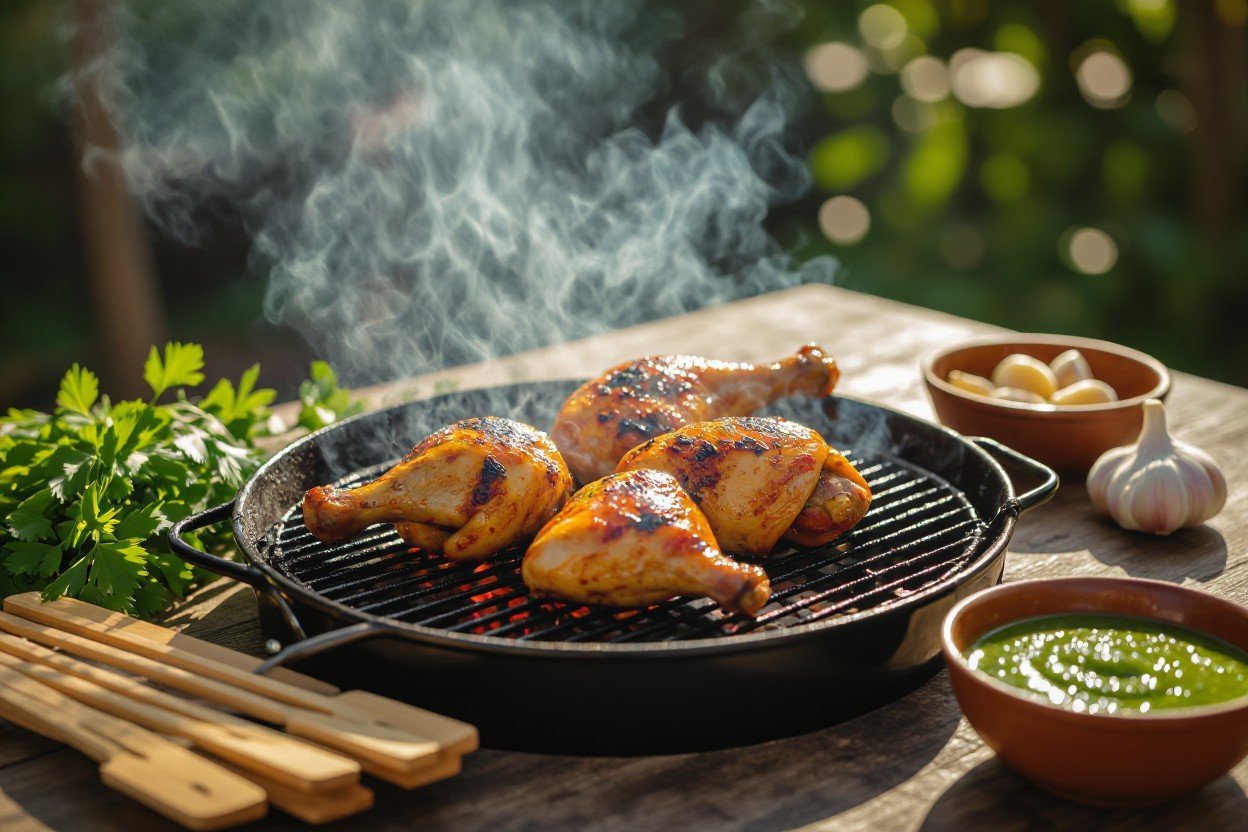
Setting up a two-zone fire on your grill gives you complete control over the cooking process. Place your coals or turn on burners on one side only, creating a hot direct-heat zone and a cooler indirect-heat zone. Start the chicken on the indirect side, allowing it to cook through slowly for about 45-60 minutes, then move it to the direct heat for the final 10-15 minutes to crisp the skin. This method mimics the rotisserie effect of traditional Peruvian ovens without requiring specialized equipment.
Your rotisserie attachment, if you have one, comes closest to replicating authentic pollo a la brasa at home. Thread the spit through the chicken’s cavity, ensuring it’s balanced and secure, then set your grill to medium heat with the burners on either side of the bird rather than directly underneath. The constant rotation bastes the chicken in its own juices while the circulating heat creates that unmistakable crispy, golden-brown exterior. After securing the chicken, brush it with any remaining marinade during the first 30 minutes of cooking for extra flavor layers.
Achieving the Perfect Flavor
Your spice blend needs at least 24 hours to penetrate deep into the meat, but 48 hours produces noticeably better results. The cumin, garlic, and aji panca paste work together to create that distinctive Peruvian taste profile that sets this dish apart from other roasted chicken recipes. You can test your marinade’s effectiveness by cutting into a piece of the meat—properly marinated chicken shows seasoning throughout, not just on the surface. Some Peruvian chefs add a tablespoon of soy sauce to their marinade for extra umami depth and a darker, more appealing color on the finished skin.
Basting becomes your secret weapon during the final stages of cooking. Mix melted butter with a bit of the leftover marinade and brush it over the chicken every 5 minutes during the last 20 minutes on the grill. This technique builds up thin layers of flavor while adding extra richness to the crispy skin. After removing the chicken from heat, let it rest for 10 minutes before carving to allow the juices to redistribute throughout the meat.
The smoke flavor you introduce can either enhance or overpower the carefully balanced spices in your marinade. Stick with mild woods like apple or cherry rather than hickory or mesquite, which can dominate the subtle aji panca and cumin notes. Adding just one or two small wood chunks to your charcoal, or using a smoker box with a handful of chips on a gas grill, provides enough smoke to complement without competing with the traditional Peruvian seasonings.
Final Words
With this in mind, Peruvian chicken stands as one of the most beloved dishes in Latin American cuisine, and for good reason. When you prepare pollo a la brasa at home, you’re not just making dinner—you’re bringing the vibrant flavors of Peru into your kitchen. The combination of the distinctive marinade with its blend of spices, the smoky char from high-heat cooking, and the juicy, tender meat creates an experience that transcends ordinary roasted chicken. Whether you use a rotisserie, grill, or oven, you can achieve authentic results that will impress your family and friends.
As you master this recipe, you’ll discover why pollo a la brasa has become a national treasure in Peru and a growing favorite worldwide. The beauty of this dish lies in its versatility—you can adjust the spice levels to suit your preferences, experiment with different cooking methods, and pair it with various sides to create your perfect meal. Don’t hesitate to make this recipe your own while respecting the traditional flavors that make it special. Your journey into Peruvian cuisine starts here, and pollo a la brasa serves as the perfect gateway to exploring more of this rich culinary tradition.