Low-Carb Chicken Enchilada Bowl
Chicken cooked with aromatic spices forms the base of this low-carb enchilada bowl, giving you the familiar bold flavors without the carbs; you’ll learn how to balance seasoned shredded chicken, sautéed peppers, cauliflower rice, and a tangy tomatillo sauce so your meals stay satisfying, protein-packed, and easy to assemble for weeknight dinners and meal prep.
Ingredients
Protein Options
You’ll want 4-6 oz (115-170 g) of cooked protein per bowl to hit roughly 25-40 g of protein: 4 oz of cooked chicken breast provides about 30-35 g protein and ~180 kcal, while 3 oz of cooked shrimp gives ~20 g protein and ~85 kcal. Ground turkey (85% lean) in a 4 oz portion delivers ~22-24 g protein; firm tofu at 100 g supplies ~8-10 g if you prefer a plant-based route. Choosing lean chicken or shrimp keeps calories and saturated fat lower, whereas pork carnitas or chicken thighs boost flavor and can be used in smaller portions if you want more richness.
You can mix proteins for variety-try 3 oz shredded chicken plus 2 oz grilled shrimp-or swap in 4 oz of seasoned tofu for a vegetarian bowl. Season boldly with chili powder, cumin, garlic, and lime (use 1-2 tbsp juice) to add depth without carbs. Aim for simple cooking methods-grill, roast, or sauté in 1 tbsp olive oil (≈120 kcal) so you control added fats and keep the carb count minimal.
Low-Carb Vegetables
Cauliflower rice is a go-to: 1 cup of riced cauliflower contains about 5 g total carbs and ~2 g fiber (~3 g net carbs) and only ~25 kcal, so you can use 1-2 cups as a substantial base. Zucchini (1 cup spiralized ≈ 3-4 g total carbs), bell pepper (½ cup diced ≈ 3 g carbs), and raw spinach (1 cup ≈ 0.4-1 g carbs) are excellent low-carb fillers that add volume, color, and micronutrients without pushing net carbs above 15-20 g for the whole bowl.
Roast or char peppers and zucchinis to concentrate flavor, steam or sauté cauliflower rice briefly to keep it fluffy, and toss spinach raw at the end so it wilts lightly without losing nutrients. Combining 1 cup cauliflower rice + 1 cup zucchini ribbons + ½ cup bell pepper keeps vegetable net carbs around 10-12 g while delivering fiber, vitamin C, and folate; add ¼ avocado (~2 g net carbs) for creaminess and healthy fats.
If you want seasonal swaps, use shredded cabbage (1 cup ≈ 3 g carbs) or grated radish for crunch; both store well in the fridge and retain texture after dressing. Also consider how cooking affects volume-cooked spinach collapses a lot, so start with a larger raw portion if you want more greens without adding carbs.
Cooking Method
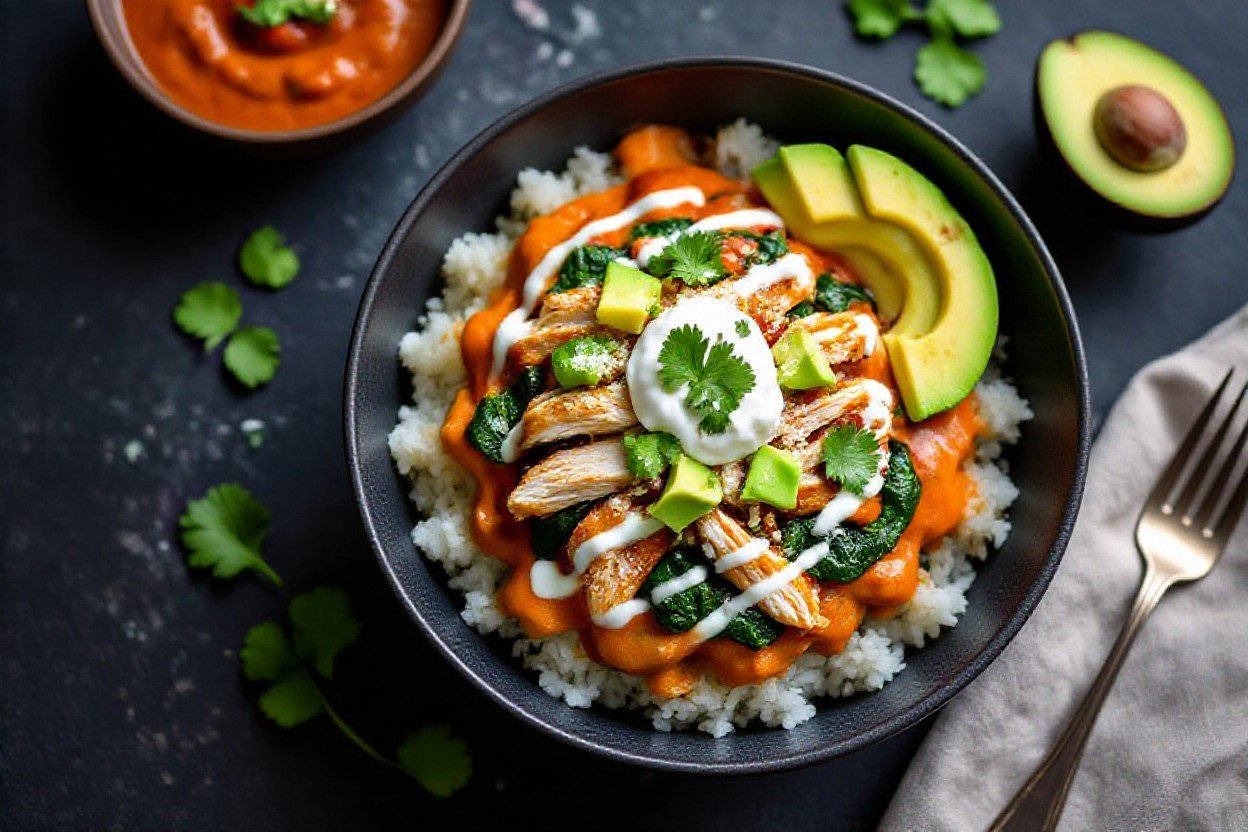
You’ll sear and finish the chicken so it develops a browning that boosts flavor, then fold it into the sauce to absorb spice and moisture. For boneless skinless breasts, heat 1 tablespoon oil in a skillet over medium-high and cook 6-8 minutes per side until an instant-read thermometer reads 165°F; thighs typically take 5-6 minutes per side. After searing, pour in 1 to 1½ cups enchilada sauce (or a mix of ¾ cup sauce + ¼ cup chicken broth for thinner consistency) and simmer 8-10 minutes to meld flavors and reach a tender interior.
Alternatively, you can bake at 400°F for 18-22 minutes (depending on thickness) or use a slow cooker on low for 3-4 hours with 1 cup chicken broth for hands-off prep. Use an instant-read thermometer to avoid overcooking: 165°F is the target, then rest the chicken 5 minutes before shredding or slicing to retain juices.
Preparing the Chicken
Trim fat and pound breasts to an even thickness of about ¾ inch so they cook uniformly; for each pound of chicken use a rub of 1 tsp chili powder, ¾ tsp ground cumin, ½ tsp garlic powder, ½ tsp onion powder, ½ tsp salt and ¼ tsp black pepper. Sear in 1 tablespoon olive oil over medium-high heat until a golden crust forms, then finish in the sauce or oven as noted above-6-8 minutes per side for breasts, 5-6 for thighs, until the internal temperature reaches 165°F.
If you prefer shredding, simmer the seared chicken in sauce for 8-10 minutes, then transfer to a cutting board and shred with two forks; you’ll get about 1½-2 cups shredded chicken from a pound. For smoky depth, add 1 tsp smoked paprika or briefly char the pieces on a hot grill for 2-3 minutes per side before simmering.
Assembling the Bowl
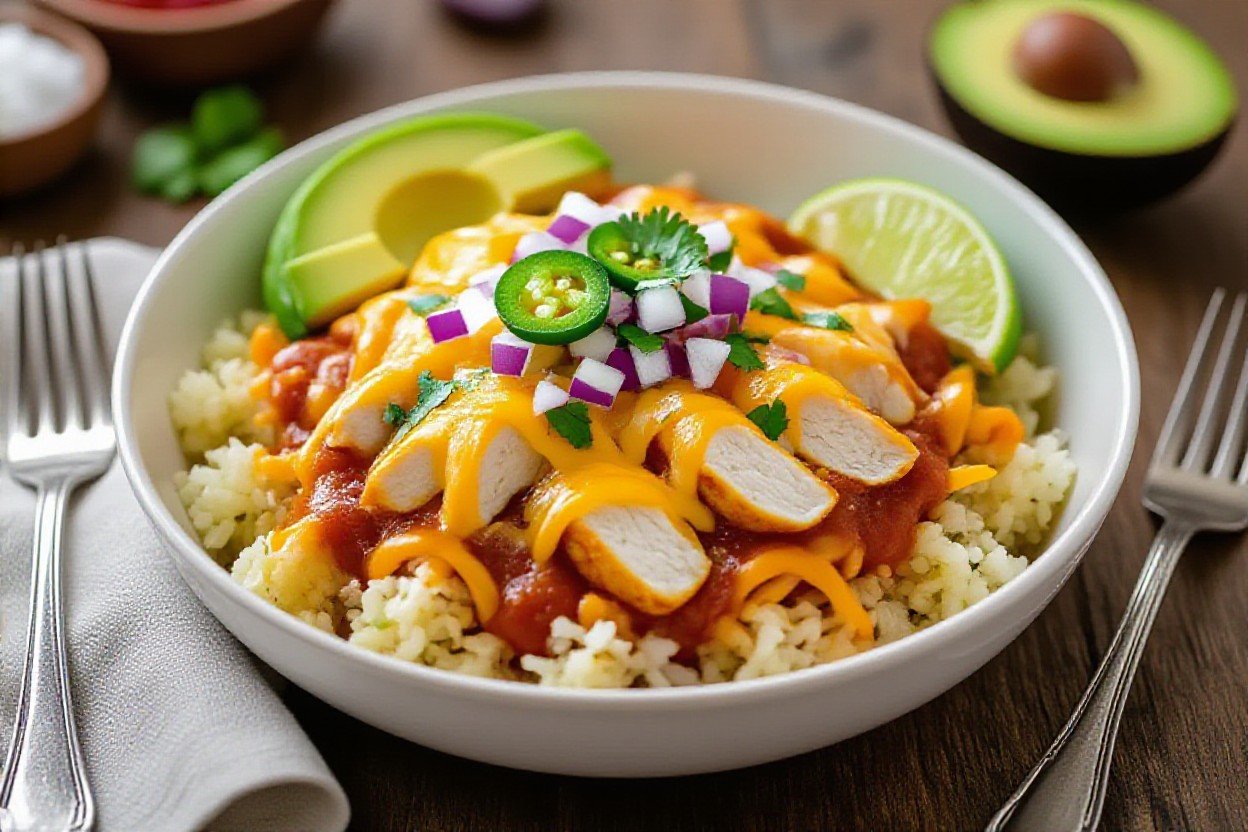
Start with a base of 1 cup cauliflower rice (sautéed 4-6 minutes with 1 tsp oil and a pinch of salt) or 2 cups shredded romaine if you want raw crunch. Layer 4 ounces (about 1 cup shredded) chicken per serving, spoon 3-4 tablespoons enchilada sauce over the top, then add ¼ cup shredded cheddar or Monterey Jack so it melts against the warm chicken. Finish with 2 tablespoons sour cream, 2 tablespoons guacamole, and 2 tablespoons pico de gallo for brightness; jalapeños, cilantro and a wedge of lime are optional accents.
When plating, keep warm and cold components separate until serving so textures stay distinct: place hot cauliflower rice first, chicken and melted cheese next, then dollop creamy toppings and fresh salsas last. For a quick melt, you can broil the assembled chicken and cheese for 1-2 minutes-watch closely to prevent burning.
For meal prep, portion components into containers with airtight lids: chicken and cauliflower rice will keep 3-4 days in the fridge and up to 2 months frozen; add avocado-based toppings fresh or within 24 hours. Nutritionally, a bowl built as above delivers roughly 30-35 g protein and about 6-10 g net carbs depending on your exact portions and whether you use cauliflower rice or a leafy base, making it easy to adjust portions to meet your macro targets.
Flavor Enhancements
You can intensify the bowl by thinking in layers: a seasoned protein, a concentrated sauce, and acid to cut through the richness. For example, marinate chicken for 30-60 minutes in 1 tbsp olive oil, 1 tsp ground cumin, 1 tsp smoked paprika, 2 crushed garlic cloves and ½ tsp kosher salt; then sear 4-5 minutes per side until it reaches 165°F to lock in flavor and moisture. Finishing the pan with 1 tbsp lime juice and 1 tbsp chopped cilantro brightens the dish and ties the components together.
Balancing salt, fat and acid matters more on a low-carb plate because you don’t have starchy sides to mute intensity. A tablespoon of full‑fat sour cream or Greek yogurt swirled into a 1‑cup batch of enchilada sauce adds creaminess without raising carbs much; alternatively, 1-2 teaspoons of apple cider vinegar or 1 tablespoon of fresh lime juice will sharpen flavors if the sauce feels flat. Small adjustments-adding ¼ teaspoon salt or a pinch of smoked paprika-can change the bowl from good to restaurant-level.
Sauces and Spices
Make a low‑carb enchilada sauce by sautéing 1 small minced onion with 1 tbsp oil, stir in 1 tbsp chili powder, 1 tsp ground cumin, ½ tsp oregano and ¼ tsp smoked paprika, then add 1 cup tomato puree and 1 cup chicken broth and simmer 10-15 minutes until slightly reduced. If you want thickness without flour, whisk in ⅛-¼ teaspoon xanthan gum off heat; it will thicken quickly and keeps the sauce glossy. Store-bought red sauces often contain 4-6 g added sugar per ¼ cup, so check labels or use homemade to control carbs and sodium.
Spice blends let you tune heat and smokiness: add 1-2 chopped chipotle peppers in adobo for a smoky kick (about 5-10% of a standard 7.5 oz can per batch), or swap in 1 tsp ancho chile powder for a milder, fruity note. When seasoning the chicken directly, use 1 tsp kosher salt per pound of meat and a ½ tsp black pepper; sear on high to get a caramelized crust, then finish in the sauce for 5-7 minutes so the spices penetrate the protein.
Toppings and Garnishes
Top the bowl with contrasts: creamy avocado, salty cheese and a pop of acid. Half an avocado (about 100 g) contains roughly 7 g total carbs with about 5 g fiber, delivering a rich, low‑net‑carb addition; 1 oz shredded cheddar contributes about 0.4 g carbs and melts into pockets of savory fat. Crumbled cotija or feta offers a saltier, crumbly texture if you prefer something that won’t fully melt.
Freshness matters for garnish choices-use 2 tablespoons chopped cilantro and a lime wedge per serving to cut fattiness, and add 1-2 tablespoons finely diced pickled red onion (quick‑pickle in ¼ cup vinegar, 1 tbsp water, ½ tsp salt for 15 minutes) to introduce bright acidity and a little crunch. Toasted pepitas (1-2 tablespoons) give 3-5 g of protein and a nutty crunch that complements soft ingredients without adding many carbs.
Texture balance is key: spoon hot sauce over warm chicken, then scatter cool toppings-avocado, crema, herbs-so each bite alternates temperature and mouthfeel; this elevates a simple bowl into a composed meal and helps you enjoy every component rather than one dominant element.
Nutritional Benefits
Low-Carb Advantages
By swapping a cup of cooked white rice (roughly 45 g carbohydrates) for a cup of cauliflower rice (about 5 g net carbs), you shave off close to 40 g of carbs per serving-something that directly lowers post-meal glycemic load and simplifies meal planning when you’re tracking net carbs. Choosing cauliflower rice, skipping beans, and using avocado or shredded cheese as calorie-dense toppings instead of tortillas or chips typically brings a single bowl into the 10-20 g net-carb range, depending on portion sizes.
Because the bowl is built around lean protein and healthy fats, you’ll also get better satiety: a 4-oz (113 g) cooked chicken breast supplies roughly 26 g of protein, which helps blunt hunger and preserve lean mass during calorie reduction. Swapping high-carb components for fat- and protein-rich alternatives can reduce the need for frequent snacking and supports steadier energy between meals when you’re aiming for weight or blood-sugar control.
Essential Nutrients
Your chicken enchilada bowl delivers more than low carbs-each component contributes specific micronutrients you’ll want. The chicken provides B3 (niacin) and B6 for energy metabolism and about 20-30% of the daily selenium requirement per serving, while avocado offers monounsaturated fats plus roughly 5-6 g of fiber if you include half an avocado. Adding bell peppers or fresh salsa supplies vitamin C (a medium red pepper can provide over 100 mg), which supports immune function and helps with iron absorption from plant ingredients.
Including a modest amount of full-fat cheese or a dollop of Greek yogurt gives calcium and phosphorus for bone health, and using spices like cumin and chili powder adds antioxidant compounds (polyphenols) without extra carbs. If you top the bowl with two tablespoons of shredded cheddar and half an avocado, you’re getting meaningful amounts of calcium, vitamin K, potassium, and fat-soluble vitamins that round out the meal beyond its macronutrient profile.
To boost nutrient density further, you can add a handful of leafy greens (one cup of spinach gives about 0.9 mg iron and 30-40 IU vitamin A) or a squeeze of lime to increase non-heme iron uptake from plant components-small swaps like this raise micronutrient value without affecting your low-carb goals.
Serving Suggestions
Meal Prep Ideas
You can batch-cook the protein and base to make weekday bowls effortless: pressure-cook 2 lb (about 900 g) chicken breasts for 12 minutes on high with a 10-minute natural release to yield roughly 6 cups of shredded meat, then portion into 4-6 containers. Pulse one large head of cauliflower into rice (about 4 cups) and sauté 5-7 minutes until just tender; a cup of cauliflower rice has ~25 kcal and ~3 g net carbs, which helps keep each bowl low-carb.
Pack toppings and sauces separately to preserve texture-store ½ cup salsa or 2 tbsp crema per container in small jars, and add avocado or greens when you eat. Refrigerate assembled components 3-4 days; freeze plain shredded chicken for up to 3 months (defrost overnight). Reheat in a skillet for 5-7 minutes or microwave 2-3 minutes, then assemble so your bowl maintains contrast between warm protein and fresh toppings.
Pairing Options
You’ll enhance flavors by pairing the bowl with drinks that cut through richness: a crisp Mexican lager (4-5% ABV) or a dry Pale Ale offers carbonation and mild bitterness that refresh the palate, while a chilled Sauvignon Blanc or Albariño (serve 10-13°C) brings bright acidity to balance avocado and cheese. For nonalcoholic choices, sparkling water with lime, unsweetened iced tea, or a tangy kombucha all provide acidity and effervescence to lift the dish.
Choose sides and toppings to hit your macro goals-add ½ cup cooked black beans (~7 g protein, ~20 g carbs) if you want more carbs and fiber, or keep it ultra-low-carb by skipping beans and increasing avocado (½ avocado ≈ 11 g fat). A cabbage-lime slaw (1 cup shredded cabbage ≈ 22 kcal, 2 g fiber) adds crunch, and 1-2 tbsp cotija or 2 tbsp Greek yogurt supply calcium and savory balance without adding excessive carbs.
For practical menus, aim for a target bowl composition to control carbs: 4 oz cooked chicken, 1 cup cauliflower rice, ¼ avocado, 2 tbsp salsa, and 1 tbsp cheese yields roughly 280-350 kcal, about 28-32 g protein and approximately 6-10 g net carbs-adjust portions (more greens, less salsa or beans) to keep each serving within your desired carbohydrate range. Setting up a simple toppings bar with 6-8 options-cilantro, lime wedges, pickled onions, diced tomatoes, sliced jalapeño, avocado, cheese, and a creamy cilantro-lime dressing-lets guests tailor their bowl while you preserve the low-carb profile.
Variations
You can stretch this recipe in multiple directions without losing the core low‑carb profile: swapping the base, changing the protein, or altering the toppings each cuts or adds specific macronutrients. For example, replacing 1 cup of cooked white rice (≈45 g carbs) with 1 cup of cauliflower rice (≈5 g carbs) reduces net carbs by roughly 40 g per serving, while keeping volume and texture similar. Try one or two swaps at a time so you can track how each change affects flavor and macros.
Ingredient Swaps
You can substitute proteins freely: 4 oz cooked chicken breast provides about 25-30 g protein, turkey breast is nearly identical, shredded pork shoulder adds more fat and richer flavor (good if you want higher calories), and firm tofu (4 oz ≈ 8 g protein) or tempeh (4 oz ≈ 16-19 g protein) work for plant‑based versions. To keep carbs low, replace beans (½ cup black beans ≈ 20 g carbs) with extra nonstarchy vegetables like sautéed zucchini or roasted bell pepper; if you want a moderate‑carb option, swap cauliflower rice for ½ cup cooked quinoa (≈20 g carbs) to add fiber and a different texture.
Cheese and sauce swaps change both taste and dietary fit: use cotija or shredded cheddar for classic richness, nutritional yeast for a dairy‑free umami boost, or a 2 tbsp avocado crema (≈10-12 g fat) instead of sour cream to increase healthy fats. For spice, swap a tablespoon of chili paste for 1 tsp smoked paprika and ½ tsp cumin to lower sodium while keeping smoky complexity.
Dietary Adjustments
To make the bowl ketogenic, aim for a meal target of roughly ≤20-25 g net carbs: use 1-1.5 cups cauliflower rice (≈5-8 g carbs), omit beans, include 4 oz chicken (≈25-30 g protein) and 1-2 tbsp olive oil or avocado (14-28 g fat) to push fat into the 20-40 g range. If you follow paleo or Whole30, remove dairy and use compliant salsa and an avocado mash; a typical paleo plate here would be 4 oz protein, 1 cup leafy greens, 1 cup roasted peppers and onions, and 1⁄2 avocado for added fat.
For vegetarian or vegan diets, increase plant proteins and watch carbs: 4 oz tempeh plus ½ cup cooked lentils provides substantial protein but also adds ~20 g carbs from the lentils, so balance by reducing starchy sides and boosting nonstarchy veggies. Those avoiding nightshades can swap salsa for a cilantro‑lime oil and use roasted sweet potato sparingly if you need additional carbs-1 small sweet potato adds about 20-25 g carbs.
Practical adjustments you can apply immediately include plating portions: use a 4 oz protein standard, limit servings of starchy components to ½ cup or less, and add fats (1 tbsp olive oil or ¼ avocado) to hit satiety. If you track macros, enter one variant at a time-example: 4 oz chicken + 1 cup cauliflower rice + 1 tbsp olive oil ≈ 26 g protein, 7-9 g carbs, 18-20 g fat-so you can fine‑tune portions to fit daily targets.
Summing up
From above, the Low-Carb Chicken Enchilada Bowl shows how you can enjoy bold enchilada flavors while keeping carbs low and protein high. By combining shredded or diced chicken with cauliflower rice, sautéed peppers, a modest amount of cheese, and a rich, low-sugar enchilada sauce, you create a satisfying, nutrient-dense meal that supports weight management and steady energy levels.
You can adapt the bowl to your goals by adjusting portion sizes, swapping in more nonstarchy vegetables, and choosing ancho or chili-based sauces for depth without added sugars; batch-cooking the components simplifies weeknight meals and keeps your nutrition consistent. With simple ingredient swaps and balanced seasonings, this dish becomes a versatile staple that fits into low-carb and keto-style plans while still delivering the classic enchilada experience.