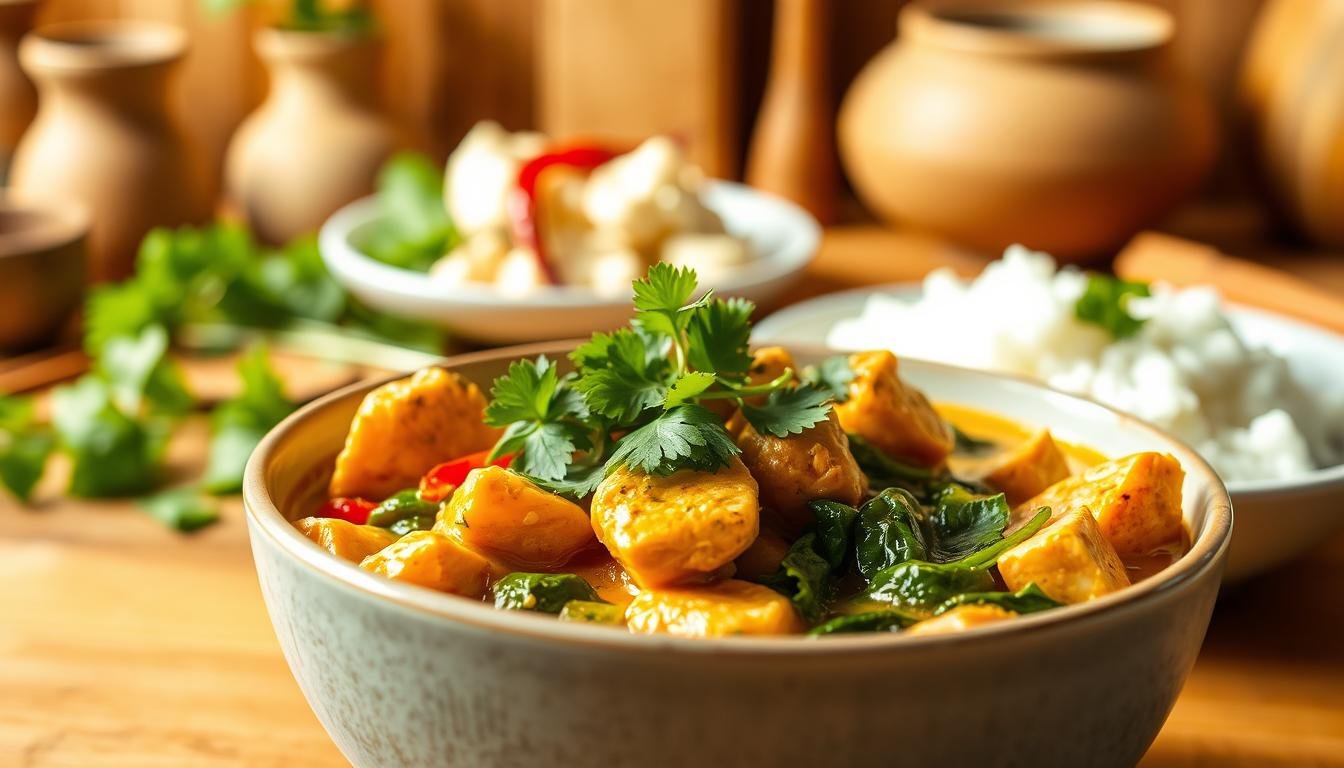
Keto Thai Coconut Chicken Curry
Ever thought about enjoying real Thai flavors without ruining your keto diet? Imagine a creamy, spicy Thai Coconut Chicken Curry that meets your cravings and stays true to your low-carb way of life.
This keto curry recipe is more than just a diet meal. It turns your weeknight dinner into a fancy restaurant dish. In just 30 minutes, you’ll make a dish full of rich coconut sauce, soft chicken, and strong Thai spices.
Goodbye to boring diet food. This Thai Coconut Chicken Curry is full of flavor but low in carbs. It’s perfect for anyone on a keto diet or just looking to eat less carbs. This recipe will show you that healthy food can be incredibly tasty.
Key Takeaways
- 30-minute recipe perfect for busy weeknights
- Authentic Thai flavors without breaking keto rules
- Packed with healthy fats from coconut milk
- Gluten-free and low-carb friendly
- Restaurant-quality taste at home
Why This Low-Carb Curry Will Become Your New Weeknight Favorite
Looking for the perfect weeknight keto meals? This low-carb Thai food recipe is a game-changer. It’s an easy keto dinner that packs a punch of flavor without much effort.
Busy cooks know the challenge of making tasty meals that fit strict diets. This Thai coconut chicken curry is the answer. It’s ready in just 30 minutes, perfect for when time is tight.
This curry is incredibly versatile. It’s great for meal prep, family dinners, or when you’re hosting. The coconut milk and chicken provide healthy fats and protein, keeping you full without breaking your keto diet.
Unlike traditional Thai dishes, this recipe avoids carbs. You get real flavor without the sugar rush. Plus, it’s a one-pot wonder, saving you time on cleanup. And the best part? The flavors get even better overnight, making it perfect for batch cooking.
Your weeknight dinner worries are over with this amazing keto curry. It shows that healthy eating can be both tasty and easy.
Essential Ingredients for Authentic Keto-Friendly Thai Curry
Making a true Thai curry that fits a keto diet means picking the right stuff. Start with full-fat canned coconut milk, not the watered-down kind. Choose brands with few additives for the best taste and richness.
Thai curry paste is key for flavor. You can pick from red, green, or yellow, each with its own taste. Make sure to check labels for hidden sugars. Look for brands like Mae Ploy or Thai Kitchen for low-carb options.
Don’t forget the protein in your coconut milk curry. Use boneless chicken thighs for more fat and tenderness. Add garlic and ginger for depth without adding carbs. Fish sauce adds a rich umami flavor that’s keto-friendly.
Adding Thai basil or kaffir lime leaves can make your curry even better. A squeeze of lime juice adds a fresh touch. Each ingredient should add flavor and meet your keto diet goals.
The Secret to Rich, Creamy Coconut Sauce Without the Carbs
Making the perfect coconut curry sauce is an art. It turns your healthy Thai curry into something special. The secret is using full-fat coconut milk for its creamy texture and deep flavor.
By separating the coconut cream from the liquid, you get a sauce that’s both rich and low-carb. This trick makes your sauce indulgent without the carbs.
Your sauce-making technique is key. Start by heating the coconut cream and mixing in your favorite curry paste. This step makes the flavors richer and the sauce smoother.
Controlling the heat and cooking time is important. It ensures your coconut curry sauce is just right.
Seasoning is also vital for a top-notch sauce. Mix in fish sauce, lime juice, and spices to balance the coconut milk’s richness. If it’s too thick, add a bit of chicken broth. If it’s too thin, simmer it until it thickens.
The goal is a sauce that coats your protein well and tastes bold and complex.
Pro tip: Taste and adjust your coconut curry sauce as you go. The right tweaks can make your healthy Thai curry unforgettable.
Thai Coconut Chicken Curry
Get ready to make your weeknight dinner amazing with this keto chicken recipe. It brings authentic Thai flavors to your kitchen. This gluten-free curry mixes rich coconut milk, tender chicken, and vibrant spices. It’s a low-carb masterpiece that won’t break your diet.
Prep Time: 10 minutes
Cook Time: 20 minutes
Total Time: 30 minutes
Servings: 4-6
Difficulty: Easy
Dietary Tags: Keto, Low-Carb, Gluten-Free, Dairy-Free
This keto chicken recipe is special because of its creamy coconut sauce and bold Thai flavors. It’s quick to make and tastes like a restaurant dish in your kitchen.
Ingredients:
– 2 lbs boneless, skinless chicken thighs
– 1 can full-fat coconut milk
– 3 tablespoons Thai red curry paste
– 2 tablespoons avocado oil
– 1 tablespoon fresh ginger, minced
– 2 cloves garlic, minced
– Salt and pepper to taste
– Fresh cilantro for garnish
This gluten-free curry is a simple, tasty option for those on a keto diet. It’s perfect for anyone who wants to enjoy delicious meals without giving up flavor or excitement.
Preparing Your Chicken for Maximum Flavor and Tenderness
Creating the perfect tender chicken curry begins with the right meat. For keto chicken recipes, chicken thighs are the best choice. They have more fat, making the meat juicy and adding richness to your curry. Chicken breasts can also work, but thighs offer deeper flavor and are more forgiving.
Make sure your chicken pieces are all 1-inch in size. This helps them cook evenly and makes them perfect for your curry. Before cooking, season the chicken well with salt, pepper, and spices that go well with Thai curry paste.
Remember, food safety is key. Always make sure your chicken is cooked to 165°F. To get the best flavor, brown the chicken pieces before adding them to the curry sauce. This method keeps the meat moist and adds tasty caramelized edges to your dish.
For those short on time, use leftover or rotisserie chicken. Add it to the curry in the last few minutes of cooking. This way, the chicken stays tender and juicy. With these tips, you can make your chicken taste like it’s from a restaurant, all while following your keto diet.
Building Layers of Flavor with Thai Curry Paste
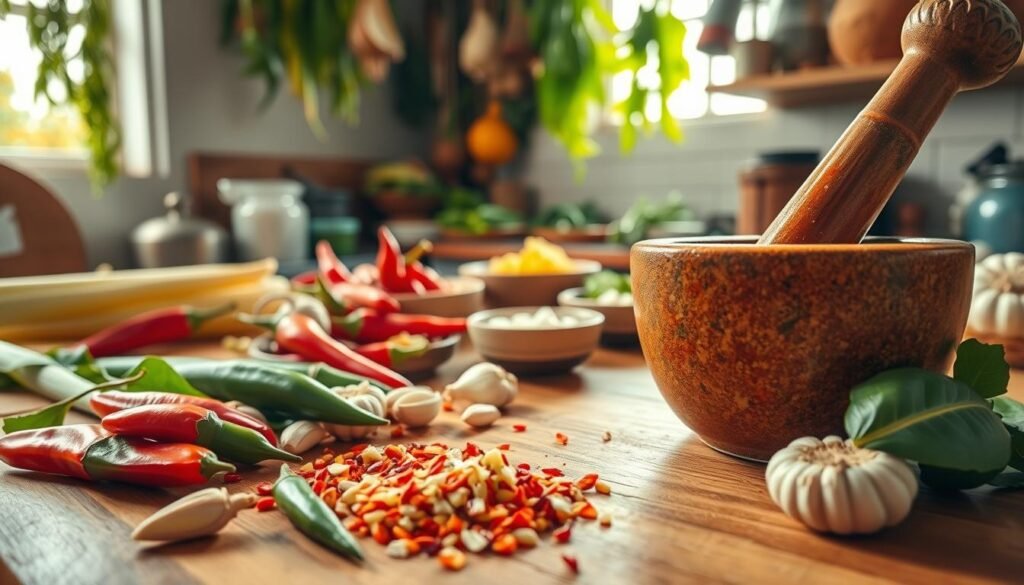
Unlocking the secret to authentic Thai flavors starts with understanding how to use Thai curry paste effectively. When you bloom your curry paste, you’re releasing a world of complex aromatics. These aromatics transform your keto coconut chicken curry from simple to spectacular.
Start by heating a bit of coconut oil in your pan. Add your Thai curry paste and watch it come alive. The paste will become fragrant and slightly darker, signaling that the spices are waking up. This technique helps intensify the flavor profile of your dish, creating depth that store-bought sauces can’t match.
Different Thai curry pastes offer unique flavor experiences. Red curry paste brings heat and intensity, green offers a fresher, more herbaceous touch, while yellow provides a milder, slightly sweeter note. Your choice depends on your spice tolerance and flavor preference. Pro tip: Start with less paste and add gradually to control the heat level.
For keto dieters seeking authentic Thai flavors, homemade curry paste gives you complete control over ingredients. If time is tight, high-quality store-bought options work perfectly. Just check the label to ensure no hidden carbs sneak into your low-carb meal.
Remember to store opened curry paste in an airtight container in the refrigerator. Pro chefs often freeze paste in ice cube trays for easy portioning. This ensures you’re always ready to create a delicious Thai-inspired meal.
Low-Carb Vegetable Additions That Complement Your Curry
Choosing the right keto-friendly vegetables can make your low-carb Thai food better. Bell peppers, zucchini, and baby bok choy are great choices. They add color, texture, and keep carbs low.
Mushrooms and green beans add depth to your curry. Cauliflower and broccoli are nutritious and fit your keto diet. Spinach adds nutrients quickly when added at the end.
Use bamboo shoots sparingly in your Thai curry. Aim for 1-2 cups of vegetables per serving. Cut them into small pieces for even cooking and looks.
Don’t use starchy veggies like carrots and potatoes. They can raise your carb count too much.
Pro tip: Cook harder veggies like cauliflower first. Add delicate greens like spinach just before serving. This keeps your veggies perfect and prevents overcooking.
Step-by-Step Cooking Instructions for Perfect Results
Making a keto Thai coconut chicken curry is all about precision. Start by preparing your ingredients. Cut the chicken into equal pieces and chop your low-carb veggies. Heat a large skillet over medium heat for this curry.
First, warm up the coconut oil. Then, sauté minced garlic and ginger for 30 seconds until they smell great. Add the Thai curry paste and stir fast to avoid burning. This step is key to bring out the spices’ flavors.
Now, pour in full-fat coconut milk and mix until the curry paste is gone. Add the chicken and simmer on low heat. This prevents the meat from getting tough. Cook for 8-10 minutes, stirring now and then, until the chicken is fully cooked and reaches 165°F.
For the last step, add your low-carb veggies. Bell peppers, zucchini, and spinach are perfect for this keto dinner. Let it simmer for 3-5 minutes. Taste and adjust with salt, pepper, or lime juice to enhance the flavors.
Your Thai coconut chicken curry is now ready. Remember, let it rest for a few minutes before serving. This allows the flavors to blend together beautifully.
Serving Suggestions That Keep Your Meal Keto-Compliant
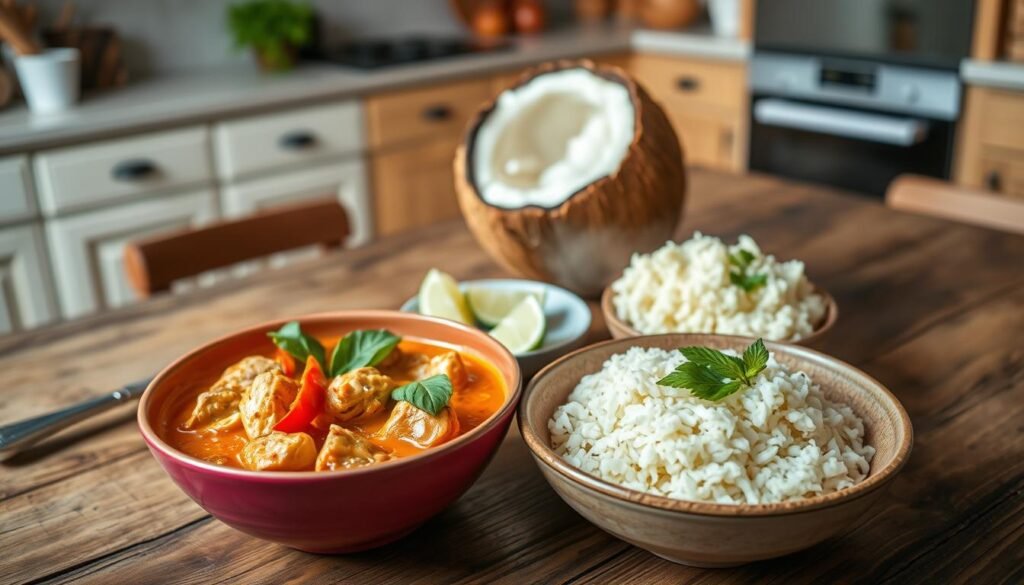
Looking for keto-friendly ways to serve your Thai coconut chicken curry? Forget about traditional rice. Instead, try cauliflower rice for a low-carb alternative. Just pulse cauliflower in a food processor and sauté it quickly. It’s a great base for your curry.
Want to get creative with your low-carb Thai dishes? Use zucchini noodles or roasted cauliflower steaks as unique serving options. Zucchini noodles are light and fresh, soaking up the curry’s flavors well. Cauliflower steaks are hearty and look great on the plate, all while staying keto-friendly.
Make your curry look amazing with colorful garnishes that taste great. Add fresh Thai basil, chopped cilantro, lime wedges, and thin red chilies. A sprinkle of crushed peanuts adds crunch, but use them sparingly to keep carbs low.
Don’t forget about drinks to complete your keto Thai meal. Try unsweetened iced tea or sparkling water with a lime wedge. If you prefer wine, a dry white can enhance the curry’s flavors while staying keto.
Nutritional Breakdown and Macro Counting
Knowing the keto macros for Thai coconut chicken curry is key to staying on track. One serving has the right mix of nutrients to keep you in ketosis. It has about 380-420 calories, fitting well within keto guidelines.
The macronutrients are balanced: 75% healthy fats, 20% protein, and 5% net carbs. Coconut milk and chicken are the main fat sources, giving you energy. The lean chicken provides protein, helping with muscle health and keeping carbs low.
For keto dieters, net carbs are what count. This recipe has 4-6 grams of net carbs per serving. The fiber from veggies like bell peppers and spinach helps balance carbs. Plus, it’s packed with vitamins, making it a nutritious choice.
For accurate tracking, use a digital food scale and nutrition app. This way, you can hit your keto macros without any doubt. You can also tweak the recipe by adding coconut cream for more fat or changing chicken cuts to meet your nutritional needs.
This curry fits any keto diet plan: standard, cyclical, or targeted. Now, tracking macros is not only easy but also tasty!
Storage Tips and Meal Prep Strategies
Learning how to prep curry meals can make keto planning easy. Your Thai coconut chicken curry is great for prep and storage. It can be your favorite dinner for the week.
Storing it in the fridge is simple. Put your curry in a sealed container for 4-5 days. A tip: The flavors get better overnight, making it even tastier the next day. Use cauliflower rice for individual portions to make lunches easy.
Freezing is also a good idea for meal planning. Your curry can be frozen for up to 3 months. Use containers that can expand. Tip: Freeze the curry and the serving base separately for better texture.
Reheating on the stovetop is best. Warm the curry gently and add coconut milk if it’s too thick. Microwave reheating is okay if you’re in a hurry. Make sure it heats to 165°F for safety.
Success in meal prep curry comes from smart prep. Cook in batches, prep veggies, and measure spices ahead of time. These steps can make healthy eating simpler.
Conclusion
You’ve now learned how easy and tasty a keto curry recipe can be. This Thai Coconut Chicken Curry makes your weeknight dinner special. It shows that low-carb eating doesn’t mean missing out on flavor or satisfaction.
Learning this Thai Coconut Chicken Curry opens up new cooking possibilities. Whether you’re an experienced cook or new to keto, this recipe lets you make amazing meals at home. Try different veggies, change the spice, and make it your own.
Eating keto doesn’t have to be dull. With recipes like this, you can enjoy creamy curries that excite your taste buds. Your kitchen is now a place for tasty, healthy meals that are full of excitement.
We’d love to hear about your keto curry adventures! Share your changes, successes, and questions in the comments below. Your creativity could inspire others to try new things in low-carb international cooking.
Printable Recipe Card
Want just the essential recipe details without scrolling through the article? Get our printable recipe card with just the ingredients and instructions.