Keto Creamy Tomato Basil Soup
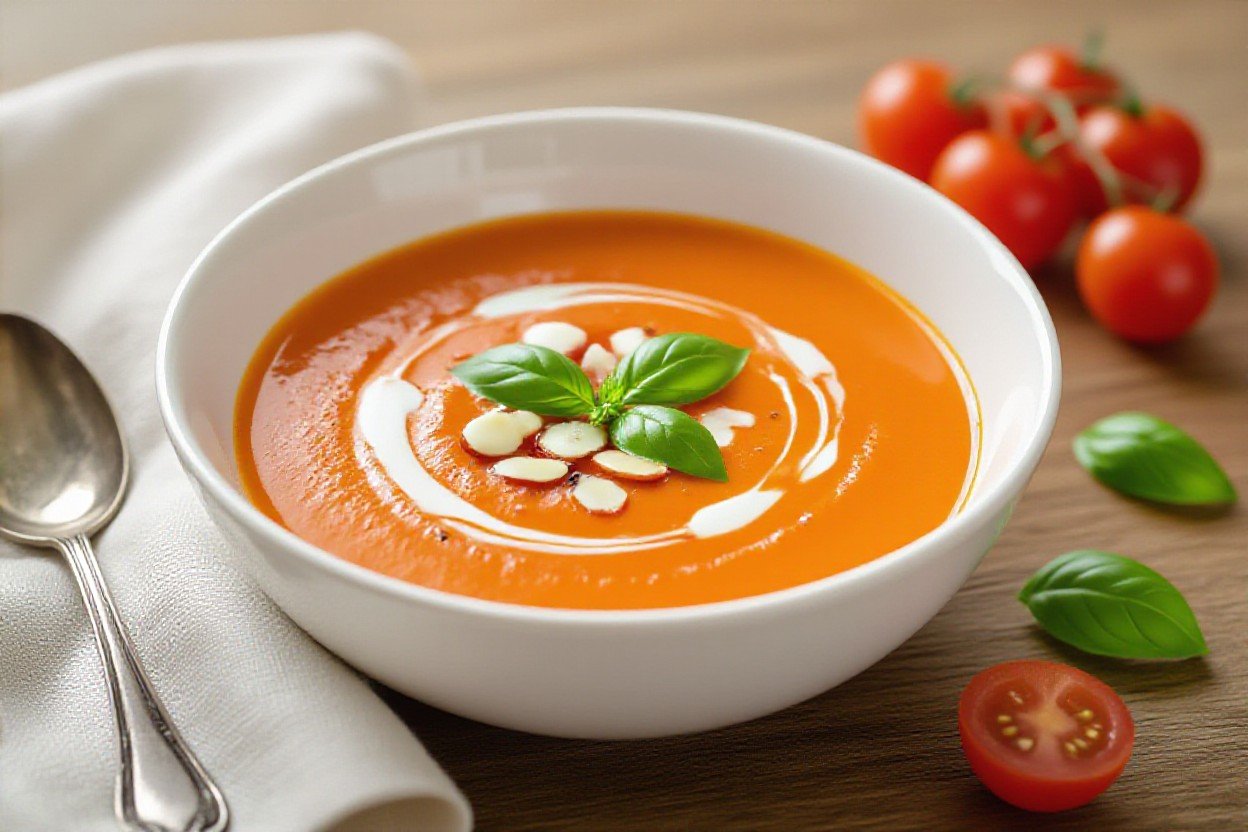
With its rich, velvety texture and vibrant basil aroma, this Keto Creamy Tomato Basil Soup shows you how to replace carbs without sacrificing flavor; using heavy cream or coconut cream, ripe tomatoes, fresh basil, and optional Parmesan, you can create a satisfying, low‑carb meal that supports ketosis, simplifies prep, and becomes a reliable addition to your weeknight rotation.
Ingredients
Key Ingredients
For a 4-serving batch you’ll typically use a 28-oz (800 g) can of whole peeled San Marzano tomatoes (or about 4 cups of roasted fresh tomatoes), 1 to 1¼ cups (240-300 ml) heavy cream, 2 cups (480 ml) chicken or vegetable broth, 4 tablespoons (56 g) unsalted butter, 1 medium onion (≈150 g) diced, 2-3 garlic cloves, and a packed cup (≈25 g) of fresh basil leaves. Finish with ½ cup (45-50 g) grated Parmesan, salt, black pepper, and 1-2 tablespoons olive oil for sautéing; for keto texture control you can add ⅛-¼ teaspoon xanthan gum or 2 ounces (56 g) cream cheese if you prefer a thicker finish.
Beyond quantities, pay attention to how each ingredient affects macros: heavy cream and butter increase fat to keep servings satiating on keto, Parmesan adds savory umami and lowers perceived sweetness, and a single 28-oz can of tomatoes used across four servings typically contributes to an estimated 4-6 g net carbs per serving depending on brand and whether you strain juices-so check labels and adjust portioning to keep your daily carbs in range.
Suggested Variations
Add roasted red bell pepper (½ cup) for a smoky layer, or swap heavy cream for ¾ cup full-fat coconut milk to make the soup dairy-free while keeping fat high; you can also stir in 4 oz (115 g) cream cheese or 1 cup shredded rotisserie chicken to boost creaminess or protein without adding carbs. For heat, fold in ½ teaspoon red pepper flakes or one seeded jalapeño, and for herb-forward twists try 2 tablespoons of basil pesto swirled in per bowl or replace basil with ½ cup cilantro plus a squeeze of lime for a brighter finish.
When incorporating proteins or bulk-like 1 cup shredded chicken (≈22 g protein) or 4 oz Italian sausage (adds roughly 12-16 g protein and mostly fat)-you’ll change mouthfeel and calorie density but not net carbs; swapping to coconut cream alters flavor and can add 1-2 g more carbs per serving depending on the product, so weigh those trade-offs against your daily allowance.
Experiment systematically: if you add water-rich items such as roasted peppers, reduce broth by ¼ cup to maintain body; use ⅛ teaspoon xanthan gum per cup of soup to thicken without starch, and account for condiments-1 tablespoon of pesto typically contributes about 0.5-1 g net carbs, so track those small additions to keep your per-serving carb target consistent.
Preparation
You should prep ingredients so the cook time stays tight and flavors layer predictably: halve 1 lb (450 g) fresh tomatoes or open a 28 oz (800 g) can of San Marzano-style tomatoes, core and roughly chop one medium onion, mince 3-4 garlic cloves, and pack about 1 cup (25 g) fresh basil leaves. Measure 2 tablespoons butter or ghee and 1 tablespoon olive oil, 2 tablespoons tomato paste, and 1 cup (240 ml) low-sodium chicken or vegetable broth; having these at hand prevents overcooking while you forage for items.
When using fresh tomatoes, blanch in boiling water 60-90 seconds, then shock in ice water to slip skins, or roast at 425°F (220°C) for 18-25 minutes to concentrate sugars and deepen color. If you want ultra-silky texture, plan to strain the soup through a fine-mesh sieve after blending; otherwise an immersion blender yields rustic body and keeps prep minimal.
Cooking Method
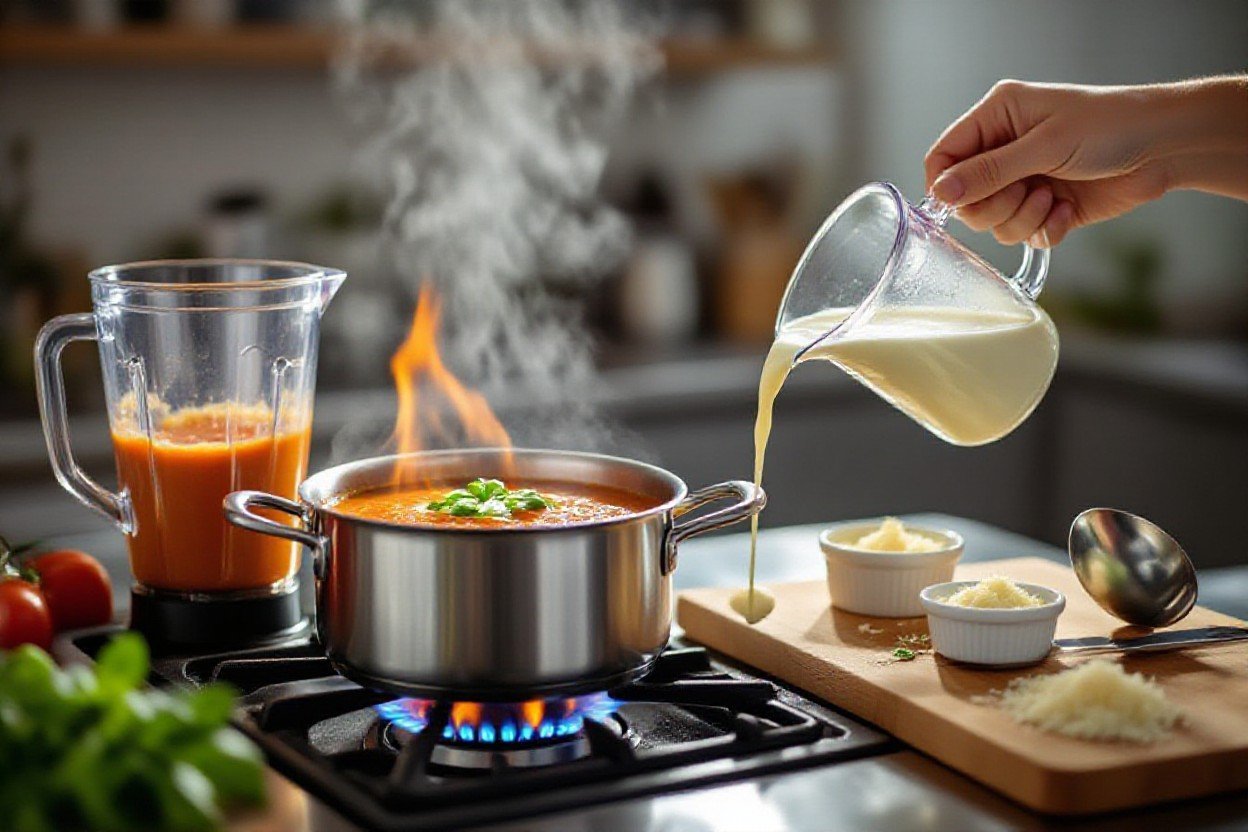
Start on medium heat with the butter and oil in a heavy-bottomed pot; add the diced onion and cook 8-10 minutes until soft and lightly caramelized, then stir in the garlic for 30-45 seconds. Add 2 tablespoons tomato paste and cook another 2-3 minutes until the paste darkens-this Maillard step adds depth that replaces sugar while staying keto-friendly. Pour in the tomatoes and 1 cup broth, bring to a gentle simmer, and cook uncovered 15-20 minutes to meld and reduce slightly.
Blend the pot in 2-3 batches with an immersion or countertop blender until smooth, then return to low heat and stir in 1/2-3/4 cup heavy cream or 1/2 cup full-fat coconut milk for a dairy-free option. Heat gently-do not boil-after adding cream to avoid separation; finish with 1 cup fresh basil folded in off heat, ¾-1 teaspoon kosher salt to start (adjust to taste), and ½ teaspoon black pepper, then let the soup rest 5 minutes so flavors integrate.
Tips for Optimal Flavor
You can maximize brightness by staging acidity adjustments: taste after the initial simmer and again after the cream is added, then tweak with 1 teaspoon lemon juice or 1/8 teaspoon baking soda if acidity feels out of balance. Use San Marzano-style canned tomatoes for consistent sweetness and acidity year-round-one 28 oz can yields a reliably balanced base for two to four servings depending on portion size.
Layer seasoning during cooking rather than dumping salt at the end; add a pinch of salt with the onions, another pinch when the tomatoes go in, and a final adjustment after the cream so you can gauge the real flavor. If you want a deeper umami note without carbs, stir in 1-2 teaspoons anchovy paste or 1 tablespoon grated Parmesan during the simmer, or use a splash (1-2 teaspoons) of Worcestershire sauce as an alternative.
- Caramelize the onions for 8-10 minutes to develop natural sweetness and reduce the need for sweeteners.
- Roast tomatoes at 425°F (220°C) for 18-25 minutes to concentrate flavor if fresh ones are in season.
- Use 2 tablespoons tomato paste and cook it down 2-3 minutes to add savory depth without extra carbs.
- Perceiving the balance between acidity and creaminess early on lets you avoid late corrections that mute basil and aromatics.
For more nuanced seasoning, taste in three stages-after sautéing aromatics, after simmering the tomatoes, and after adding cream-so you can compensate with small, specific changes like ½ teaspoon lemon juice, a pinch of erythritol (0.25-0.5 g) if you want a trace of sweetness, or 1/8 teaspoon baking soda to tame excess acidity.
- Blend hot in small batches and strain if you want a velvety finish that feels restaurant-quality.
- Reserve 1-2 tablespoons of basil and a drizzle of olive oil per bowl as garnish to preserve fresh aromatics.
- Freeze portions without cream; add cream when reheating to maintain texture and prevent separation.
- Perceiving how small changes-5-10 seconds more caramelization or ¼ teaspoon extra lemon-shift the final profile will help you dial the soup to your taste.
Nutritional Benefits
Keto-Friendly Components
You’ll notice the soup’s base-heavy cream, cream cheese or coconut cream, and a splash of olive oil-keeps total carbohydrates low while providing satisfying fat: a typical 1-cup serving prepared this way runs about 250-350 kcal with roughly 3-6 g net carbs, 20-28 g fat, and 6-10 g protein, depending on whether you add cheese or bone broth. The natural fiber and water content of tomatoes reduce the net-carb impact, and using full‑fat dairy or oils helps you meet typical ketogenic ratios (often 70-75% fat, 15-25% protein, 5-10% carbs by calories) without sacrificing flavor.
If you want to fine‑tune macros, you can swap ingredients to shift the numbers: replacing heavy cream with coconut cream keeps carbs similar but makes it dairy‑free, while stirring in 1-2 oz of grated Parmesan increases protein by about 8-12 g per serving and adds calcium. Adding shredded chicken (30 g cooked) will boost protein by roughly 7 g and lower the percentage of calories from fat, which is useful if you’re targeting a higher-protein keto approach.
Health Benefits of Tomato and Basil
Tomatoes contribute more than flavor: they’re a concentrated source of lycopene, vitamin C and potassium, with raw tomatoes providing roughly 14-20 mg vitamin C and about 200-300 mg potassium per 100 g. Because you cook the tomatoes for the soup, lycopene becomes more bioavailable-studies show processed or cooked tomato products significantly increase lycopene absorption compared with raw fruit-so each bowl delivers potent antioxidant activity that supports vascular health and oxidative stress reduction.
Basil adds complementary phytonutrients and micronutrients; its imperative oils (eugenol, linalool) exhibit anti‑inflammatory and antimicrobial properties in laboratory studies, and fresh leaves supply useful amounts of vitamin K that supports bone health and normal blood clotting. Including a generous handful of basil in your blended soup both enhances the antioxidant profile and provides volatile compounds that pair well with dietary fats to improve overall uptake of fat‑soluble nutrients.
More specifically, combining cooked tomatoes with healthy fats in this recipe increases absorption of lycopene and other carotenoids, and the polyphenols in basil can work synergistically to modulate inflammatory pathways-so your bowl is not only low in carbs for ketosis but also delivers targeted micronutrients and plant compounds linked in epidemiological research to lower cardiovascular risk and improved metabolic markers.
Serving Suggestions
You can serve this soup in 1-cup (240 ml) portions for a light lunch or 1½-cup (360 ml) portions as a main; those sizes help control calories and carbs while keeping mouthfeel satisfying. Reheat gently over low heat to about 140-160°F (60-71°C), whisking in 1-2 tablespoons of heavy cream or mascarpone per quart to restore silkiness if it’s been chilled overnight.
When plating for a group, ladle the soup into warmed bowls to keep it at an ideal eating temperature for 10-15 minutes, and time garnishes so herbs stay bright-add delicate basil chiffonade (about 1/4-inch ribbons) just before serving for peak color and aroma.
Accompaniment Ideas
You’ll extend the meal with low-carb sides that add texture and fat: a single slice of almond-flour keto bread (typically 3-5 g net carbs) or 2-3 Parmesan crisps provide crunch without blowing your carb target. For protein, serve 3-4 grilled shrimp or 2-3 ounces of shredded rotisserie chicken alongside the bowl to make a 20-30 g protein plate that keeps you full longer.
Include a simple green salad dressed with 1 tablespoon olive oil (14 g fat) and a splash of lemon to cut richness; roasted cauliflower florets tossed with 1 teaspoon smoked paprika add a savory counterpoint and 2-3 g net carbs per 100 g. Additions like 1 tablespoon toasted pine nuts (about 50 kcal) contribute crunch and visual contrast.
- Keto bread or almond-flour crackers for dipping (1 slice or 5 crackers ≈ 3-5 g net carbs).
- Protein options: 3-4 grilled shrimp or 2-3 oz shredded chicken (20-30 g protein).
- Vegetable sides: roasted cauliflower or sautéed spinach (2-3 g net carbs per 100 g).
- Any herb oil drizzle-1 teaspoon basil oil or chili oil adds aroma and sheen.
Presentation Tips
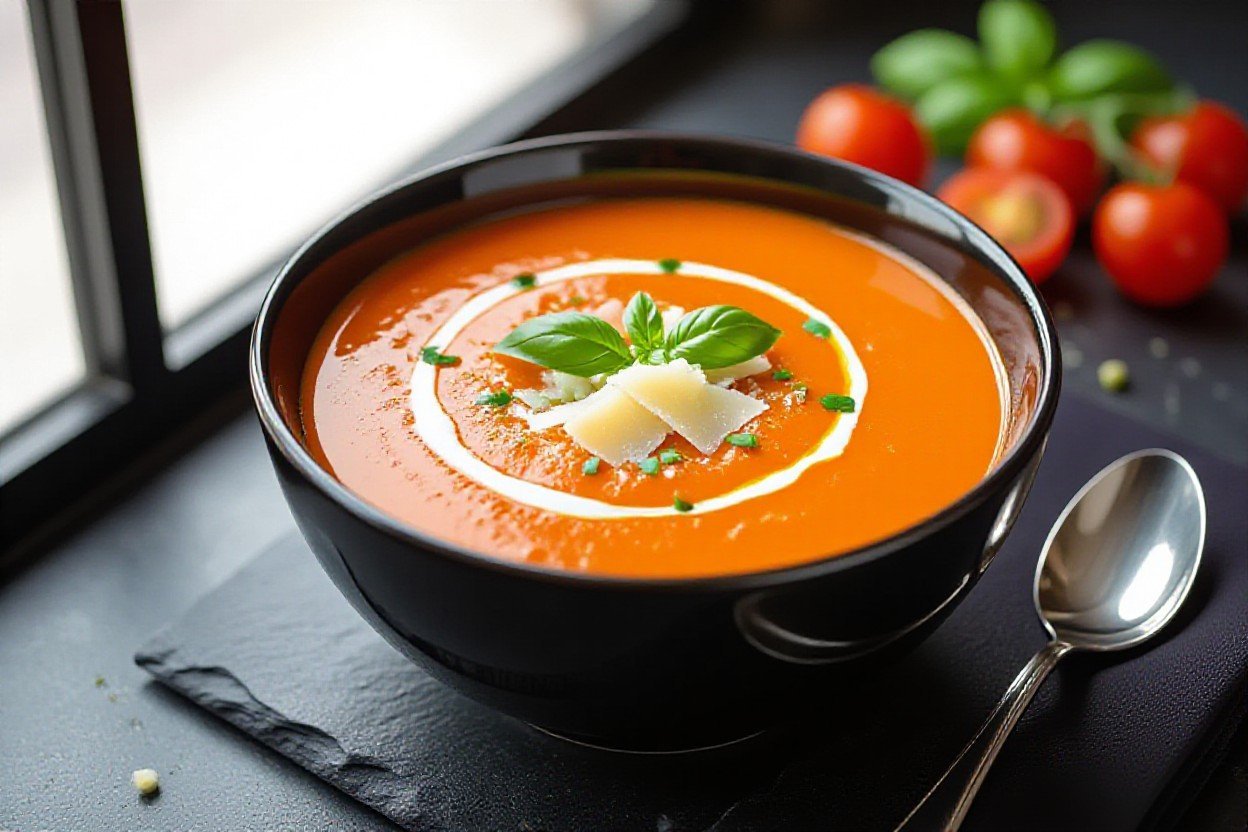
You should aim for contrast: a glossy surface, a bright green chiffonade, and a crisp garnish create an inviting bowl. Use a ladle to make a smooth, centered pool and add a 1-tablespoon cream swirl using the back of a teaspoon to make a decorative comet or spiral-this technique is quick and reproducible for 8-12 servings at a dinner party.
Consider height and texture on the bowl’s rim: rest a 2-3-inch Parmesan tuile or a sprig of basil across one edge, sprinkle 1 tablespoon of toasted seeds for crunch, and keep garnishes to the side so guests can mix them in as they eat.
- Make a cream or olive oil swirl immediately after ladling for a photo-ready finish.
- Use warmed, shallow bowls (8-10 oz capacity) to concentrate aroma and maintain temperature.
- Garnish ideas: basil chiffonade, a pinch of flaky sea salt, or a single Parmesan crisp.
- Any warmed bowl and a drizzle of basil oil will heighten aroma and keep the soup tasting fresh longer.
For more refined plating when serving guests, prep garnish stations with pre-chiffonaded basil, measured 1-tablespoon toasted pine nuts, and pre-baked Parmesan tuile so you can plate 6 bowls in under 3 minutes; this approach reduces heat loss and ensures each bowl looks identical on the table.
- Set up a garnish station so you can plate quickly and consistently.
- Use measuring spoons for consistent garnish portions (1 tablespoon pine nuts, 1 tsp oil).
- Finish each bowl at the pass to retain temperature and visual impact.
- Any final herb sprig placed immediately before serving preserves color and aroma.
Common Mistakes to Avoid
Ingredient Substitutions
When you swap heavy cream, aim for equivalent fat and texture: for a 4-serving pot that calls for 1/2 cup (120 ml) heavy cream, use 1/2 cup full‑fat coconut milk if you accept a mild coconut note, or about 3 oz (85 g) mascarpone thinned with 1-2 tablespoons water to match richness without thinning the soup. Plain Greek yogurt and low‑fat dairy will split when heated; if you must use yogurt, temper it by whisking a ladle of hot soup into the yogurt before stirring it back in.
Substituting tomatoes and herbs changes carbs and flavor intensity: one cup (240 ml) canned crushed tomatoes typically contains about 8-10 g total carbs, so pick “no salt added” or San Marzano style for cleaner taste. Swap dried basil at a 1:3 ratio (1 tbsp dried = 3 tbsp fresh) and prefer bone or low‑sodium vegetable broth to keep net carbs low; also be cautious with nut‑based creams-cashew or almond purées add measurable carbs and should be counted toward your daily 20-30 g net carb limit.
Cooking Errors
Overcooking aromatics and under‑reducing tomatoes are common pitfalls: sauté onions until translucent and lightly caramelized (about 6-8 minutes) and limit garlic to 30-60 seconds once fragrant to avoid bitterness. Allow the tomato base to simmer 15-20 minutes to concentrate flavor and mellow acidity; if the soup tastes sharp, a pinch of baking soda (around 1/8 teaspoon per 4 cups) will neutralize excess acid without altering texture.
Heating dairy too quickly causes separation-either reduce heat to low before adding cream or temper the cream by whisking in a ladle of hot soup first. Avoid overblending hot soup in a sealed counter blender: blend in batches with the lid vented or use an immersion blender to prevent pressure buildup, and reserve final salt and acid adjustments until after blending so you can balance flavors precisely.
If the soup curdles, rescue it by whisking in 1-2 tablespoons of cold butter or a splash of cold cream off the heat, or reblend briefly at low speed; to thicken a thin batch, simmer uncovered for 10-15 minutes, stir in 1 cup cauliflower purée, or use 1/8-1/4 teaspoon xanthan gum per 4 cups whisked in gradually to avoid clumping.
Storage and Reheating
Storage Guidelines
Cool the soup to near room temperature within 2 hours, then transfer into airtight containers; for fridge storage use shallow containers to speed cooling. Store in the refrigerator for 3-4 days or freeze in 1- to 2-cup portions for up to 3 months-leave about 1/2 inch headspace if freezing in jars and label each container with the date.
Expect some texture changes after freezing because dairy-based emulsions can separate. To minimize this, blend the soup briefly before freezing or plan to re-emulsify after reheating with an immersion blender. Hold back fresh basil and any finishing olive oil or cream, adding them after reheating to preserve color and brightness.
Reheating Techniques
On the stovetop, reheat over low-medium heat in a heavy-bottomed pot, stirring frequently; 2 cups will typically take 5-10 minutes to reach serving temperature without boiling. If the soup thickens or looks curdled, whisk in 1-2 tablespoons of broth or heavy cream per cup and finish heating until it reaches an internal temperature of 165°F (74°C).
For single servings use the microwave in 30-second bursts at 50-70% power, stirring between intervals-most 1-cup portions take 1.5-3 minutes total. Cover with a microwave-safe lid or plate to retain steam and check the temperature with a thermometer to ensure it reaches 165°F.
If you’re reheating from frozen, thaw overnight in the refrigerator (about 24 hours) and then reheat slowly on the stovetop for 10-15 minutes, blending with an immersion blender if separation occurs; finish by stirring in fresh torn basil and a tablespoon of cream or a drizzle of olive oil to restore silkiness and brightness.
To wrap up
Summing up, Keto Creamy Tomato Basil Soup proves that low-carb eating does not mean sacrificing comfort or flavor: you enjoy a silky tomato base enriched with cream and bright basil, plus satisfying fats that support your ketogenic goals, making it a dependable option for weeknight dinners or a cozy meal when you want something soothing yet nourishing.
When you prepare it, prioritize ripe or high-quality canned tomatoes, full-fat cream or coconut cream for richness, and fresh basil for lift; you can batch-cook and portion the soup to streamline your meal plan while adjusting seasoning to maintain depth without adding carbs.