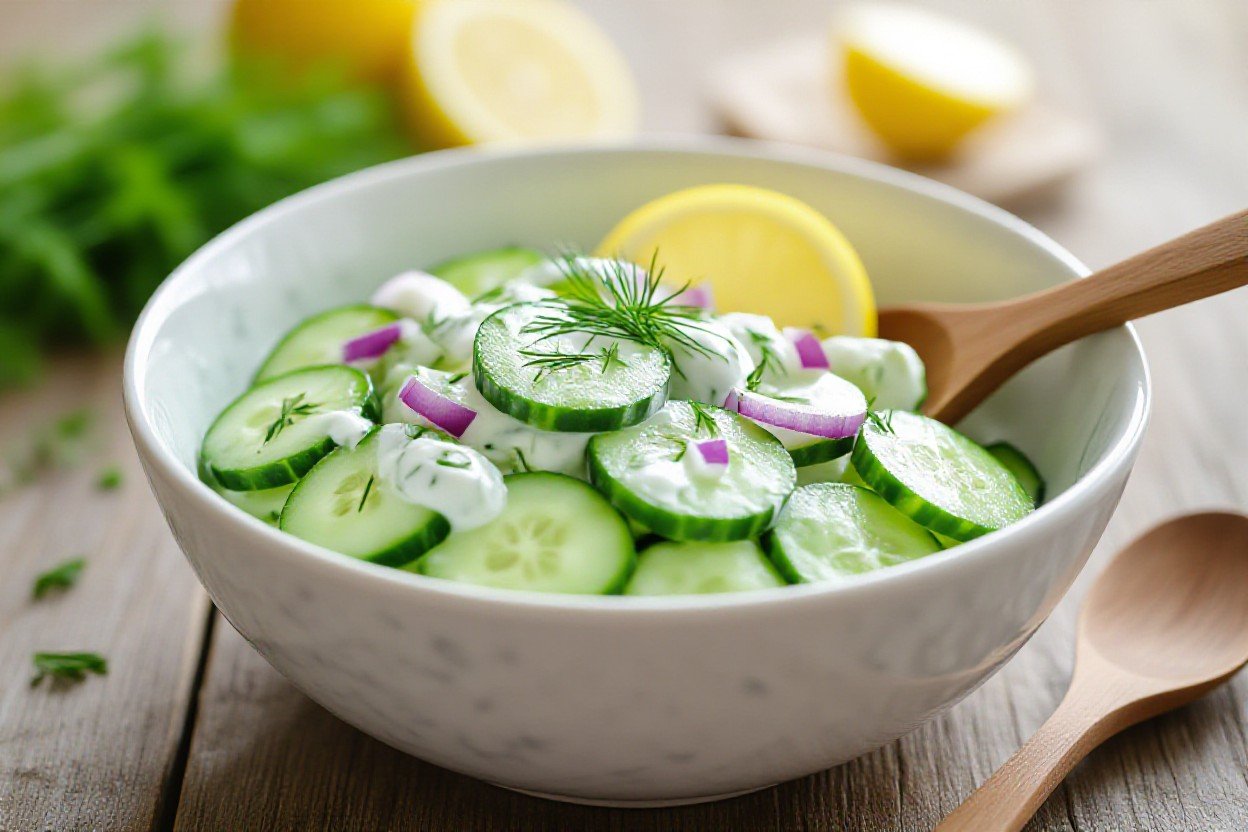
Keto Creamy Dill Cucumber Salad
Overall, this Keto Creamy Dill Cucumber Salad offers a low-carb, refreshing side that keeps your macros on track while delivering rich, tangy flavor and crisp texture; you’ll learn how simple ingredients and quick techniques yield a make-ahead dish that supports your keto goals and suits family meals or meal prep.
Ingredients
Fresh Cucumbers
You’ll want firm, thin-skinned cucumbers for the best texture – English (hothouse) or Persian varieties work especially well because they have fewer seeds and thinner skin. For four servings, use about 2 medium English cucumbers (roughly 12-14 oz each), which will yield approximately 5-6 cups of thinly sliced rounds; Kirby or Persian cukes require 3-4 to reach the same volume.
Slice to between 1/16″ and 1/8″ for a crisp bite that soaks up dressing without becoming mushy. If your cucumbers are very watery, sprinkle about 1 tsp kosher salt over the slices, let sit 15-20 minutes, then drain or gently squeeze out excess liquid – this prevents a watery dressing and keeps your salad bright and crunchy.
Creamy Dressing Components
Build the dressing around full‑fat fat sources to keep the dish keto-friendly: start with 1/2 cup mayonnaise (avocado‑oil or olive‑oil mayo if you prefer), add 1/3 cup sour cream or 2-3 tbsp plain full‑fat Greek yogurt, and thin with 1-2 tbsp heavy cream if needed. Brighten with 1 tbsp fresh lemon juice or 1 tsp apple cider vinegar, 1 tsp Dijon mustard, 1 small minced garlic clove (or 1/4 tsp garlic powder), 1/2 tsp fine salt and 1/4 tsp freshly ground black pepper.
Using these proportions you’ll get a tightly emulsified, spoonable dressing that clings to cucumber slices without pooling; whisk vigorously or pulse in a small blender for 10-15 seconds to fully emulsify and release garlic and mustard aromatics.
Substitutions and macro notes: choosing full‑fat mayo and sour cream keeps carbs minimal (sour cream ~1-2 g carbs per 2 tbsp; plain Greek yogurt has slightly more protein and 1-3 g carbs per 2 tbsp), while heavy cream adds richness with negligible carbs. If you prefer less fat, swap 2 tbsp Greek yogurt for some mayo but account for a slightly higher protein and carb count; for oil‑based flavor, an avocado‑oil mayo preserves keto ratios and adds a neutral taste.
Dill and Seasonings
Fresh dill gives the salad its signature flavor – plan on about 2 tbsp chopped fresh dill (loosely packed), which is roughly 1/4 cup before chopping. If you’re out of fresh, use 2 tsp dried dill (the general conversion is 1 tbsp fresh = 1 tsp dried), but note dried lacks the bright, herbaceous lift of fresh herb.
Complement dill with 2 tbsp finely chopped chives or green onion for a mild bite, plus 1 tbsp minced shallot or red onion if you like more pungency; finish with 1/2 tsp onion powder or a pinch of crushed red pepper for heat, adjusted to taste. Salt and black pepper levels from the dressing carry through, so taste after mixing to dial seasoning.
For layering flavors, add 1 tsp lemon zest when you want extra brightness without more acid, and avoid dill seed here – it imparts a caraway‑like note that changes the profile; stick with dill weed (fresh) for the classic cucumber‑dill pairing.
Preparation Steps
Gather your ingredients and tools before you start: 2 large English cucumbers (or 3-4 Kirby/gherkin cucumbers) will yield roughly 4 cups of sliced cucumber, 1 cup full‑fat sour cream, 2 tbsp mayonnaise, and 2 tbsp fresh dill for a standard batch that serves 4 as a side. Prep time is about 15-20 minutes; factor in 10-15 minutes of salting/draining and at least 30 minutes of chilling so flavors meld and textures settle.
Sequence matters for texture and efficiency: slice first, then salt and drain the cucumbers while you whisk the dressing; this keeps the dressing from diluting as the cucumbers release water. If you double the recipe, maintain the cucumber:dressing ratio (about 4 cups sliced to 1¼ cups dressing) and extend chilling time to 45-60 minutes for best flavor integration.
Slicing the Cucumbers
Slice to the thickness you prefer: 1/8 inch (≈3 mm) produces a crisp, ribbon‑like salad, while 1/4 inch (≈6 mm) yields chunkier, more substantial bites. Use a mandoline set to 2-3 mm for uniform thin slices or a very sharp chef’s knife; if using large, seedy cucumbers, halve lengthwise and scoop seeds before slicing to avoid excess moisture.
Salt the slices lightly-about 1 tsp kosher salt per 2 cucumbers-then spread them on a colander or paper towel for 10-15 minutes and blot or gently squeeze to remove the drawn water. If you’re short on time, plunge slices into ice water for 3 minutes to tighten the texture, then pat dry before dressing.
Making the Creamy Dressing
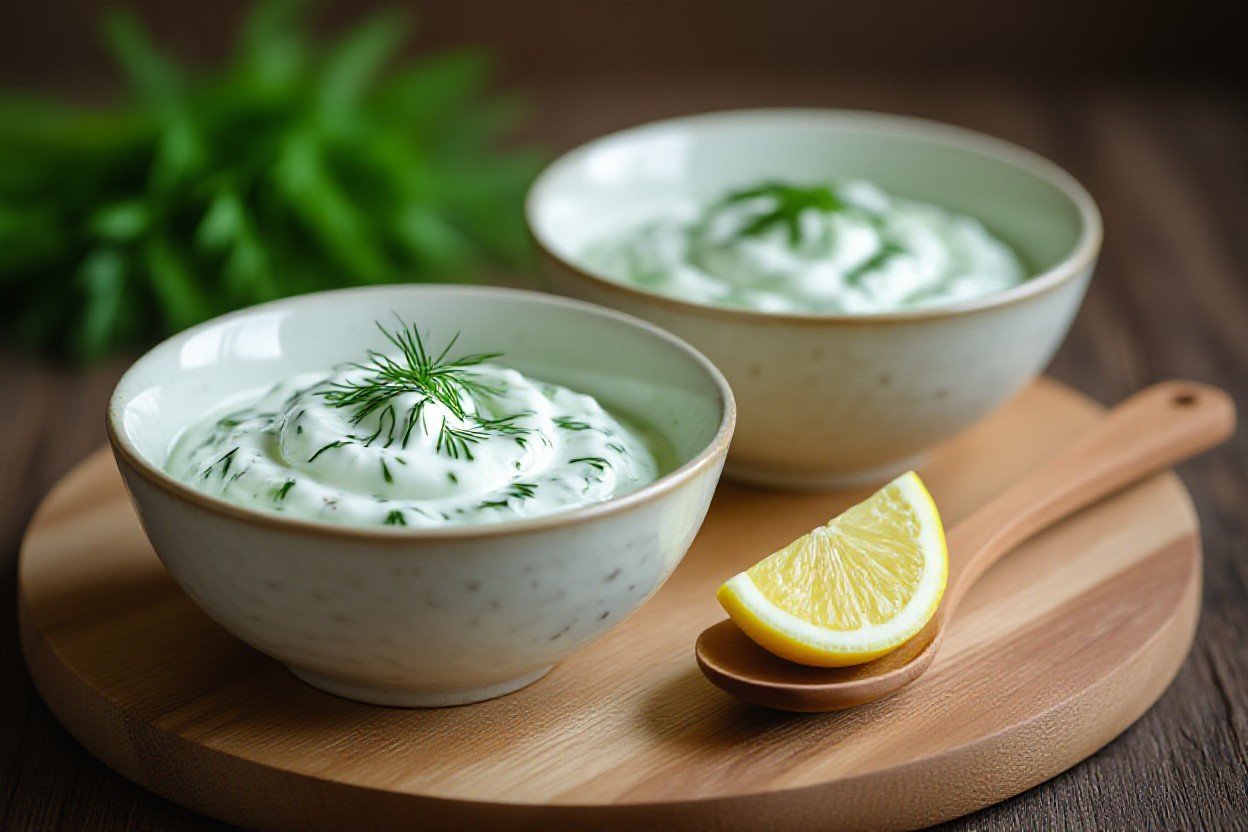
Combine 1 cup full‑fat sour cream (or plain Greek yogurt), 2 tbsp mayonnaise, 2 tbsp finely chopped fresh dill, 1 tbsp lemon juice (or 1 tbsp apple cider vinegar), 1 small minced garlic clove (or 1/2 tsp garlic powder), 1/2 tsp kosher salt and 1/4 tsp freshly ground black pepper; whisk until smooth-this yields about 1¼ cups of dressing, enough for 4 servings. Add 1 tsp Dijon mustard or 1-2 tbsp finely chopped red onion if you want extra depth.
Taste and adjust: start with the listed salt and acid, then increase lemon or vinegar by 1/2 tsp increments if you want more brightness; if the dressing is too thick after chilling, thin with 1-2 tbsp heavy cream or cold water to reach a spreadable consistency. Whisking vigorously or pulsing 10-15 seconds in a mini food processor gives a silkier emulsion.
For variations, swap half the sour cream for Greek yogurt for tang (use a 50:50 split) or add 1 tbsp chopped chives and 1 tsp tarragon for herbaceous notes; the dressing keeps 3-5 days refrigerated at 4°C (≈39°F), though freshest flavors occur within 48 hours.
Combining Ingredients
Drain and blot the cucumber slices thoroughly, then fold them into the dressing using a spatula so each slice is evenly coated without being crushed; combine about 4 cups sliced cucumber with 1¼ cups dressing as your baseline. If using red onion, add 1/4 cup thinly sliced onion and toss gently; garnish with an additional tablespoon of chopped dill before chilling.
Let the assembled salad rest in the refrigerator for 15-30 minutes before serving to let the acid and herbs mellow; for the most consistent texture, chill 30-60 minutes. If you notice excess liquid after resting, tilt the bowl into a colander for a minute and reserve any drained liquid-adjust seasoning and add a splash of lemon if needed before serving.
When prepping for a gathering, either dress the cucumbers just before serving to maximize crunch, or dress them earlier and place on a paper towel-lined tray in the fridge to absorb extra moisture; keeping the dressing-to-cucumber ratio and a short chill will help retain both flavor and texture.
Nutritional Benefits
Low-Carb Advantages
A typical 1-cup serving of this creamy dill cucumber salad contains roughly 3-6 g net carbs depending on whether you use full‑fat Greek yogurt or sour cream, making it easy to fit into your 20-50 g/day keto target. Cucumbers themselves contribute only about 3.6 g total carbs per 100 g with roughly 0.5 g fiber, so you get volume and crunch with minimal impact on blood glucose.
Because the recipe centers on fats-mayonnaise or full‑fat dairy-you gain sustained satiety and a lower post‑meal glucose response; one tablespoon of mayo provides about 90-100 kcal and ~10-11 g fat, which helps you reach daily fat targets without adding carbs. If you need to trim carbs further, swap Greek yogurt for sour cream or increase mayo; that will lower net carbs while increasing caloric density, so adjust your portion sizes to keep your macros in balance.
Nutrient Profile of Key Ingredients
Cucumber, Greek yogurt, mayo, and dill each deliver distinct nutrients: per 100 g, cucumber supplies ~15 kcal, 3.6 g carbs, ~0.5 g fiber, ~147 mg potassium and ~16 µg vitamin K; plain full‑fat Greek yogurt (100 g) gives ~10 g protein, ~4 g carbs and 7-10 g fat; a tablespoon of mayonnaise contains ~90-100 kcal and ~10 g fat (largely unsaturated if made with avocado or olive oil); fresh dill contributes vitamin A, vitamin C, calcium and polyphenol antioxidants even in small amounts. Together you get a low‑carb, protein‑containing, fat‑forward side that also supplies micronutrients often underrepresented on keto.
Because vitamin K and other fat‑soluble compounds are present, combining cucumbers and dill with dietary fat in the dressing improves absorption-so the mayo or full‑fat yogurt isn’t just about macros, it enhances nutrient uptake. If you monitor sodium, be aware that store‑bought mayo and salted dairy can add sodium; choose low‑sodium or homemade options. As a practical example, a half‑cup serving of this salad will usually fall between ~150-220 kcal, ~12-20 g fat and roughly 2-5 g net carbs depending on ingredient choices and portion sizes.
Serving Suggestions
Perfect Pairings
You can turn this creamy dill cucumber salad into a balanced keto plate by pairing it with fatty proteins: 4 oz (115 g) grilled salmon provides roughly 23-25 g protein and 14-18 g fat, which complements the salad’s light acidity and fresh herbs. Alternatively, pan-seared ribeye or sirloin at 3-4 oz (85-115 g) delivers 20-28 g protein and enough fat to keep you satiated without adding carbs.
If you prefer poultry, 3 oz (85 g) roasted chicken thigh gives about 19-22 g protein and pairs well with the salad’s tang; for vegetarian keto options, serve with 2-3 oz (56-85 g) of fried halloumi or a 1/2 avocado (≈150-200 kcal, ~15 g fat) to add richness. When serving a crowd, plan on 1/2 cup (about 70-90 g) of salad per person as a side-one batch of this recipe typically yields 5-6 side servings if you keep portions conservative.
- 4 oz grilled salmon – 23-25 g protein; lemon and dill amplify the fish’s flavor.
- 3-4 oz roasted chicken thigh – 19-22 g protein; the salad cuts through the meat’s richness.
- Any leftover pulled pork or roast beef warmed and plated alongside makes for an easy low-carb meal.
Presentation Tips
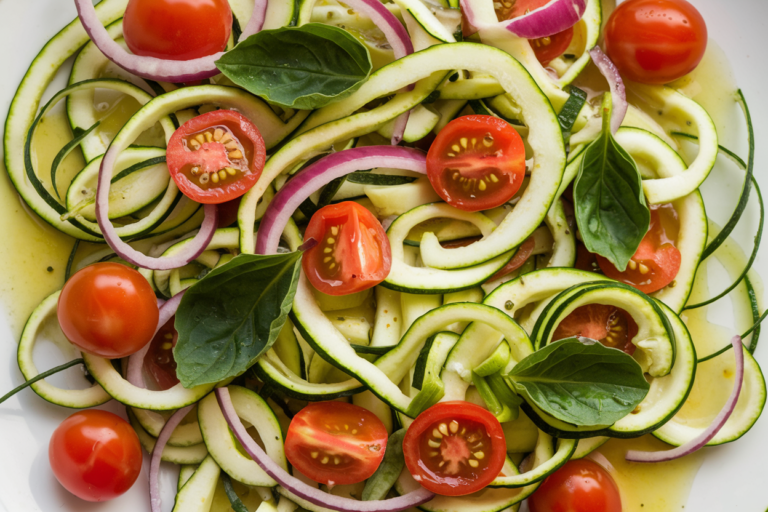
You’ll get more visual impact by slicing cucumbers uniformly: use a mandoline set to 2-3 mm for even rounds or a vegetable peeler for 6-8 cm ribbons that layer nicely. Chill the cucumbers and the finished salad in the fridge for 10-15 minutes before serving so the dressing chills and the cucumbers retain crunch; toss the salad with dressing about 10 minutes ahead to let dill and acid meld without turning vegetables limp.
Select servingware that keeps the salad crisp-shallow chilled glass bowls work well for family-style service and 4-6 oz (120-180 ml) ramekins are ideal for individual portions. Garnish each plate with a single dill sprig, 1/8 tsp lemon zest, and 1 tbsp toasted pumpkin or sunflower seeds for a 5-7 g fat/90 kcal boost and a pleasant textural contrast; portion at 1/2 cup per guest when offering other mains, or 1 cup if serving the salad as a light entrée.
For composed plating use an overlapping fan or tight spiral of cucumber slices to create height; press slices lightly into a small ring mold for neat stacks and finish with a tiny pinch of flaky sea salt (≈0.3 g) and two twists of fresh black pepper. You can also alternate thin cucumber ribbons with strips of smoked salmon or prosciutto for party platters that feed 8-10 people when you layer across a 12-inch (30 cm) serving board; tongs and a bench scraper make assembly faster and neater.
- Use a mandoline for consistent 2-3 mm slices to ensure even dressing distribution.
- Chill bowls and ramen-like ramekins for at least 15 minutes to keep the salad cold longer on the table.
- Any simple garnish-dill sprig, lemon zest, and 1 tbsp toasted seeds-elevates the presentation and adds texture.
Variations of the Salad
You can shift this salad from a light side to a hearty main by adjusting add-ins and proportions: for example, fold in 4 oz (115 g) flaked smoked salmon or 1 cup (about 150 g) shredded rotisserie chicken to serve two, or double the dressing and add 1 ripe avocado for extra creaminess. Small changes-swapping one tablespoon of chopped fresh dill for tarragon, or adding 2 tablespoons of toasted nuts-will change the flavor profile without breaking the keto ratio.
Additional Ingredients
Add-ins that complement the creamy-dill base include 2 tablespoons of crumbled feta or goat cheese for a tangy lift, 2 tablespoons of chopped walnuts or slivered almonds for crunch, and 1 tablespoon of capers for a briny punch. You can also mix in 2 hard-boiled eggs (chopped) for extra protein per every two servings, or 3-4 ounces (85-115 g) of smoked trout or salmon to make the salad a more substantial entrée.
Herbs and aromatics change the salad subtly: use 1 tablespoon minced chives or 2 tablespoons minced fresh tarragon instead of dill for a different herbal note, and swap 1 tablespoon finely minced shallot for a milder onion flavor. Citrus additions-1 teaspoon lemon zest or 1 tablespoon lemon juice-brighten the dressing without adding carbs, while 1-2 tablespoons of chopped dill pickles or 1 tablespoon of chopped red onion increases acidity and texture.
Substitutions and Swaps
If you need to swap the base dairy, use a 1:1 ratio when replacing sour cream with full‑fat Greek yogurt, or replace half the mayonnaise with Greek yogurt to cut calories while keeping a thick dressing. For a mayo‑free version, 3/4 to 1 cup thick Greek yogurt will mimic the same body; for vegan or egg‑free options, use an equal volume of vegan mayonnaise. When substituting fresh herbs with dried, apply the standard conversion of 1 tablespoon fresh = 1 teaspoon dried.
Vegetable swaps are simple: substitute 2-3 Persian cucumbers for 1 large English cucumber, or use 1 small zucchini (thinly sliced and lightly salted) if cucumbers are out of season-allow it to drain 5-10 minutes so your dressing doesn’t get watery. To reduce bite, swap red onion for 2 tablespoons chopped chives or the white part of 1 scallion; both will keep carbs low while softening the raw-onion intensity.
When making multiple substitutions at once, focus on maintaining the salad’s balance of fat, acid, and texture: if you remove mayonnaise, add a tablespoon of olive oil or an extra yolk to preserve richness; if you swap cucumbers for zucchini, increase the salt-and-drain step to keep the dressing concentrated. Small, measured swaps (1-2 tablespoons or one herb change at a time) help you track how each change affects flavor and consistency so you can repeat combinations that work best for your palate.
Storage and Shelf Life
Best Practices for Storage
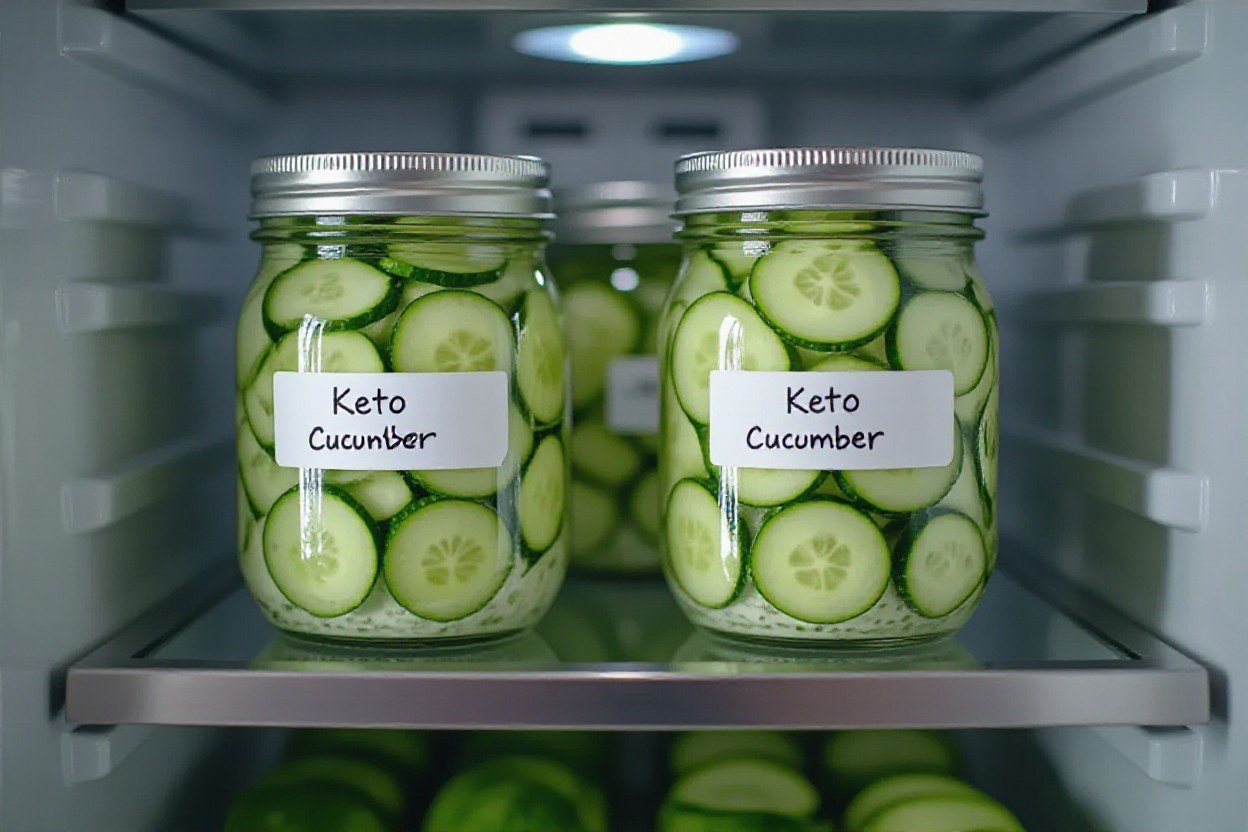
When you finish assembling the salad, cool it to fridge temperature quickly and transfer it into an airtight container; glass jars or BPA‑free plastic with tight lids work best because they prevent odor transfer and let you see the contents. Pat sliced cucumbers dry with paper towels before adding the dressing to limit excess water, or better yet store the dressing separately in a jar if you plan to keep the salad more than a day.
Place the container in the coldest part of your refrigerator (the back, not the door) and keep the internal temp at or below 40°F (4°C). Label the container with the prep date, use clean utensils each time you serve to avoid cross‑contamination, and avoid storing the salad near ethylene‑producing fruits like apples or bananas that can speed deterioration.
Recommended Duration
If the cucumbers are already dressed with mayo and sour cream or Greek yogurt, plan to eat the salad within 3 days for best texture and safety; quality and crunch typically decline after that. Storing the dressing separately extends usable life: undressed sliced cucumbers can remain crisp for 4-5 days in a sealed container with a paper towel to absorb moisture, while the dressing keeps for 5-7 days refrigerated.
Freezing is not recommended because cucumbers will become watery and mushy; if you must freeze, freeze only the dressing in a leak‑proof container for up to 1 month and expect some separation after thawing that you can re‑emulsify by whisking. Watch for signs of spoilage such as off smells, sliminess, or mold-if you detect any, discard the batch immediately.
Summing up
Upon reflecting, this Keto Creamy Dill Cucumber Salad delivers a bright, satisfying low-carb side that pairs creamy dressing with fresh dill and crisp cucumbers, giving you a flavorful option that complements grilled meats, eggs, or seafood. You can adapt the richness and seasoning to match your macros and taste, and optional additions like red onion, chives, or toasted seeds let you personalize texture and flavor without adding many carbs.
You’ll appreciate how quickly it comes together and how well it stores, making it a practical choice for meal prep and weeknight dinners; its balance of fat, acidity, and crunch helps keep meals interesting while supporting your ketogenic goals. With minimal ingredients and simple technique, you can rely on this salad to add freshness and variety to your low-carb repertoire.
Printable Recipe Card
Want just the essential recipe details without scrolling through the article? Get our printable recipe card with just the ingredients and instructions.