Keto Chicken Bacon Ranch Salad
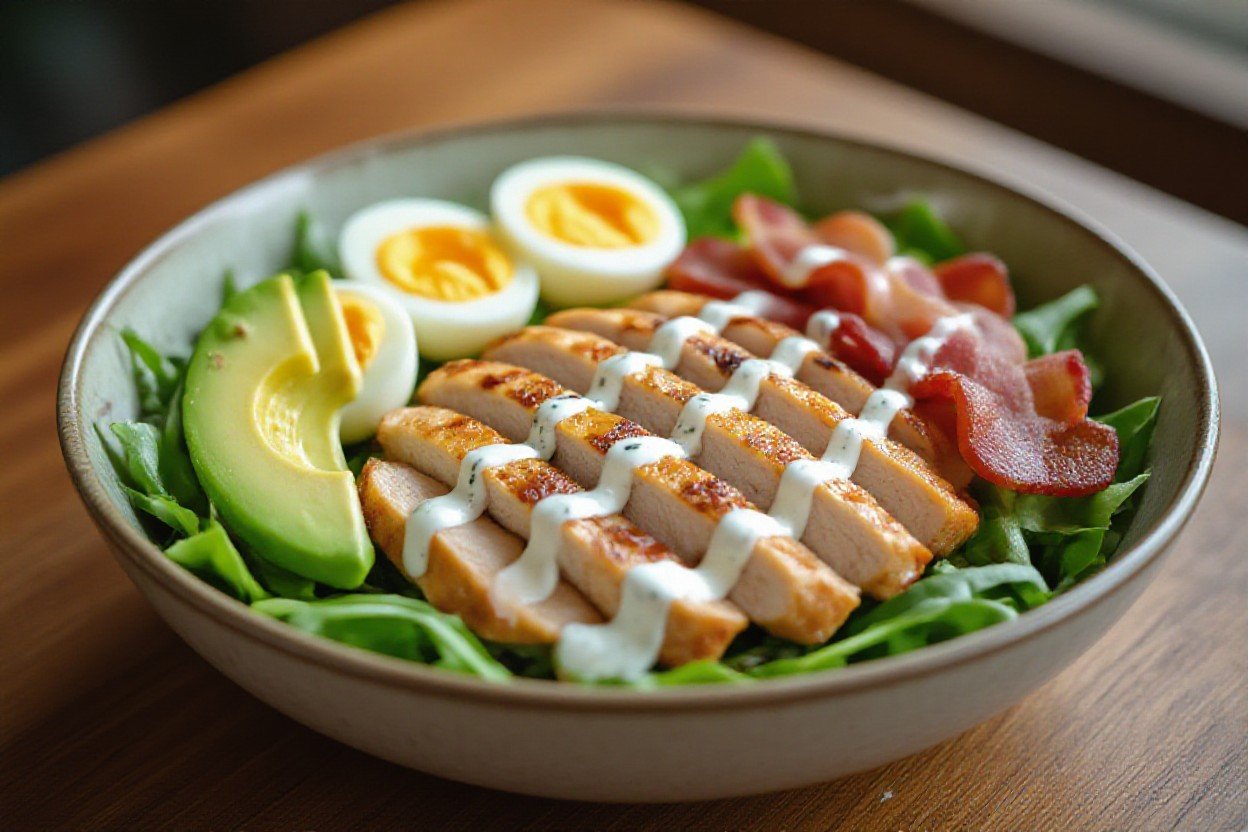
Just combine protein-rich chicken, crisp bacon, and tangy ranch dressing over low-carb greens to create a satisfying Keto Chicken Bacon Ranch Salad that supports your ketogenic goals. You’ll get a balanced mix of healthy fats and protein while keeping carbs low, making it ideal for meal prep or a quick dinner that aligns with your macros. This straightforward recipe offers flavor and nutrition without sacrificing your diet plan.
Ingredients
Chicken
You’ll want about 1 pound (450 g) of cooked chicken for a 4-serving salad; 100 g of cooked skinless chicken breast provides roughly 31 g of protein and about 165 kcal, so plan portions accordingly if you track macros. Use rotisserie chicken for speed, or cook 2 boneless skinless breasts by searing in a hot pan and finishing at an internal temperature of 165°F (74°C) to lock in juiciness without adding carbs.
Season simply with salt, pepper, garlic powder and a teaspoon of smoked paprika or a tablespoon of ranch seasoning so the chicken complements the dressing rather than competing with it. You can shred or cube the meat – shredding distributes flavor and dressing more evenly, while larger cubes make the salad heartier for meal-prep portions.
Bacon
Choose thick-cut or center-cut bacon and aim for 4-6 slices for a 4-serving salad; one cooked slice yields about 40-45 kcal and roughly 3-4 g of fat and protein, so three slices per serving gives the salad satisfying crunch and flavor without breaking your fat target. Cook on a rimmed baking sheet at 400°F (205°C) for 12-18 minutes depending on thickness to get consistent crispness.
Render and drain the bacon well – pat on paper towel or cool on a wire rack so it stays crisp when tossed with greens and dressing. You can reserve 1-2 tablespoons of the rendered fat to sear the chicken for extra depth, but measure it into your macros if you’re tracking fats closely.
For ingredient choices, scan labels: pick nitrate-free and sugar-free varieties when possible, or substitute pancetta for a porky, slightly less smoky profile; turkey bacon works as a lower-fat option but check carbs on flavored varieties like maple, which can add 1-2 g net carbs per slice.
Greens
Use a mix of romaine and baby greens (about 4 cups loosely packed, roughly 120-140 g) for volume with low carbs – romaine provides crunch, while baby spinach and arugula add tenderness and peppery notes. If you prefer a sturdier base for meal-prep, include 1-2 cups of chopped kale but massage it with 1 tsp olive oil and a squeeze of lemon to soften the leaves.
Varying greens also shifts micronutrients: kale and spinach boost vitamin K and iron, while butter lettuce increases water content and balance. For a single-serving guideline, plan on 2 cups loosely packed greens (approximately 60-70 g) per plate so the salad stays proportional to the protein and fat components.
Wash and dry your greens thoroughly – spinning them twice or blotting with paper towels prevents watery dressing and soggy bacon; stored with a dry paper towel in an airtight container, washed greens keep crisp for 4-5 days, which helps with weekly meal prep.
Dressing
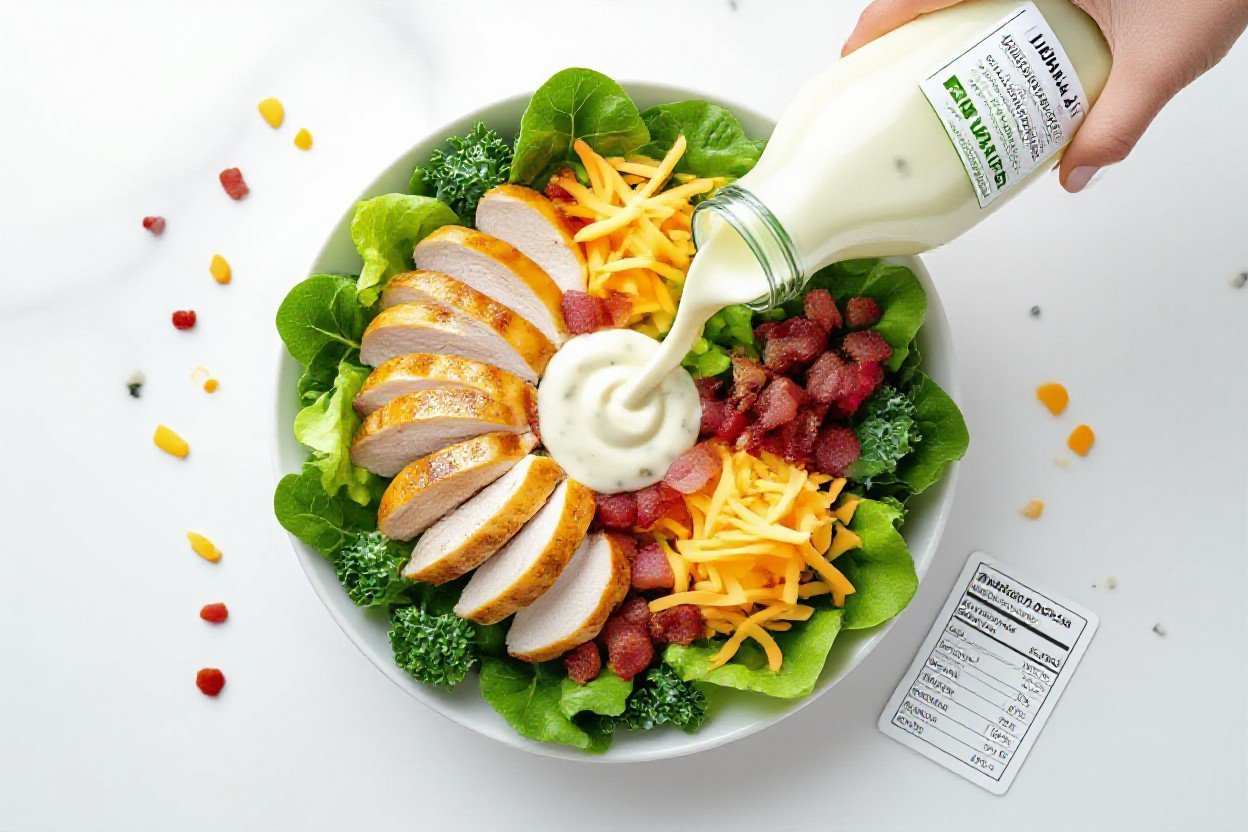
Make a keto-friendly ranch with full-fat ingredients: combine 1/2 cup mayonnaise, 1/4 cup sour cream, and 2-3 tablespoons heavy cream (or 1/4 cup buttermilk if you tolerate the carbs) for a creamy base. Add 1 teaspoon dried dill or 1 tablespoon chopped fresh dill, 1/2 teaspoon garlic powder, 1/2 teaspoon onion powder, 1 tablespoon chopped chives, and salt and pepper to taste – this ratio yields about 3/4-1 cup of dressing, enough for 4 servings at roughly 3-4 tablespoons each.
Whisk and chill the dressing at least 30 minutes so flavors meld and the texture thickens; using full-fat mayo and sour cream will give you roughly 10-15 g fat per 2-tablespoon serving, which aligns well with typical keto macro goals when you portion it across the salad.
Store homemade ranch in an airtight container in the fridge for up to 7 days, and give it a quick stir before using; if you want lower calories but still keto-compliant, dilute slightly with water or lemon juice and adjust herbs to preserve flavor without adding carbs.
Preparation Steps
Cooking the Chicken
You can use boneless skinless chicken breasts (about 8 oz each) or thighs for richer flavor; pat the pieces dry, then season with 1 tsp kosher salt, 1/2 tsp black pepper, 1 tsp garlic powder and 1-2 tsp ranch seasoning for 15-30 minutes to let the flavors penetrate. If you have time, a 30-minute quick brine (1 tbsp salt dissolved in 2 cups cold water) keeps breasts juicier under high-heat methods.
For consistent results, sear on medium-high oil in a skillet 3-4 minutes per side to develop a golden crust, then finish in a 400°F oven for 8-12 minutes until the internal temperature reaches 165°F; alternatively bake breasts directly at 400°F for 18-22 minutes. Allow the chicken to rest 5-10 minutes before slicing against the grain into 1/4-inch strips to preserve juices and yield neat presentation for the salad.
Preparing the Bacon
Bake bacon on a foil-lined sheet at 400°F for 12-18 minutes depending on thickness-12-14 minutes for thin-cut, 16-18 for thick-cut-using a wire rack for extra crispness; you’ll get even cooking and less shrinkage than skillet frying. Drain on paper towels and chop into roughly 1/2-inch pieces so every forkful gets a hit of savory crunch.
For stovetop work, cook in a cast-iron skillet over medium-high heat about 3-4 minutes per side for medium thickness, watching for 375°F surface temper and using a splatter screen; save 1-2 tablespoons of the rendered fat to toss into a warm dressing or to sear the chicken for added bacon depth. One pound of bacon typically yields 12-14 slices, which is enough to top a 2-3 serving salad when chopped.
Assembling the Salad
Use about 4 cups mixed greens for 2-3 servings, then layer 8 oz sliced chicken, 4 chopped bacon slices, 1 cup halved cherry tomatoes, 1/2 cup shredded cheddar and 1/4 cup sliced green onions; toss with 2-3 tablespoons of full-fat ranch or 1/2 cup homemade keto ranch (1/2 cup mayo, 1/4 cup sour cream, 1 tbsp apple cider vinegar, dill and chives to taste) to coat evenly without wilting the greens. Add avocado slices last to avoid browning and distribute protein evenly across the bowl for balanced bites.
To keep textures distinct, serve the dressing on the side when prepping ahead and assemble just before eating so the bacon stays crisp; store cooked chicken and bacon separately in airtight containers in the refrigerator (at or below 40°F) for up to 3 days and combine with fresh greens within 24 hours for best texture and flavor.
Nutritional Information
Per serving this salad runs roughly 500-520 kcal with about 38 g fat, 34 g protein, 8 g total carbs and approximately 4 g fiber (net carbs ≈ 4 g). That balance delivers roughly 68% of calories from fat, 27% from protein and 5% from carbohydrates, making it straightforward for you to fit into a 20-50 g daily carb target without exceeding typical keto ratios.
If you need to adjust calories or macros, small swaps change the math quickly: removing 2 tablespoons of ranch cuts ~140 kcal and 14 g fat, while adding 3 oz extra chicken will give you about 20-25 g more protein and roughly 100-150 kcal. Use those examples when you scale portions to meet your personal macro goals.
Macronutrient Breakdown
Fat is the dominant macronutrient here, largely from dressing, bacon and avocado; 38 g of fat equals about 342 kcal, which supports ketosis for most people keeping carbs low. Protein at 34 g supplies the muscle-maintenance and satiety component-34 g represents roughly 68% of a 50 g daily protein reference-while net carbs around 4 g keep insulin and blood-glucose impact minimal.
For practical tracking, match this meal to your target percentages: if your goal is ~70% fat, ~25% protein, ~5% carbs this salad fits well as-is. To push fat percentage higher, add 1 tablespoon of olive oil (approx. 14 g fat = 126 kcal); to raise protein without more carbs, toss in an extra 3 oz grilled chicken (≈20-25 g protein, 100-150 kcal).
Health Benefits
You get pronounced satiety from the combined fat and protein, which helps reduce snacking and overall calorie intake; many people on low-carb plans report steadier energy and fewer blood-sugar spikes after meals like this. The high protein supports recovery and preserves lean mass, while the low net-carb profile helps keep you within the carbohydrate window needed to sustain ketosis.
Beyond macros, the salad supplies useful micronutrients: avocado contributes potassium and heart-healthy monounsaturated fats, leafy greens add vitamin K and folate, and chicken provides B vitamins and selenium. Those nutrients, paired with reduced carbohydrate load, are associated in trials with improved triglycerides and higher HDL within weeks-benefits you can expect when this meal replaces higher-carb alternatives.
Variations and Substitutions
Alternative Proteins
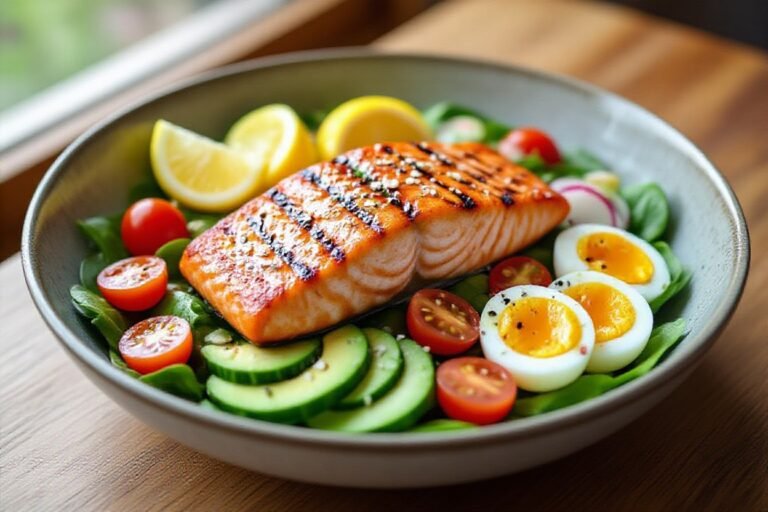
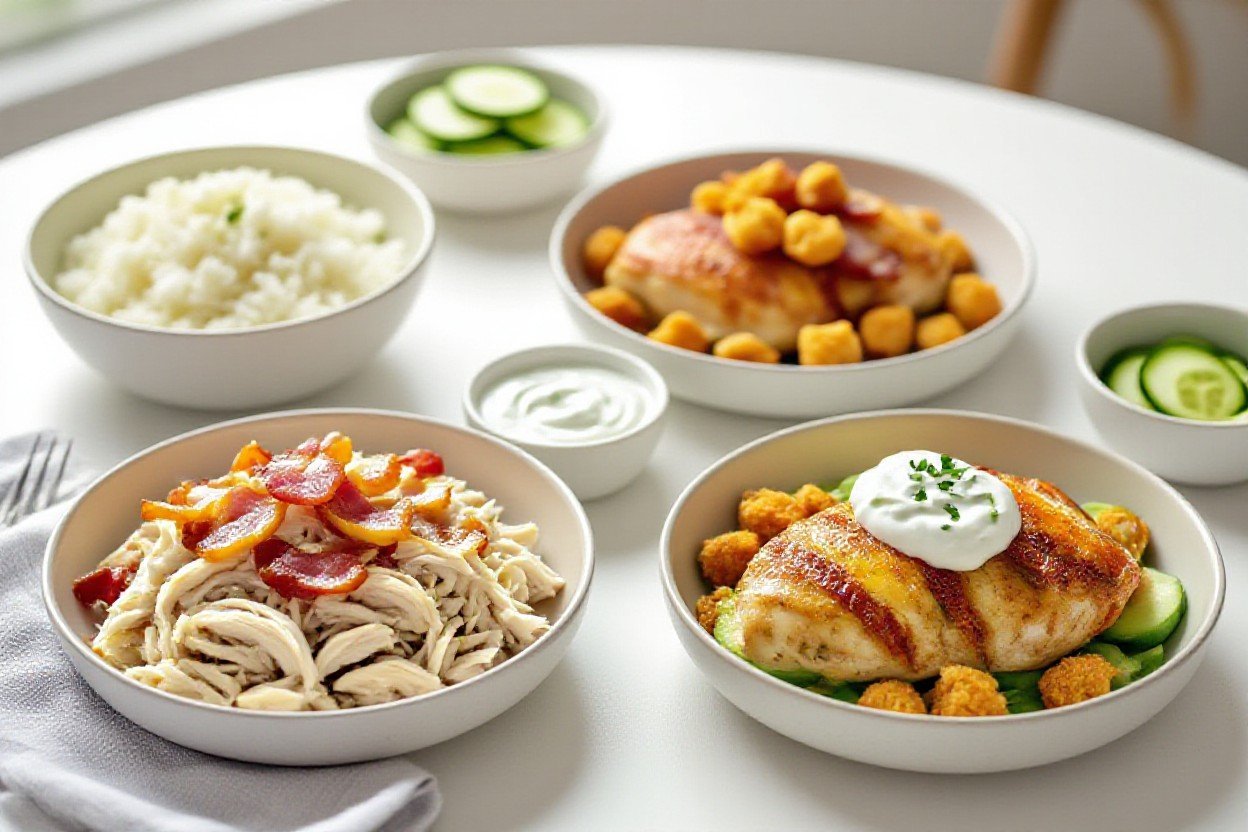
Swap the grilled chicken for salmon, shrimp, turkey or pulled pork to change flavor and fat content: a 3 oz cooked chicken breast gives about 26 g protein, 3 oz salmon ~22 g, and 3 oz shrimp ~20 g. You can use smoked salmon or canned tuna for no-cook convenience-canned tuna (drained) also delivers roughly 20-22 g protein per 3 oz and pairs well with the ranch and bacon for a quick, high-protein bowl. If you prefer plant-based, press and pan-sear extra-firm tofu or slice tempeh; 4 oz firm tofu provides around 8-10 g protein, so increase portion size or add avocado and extra-fat dressing to hit keto fat targets.
If you switch to leaner proteins like turkey breast or white fish, compensate by increasing dietary fat: add ½ an avocado (about 15 g fat), an extra tablespoon of full-fat mayo (≈11 g fat), or a few more slices of bacon. Cook times and methods matter for texture-pan-sear salmon 3-4 minutes per side for medium, sear shrimp 2-3 minutes per side until opaque, and roast bacon on a sheet at 400°F for 12-15 minutes for consistent crispness-so you keep the salad components distinct and satisfying while maintaining low carbs.
Dressing Options
Stick with a keto-friendly ranch base using full-fat mayonnaise and sour cream: for four servings mix ½ cup mayo, ¼ cup sour cream, 2 tbsp heavy cream (or water for a lighter pour), 1 tsp garlic powder, 1 tsp onion powder, 1 tbsp chopped dill and 1 tbsp chopped chives; this yields roughly ¾-1 cup of dressing and keeps carbs near zero. Full-fat mayo runs about 100 kcal and 11 g fat per tablespoon, so factor portions into your meal-two tablespoons of this ranch will add roughly 200 kcal and 22 g fat.
Alternatively, make a bright oil-based dressing to cut creaminess without raising carbs: whisk 3 parts olive or avocado oil to 1 part apple cider vinegar (for example, 3 tbsp oil + 1 tbsp vinegar), add ½ tsp Dijon and salt and pepper; for a ranch-flavored vinaigrette stir in 1 tsp dried dill and ½ tsp garlic powder. This 3:1 ratio emulsifies well and gives a stable dressing that keeps macros focused on fat; olive oil contains about 120 kcal and 14 g fat per tablespoon, so measure for accurate tracking.
Store your dressings tightly sealed in the fridge-mayo-based ranch will last about 5-7 days, while oil-vinegar dressings can keep 1-2 weeks; thin creamy ranch with a splash of heavy cream or water if it firms up, and thicken a too-thin vinaigrette with a small teaspoon of mustard as an emulsifier. Use a tablespoon to portion dressings so you can easily track calories: every additional tablespoon of mayo-based ranch adds roughly 100 kcal and 11 g fat to your salad, which matters if you aim for a target of ~70-75% calories from fat on keto.
Storage and Meal Prep
You can stretch the life of this salad by separating components and prioritizing perishables first: cooked chicken and bacon keep well in the fridge for 3-4 days in airtight glass containers, while homemade ranch (mayo + sour cream base) will stay good for about 5-7 days chilled. Store greens separately-romaine lasts 3-4 days, baby spinach closer to 48 hours-and keep chopped veg in a dry, ventilated container to avoid sogginess.
When freezing, focus on proteins only: cooked chicken freezes well for up to 2 months if vacuum-sealed or wrapped tightly, but bacon will lose crispness and lettuce should never be frozen. Use date labels and plan meals so you use assembled salads within 24-48 hours, and component-based meals within 3-4 days to maintain texture and food safety.
Storing Leftovers
Package proteins and dressing separately from greens and crunchy toppings: portion 4 oz cooked chicken per container and 2 slices of bacon per serving to simplify reheating and macro tracking. Glass meal prep containers with snap lids prevent odor transfer and withstand reheating; place dressing in a 12-16 oz mason jar so you can shake it before serving.
Reheat chicken gently to preserve moisture-about 325°F in the oven for 8-12 minutes or a 45-60 second microwave burst covered with a damp paper towel for single portions-and crisp bacon in a 375°F oven for 4-6 minutes on a wire rack. The assembled salad should be dressed only at the moment of eating to keep textures distinct and flavors bright.
Meal Prep Tips
Batch-cook on one day: roast 3-4 boneless skinless chicken breasts (roughly 1.5-2 lb) seasoned with smoked paprika and garlic for easy shredding, and pan-cook or oven-bake 10-12 bacon slices until just crisp. Portion into four servings with an example macro-friendly build: 4 oz chicken (≈28 g protein), 2 bacon slices (≈6 g fat), 2 cups romaine (≈2 g carbs), and 2 tbsp ranch (≈14 g fat) to keep the meal keto-balanced.
Use simple labeling: write the cook date and portion info (calories/protein/fat) on each container so you can rotate older meals first; plan for 3-4 lunches per week per person to minimize waste and maintain freshness. Pack crunchy toppings like toasted sunflower seeds in a small separate container to add just before eating.
- Sunday schedule: 45-60 minutes to cook chicken and bacon, 15 minutes to chop veg and mix dressing.
- Portion guide: aim for 4-5 oz protein and 2 tablespoons dressing per meal to hit typical keto targets.
- The jar layering method (dressing bottom, hearty veg, proteins, greens on top) keeps salads fresh for up to 72 hours in the fridge.
Scale prep by household: if you’re feeding two, double proteins and divide into 6-8 containers so each meal stays within the 3-4 day fridge window; families can freeze extra cooked chicken in 8 oz vacuum packs for quick replenishment. You can also vary fats by swapping 2 tbsp ranch for 1/4 avocado to alter texture and add monounsaturated fats without changing prep time.
- Quick reheating cheat: reheat chicken slices in a covered skillet with 1-2 tbsp water over medium heat for 3-4 minutes to preserve juiciness.
- Snack add-ons: hard-boiled eggs (store peeled in water for up to 5 days) and celery sticks keep well with the salad kit approach.
- The consistent habit of prepping on the same day each week reduces decision fatigue and keeps your keto plan practical.
Serving Suggestions
You can keep the salad vibrant by serving the dressing on the side so each person controls the fat and salt – offer 2-3 tablespoons per serving as a starting point and label it for easy customization. Crisp bacon holds up best when added last; cook bacon at 400°F for 12-15 minutes on a rack to render fat evenly, then crumble just before plating so the texture contrasts with tender chicken and creamy avocado.
Plate portions around 6-8 ounces of salad per person for a main-course portion or 4-5 ounces as part of a larger spread; use chilled bowls to keep greens crisp. If assembling ahead, store the greens, protein, and toppings separately: chicken and bacon keep safely refrigerated for 2-3 days, while the dressing stays fresh for 4-5 days in an airtight jar.
Side Pairings
Pair the salad with low-carb sides that mirror its fat-forward profile – cauliflower mash (about 3-4 g net carbs per ½ cup) complements the ranch and bacon without raising the carb load, and roasted asparagus or Brussels sprouts add 4-6 g net carbs per cup with fiber and texture. Serve a simple avocado and cucumber platter (half an avocado contributes roughly 2 g net carbs and 10-15 g fat) to boost satiety and keep the meal keto-compliant.
For crunch, offer parmesan crisps or pork rind nachos as a substitute for crackers; 10-12 crisps per person makes a satisfying crunchy side. Beverage-wise, stick to unsweetened iced tea, sparkling water with lemon, or dry sparkling wine in moderation – these options add minimal carbs while rounding out the meal.
Serving for Events
When scaling for a crowd, prep components in advance: cook and shred chicken in batches (plan on 4-6 ounces cooked chicken per guest), bake bacon on sheet pans and store separately, and portion dressing into 2-3 tablespoon ramekins for self-serve stations. Keep cold items at or below 40°F using insulated coolers or refrigerated trays and limit time at room temperature to 2 hours (1 hour if ambient temperature exceeds 90°F) to comply with food-safety guidelines.
Consider individual mason-jar salads (12-16 oz jars) for easy transport and portion control – layer dressing on the bottom, sturdy vegetables next, then proteins and greens on top; guests shake and pour onto a plate or eat directly from the jar. For plated service, arrange a large platter with labeled sections for bacon, chicken, cheeses, and fresh herbs so guests build their own plates while minimizing cross-contamination of wet ingredients.
Also plan logistics: provide tongs for each component, small signs indicating allergens (dairy, egg), and a schedule for replenishing trays every 60-90 minutes to maintain freshness and presentation throughout the event.
Conclusion
Ultimately you can rely on the Keto Chicken Bacon Ranch Salad as a satisfying, low‑carb meal that delivers ample protein and healthy fats while keeping net carbs minimal. By combining grilled or roasted chicken, crisp bacon, a full‑fat ranch, and fresh greens you create a nutrient‑dense plate that supports ketosis, preserves muscle, and keeps you full between meals.
To optimize your results, tailor portion sizes and ingredient choices to your daily macros: use full‑fat mayonnaise or sour cream in the ranch, add avocado for monounsaturated fat and fiber, and swap higher‑carb mix‑ins for low‑carb vegetables. Batch‑prep components for quick lunches and vary seasonings so your salad remains convenient and satisfying over time.
Printable Recipe Card
Want just the essential recipe details without scrolling through the article? Get our printable recipe card with just the ingredients and instructions.