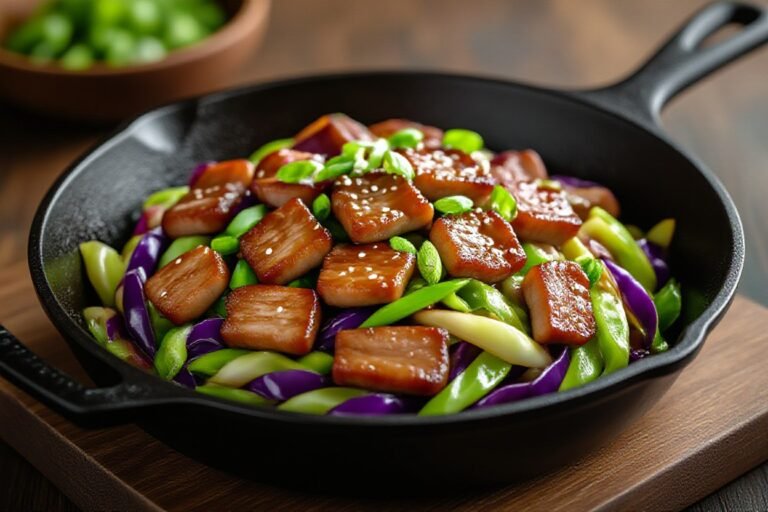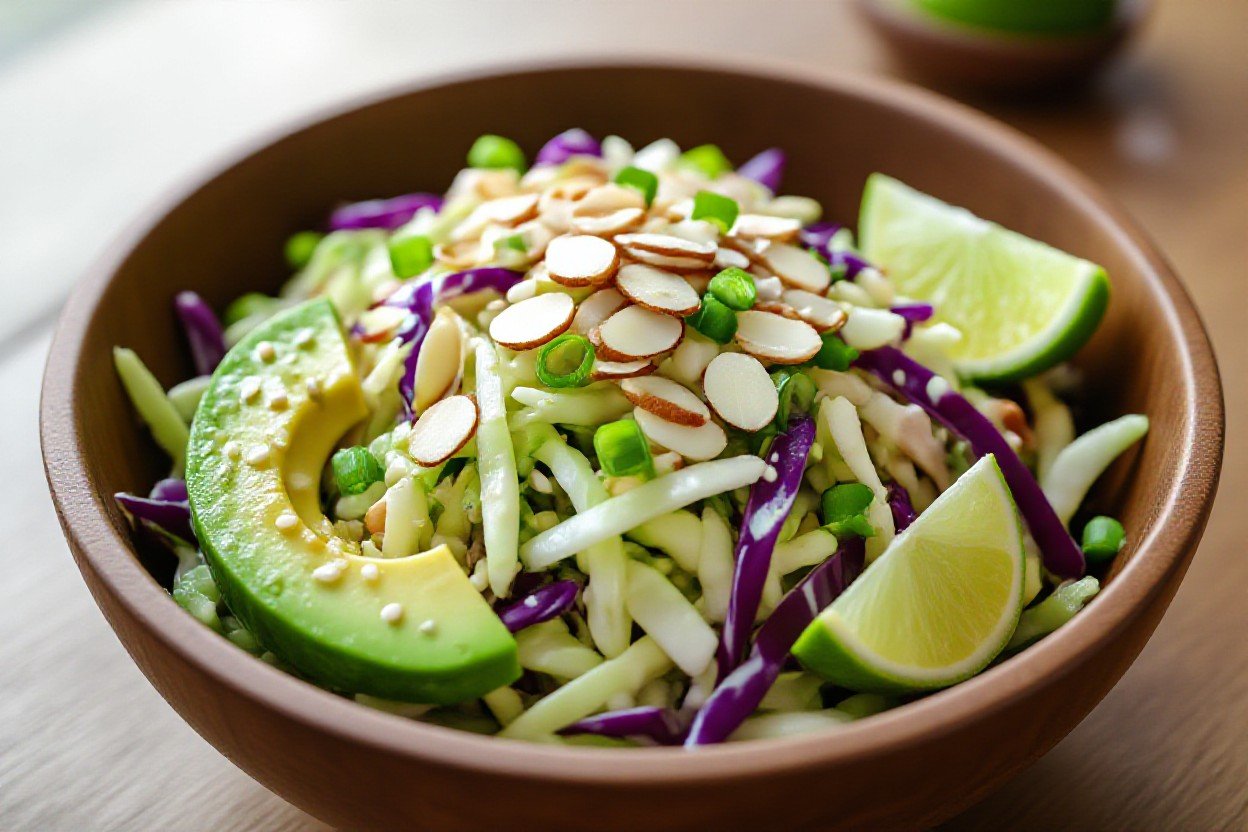
Keto Asian Cabbage Salad
With crisp Napa and green cabbage, toasted sesame, and a tangy soy-ginger dressing, you get a low-carb salad that delivers bold flavor and satisfying crunch while keeping carbs minimal. You’ll learn smart ingredient swaps, how to balance fat and acidity for ketosis, and quick assembly tips so your salad is meal-prep friendly.
Ingredients
Focus on low-carb, high-crunch components that keep the salad under 6-8 g net carbs per serving while maximizing texture and flavor. You’ll balance a shredded cabbage base with a handful of low-carb vegetables, a protein or nut element if desired, and a tangy, oil-based dressing that delivers umami without added sugars.
Portion control matters: aim for about 150-200 g of mixed vegetables per serving and 2 tablespoons of dressing to stay within typical keto targets. You can swap or scale ingredients to fit your daily carb allowance while maintaining the Asian flavor profile.
Cabbage Varieties
Green (common) cabbage gives you firm crunch and mild flavor, with roughly 3-4 g net carbs per 100 g, making it a solid keto anchor. Shred it finely for even dressing coverage and to mimic classic slaw texture.
Napa (Chinese) cabbage tends to be lighter and more delicate, at about 1-2 g net carbs per 100 g; it soaks up dressings and pairs well with thinly sliced scallions and sesame. Red cabbage adds color and a slightly higher carb count-around 4-5 g net per 100 g-so use it sparingly for visual contrast or mix a 1:3 ratio with green cabbage to control carbs.
Additional Vegetables
Choose low-carb additions like cucumber (about 1-2 g net carbs per 100 g), radish (~2 g net), bean sprouts (~1 g net), and scallions (~1.5 g net) to boost freshness without spiking carbs. You can include small amounts of bell pepper or carrot for color; keep carrot to 1-2 tablespoons per serving to limit its ~6 g net carbs per 100 g impact.
Herbs such as cilantro, Thai basil, or mint add intense flavor for virtually no carbs, and a tablespoon of toasted sesame seeds or crushed peanuts contributes fat and texture-sesame seeds have roughly 3 g net carbs per 15 g (1 tablespoon), so measure accordingly.
Prep tips: julienne or use a mandoline for uniform pieces that absorb dressing evenly, and briefly blanch heartier veg like broccoli slaw if you want softer bites without losing much of the low-carb profile.
Keto-Friendly Dressings
Build dressings around oils and fermented condiments: sesame oil and avocado oil (0 g carbs), tamari or soy sauce (~0.5-1 g carbs per tablespoon), and rice vinegar (near 0 g) give authentic flavors with minimal carbs. Swap coconut aminos if you prefer a slightly sweeter profile-expect about 1-2 g carbs per tablespoon depending on the brand.
Sweeteners like erythritol or stevia let you recreate classic sweet-tangy Asian dressings without sugar; 1 teaspoon of erythritol adds negligible carbs. For creamier options, mix mayonnaise (0 g carbs per tablespoon typical) with lime juice, fish sauce, and a touch of chili paste for heat while keeping carbs near zero.
To control overall meal carbs, portion the dressing: 2 tablespoons typically contribute 0-2 g net carbs depending on ingredients, and emulsifying with a small whisk or shaking in a jar yields a stable dressing that clings to shredded cabbage for maximum flavor per bite.
Nutritional Benefits
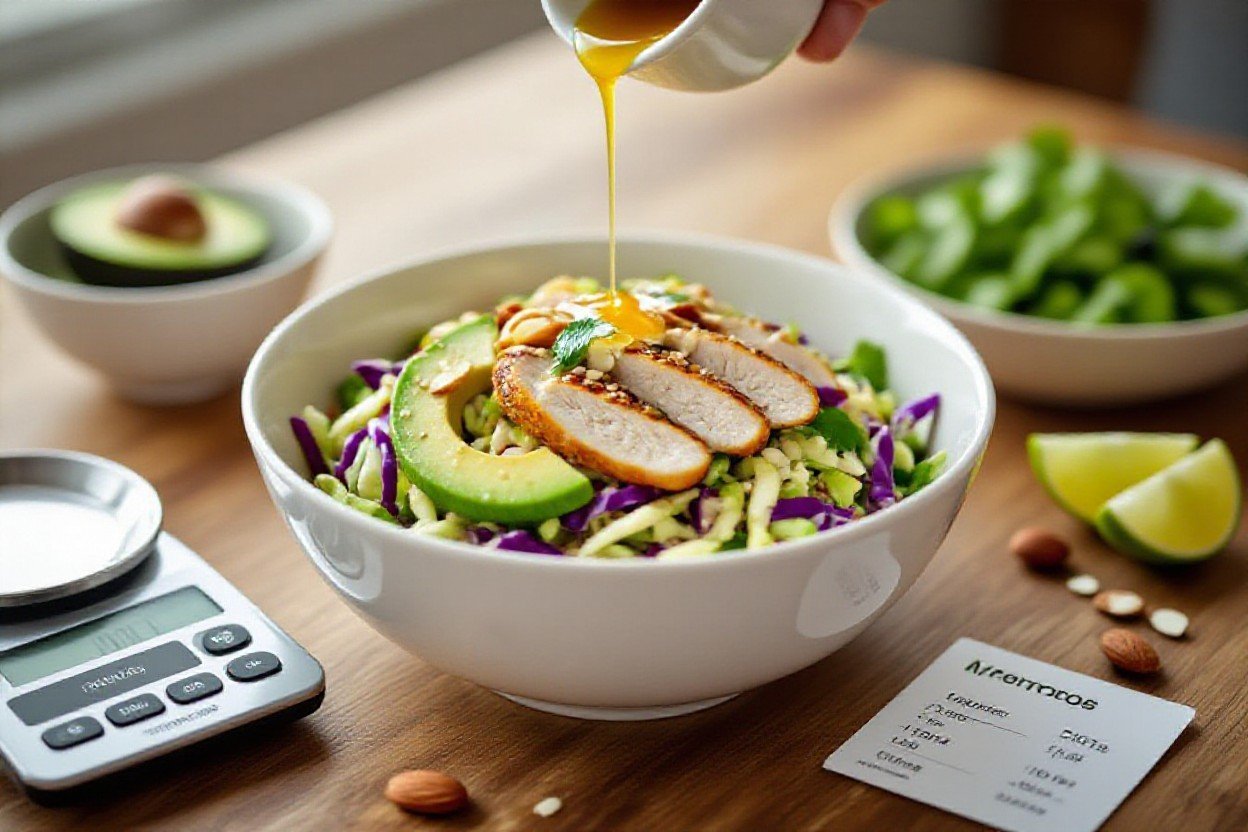
With a base of thinly shredded cabbage, this salad delivers big volume for very few calories-about 25 kcal per 100 g of raw cabbage-so you can eat a generous portion without blowing your calorie or carb budget. When you add a keto-style dressing (sesame oil, rice vinegar substitute, and a nut butter or mayo), a typical serving lands around 150-250 kcal, 12-22 g fat, and roughly 4-6 g net carbs depending on dressing and add-ins, making it easy to hit your daily fat targets while keeping carbs low.
Because the salad combines high-fiber vegetables with fat-forward dressings and optional protein (grilled chicken, shrimp, or chopped nuts), you get sustained satiety and better control over meal-level macronutrient ratios. If you swap this salad for a starchy side-one cup cooked white rice at ~45 g carbs-you immediately free up 40+ grams of carbs to allocate elsewhere in your day or to stay well inside ketosis thresholds.
Low-Carb Advantages
Raw cabbage contains about 5.8 g total carbs and 2.5 g fiber per 100 g, yielding roughly 3.3 g net carbs; a 150 g serving of shredded cabbage is therefore in the neighborhood of 5 g net carbs. You can stack toppings like 1 tablespoon sesame oil (≈14 g fat, ~120 kcal) and 2 tablespoons chopped almonds (~3 g net carbs, ~6 g fat) and still keep a single plate under 10 g net carbs, which is ideal for most ketogenic targets.
Swapping high-carbohydrate sides for this salad is a practical tactic: for example, replacing a typical 200 g portion of stir-fried rice (≈60 g carbs) with your cabbage salad reduces meal carbs by roughly 55 g. That kind of substitution not only helps maintain ketosis but also reduces post-meal glucose excursions, so you’ll likely feel less of the energy crash that follows carb-heavy meals.
Vitamins and Minerals
Cabbage punches above its weight for micronutrients: per 100 g of raw cabbage you’ll find about 36 mg vitamin C, roughly 70-80 µg vitamin K, around 43 µg folate, and close to 170 mg potassium. Those numbers translate into meaningful contributions toward daily needs-vitamin C supports collagen synthesis and immune function, while vitamin K is important for normal blood clotting and bone metabolism.
Additions you commonly use in this recipe-red cabbage, scallions, cilantro, and sesame seeds-boost the profile further. Red cabbage supplies anthocyanin antioxidants (linked to lower inflammation in several observational studies), scallions add small amounts of B vitamins and vitamin A precursors, and a tablespoon of sesame seeds contributes calcium (≈88 mg) and magnesium (≈32 mg), helping round out mineral intake on a low-carb plan.
If you’re monitoring medications or have specific nutrient targets, note that vitamin K levels in leafy brassicas can matter; if you take anticoagulants, coordinate intake with your healthcare provider. Otherwise, regular portions of this salad are an efficient, low-carb way to increase intake of vitamin C, K, folate, potassium and trace minerals while keeping your macros aligned with keto goals.
Preparation Instructions
Chopping and Mixing
Start by shredding about 400 g (14 oz) of cabbage into 1/8-1/4-inch ribbons – a mandoline or sharp chef’s knife gets consistent pieces that dress evenly. Slice 3 green onions on the bias, julienne one small cucumber (about 80 g) into matchsticks, and finely chop 1/4 cup cilantro or parsley; if you want extra crunch, fold in 2-3 tablespoons of toasted sliced almonds or 2 tablespoons of sesame seeds.
When you mix, toss gently so the leaves don’t bruise; using a large bowl gives you room to incorporate inclusions without compressing the cabbage. Let the assembled salad sit 8-12 minutes after tossing with some dressing so the cabbage softens slightly and absorbs flavors – for meal prep, keep dressing separate and combine within 24 hours to maintain optimal crunch.
Dressing the Salad
Combine 3 tablespoons tamari (or coconut aminos for lower sodium), 1 tablespoon rice vinegar, 2 teaspoons toasted sesame oil, 2 tablespoons avocado or olive oil, 1 teaspoon grated ginger, 1 small minced garlic clove, and 1-2 teaspoons erythritol or monk fruit for a balanced sweet-savory vinaigrette; whisk until emulsified – this yields roughly 1/3 cup, enough for 4 cups of salad (about 4 servings).
Dress the cabbage with about 2-3 tablespoons of this vinaigrette per 4 cups of salad and toss thoroughly so every ribbon is coated; if you prefer a brighter bite, add an extra teaspoon of rice vinegar and taste again. Store leftover dressing in the refrigerator for up to 7 days in a sealed jar and shake well before reuse.
For extra umami or depth, stir in 1 teaspoon fish sauce or 1 tablespoon mayonnaise for creaminess; alternatively, dilute a too-sharp dressing with a splash (1-2 teaspoons) of warm water to mellow acidity without changing the flavor profile significantly.
Serving Suggestions
As a Side Dish
Serve the salad chilled alongside a hot protein to create contrast: 1 cup of this cabbage salad (about 3 g net carbs) pairs well with 4-6 oz grilled salmon, seared tuna, or roasted pork belly. Adding 1 tablespoon of toasted sesame oil to the dressing supplies roughly 14 g of fat and ~120 kcal, which helps push the plate toward keto macros without adding carbs. Finish with 1 teaspoon toasted sesame seeds or 1 tablespoon sliced scallions for texture and a 5-10 kcal lift.
Prepare it 20-30 minutes ahead to let the vinegar and oils mellow the cabbage, or make a day in advance and store in an airtight container for 3-4 days; drain any excess liquid before plating to preserve crispness. If you want a warm option, wilt the salad in a hot skillet for 1-2 minutes with a splash of sesame oil and serve immediately beside the protein.
Meal Pairings
Pair the salad with Asian-flavored mains: miso-glazed black cod, Korean-style ribeye (bulgogi), coconut curry chicken served over cauliflower rice, or sesame-crusted tuna all complement the crunchy, tangy slaw. For a balanced keto meal aim for 4-6 oz of protein plus the salad and 1 tablespoon of added fat (olive or sesame oil) to reach a satiating fat-to-protein ratio. Most dry wines contain about 1-3 g carbs per 5-oz pour if you choose to drink.
Balance flavors by matching the salad’s acidity with richer sauces-add a lemon-almond butter to fish, a sugar-free gochujang-based glaze for beef, or coconut-milk curry sauce for chicken. Swap in coconut aminos or a touch of erythritol-sweetened dressing to maintain authentic Asian profiles without the sugar load.
To make this a fuller, stricter keto plate, boost fat with additions like half an avocado (about 10-12 g fat and roughly 2 g net carbs) or 1 tablespoon extra sesame oil (≈14 g fat); alternatively sprinkle 1 ounce of toasted macadamia nuts for roughly 18-20 g of fat and minimal carbs to raise calories and keep the meal firmly ketogenic.
Variations
You can pivot this salad between side dish and main by adjusting textures and proportions: start with about 4 cups (≈240 g) shredded cabbage as your base, then add 1-2 cups of crunchy elements like sliced radish, 1/2 cup shredded carrot (optional if you track carbs), or 1/2 cup thinly sliced bell pepper for color. For a lighter, faster prep, swap napa cabbage for green cabbage-the former wilts more quickly and yields a softer bite while 1 cup shredded green cabbage contains roughly 22 kcal and about 3 g net carbs, keeping the dish keto-friendly.
Small changes deliver big differences: toast 2 tbsp sesame seeds for nutty depth, replace peanuts with 1 oz macadamia nuts (≈21 g fat, ≈2 g net carbs) for higher-fat profiles, or add 1/4 cup pickled cucumber or daikon for acidity without many carbs. You’ll get excellent make-ahead results if you keep dressing separate; the salad will stay crisp for 3-4 days refrigerated if dressed immediately before serving.
Protein Additions
For a protein-forward meal, add 4 oz (≈113 g) grilled chicken breast for about 35 g protein, 3-4 oz (≈85-113 g) pan-seared salmon for ~20-24 g protein plus omega-3 fats, or 4-6 oz shrimp (≈24-36 g protein depending on weight) for a fast-cooking option. If you prefer plant protein, toss in 150 g firm tofu (≈12 g protein) that’s been pressed and pan-seared in 1 tsp sesame oil to improve texture and flavor while keeping carbs low.
Integrate proteins to affect mouthfeel: add warm grilled chicken or salmon to gently wilt the cabbage and help the dressing cling, or scatter chilled smoked salmon or canned tuna for a cold, briny contrast. For meal planning, target 20-30 g protein per serving-so two 4-oz portions of shrimp or one 4-oz portion of salmon paired with the base salad will hit common protein goals for a main-course portion.
Flavor Enhancements
Increase savory depth with 1 tbsp tamari or coconut aminos (tamari is lower in sugar; coconut aminos adds sweetness but contains ~1-3 g carbs per tbsp), 1 tsp toasted sesame oil for aroma, and 1 tsp grated fresh ginger for brightness. For sweet balance without carbs, use 1/2 tsp erythritol or a pinch of monk fruit; small adjustments-try adding acid in 1 tsp increments-let you dial in the profile without overpowering the cabbage.
Spice and herbs lift the salad: add 1 tsp crushed red pepper or 1/2 tsp chili flakes for heat, 2 tbsp chopped cilantro for herbaceous lift, and 2 thinly sliced scallions for allium punch. Textural contrasts matter too-finish with 2 tbsp toasted sesame seeds or 1 tbsp chopped macadamia nuts to add crunch while keeping net carbs low.
Practical dressing ratio for 4 cups of cabbage: whisk 2 tbsp neutral oil (avocado or light olive), 1 tbsp rice vinegar, 1 tsp toasted sesame oil, 1 tsp tamari, 1 tsp grated ginger, 1 small minced garlic clove, and 1/2 tsp erythritol; toss just before serving and then adjust salt or acid by 1/4-1/2 tsp increments based on taste.
Storage Tips
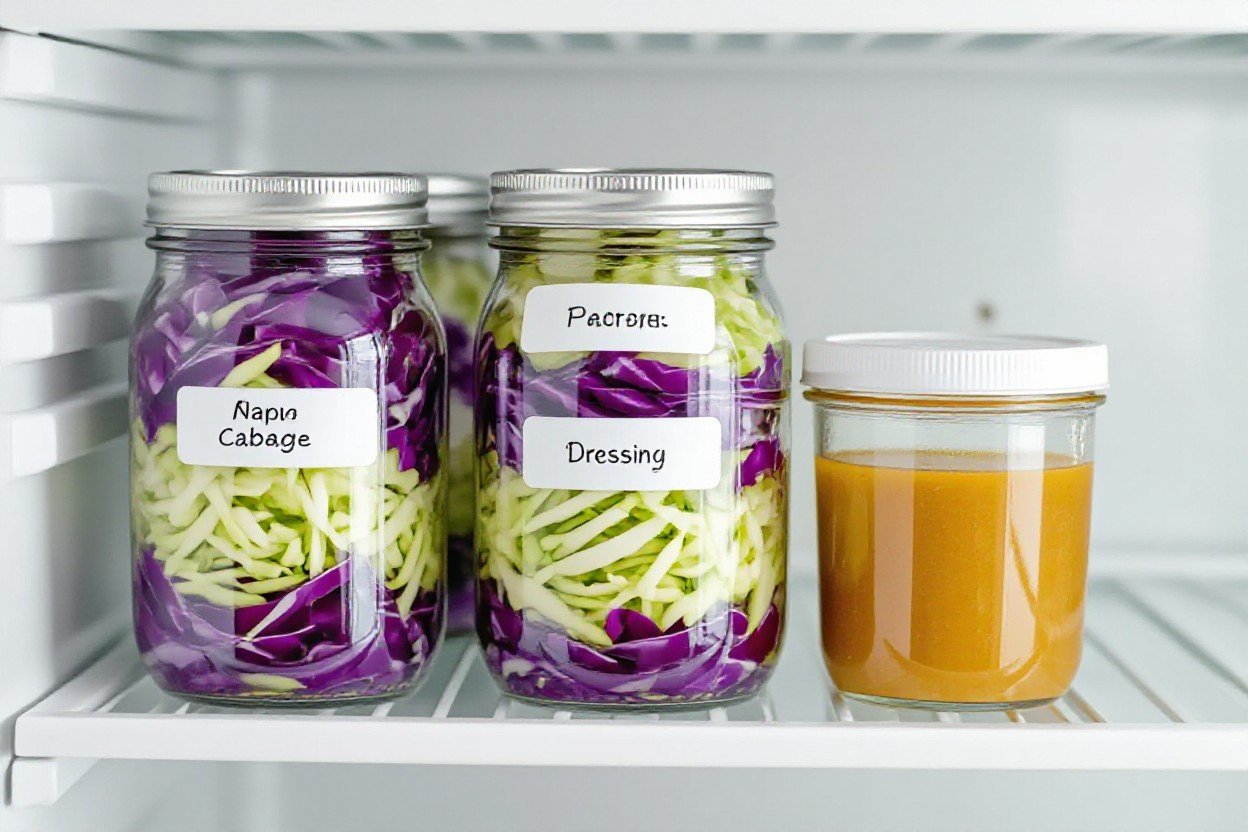
Store the salad in airtight glass containers to limit moisture and flavor transfer; glass keeps odors out better than plastic and is safe for reheating if you add warm proteins later. If you plan to eat within 48-72 hours, you can dress the cabbage, but beyond that separate the dressing to preserve crunch-undressed shredded cabbage will hold for 5-7 days in the fridge at 34-40°F (1-4°C).
- Use shallow containers to cool quickly and reduce bacterial growth.
- Keep dressings and crunchy toppings (toasted sesame seeds, chopped peanuts) in separate small containers for up to 7 days.
- Label containers with date; consume dressed portions within 3 days for best texture and flavor.
Store individual portions sized for your meal cadence-four 12-16 oz containers make a practical 4-day lunch rotation and prevent repeated opening of a large bowl. Knowing how you portion and combine components up front will keep the salad bright and make weekday service effortless.
Refrigeration Guidance
Set your refrigerator between 34-40°F (1-4°C) to maximize shelf life; at this range the dressed salad maintains acceptable quality for about 2-3 days while undressed cabbage lasts 5-7 days. You should avoid placing containers in the door, where temperature fluctuates most-store them on a middle shelf instead.
When chilling, cool any warm ingredients separately before combining to prevent condensation that hastens wilting; for example, cool sautéed chicken to room temperature then refrigerate in its own container and add to the salad just before serving. Vacuum-sealed bags or tight-lid glass jars also reduce oxidation and can extend freshness by roughly 24-48 hours compared with loose plastic wrap.
Meal Prep Considerations
Portion the salad into single-meal containers and stash dressings in small screw-top jars to keep textures distinct-this method keeps the cabbage crisp and toppings crunchy. If you prep for a 5-day workweek, divide into five 14-16 oz containers and put dressings in 2-3 oz jars; assemble in under a minute at lunch for best results.
Avoid freezing the dressed salad: ice crystals break cell walls in cabbage and create a soggy mess upon thawing, so only freeze cooked proteins separately if you want a longer storage option. You can, however, freeze cooked chicken or shrimp in 1-2 cup portions and thaw overnight in the fridge to pair with freshly dressed servings.
For extra convenience, use mason-jar layering: dressing on the bottom, then proteins, sturdy veggies, and cabbage on top-shake and eat within 24-48 hours for optimal texture; this technique is especially effective if you alternate dressings and proteins across the week to keep lunches varied.
Final Words
As a reminder, Keto Asian Cabbage Salad gives you a low‑carb, nutrient‑dense option that delivers crisp texture, fiber, and vitamins while keeping your carb count in check; you can customize the flavor profile with toasted sesame, fresh herbs, and a sugar‑free dressing to suit your palate and goals. By choosing high‑quality oils and acid like rice vinegar or lime, you preserve bright flavors without unnecessary carbs, and thinly sliced cabbage maximizes crunch with minimal prep.
You should batch‑prep the components and keep the dressing separate to maintain texture and make weeknight meals effortless, and add lean proteins or healthy fats-grilled chicken, shrimp, tofu, avocado, or a controlled portion of nuts-to balance macros and make the salad a complete meal; with simple swaps and portion control, this dish can be a reliable, versatile staple in your keto rotation.
Printable Recipe Card
Want just the essential recipe details without scrolling through the article? Get our printable recipe card with just the ingredients and instructions.