French Macarons: The Tiny, Bougie Cookies That Make You Look Like a Pastry Pro
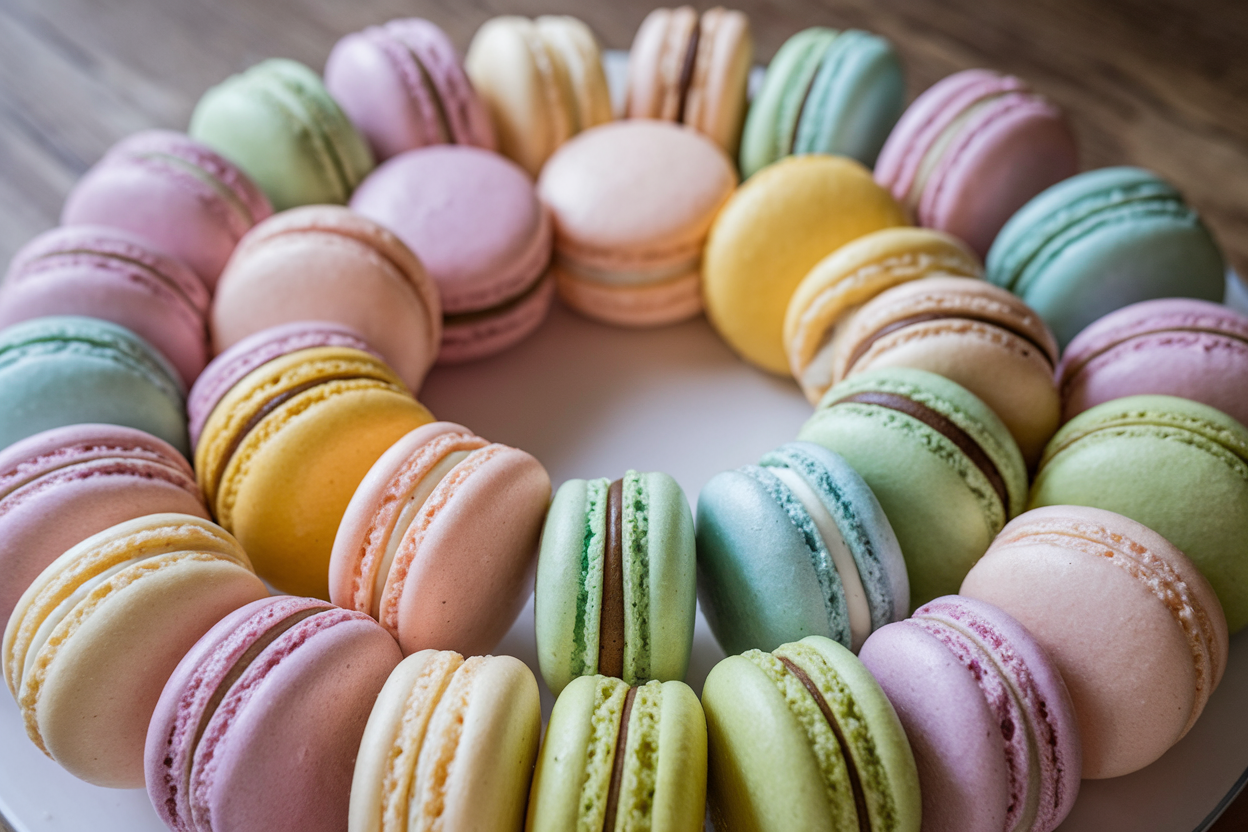
Forget cupcakes. If you want dessert cred, you need French Macarons—crisp shells, chewy centers, and fillings so silky they could sell skincare. They look intimidating, sure, but that’s just their PR team.
With a few smart moves (and zero martyrdom), you can pull off bakery-level results at home. And once that first tray grows perfect feet? Yeah, you’ll start planning flavors like a mad scientist.
What Makes This Recipe So Good
- Reliable structure: This method uses the French meringue technique—no syrup thermometers, just consistent results with a handheld or stand mixer.
- Glossy, stable batter: Macaronage cues are clear and repeatable, so you don’t end up with pancake shells or blown-out tops.
- Balanced sweetness: The shells are sweet (they’re macarons), but the filling options here keep the overall bite elegant, not cloying.
- Beginner-friendly swaps: We cover almond flour troubleshooting, oven adjustments, and humidity hacks.
Because kitchens aren’t labs.
- Professional finish: Smooth tops, defined feet, and even sizes—your camera roll will thank you.
Ingredients Breakdown
- Almond flour (super-fine, blanched): The backbone of smooth shells. No skins, no grittiness.
- Powdered sugar: Blends with almond flour to form the dry base; helps achieve that signature texture.
- Granulated sugar: Stabilizes and sweetens the meringue.
- Egg whites (aged, room temperature): Whip better and hold structure. Separate a day ahead and chill, then bring to room temp.
- Cream of tartar (optional): Adds extra meringue stability.
A small pinch goes far.
- Fine salt: Enhances flavor and balances sweetness.
- Gel or powdered food coloring (optional): Avoid liquid; it thins the batter.
- Vanilla bean paste or extract (for shells, optional): Subtle aroma without messing with texture.
- Filling options: Buttercream, ganache, or jam. See variations below, but keep fillings thick, not runny.
Let’s Get Cooking – Instructions
- Prep your gear. Line 2–3 sheet pans with silicone mats or parchment. Fit a piping bag with a 1/2-inch round tip.
Wipe bowls and whisk with vinegar to remove grease. Preheat oven to 300°F (150°C).
- Sift the dry mix. Weigh 120g almond flour and 200g powdered sugar. Sift together twice, discarding any big bits.
If more than 1 tablespoon remains, your almond flour is too coarse.
- Start the meringue. In a clean bowl, combine 100g room-temp egg whites with a pinch of salt and 1/8 tsp cream of tartar. Whip on medium until frothy.
- Rain in sugar. Gradually add 100g granulated sugar while whipping. Increase to medium-high and beat until you get stiff, glossy peaks that clump in the whisk and form bird beaks.
- Add color and vanilla. If using, add gel coloring and 1/2 tsp vanilla bean paste/extract.
Whisk 5–10 seconds to combine.
- Fold dry into meringue. Add the almond mixture in two additions. Use a spatula to fold, pressing batter against the bowl to deflate large bubbles.
- Macaronage to the right texture. Batter should flow like slow lava. Do the “figure 8 test”: batter should ribbon off the spatula and complete an 8 without breaking, then disappear within 10–15 seconds. Do not overmix.
- Pipe the shells. Fill your piping bag and pipe 1.5-inch rounds, spacing 1 inch apart.
Keep the bag perpendicular to the tray and twist the tip quickly to finish.
- Tap out bubbles. Rap trays firmly on the counter 3–4 times. Pop visible bubbles with a toothpick, then re-smooth the surface.
- Rest for a skin. Let shells sit 20–45 minutes until they’re dry to the touch. When you gently brush a finger over a shell, it shouldn’t stick.
Humid day? Add a fan nearby.
- Bake properly. Bake one tray at a time on the middle rack for 14–17 minutes. Shells should have feet and not wobble when nudged.
If tops discolor, your oven runs hot—drop to 285–295°F next batch.
- Cool and release. Let shells cool on the tray 10 minutes, then gently lift. If they stick, they’re underbaked—return to the warm oven for 2–3 minutes.
- Pair and fill. Match shells by size. Pipe your chosen filling (buttercream, ganache, or jam) onto one shell and sandwich gently with another. Don’t overfill.
- Mature in the fridge. Place filled macarons in an airtight container and refrigerate 24 hours.
This “maturation” softens the interior and melds flavors. Yes, the wait is worth it.
How to Store
- Filled macarons: Refrigerate in an airtight container for 3–5 days. Bring to room temperature 20–30 minutes before serving.
- Unfilled shells: Freeze up to 2 months in a single layer, then transfer to a container.
Thaw at room temperature, then fill.
- Freezing filled macarons: Most buttercream and ganache-filled macarons freeze well up to 1 month. Avoid high-water fillings like fresh fruit.
What’s Great About This
- Technique focus, not gimmicks: Clear cues for mixing, resting, and baking—so results are repeatable.
- Flexible fillings: Swap flavors without rebuilding the whole recipe.
- Camera-ready results: Smooth tops and tidy feet make these party-worthy and giftable.
- Time-smart: Active time is short; the rest is hands-off. Your future self gets dessert with interest.
Avoid These Mistakes
- Skipping the scale: Volume measures are chaos.
Weigh ingredients for consistency, IMO.
- Overmixing the batter: If it runs like pancake batter, you’ve gone too far. Aim for slow ribbons that fade in 10–15 seconds.
- Baking too hot: High heat leads to cracked tops and hollow shells. Adjust down in 10°F increments and use an oven thermometer.
- No rest time: Without a dry skin, shells crack.
Be patient or use a fan to help.
- Greasy equipment: Any fat kills meringue. Degrease bowls and tools, and avoid plastic bowls that hold onto oil.
- Wet fillings: Runny jam or curds will soak shells and ruin texture. Thicken fillings or pipe a buttercream “dam.”
Mix It Up
- Classic vanilla + dark chocolate ganache: Shells scented with vanilla; fill with a 2:1 chocolate-to-cream ganache.
- Raspberry rose: Add a whisper of rose water to shells; fill with raspberry buttercream or thick jam.
- Pistachio: Replace 20% of almond flour with fine pistachio flour; fill with pistachio buttercream.
- Lemon meringue-ish: Lemon-zested shells, filled with stabilized lemon curd and a ring of Swiss meringue buttercream.
- Salted caramel: Caramel buttercream + a tiny dot of thick caramel in the center.
Don’t overdo it, hero.
- Matcha white chocolate: Whisk 1–2 tsp matcha into the dry mix; fill with white chocolate ganache.
FAQ
Why did my macarons crack?
Insufficient drying time, overmixing, or a too-hot oven are the main culprits. Make sure shells form a dry skin, and use an oven thermometer to verify 290–300°F. Also, pop surface bubbles before baking.
How do I avoid hollow shells?
Aim for properly whipped meringue (stiff, glossy peaks), correct macaronage (not too loose), and bake long enough to set interiors.
Sometimes 1–2 extra minutes fixes hollows. Resting and stable oven temp are key.
Can I use liquid food coloring?
Avoid it. Liquid thins the batter and messes with structure.
Use gel or powdered color—tiny amounts go a long way, FYI.
Do I have to age the egg whites?
Not mandatory, but aged whites whip more consistently. If skipping, ensure they’re at room temp and grease-free, and consider the pinch of cream of tartar for stability.
What’s the best filling for beginners?
American buttercream or simple ganache are the most forgiving. They’re pipeable, set nicely, and won’t weep into the shells.
My macarons stick to the mat—now what?
They’re underbaked.
Return to the warm oven for 2–3 minutes. Next time, check for slight browning at the base edges and a firm bottom that releases cleanly.
Can I make them on a rainy day?
Yes, but expect longer resting times. Use a fan, dehumidifier, or slightly drier oven environment.
Keep humidity in mind when storing, too.
Wrapping Up
French Macarons aren’t hard—they’re specific. Nail your meringue, watch the batter texture, and bake at a sane temperature. The payoff?
Glossy domes, ruffled feet, and flavors that flex from elegant to extra. Make a batch today, and tomorrow you’ll be the person casually handing out macarons like it’s no big deal—because now, it isn’t.
Printable Recipe Card
Want just the essential recipe details without scrolling through the article? Get our printable recipe card with just the ingredients and instructions.