Chicken Pad Thai
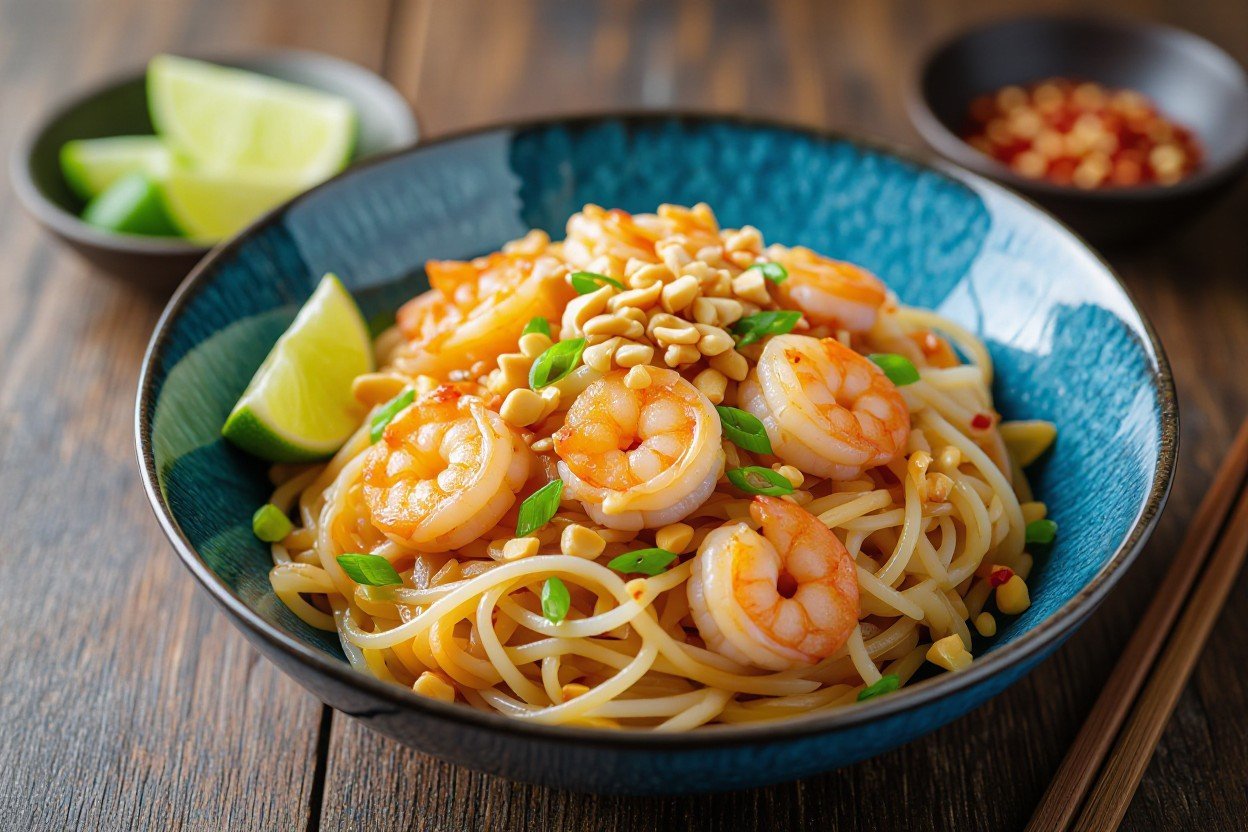
Many food enthusiasts consider Chicken Pad Thai one of Thailand’s most beloved culinary exports, and for good reason. This iconic stir-fried noodle dish combines tender chicken with rice noodles, eggs, and a perfect balance of sweet, sour, and savory flavors. When you prepare Chicken Pad Thai at home, you’ll discover it’s more accessible than you might think. The key lies in understanding the necessary ingredients: tamarind paste, fish sauce, palm sugar, and fresh lime, which create that authentic taste you’ve enjoyed at your favorite Thai restaurant. With the right technique, you can master this delicious dish in your own kitchen.
With its perfect balance of sweet, sour, and savory flavors, Chicken Pad Thai stands as Thailand’s most beloved street food export. You’ll discover this iconic stir-fried noodle dish combines tender chicken, rice noodles, eggs, and bean sprouts in a tangy tamarind-based sauce. Your plate arrives garnished with crushed peanuts, lime wedges, and fresh herbs, creating a symphony of textures and tastes. Whether you’re ordering from your favorite Thai restaurant or preparing it in your own kitchen, understanding the authentic ingredients and techniques will help you appreciate why this dish has captivated food lovers worldwide.
Key Takeaways:
- Chicken Pad Thai is a popular Thai stir-fried noodle dish featuring flat rice noodles, chicken, eggs, and a signature sweet-sour-salty sauce made with tamarind, fish sauce, and palm sugar.
- The dish achieves its distinctive flavor balance through the combination of tangy tamarind paste, savory fish sauce, and sweetness, topped with crushed peanuts, bean sprouts, and lime wedges for freshness and texture.
- Proper preparation involves soaking rice noodles until pliable, cooking over high heat in a wok for authentic smoky flavor, and adding ingredients in stages to prevent overcooking while maintaining the noodles’ chewy texture.
Key Takeaways:
- Chicken Pad Thai is one of Thailand’s most popular stir-fried noodle dishes, featuring rice noodles, chicken, eggs, and a signature sweet-sour-salty tamarind sauce.
- The dish achieves its authentic flavor through a balance of fish sauce, tamarind paste, palm sugar, and lime, topped with crushed peanuts and fresh bean sprouts.
- Pad Thai can be prepared in under 15 minutes using high heat and a wok, making it an accessible weeknight meal that delivers restaurant-quality taste at home.
Ingredients
The beauty of Chicken Pad Thai lies in its careful balance of ingredients, each playing a specific role in creating the dish’s signature sweet, sour, salty, and umami profile. You’ll need about 8 ounces of flat rice noodles (also called Pad Thai noodles or sen lek), which should be soaked in room temperature water for 30-45 minutes until pliable but not mushy. For the protein, 12 ounces of boneless, skinless chicken breast or thigh meat works best, sliced into thin strips against the grain to ensure tenderness.
Your sauce base requires 3 tablespoons of fish sauce, 3 tablespoons of tamarind paste, 2 tablespoons of palm sugar (or brown sugar as a substitute), and 1 tablespoon of rice vinegar. You’ll also need 3 cloves of minced garlic, 2 large eggs, 1 cup of bean sprouts, 3 green onions cut into 1-inch pieces, and ¼ cup of roasted peanuts, roughly chopped. A fresh lime wedge and a handful of fresh cilantro complete the imperative lineup.
Essential components
Tamarind paste stands as the non-negotiable ingredient that separates authentic Pad Thai from its westernized versions. You can find it in Asian grocery stores, either as a concentrated paste or in block form that requires soaking and straining. The paste delivers that distinctive tangy-sour backbone that defines the dish, and no substitute—not lime juice, not vinegar alone—can replicate its complex, fruity acidity. Palm sugar similarly provides a depth of caramelized sweetness that regular white sugar simply can’t match, though light brown sugar comes reasonably close in a pinch.
Fish sauce brings the imperative umami and saltiness that anchors all the other flavors together. You’ll want a quality brand like Red Boat or Three Crabs, as inferior versions can taste overly fishy or harsh. The rice noodles themselves must be the flat variety, typically 3-5mm wide—using round noodles or substituting with Italian pasta fundamentally changes the texture and your ability to achieve that characteristic slight chewiness with crispy edges that proper Pad Thai delivers.
Optional additions
Dried shrimp adds an extra layer of seafood umami that many Thai street vendors consider standard, though it’s often omitted in home versions. You’ll find these small, orange-pink shrimp in Asian markets, and just 2 tablespoons, roughly chopped, can deepen the overall flavor profile significantly. Preserved radish (chai poh), another street cart staple, contributes a sweet-salty crunch and slight funk that enhances complexity—use about 2 tablespoons, rinsed and chopped.
Fresh Thai chiles or dried chile flakes let you adjust the heat level to your preference, while Chinese chives (garlic chives) offer a more pungent, garlicky bite than regular green onions. Some cooks add a tablespoon of tamarind water separately from the paste for extra tang, or include a teaspoon of paprika purely for color enhancement without affecting flavor.
These optional ingredients transform your Pad Thai from a solid home version into something that rivals what you’d find at a bustling Bangkok street stall. The dried shrimp and preserved radish in particular add layers of fermented, aged flavors that create depth you can’t achieve with fresh ingredients alone. Your choice to include them depends on how adventurous your palate is and whether you’re cooking for guests who might find these traditional elements too unfamiliar.
History of Pad Thai
Origins and Cultural Significance
You might be surprised to learn that Pad Thai isn’t an ancient Thai dish passed down through centuries. This beloved noodle dish emerged during the 1930s and 1940s under Prime Minister Plaek Phibunsongkhram’s nationalist campaign. He promoted Pad Thai as part of his effort to modernize Thailand and create a unified national identity. The government actually distributed recipe cards throughout the country, encouraging street vendors to prepare this standardized dish that would represent Thai cuisine to the world.
The timing of Pad Thai’s creation wasn’t coincidental. During World War II, Thailand faced rice shortages, and the government promoted rice noodles as an alternative staple. Phibunsongkhram wanted to reduce rice consumption while simultaneously fostering a sense of Thai nationalism through food. The dish’s name itself—”Pad Thai” literally means “Thai stir-fry”—was a deliberate choice to associate this relatively new creation with national pride. Today, you’ll find Pad Thai served everywhere from Bangkok street carts to high-end restaurants worldwide, making it Thailand’s most recognized culinary export.
Evolution Over Time
The original Pad Thai recipe looked quite different from what you typically encounter today. Early versions contained fewer ingredients and focused on simplicity—rice noodles, preserved radish, dried shrimp, and a basic sauce made from tamarind and fish sauce. Street vendors gradually added their own variations, incorporating fresh shrimp, tofu, eggs, and bean sprouts based on ingredient availability and customer preferences. By the 1960s and 1970s, regional variations had developed across Thailand, with vendors in different provinces adding local touches to make the dish their own.
When Pad Thai reached Western countries in the 1980s and 1990s, it underwent another transformation. Thai restaurants adapted the dish to suit local palates, often reducing the fish sauce intensity and increasing sweetness levels. You’ll notice that American and European versions frequently include more vegetables like carrots and bell peppers—ingredients rarely found in traditional Thai preparations. The protein options expanded significantly too, with chicken becoming the most popular choice in Western markets, despite shrimp being the traditional favorite in Thailand.
Your experience with Pad Thai today reflects decades of culinary adaptation and cross-cultural exchange. Modern Thai chefs have begun reclaiming the dish’s heritage, returning to traditional preparation methods while experimenting with premium ingredients. High-end restaurants now serve deconstructed versions or use heirloom rice noodles, while fusion establishments blend Pad Thai elements with other cuisines. This ongoing evolution demonstrates how a government-created dish from the 1940s has become a living culinary tradition that continues to adapt while maintaining its important character.
Preparation Methods
Traditional cooking techniques
The wok stands at the heart of authentic Pad Thai preparation, and you’ll need to heat yours until it reaches approximately 400-450°F before adding any ingredients. This high-heat cooking method, known as “wok hei,” creates that distinctive smoky flavor and allows you to cook the chicken and noodles in under five minutes. You’ll want to work in batches rather than overcrowding the wok—cook your marinated chicken pieces first, remove them, then return them only after you’ve stir-fried the noodles with your sauce. Thai street vendors typically use a specific rhythm: proteins first, noodles second, then a quick toss with eggs, bean sprouts, and the cooked protein to finish.
Your rice noodles require precise handling to achieve the right texture. Soak them in room temperature water for 30-40 minutes until they’re pliable but still firm—they should bend without breaking but maintain a slight resistance. Never boil rice noodles for Pad Thai, as this makes them too soft and mushy for the high-heat stir-frying process. The soaked noodles will finish cooking in the wok as they absorb the tamarind-based sauce, developing that characteristic chewy texture that distinguishes restaurant-quality Pad Thai from home attempts.
Modern adaptations
Sheet pan methods have transformed Pad Thai into a hands-off dinner option that serves 4-6 people simultaneously. You can arrange your chicken strips, pre-soaked noodles, and vegetables on a large baking sheet, drizzle everything with your prepared sauce, and roast at 425°F for 18-22 minutes. This technique sacrifices some of the traditional smokiness but delivers consistent results without requiring you to stand over a hot wok. Many home cooks now use this method for meal prep, portioning the finished dish into containers that reheat beautifully throughout the week.
Instant Pot and air fryer versions have gained popularity on cooking platforms, with some recipes accumulating over 50,000 saves on Pinterest alone. The Instant Pot approach involves pressure cooking the chicken with aromatics for 8 minutes, then using the sauté function to finish the dish with noodles and sauce. Air fryer adaptations typically focus on creating crispy chicken pieces at 380°F for 12 minutes, which you then toss with traditionally prepared noodles for a textural contrast.
Slow cooker adaptations take the most liberty with traditional methods, but they’ve earned their place in busy kitchens. You can combine chicken thighs, sauce ingredients, and aromatics in your slow cooker for 3-4 hours on low, then add pre-soaked noodles during the final 20 minutes of cooking. This method produces a saucier version that resembles a noodle bowl more than street-style Pad Thai, yet it maintains the necessary flavor profile while requiring only 10 minutes of active preparation time.

Key Ingredients
The magic of Chicken Pad Thai lies in the careful balance of its components, each playing a distinct role in creating the dish’s signature sweet, salty, tangy, and umami-rich profile. You’ll need to source about a dozen crucial ingredients to achieve authentic results, though many can be found in standard supermarkets these days. The quality of your ingredients directly impacts the final dish—fresh rice noodles behave differently than dried ones, and fish sauce brands vary significantly in their depth of flavor and saltiness levels.
Building your ingredient list starts with understanding the three main categories: your base of noodles and proteins, the fresh vegetables and herbs that provide texture and brightness, and the sauce components that tie everything together. Most ingredients store well, so you can keep staples like tamarind paste and dried shrimp on hand for whenever the craving strikes. Fresh elements like bean sprouts and Thai basil are best purchased the day you plan to cook.
Noodles and Proteins
Rice noodles form the foundation of your Pad Thai, and you’ll want the flat variety labeled “Pad Thai noodles” or “rice stick noodles” in widths between 1/8 to 1/4 inch. Dried noodles require soaking in room temperature water for 30-45 minutes until pliable but still firm—they’ll finish cooking in the wok. Fresh rice noodles, if you can find them at Asian markets, need only a brief separation and can go directly into your hot wok. The texture should end up slightly chewy with a delicate bite, never mushy or sticky.
Chicken thigh meat works better than breast for Pad Thai because it stays tender during high-heat stir-frying and won’t dry out. You’ll need about 8 ounces of boneless, skinless thigh meat sliced into thin strips against the grain. Marinating the chicken for 15 minutes in a tablespoon of soy sauce and a teaspoon of cornstarch creates a protective coating that keeps the meat juicy. Some cooks add dried shrimp to boost the umami factor—these tiny, orange-pink crustaceans pack an intense seafood punch and can be found in the international aisle or Asian grocery stores.
Vegetables and Herbs
Bean sprouts provide the crucial crunch that contrasts with soft noodles, and you’ll need about 2 cups—half cooked into the dish and half served raw on the side. Mung bean sprouts are the traditional choice, offering a clean, slightly sweet flavor and satisfying snap when fresh. Garlic chives (also called Chinese chives) cut into 2-inch segments add a mild onion-garlic flavor that’s more nuanced than regular chives. If you can’t locate garlic chives, green onions make an acceptable substitute, though they lack the same flat, blade-like texture.
Fresh Thai basil and cilantro aren’t cooked into the dish but serve as crucial garnishes that brighten each bite. Thai basil has a distinct anise-like flavor with purple stems and smaller leaves than Italian basil—it’s worth seeking out at Asian markets for authenticity. Cilantro leaves and stems both work well, providing that love-it-or-hate-it herbaceous note that’s become synonymous with Thai cuisine. A wedge of lime squeezed over the finished dish just before eating adds the final acidic punch that makes all the flavors pop.
Shallots bring a sweeter, more delicate onion flavor than yellow onions and caramelize beautifully in the hot wok. You’ll need 2-3 shallots thinly sliced, which will soften and turn golden during cooking. Some recipes call for preserved radish (chai poh), a sweet-salty pickled ingredient that adds complexity, though it’s optional if you’re keeping things simple for your first attempt.
Sauces and Seasonings
Tamarind paste creates the signature tangy backbone of Pad Thai sauce, delivering a fruity sourness that vinegar can’t replicate. You’ll need 3 tablespoons of tamarind concentrate mixed with a bit of warm water to form a
Cooking Tips
The difference between restaurant-quality Pad Thai and a disappointing home version often comes down to a few key techniques that professional Thai chefs have perfected over years of practice. Your wok temperature needs to reach at least 400°F before you add any ingredients – this high heat creates the characteristic smoky flavor called “wok hei” that you can’t replicate at lower temperatures. Use a cooking thermometer if you’re unsure, and give your wok a full 5 minutes to preheat over high heat.
Work in small batches when cooking for multiple people, never more than two servings at once. Overcrowding your wok drops the temperature dramatically and causes your ingredients to steam rather than sear. You’ll notice the noodles become gummy and the chicken releases water instead of developing a golden crust. Have all your ingredients prepped and within arm’s reach before you start cooking – once you begin, the entire dish comes together in just 4-5 minutes of active cooking time.
- Keep your rice noodles slightly undercooked when you soak them, as they’ll continue softening in the wok
- Cut your chicken into uniform 1-inch pieces so everything cooks at the same rate
- Toast your peanuts in a dry pan for 3-4 minutes to intensify their flavor before crushing
- Push ingredients up the sides of the wok to create space for scrambling eggs directly in the center
- Add bean sprouts in the final 30 seconds to maintain their signature crunch
- After plating, squeeze fresh lime juice over the entire dish rather than mixing it in during cooking
Achieving the perfect texture
Your noodles should have what Thai cooks call a “QQ texture” – slightly chewy with a gentle bounce when you bite into them. Soak dried rice noodles in room temperature water for exactly 25-30 minutes, then drain them when they’re still firm and opaque in the center. They’ll look underdone at this stage, but that’s exactly what you want. The residual heat from the wok will finish cooking them through while preventing the mushy, clumped texture that happens when you over-soak.
Test your noodles by bending one strand – it should flex without breaking but still offer resistance. If the noodles bend too easily or feel slippery, you’ve soaked them too long and should start over with a fresh batch. During the actual stir-frying, add your sauce in two stages: half when the noodles first hit the wok, then the remaining half 30 seconds later. This technique allows the noodles to absorb the flavors gradually without becoming soggy or sticking together in clumps.
Flavor balancing
Thai cuisine operates on a precise balance of four fundamental flavors: sweet, sour, salty, and spicy. Your Pad Thai sauce should hit all these notes in equal measure, with none overpowering the others. Start with a ratio of 3 tablespoons fish sauce, 3 tablespoons tamarind paste, 2 tablespoons palm sugar, and 1 teaspoon chili flakes for two servings. Taste the sauce before cooking – you should detect the fish sauce’s umami first, followed immediately by tamarind’s tanginess, then the rounded sweetness of palm sugar lingering on your palate.
Adjust your sauce by adding one ingredient at a time in small increments – just 1/2 teaspoon adjustments can make a significant difference. If your sauce tastes too sharp or acidic, add another 1/2 tablespoon of palm sugar. When it’s too sweet, balance it with extra tamarind or a splash of lime juice. The sauce will concentrate slightly as it reduces in the wok, so aim for a flavor profile that’s slightly more subdued than your target taste.
Professional Thai restaurants typically prepare their Pad Thai sauce in large batches and let it rest for at least 2 hours before using it. This resting period allows the palm sugar to fully dissolve and the flavors to meld together into a more coh
Cooking Techniques
Stir-Frying Basics
Your wok or large skillet needs to reach approximately 400-450°F before you add any ingredients – a temperature high enough that a drop of water sizzles and evaporates within 1-2 seconds of contact. This intense heat creates what Chinese chefs call “wok hei” or “breath of the wok,” that distinctive smoky flavor you’ll find in restaurant-quality Pad Thai. You’ll want to work in batches rather than crowding your pan, as overloading drops the temperature by 100°F or more, causing your ingredients to steam and turn soggy instead of developing that characteristic caramelized exterior.
Your chicken should hit the hot surface in a single layer and remain undisturbed for 45-60 seconds before you begin tossing. This brief pause allows the Maillard reaction to occur, creating those golden-brown edges that add depth to your dish. The noodles require a different approach – you’ll need to keep them moving constantly for 2-3 minutes, using a lifting and folding motion rather than aggressive stirring, which can break the delicate rice strands into pieces.
Balancing Flavors
The sauce for Pad Thai operates on a precise ratio that you can adjust to your preference: 3 parts tamarind paste, 3 parts fish sauce, 2 parts palm sugar, and 1 part rice vinegar. This 3:3:2:1 formula gives you the foundation, but your palate should guide the final adjustments. Professional Thai cooks taste their sauce at least three times during preparation, adding small increments of each component until they achieve what they call “rot chaat” – a flavor that makes your taste buds “dance.”
You’ll notice authentic Pad Thai hits all four primary taste receptors simultaneously: salty from fish sauce, sweet from palm sugar, sour from tamarind, and umami from dried shrimp and preserved radish. Many home cooks make the mistake of over-sweetening their sauce, using 4-5 tablespoons of sugar when 2-3 tablespoons suffices. Test your sauce by dipping a cooled noodle strand into it – if the sweetness hits first and lingers, you’ve gone too far.
The finishing touches happen off the heat, where you’ll fold in fresh bean sprouts, Chinese chives, and crushed peanuts. These raw elements introduce textural contrast and a cooling effect that tempers the richness of the cooked components. Your lime wedges serve as the final balancing tool – a squeeze of fresh citrus can rescue an overly sweet or salty dish, bringing all the flavors into harmony within seconds.
Serving Suggestions
Side dishes
You’ll want to pair your Chicken Pad Thai with complementary sides that enhance rather than compete with its bold flavors. A simple cucumber salad dressed with rice vinegar and a pinch of sugar cuts through the richness of the noodles, while fresh spring rolls filled with herbs and vegetables provide a cooling contrast. Thai restaurants typically serve tom yum soup alongside Pad Thai, though this creates a flavor-heavy combination that works best when you’re sharing multiple dishes family-style.
Your best bet for an authentic experience involves keeping sides minimal and light. A small portion of som tam (green papaya salad) offers the perfect acidic counterpoint, and its crunchy texture complements the soft noodles beautifully. Many Bangkok street vendors simply offer raw bean sprouts, lime wedges, and crushed peanuts on the side, allowing you to adjust the dish’s texture and flavor as you eat. This approach lets the Pad Thai remain the star while giving you control over each bite’s intensity.
Presentation tips
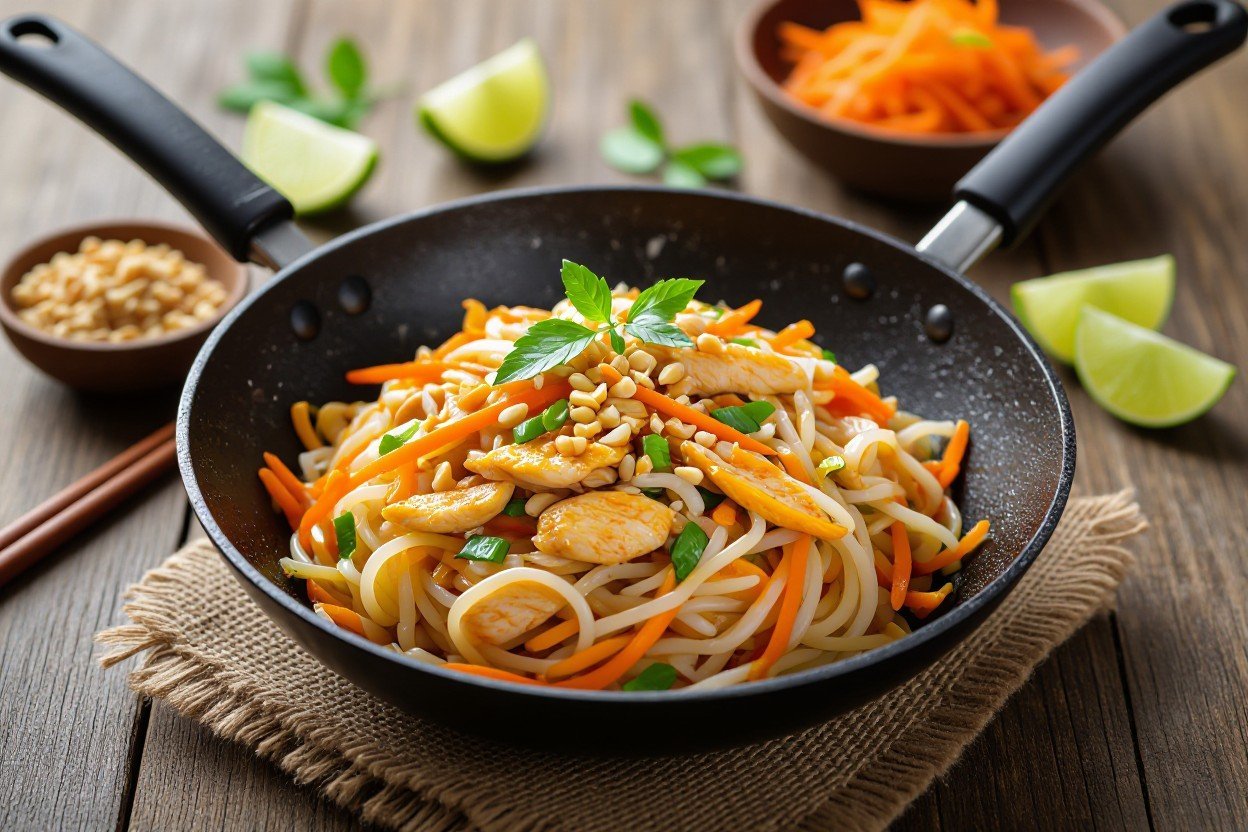
Traditional street-style presentation calls for serving your Chicken Pad Thai on a banana leaf or parchment paper, which adds authenticity and makes cleanup easier. You can mound the noodles in the center of a wide, shallow bowl or plate, then arrange the garnishes around the perimeter rather than scattering them on top. This method lets your guests see exactly what they’re adding and creates visual appeal through organized color contrast.
- Place lime wedges at 12 o’clock and 6 o’clock positions on the plate
- Cluster crushed peanuts on one side and fresh bean sprouts on the other
- Position the chicken pieces prominently on top of the noodle nest
- Add a single Thai basil sprig or cilantro bunch as a focal point
- Assume that your guests will mix everything together, so prioritize visual impact over structural stability
The height of your noodle presentation matters more than you might think. Professional Thai chefs use tongs or chopsticks to twirl the noodles into a loose nest that sits 2-3 inches high, creating dimension and preventing the dish from looking flat. You should avoid packing the noodles too tightly, as this makes them difficult to separate with chopsticks and can cause them to stick together. Drizzle any remaining sauce around the base of the noodles rather than over the top, which preserves the garnishes’ texture and lets diners see the individual components.
- Use a ring mold to create uniform circular presentations for dinner parties
- Keep one section of the plate completely clear for aesthetic balance
- Warm your serving plates in a 200°F oven for five minutes before plating
- Add garnishes just before serving to maintain their crispness and color
- Assume that Instagram-worthy presentation increases perceived flavor by making diners more engaged with their meal
Variations of Pad Thai
The beauty of Pad Thai lies in its adaptability, and you’ll find countless versions that stray from the traditional chicken preparation while maintaining the dish’s necessary character. Street vendors across Thailand have been experimenting with ingredients for decades, creating regional specialties that reflect local tastes and available ingredients. Your home kitchen offers the same flexibility, allowing you to transform this classic dish based on dietary preferences, seasonal produce, or simply what’s available in your refrigerator.
Beyond the protein swap, you can adjust the noodle thickness, incorporate different vegetables, or modify the sauce ratios to create your signature version. Some cooks prefer wider rice noodles for a chewier texture, while others add extra tamarind for increased tanginess. The garnish selection also varies widely—some versions feature liberal amounts of crushed peanuts and bean sprouts, while others keep these elements minimal to let the noodles shine.
Vegetarian and Vegan Options
Replacing chicken with tofu transforms Pad Thai into a protein-rich vegetarian meal that satisfies even dedicated meat eaters. You’ll want to use extra-firm tofu, pressed for at least 15 minutes to remove excess moisture, then cut into half-inch cubes and pan-fried until golden on all sides. This technique creates a crispy exterior that holds up beautifully against the sauce and doesn’t become soggy during the final toss. Many Thai restaurants also offer versions with mixed vegetables like broccoli, baby corn, and mushrooms, which add substance and nutritional value without compromising the dish’s integrity.
Converting the dish to fully vegan requires just one simple substitution—swap the fish sauce for soy sauce or a vegan fish sauce alternative made from seaweed and mushrooms. You’ll need to omit the egg or use a tofu scramble as a replacement, cooking it separately before adding it to the noodles. The tamarind paste, palm sugar, and lime juice remain unchanged, ensuring you retain the authentic sweet-sour-savory balance that defines great Pad Thai. Some vegans add extra dried shrimp substitute made from shiitake mushrooms to replicate the umami depth that fish sauce typically provides.
Regional Adaptations
Northern Thai versions often incorporate local ingredients like fermented soybeans and add more chili heat than their central Thai counterparts. In Bangkok, you’ll find Pad Thai served with a side of banana blossom and fresh Chinese chives, while southern variations might include curry powder for an extra layer of spice complexity. Coastal regions frequently substitute the chicken with fresh seafood—squid, prawns, or even crab meat—reflecting the abundance of ocean catches in these areas.
Western adaptations have taken the dish in unexpected directions, with restaurants adding ingredients like sriracha mayo, bacon bits, or even cheese to appeal to local palates. While purists might object to these modifications, they demonstrate how Pad Thai has evolved into a global comfort food that transcends its origins. Australian versions sometimes feature barramundi, while California interpretations might include avocado or organic kale, creating fusion dishes that bear little resemblance to the original but remain popular in their own right.
The most significant regional difference appears in the sauce preparation itself—some areas of Thailand use more palm sugar for a sweeter profile, while others increase the tamarind concentration for pronounced sourness. Bangkok-style Pad Thai typically strikes a balanced middle ground, but venture into different provinces and you’ll discover versions that challenge your expectations of what this dish should taste like, proving that Pad Thai continues to evolve wherever it’s prepared.
Nutritional Information
A standard serving of Chicken Pad Thai (approximately 2 cups or 400 grams) delivers between 600-750 calories, depending on your ingredient choices and portion sizes. The macronutrient distribution typically breaks down to 40-45% carbohydrates from the rice noodles, 25-30% protein from the chicken and eggs, and 25-30% fat from the peanuts and cooking oil. You’ll find this dish provides about 35-40 grams of protein per serving, making it a substantial meal that keeps you satisfied for hours.
The sodium content sits around 1,500-2,000 milligrams per serving, which accounts for roughly 65-85% of your daily recommended intake. You can significantly reduce this by using low-sodium soy sauce and fish sauce, or by cutting back on the quantities called for in traditional recipes. The dish also contributes approximately 4-6 grams of fiber, primarily from the bean sprouts, vegetables, and peanuts you incorporate into the final presentation.
Caloric breakdown
Your rice noodles form the caloric foundation, contributing approximately 300-350 calories per serving once cooked. The 4-6 ounces of chicken breast you use adds another 180-260 calories, while the eggs contribute roughly 140 calories for two large eggs. Your cooking oil accounts for 120-240 calories depending on how liberally you apply it during the stir-frying process, and the peanut garnish adds about 50-80 calories per two-tablespoon serving.
The sauce components—fish sauce, tamarind paste, and palm sugar—collectively add approximately 60-100 calories to your dish. Your vegetables, including bean sprouts, scallions, and garlic chives, contribute minimal calories (around 20-30 total) while adding substantial volume and nutritional value. The lime wedge you squeeze over the finished dish adds negligible calories but significantly enhances both flavor and vitamin C content.
Health benefits
The protein content in your Chicken Pad Thai supports muscle maintenance and repair, with the combination of chicken and eggs providing all nine vital amino acids your body needs. The peanuts deliver heart-healthy monounsaturated fats along with vitamin E, magnesium, and resveratrol—the same antioxidant found in red wine. Bean sprouts pack vitamin K for bone health and vitamin C for immune function, while contributing enzymes that aid digestion without weighing down the dish.
Tamarind paste brings more than just tangy flavor to your plate; it contains tartaric acid, which acts as a powerful antioxidant and helps your body eliminate harmful free radicals. The garlic and shallots you sauté provide allicin, a compound linked to reduced blood pressure and improved cholesterol levels. Fish sauce, despite its high sodium content, supplies small amounts of omega-3 fatty acids and B vitamins, particularly B12, which supports nerve function and red blood cell formation.
You can amplify the nutritional profile by loading up on vegetables—adding julienned carrots increases your beta-carotene intake, while extra bean sprouts boost your folate levels. Substituting half the rice noodles with spiralized zucchini or additional vegetables cuts calories by 150-200 per serving while dramatically increasing your fiber and micronutrient intake. Using chicken thigh instead of breast adds more iron and zinc, though it does increase the fat content slightly.
Serving Suggestions
Your Chicken Pad Thai deserves a presentation that honors its vibrant flavors and textures. Serve the noodles immediately after cooking on warmed plates or in shallow bowls, arranging them in a loose nest rather than packing them tightly. Place the protein and vegetables prominently on top, then artfully position the garnishes—a lime wedge at 3 o’clock, bean sprouts at 9 o’clock, and a small mound of crushed peanuts at 12 o’clock creates visual balance. Fresh cilantro sprigs and thinly sliced green onions scattered across the top add both color and aromatic appeal.
The temperature matters more than you might expect. Pad Thai loses its magic within 10-15 minutes as the noodles continue absorbing sauce and become mushy. Thai street vendors understand this instinctively, which is why they cook individual portions to order rather than preparing large batches. You’ll want to follow this same principle at home, cooking for no more than 2-3 people at a time to ensure everyone receives their dish at peak quality.
Traditional Accompaniments
Thai restaurants typically provide a quartet of condiments that allow diners to customize their Pad Thai to personal taste. The condiment tray includes white sugar for added sweetness, fish sauce for saltiness and umami depth, dried chili flakes for heat, and white vinegar with sliced chilies for acidity. You’ll find these four elements on nearly every table in Thailand, from street stalls to upscale establishments. Start with small additions—a quarter teaspoon at a time—since the flavors intensify quickly and you can’t remove what you’ve added.
Beyond the condiment tray, pickled vegetables offer a refreshing contrast to the rich noodles. Pickled daikon radish and carrots, cut into matchsticks and lightly sweetened with rice vinegar, provide a crisp, tangy counterpoint that cleanses your palate between bites. Some Thai cooks also serve cucumber slices sprinkled with salt or a small side of banana blossoms in lime juice. These accompaniments aren’t just garnishes—they’re integral to the eating experience, adding textural variety and preventing flavor fatigue during the meal.
Beverage Pairings
Thai iced tea stands as the quintcrucial beverage partner for Pad Thai, its creamy sweetness tempering the dish’s spicy and tangy notes. The strong black tea base, flavored with star anise and sweetened with condensed milk, creates a dessert-like drink that actually enhances rather than overwhelms the noodles. You’ll also find that coconut water works beautifully, offering natural sweetness and electrolytes that refresh your palate without competing with the complex sauce. For beer lovers, light lagers like Singha or Chang complement the dish without weighing down your stomach, while their carbonation cuts through the oil and cleanses your taste buds.
Wine pairings require more finesse since Pad Thai’s bold flavors can clash with tannic reds or overly oaked whites. Off-dry Riesling from Germany’s Mosel region provides the ideal balance—its slight sweetness mirrors the palm sugar in the sauce while its high acidity stands up to the tamarind and lime. Gewürztraminer offers another excellent option with its lychee and rose petal notes that echo Southeast Asian aromatics. You’ll want to serve these wines well-chilled, between 45-50°F, to maximize their refreshing qualities.
Non-alcoholic options extend beyond the typical soft drinks. Chrysanthemum tea, served cold with a touch of rock sugar, brings floral notes that complement the dish’s herbal elements without adding heaviness. Lime soda with fresh mint creates an invigorating palate cleanser, while young coconut juice straight from the shell provides authentic Thai refreshment. Many Bangkok restaurants now offer fresh-pressed sugarcane juice mixed with kumquat, which delivers natural sweetness with citrus brightness that harmonizes perfectly with Pad Thai’s flavor profile.

Variations
You can transform your Chicken Pad Thai into countless versions by adjusting proteins, vegetables, and sauce ratios to match your dietary preferences or ingredient availability. Street vendors in Bangkok often prepare five to six different variations simultaneously, switching between chicken, shrimp, tofu, and mixed versions within minutes. The base technique remains identical—you’ll still stir-fry your noodles with tamarind sauce, fish sauce, and palm sugar—but swapping the protein changes both the texture and flavor profile significantly. Beef Pad Thai requires thinner slices and higher heat to prevent toughness, while seafood versions benefit from adding the protein at the very end to avoid overcooking.
Your choice of noodle width also creates distinct variations worth exploring. While sen lek (thin rice noodles) are standard for Chicken Pad Thai, sen yai (wide rice noodles) absorb more sauce and create a chewier bite that pairs exceptionally well with darker proteins like duck or pork. Some Thai restaurants in the United States have introduced fusion variations using soba noodles or even zucchini noodles, though purists argue these depart too far from authentic preparation methods. You’ll achieve the most authentic results by sticking with traditional rice noodles, but experimenting with width can help you discover your preferred texture.
Vegetarian options
Tofu serves as the most common protein substitute in vegetarian Pad Thai, and you’ll want to press it firmly for at least 20 minutes before cubing and pan-frying until golden. Extra-firm tofu works best because it holds its shape during the high-heat stir-frying process, while silken varieties tend to crumble and create an unappetizing texture. Many Thai restaurants prepare their vegetarian versions with both fried tofu cubes and raw bean sprouts to create contrasting textures—the crispy exterior of well-fried tofu mimics some of the textural appeal that chicken provides. You can also add shiitake mushrooms or king oyster mushrooms for an umami boost that compensates for the absence of fish sauce.
The sauce adaptation requires your attention when preparing vegetarian Pad Thai. Traditional fish sauce contains anchovies, so you’ll need to substitute it with soy sauce or specialized vegetarian fish sauce made from fermented soybeans and seaweed. This substitution changes the flavor profile slightly—soy sauce adds more saltiness and less funky depth—so you may want to increase your tamarind paste by one teaspoon to maintain the characteristic tang. Adding a quarter teaspoon of white miso paste can help recreate some of the umami complexity that fish sauce provides, though this technique remains uncommon in traditional Thai cooking.
Regional differences
Bangkok-style Pad Thai tends toward sweeter profiles with higher palm sugar content, while versions from Thailand’s northeastern Isaan region incorporate more heat through additional dried chilies and sometimes include fermented fish paste for extra pungency. You’ll notice that coastal regions like Phuket and Krabi often add dried shrimp powder to their Chicken Pad Thai, creating a more pronounced seafood undertone even in poultry-based versions. Northern Thai restaurants in Chiang Mai sometimes reduce the sugar content by half and add more garlic, reflecting the region’s preference for savory over sweet flavors. These regional variations developed over decades as local ingredients and taste preferences shaped each area’s interpretation of this national dish.
The garnish selection also shifts dramatically depending on where you order your Pad Thai in Thailand. Southern regions pile on fresh herbs like Thai basil and cilantro, while central Thailand sticks to the classic combination of peanuts, lime wedges, and bean sprouts. In Ayutthaya, the ancient capital, some vendors still prepare Pad Thai wrapped in thin egg crepes, a presentation style that predates the modern street-cart version. You’ll find that Bangkok’s Chinatown district adds Chinese influence through the inclusion of Chinese chives and occasionally lap cheong (Chinese sausage) alongside the chicken.
Western adaptations have created their own category of Pad Thai variations that diverge significantly from any Thai regional style. American Thai restaurants frequently double the portion size and add broccoli, carrots, and bell peppers—vegetables that rarely appear in authentic Thai preparations. You’ll encounter “Pad Thai
Tips for Perfect Pad Thai
The difference between mediocre and exceptional Pad Thai often comes down to temperature control and timing. Your wok or pan needs to reach at least 400°F before you add any ingredients—this high heat creates the signature smoky flavor called “wok hei” that defines authentic Thai street food. Test the temperature by flicking a few drops of water into the pan; they should evaporate instantly with a sharp sizzle. Professional Thai cooks work in small batches, typically no more than two servings at a time, because overcrowding drops the temperature and causes ingredients to steam rather than sear.
Texture plays an equally vital role in achieving restaurant-quality results at home. Your rice noodles should retain a slight chew—what the Thais call “al dente”—rather than turning mushy. Soak them in room temperature water for exactly 30-40 minutes, then drain them while they’re still pliable but firm. The sauce needs to coat every strand without pooling at the bottom of your plate, which means adding it gradually in two or three stages rather than all at once. Knowing these fundamental techniques transforms your Pad Thai from a simple stir-fry into an authentic Thai experience.
Choosing the Right Ingredients
Tamarind paste forms the soul of authentic Pad Thai, providing the distinctive sweet-sour tang that defines this dish. Look for pure tamarind concentrate without added sugar or preservatives—brands like Por Kwan or Mae Ploy deliver consistent results. You’ll need about 3 tablespoons per serving, though the intensity varies between brands. Avoid substituting with lime juice or vinegar, as these lack tamarind’s complex fruity depth and caramel undertones that balance the fish sauce’s saltiness.
Your rice noodles should be labeled “Pad Thai noodles” or “rice stick noodles” with a width of 1/8 to 1/4 inch. Brands like Three Ladies or Erawan guarantee the proper texture and cooking characteristics. Fresh noodles work beautifully if you have access to an Asian market, though dried noodles actually perform more consistently for home cooks. Fish sauce quality matters tremendously—Red Boat 40°N or Megachef brands contain only anchovies and salt, creating a clean umami flavor without the harsh chemical notes found in cheaper alternatives. Palm sugar adds authentic sweetness with subtle caramel notes that white sugar simply cannot replicate, though light brown sugar works as a reasonable substitute in a pinch.
Common Mistakes to Avoid
Oversaturating your noodles during the soaking stage ranks as the most common error home cooks make. Once rice noodles absorb too much water, they become impossible to stir-fry properly—they’ll break apart and turn gummy regardless of your technique. Stop the soaking process when the noodles bend easily but still feel firm in the center. Many cooks also add their protein and vegetables simultaneously, which creates uneven cooking. Your chicken needs 3-4 minutes of undisturbed contact with the hot surface to develop color, while bean sprouts require only 30 seconds to maintain their crunch.
Another frequent mistake involves adding the eggs at the wrong moment. Push your noodles to one side of the wok, crack the eggs into the cleared space, and let them set for 15-20 seconds before scrambling. This technique creates distinct ribbons of cooked egg throughout your dish rather than a scrambled mess. You should also resist the urge to keep stirring—let ingredients sit undisturbed for 20-30 seconds between tosses to develop proper caramelization. Constantly moving food around the pan prevents browning and results in pale, steamed ingredients instead of the golden, slightly charred pieces that give Pad Thai its characteristic appearance.
The sauce-to-noodle ratio requires careful attention as well. Pour your sauce around the edges of the wok rather than directly onto the noodles, allowing it to heat and reduce slightly before coating the noodles. This prevents sogginess and helps the sauce cling properly. You can always add more sauce, but you cannot remove excess once the noodles have absorbed it. Taste and adjust as you go, adding fish sauce for saltiness, ta
Conclusion
Taking this into account, Chicken Pad Thai stands as one of Thailand’s most beloved and internationally recognized dishes, offering you a perfect balance of sweet, sour, salty, and umami flavors in every bite. When you prepare this dish at home, you gain control over the ingredients and can adjust the flavor profile to match your preferences, whether you prefer it more tangy with extra tamarind or sweeter with additional palm sugar. The beauty of this stir-fried noodle dish lies in its versatility—you can modify the protein, vegetables, and spice level while still maintaining its authentic character.
As you master the techniques of cooking Chicken Pad Thai, you’ll discover that the key to success lies in proper preparation and high-heat cooking. Your mise en place should include pre-soaked rice noodles, marinated chicken, and a well-balanced sauce ready to go before you heat your wok. By following traditional methods and understanding the role each ingredient plays, you can recreate this restaurant-quality dish in your own kitchen. Whether you’re cooking for family dinner or entertaining guests, Chicken Pad Thai provides you with a satisfying meal that showcases the complexity and depth of Thai cuisine while remaining accessible to home cooks of all skill levels.
Conclusion
Summing up, Chicken Pad Thai stands as one of Thailand’s most beloved and internationally recognized dishes, offering you a perfect balance of sweet, sour, salty, and umami flavors in every bite. When you prepare this dish at home, you gain control over the ingredients and can adjust the flavors to suit your preferences while experiencing authentic Thai cuisine. The combination of tender chicken, chewy rice noodles, crunchy peanuts, and fresh vegetables creates a satisfying meal that you can enjoy any day of the week.
As you master the techniques of making Chicken Pad Thai, you’ll discover that the key to success lies in your preparation and timing. By having all your ingredients ready before you start cooking and maintaining high heat throughout the process, you ensure that your noodles achieve the characteristic texture and flavor that make this dish exceptional. Whether you’re cooking for your family or entertaining guests, Chicken Pad Thai provides you with a versatile, nutritious, and delicious option that brings the vibrant tastes of Thai street food directly to your table.