Chicken Carbonara That Breaks the Internet: Creamy, Cheesy, 20-Minute Magic You’ll Crave
You know those meals that taste like a night out but take less time than scrolling your feed? This Chicken Carbonara is exactly that. It’s rich, luxe, and unapologetically comforting—without the restaurant price tag or the hour-long commitment.
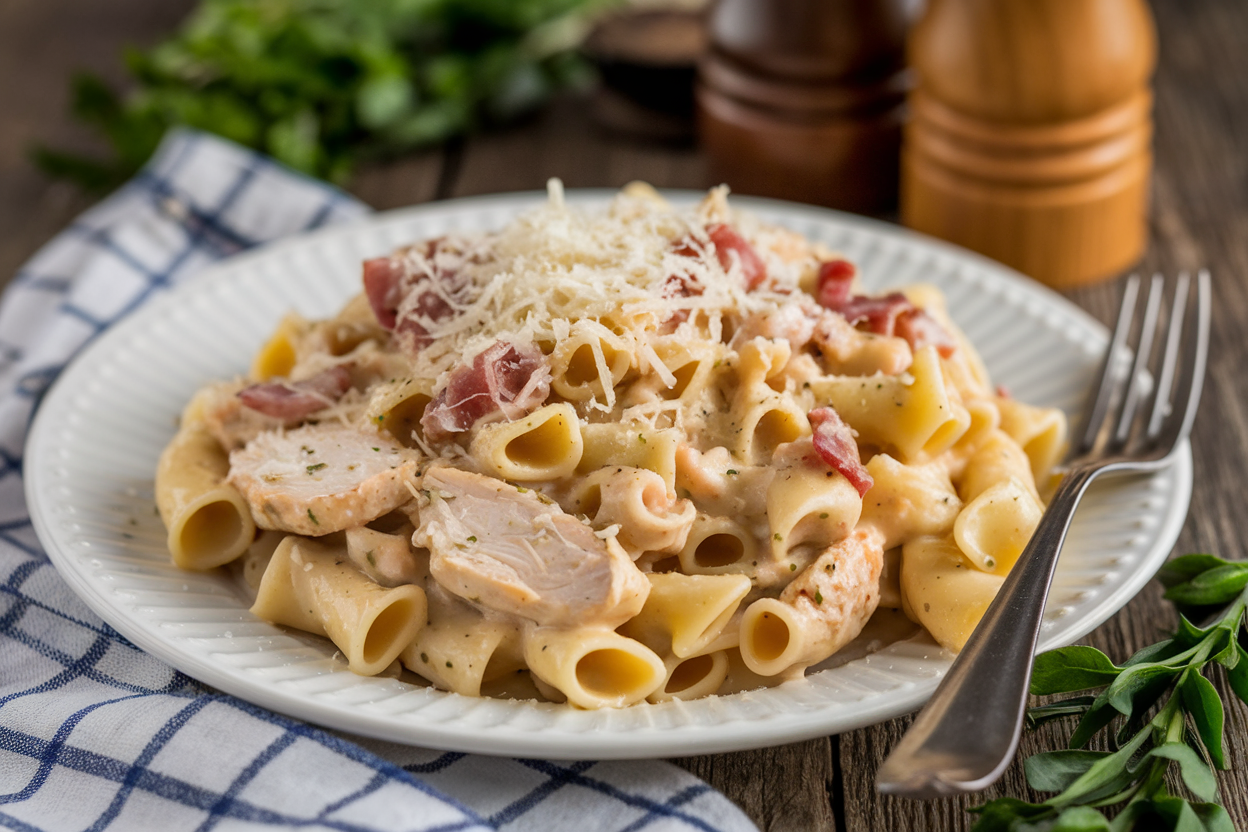
Crispy pancetta, juicy chicken, silky egg-Parmesan sauce—every bite punches above its weight. Make it once and your weeknight standards will never recover.
What Makes This Recipe Awesome
This Chicken Carbonara ditches the heavy cream and leans on a classic technique: eggs combined with cheese and starchy pasta water for a naturally glossy, rich sauce. The chicken breast brings protein and heft, so this becomes a full meal that satisfies big appetites.
Pancetta (or bacon) adds crunch and salt, while garlic and black pepper deliver that signature carbonara swagger. It’s fast, scalable, and you can prep 90% of it while the pasta water boils. That’s efficiency your future self will thank you for.
Ingredients Breakdown
- Spaghetti or bucatini (12 oz) — Long pasta grips the sauce better.
Spaghetti is classic; bucatini is bougie.
- Chicken breast (1 large, about 10–12 oz) — Thinly sliced or cut into small bites for fast cooking.
- Pancetta or thick-cut bacon (4–6 oz) — Pancetta is traditional-adjacent; bacon works and brings smoke.
- Eggs (3 large) — The backbone of the sauce. Room temp helps avoid scrambling.
- Parmigiano-Reggiano (1 cup finely grated) — Salty, nutty, and melts smoothly. Pecorino Romano can swap in (or mix both).
- Garlic (2 cloves, minced) — Not traditional in carbonara, but the flavor hits hard with chicken.
- Freshly cracked black pepper (1–2 tsp) — You want visible specks.
This is a pepper-forward dish.
- Olive oil (1 tbsp) — Helps brown the chicken and bloom garlic.
- Kosher salt — For pasta water and seasoning. Be mindful; cheese and pancetta are salty.
- Reserved pasta water (about 1 cup) — Starch = silky sauce insurance.
- Optional: chopped parsley or chives — For a fresh finish that says “I tried.”
The Method – Instructions
- Boil the pasta. Salt a large pot of water like the ocean. Cook spaghetti until just shy of al dente.
Before draining, reserve at least 1 cup of pasta water.
- Prep the sauce base. In a bowl, whisk the eggs, grated Parmesan, and a generous amount of black pepper until smooth. Set aside.
- Crisp the pancetta. In a large skillet over medium heat, cook pancetta until golden and crisp. Scoop it out, leaving the rendered fat in the pan.
- Cook the chicken. Season the chicken lightly with salt and pepper.
Add olive oil to the pancetta fat if needed, then sear chicken over medium-high until just cooked and lightly browned, 4–6 minutes. Remove to a plate.
- Bloom the garlic. Lower heat to medium. Add minced garlic to the pan for 30 seconds until fragrant, not brown.
Too dark? Start over—burnt garlic is a buzzkill.
- Combine pasta and fats. Add drained pasta to the skillet with garlic and toss to coat in the fat. Add the pancetta and chicken back in.
Kill the heat.
- Temper the eggs. Pour the egg-cheese mixture over the hot pasta while tossing vigorously. Add splashes of hot reserved pasta water to loosen and create a glossy sauce. You’re aiming for creamy, not scrambled—keep the heat off and move fast.
- Adjust and finish. Season with more pepper, a touch of salt if needed, and a handful of extra cheese.
If the sauce tightens, add a bit more pasta water until silky.
- Serve immediately. Top with herbs if you’re feeling fancy. Eat while it’s steaming and creamy.
Storage Instructions
- Fridge: Store leftovers in an airtight container for up to 2 days. The sauce will thicken as it cools.
- Reheat: Warm gently in a skillet over low heat with a splash of water or chicken stock to re-loosen the sauce.
Avoid microwaving on high; you’ll curdle it.
- Freezer: Not recommended. The egg-based sauce doesn’t survive freezing well, and the texture goes grainy. Hard pass.
What’s Great About This
- Fast and premium: Looks like date-night, cooks like Tuesday-night.
- Protein-packed:</-strong> Chicken plus eggs = satisfying and balanced.
- Cream-free creaminess: The sauce is silky without heavy cream weighing you down.
- One-pan finish: Minimal dishes, maximum flavor extraction from pancetta fat.
- Customizable: Easy to tweak with veggies, different cheeses, or alternative proteins.
Don’t Make These Errors
- Scrambling the eggs: If the pan is too hot or you add the eggs over direct heat, you’ll get breakfast, not carbonara.
Kill the heat first.
- Skipping the pasta water: It’s your sauce’s superpower. No starch = no silk.
- Over-salting: Cheese and pancetta bring plenty. Salt the pasta water well, then taste before adding more.
- Overcooking the chicken: Dry chicken ruins the party.
Thin slices, hot pan, short cook time.
- Using pre-shredded cheese: It’s often coated with anti-caking agents and won’t melt smoothly. Grate it fresh. Yes, it’s worth it.
Variations You Can Try
- Half Parm, half Pecorino: Pecorino adds a sharper, saltier edge.
Great if you love bold flavors.
- Lemon zest and peas: For a bright, springy vibe. Add peas during the last minute of pasta cooking.
- Smoky mushroom carbonara: Swap half the chicken for sliced cremini or shiitake. Sear until browned for umami depth.
- Spicy upgrade: Pinch of red pepper flakes in the garlic step for gentle heat.
Not traditional, but neither is the chicken—so YOLO.
- Gluten-free: Use a GF spaghetti you trust and monitor pasta water; some brands release extra starch, which can make the sauce thicker (not a bad thing).
- Turkey bacon or guanciale: Bacon’s lighter cousin works; guanciale is the purist’s choice with big porky flavor.
FAQ
Isn’t carbonara supposed to be made without chicken?
Traditional carbonara uses guanciale, eggs, pecorino/Parmesan, black pepper, and pasta—no chicken, no cream. This version adds chicken for extra protein and a full-meal feel. It’s an homage, not a replica, and it tastes phenomenal.
Do I need heavy cream?
No.
The creaminess comes from eggs, cheese, and starchy pasta water. Cream dulls the peppery bite and can make the dish heavy. If you must, use a tiny splash—but it’s better without, IMO.
How do I keep the eggs from scrambling?
Turn off the heat before adding the egg-cheese mixture, and toss quickly while adding hot pasta water a little at a time.
The residual heat cooks the eggs gently into a sauce. Keep the pan moving and you’re golden.
Can I use pre-cooked rotisserie chicken?
Yes, but warm it briefly in the pancetta fat so it doesn’t cool down the pan. Add it right before the egg mixture and toss thoroughly to heat through.
What’s the best pasta shape?
Spaghetti is classic for a reason: it coats evenly and twirls beautifully.
Bucatini is fun and chewy. If you only have rigatoni, it still works—just toss well to coat the tubes.
Can I make this ahead?
It’s best fresh. The sauce thickens as it sits and loses its silky sheen.
If you need to prep, cook the chicken and pancetta ahead, then rewarm and finish with pasta, eggs, and cheese right before serving.
How peppery should it be?
Carbonara loves black pepper. You should see flecks throughout the sauce and taste a gentle bite. Start with 1 teaspoon and add to preference.
My Take
This Chicken Carbonara is my weeknight flex: minimal effort, maximum applause.
It respects the spirit of carbonara—eggs, cheese, heat, and timing—while adding chicken so no one asks, “Where’s the protein?” The sauce is glossy, the pancetta crunches, and the pepper lingers just enough to make you go back for another forkful. FYI, it’s also the dish I make when I need a guaranteed win. Clean plates don’t lie.
Printable Recipe Card
Want just the essential recipe details without scrolling through the article? Get our printable recipe card with just the ingredients and instructions.