Chicken & Broccoli Alfredo
There’s nothing quite like the creamy comfort of Chicken & Broccoli Alfredo to satisfy your dinner cravings. This classic Italian-American dish combines tender chicken breast, crisp broccoli florets, and perfectly cooked pasta, all coated in a rich, velvety Alfredo sauce made from butter, cream, and Parmesan cheese. Whether you’re cooking for your family on a busy weeknight or hosting friends for dinner, this beloved recipe delivers restaurant-quality results right in your own kitchen. You’ll discover that mastering this dish is easier than you think, requiring just a handful of ingredients and simple techniques.
Key Takeaways:
- This classic Italian-American dish combines tender chicken, fresh broccoli, and fettuccine pasta in a rich, creamy Alfredo sauce made with butter, heavy cream, and Parmesan cheese.
- The dish offers a balanced meal with protein from chicken, vitamins and fiber from broccoli, and carbohydrates from pasta, making it a satisfying one-pot dinner option.
- You can lighten the recipe by using milk instead of heavy cream, adding extra vegetables, or substituting whole wheat pasta while still maintaining delicious flavor.
Ingredients
The beauty of Chicken & Broccoli Alfredo lies in its simplicity—just four main components come together to create a restaurant-quality dish in your own kitchen. Each ingredient plays a distinct role in building layers of flavor and texture, from the tender protein to the creamy sauce that ties everything together. Getting familiar with these components will help you make smart choices at the grocery store and set yourself up for success before you even turn on the stove.
Quality matters more than quantity in this recipe. You’ll want to select fresh, vibrant ingredients that can stand on their own, since there’s nowhere for subpar components to hide in such a straightforward dish. The good news is that none of these ingredients are exotic or hard to find—your local supermarket will have everything you need.
Chicken
Boneless, skinless chicken breasts are your best bet for this recipe, though chicken thighs work beautifully if you prefer darker meat with more flavor. You’ll need about 1.5 pounds for four servings, which typically translates to two large breasts or four to five thighs. The key is cutting the meat into uniform, bite-sized pieces—roughly one-inch cubes—so they cook evenly and are easy to twirl with your pasta on a fork.
Before cooking, pat your chicken completely dry with paper towels. This simple step makes a dramatic difference in achieving a golden-brown sear rather than steamed, gray meat. Season generously with salt and pepper on all sides, and consider adding a pinch of garlic powder or Italian seasoning to build flavor from the ground up. Your chicken should reach an internal temperature of 165°F, but in practice, small cubes cooked over medium-high heat typically need just 6-7 minutes total, turning once or twice.
Broccoli
Fresh broccoli crowns deliver the best texture and flavor, though frozen florets can work in a pinch when you’re short on time. Plan for about 3 cups of florets, which equals roughly one medium head of broccoli. Cut your florets into bite-sized pieces that match your chicken cubes—this consistency isn’t just aesthetic; it ensures everything cooks at the same rate and makes for a more enjoyable eating experience.
The stems are completely edible and shouldn’t go to waste. Peel away the tough outer layer with a vegetable peeler, then slice the tender inner stem into coins or matchsticks. These pieces add a pleasant crunch and slightly sweeter flavor than the florets. Blanching your broccoli separately before adding it to the final dish gives you complete control over its texture—you want it bright green and tender-crisp, not mushy or raw.
Timing your broccoli correctly prevents the most common mistake in this dish: overcooked, olive-drab vegetables that fall apart. Drop your florets into boiling salted water for exactly 2-3 minutes, then immediately transfer them to an ice bath. This technique, called blanching and shocking, stops the cooking process instantly and locks in that vibrant color. You can do this step hours ahead, keeping the broccoli refrigerated until you’re ready to toss everything together.
Alfredo Sauce
Authentic Alfredo sauce contains just three ingredients: butter, heavy cream, and Parmesan cheese. You’ll need half a cup of butter (one stick), one cup of heavy cream, and 1.5 cups of freshly grated Parmesan—not the pre-grated kind in the green canister. Real Parmigiano-Reggiano, grated on a box grater or microplane, melts smoothly and creates a silky sauce, while pre-shredded cheese contains anti-caking agents that make your sauce grainy and prevent proper emulsification.
The ratio of these three ingredients determines your sauce’s consistency. Too much butter makes it greasy; too much cream makes it thin and soup-like; too much cheese causes it to break and become clumpy. The proportions listed above create a sauce that’s thick enough to coat pasta without being heavy or gluey. You’ll build this sauce right in your pan after cooking the chicken, using the browned bits (fond) stuck to the
Preparation Steps
Getting each component right sets the foundation for a restaurant-quality dish in your own kitchen. The key to this recipe lies in timing and technique—you’ll want to have all your ingredients prepped and ready before you start cooking, as the process moves quickly once you begin. This mise en place approach ensures nothing overcooks while you’re scrambling to chop or measure.
Each element of this dish requires its own specific method to achieve the best texture and flavor. You’ll cook the chicken first, steam or blanch the broccoli separately, prepare the silky Alfredo sauce, and then bring everything together with your cooked pasta. This systematic approach gives you control over each component and prevents the common pitfall of mushy broccoli or rubbery chicken.
Cooking the Chicken
Season your chicken breasts generously on both sides with salt, pepper, and a pinch of garlic powder before they hit the pan. Heat two tablespoons of olive oil in a large skillet over medium-high heat until it shimmers—this usually takes about two minutes. Place the chicken breasts in the pan without crowding them, and resist the urge to move them around. Let them cook undisturbed for 6-7 minutes on the first side until a golden-brown crust forms.
Flip the chicken once and cook for another 5-6 minutes, or until the internal temperature reaches 165°F when checked with a meat thermometer at the thickest part. Transfer the cooked chicken to a cutting board and let it rest for five minutes before slicing it into strips or bite-sized pieces. This resting period allows the juices to redistribute throughout the meat, keeping it moist rather than letting all that flavor run out onto your cutting board.
Preparing the Broccoli
Cut your broccoli into uniform florets about 1.5 inches in size—consistency in sizing ensures even cooking. Bring a large pot of salted water to a rolling boil, then add the broccoli florets. Blanch them for exactly three minutes, which gives you that perfect tender-crisp texture that holds up well when mixed with the pasta and sauce.
Drain the broccoli immediately and plunge it into a bowl of ice water to stop the cooking process. This technique, called shocking, preserves the vibrant green color and prevents the florets from turning that unappetizing olive-gray shade. After 30 seconds in the ice bath, drain the broccoli thoroughly and set it aside on a clean kitchen towel.
You can also steam the broccoli if you prefer, using a steamer basket over boiling water for 4-5 minutes. The steaming method retains slightly more nutrients than blanching, though both methods work beautifully for this recipe. Whichever method you choose, avoid overcooking—broccoli should still have a slight bite to it, as it will continue to soften slightly when you toss it with the hot pasta and sauce.
Making the Alfredo Sauce
Melt four tablespoons of butter in a medium saucepan over medium heat, watching carefully to ensure it doesn’t brown. Add three cloves of minced garlic and sauté for 30-45 seconds until fragrant but not colored—burned garlic will make your sauce bitter. Pour in two cups of heavy cream and bring the mixture to a gentle simmer, stirring occasionally.
Reduce the heat to low and gradually whisk in 1.5 cups of freshly grated Parmesan cheese, adding it in three batches. Wait for each addition to melt completely before adding more, which prevents the cheese from clumping. Season with half a teaspoon of salt, a quarter teaspoon of white pepper, and a pinch of nutmeg—this last ingredient is the secret that elevates your sauce from good to exceptional.
The sauce will thicken as it cools, so aim for a consistency slightly thinner than what you want in the final dish. If your sauce becomes too thick, you can thin it with a few tablespoons of the pasta cooking water, which contains starch that helps the sauce cling to the noodles. Avoid using milk as a thinner
Serving Suggestions
Your Chicken & Broccoli Alfredo deserves to be plated with the same care you put into making it. The creamy white sauce provides a beautiful canvas for creating an appetizing presentation that will have your family and guests reaching for their forks before you’ve even sat down. The key lies in balancing visual appeal with practicality—you want a dish that looks restaurant-quality but doesn’t require last-minute fussing when you’re ready to eat.
Temperature plays a significant role in how well your alfredo holds together on the plate. Serve it immediately after tossing the pasta with the sauce, as alfredo naturally thickens as it cools. If you need to hold it for a few minutes, keep it in a warm serving bowl rather than individual plates, and reserve about a quarter cup of pasta water to loosen the sauce just before serving if needed.
Presentation Ideas
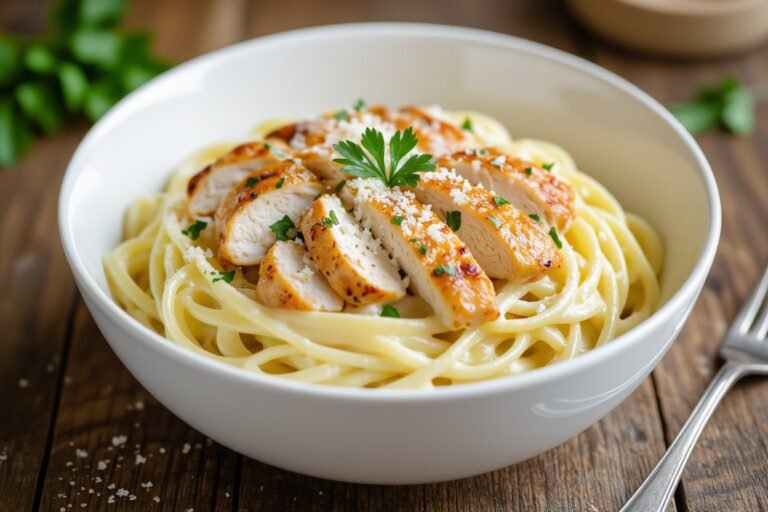
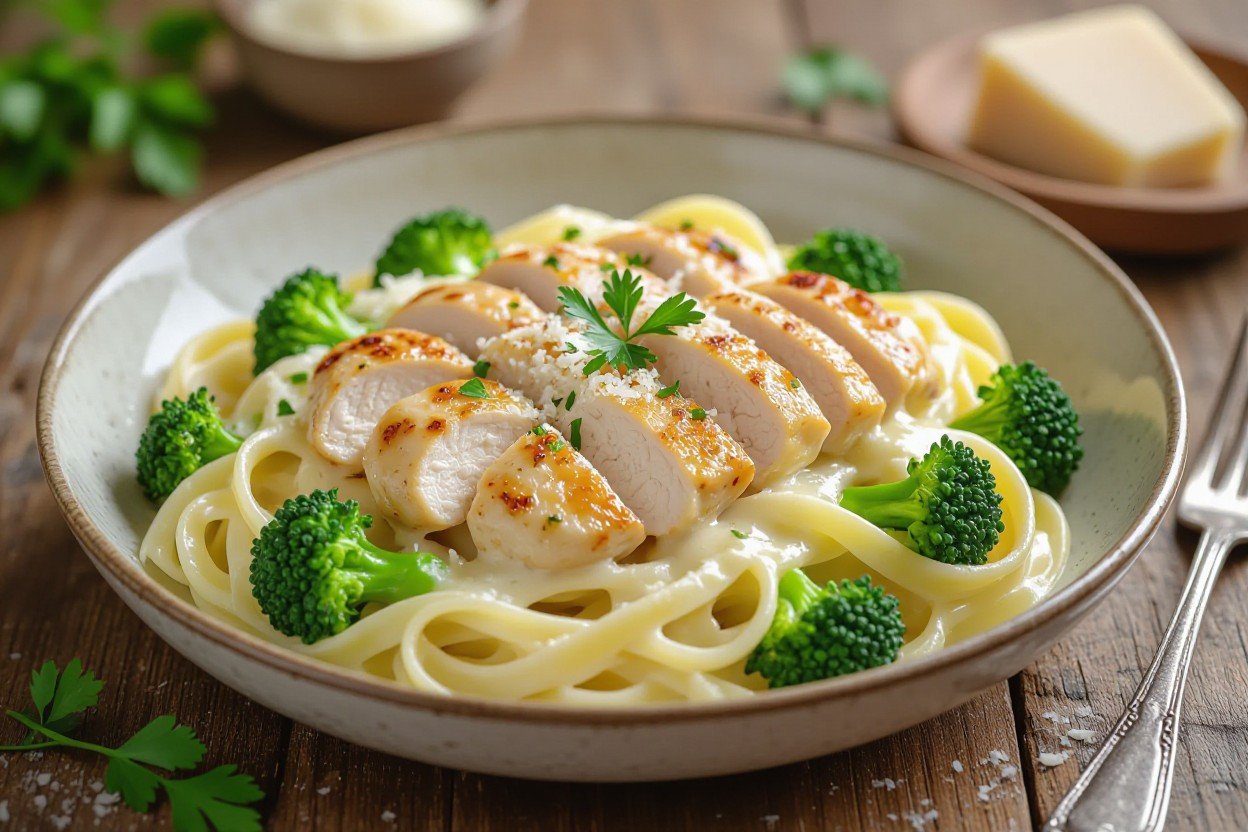
Start by twirling your fettuccine into neat nests using tongs or a large fork, creating height on the plate rather than letting the pasta fall flat. Place these pasta nests slightly off-center on warmed plates—heating your dishes in a 200°F oven for five minutes prevents the sauce from congealing on contact. Arrange three to four pieces of sliced chicken breast in a fan pattern across the top of each nest, and nestle the bright green broccoli florets strategically around the edges where they’ll catch the eye. A light dusting of freshly grated Parmesan cheese and a small sprinkle of chopped fresh parsley adds contrast against the creamy sauce.
For family-style serving, choose a wide, shallow bowl that shows off the dish’s components rather than piling everything into a deep vessel. Layer the pasta first, then distribute the chicken and broccoli evenly across the top so each person gets a balanced serving. Garnish the entire dish with a generous handful of Parmesan and fresh herbs, and place a small bowl of extra cheese and a pepper grinder nearby. This approach works particularly well for casual dinners and allows everyone to serve themselves while the pasta stays warmer longer.
Side Dishes
A crisp Caesar salad cuts through the richness of alfredo sauce beautifully, providing textural contrast and a bright, acidic counterpoint to the creamy main dish. Toss romaine hearts with a tangy dressing, homemade croutons, and shaved Parmesan about ten minutes before serving your pasta. Garlic bread remains the classic pairing for good reason—the toasted, buttery crunch complements the silky sauce, and you’ll want something to soak up every last bit of alfredo from your plate. Brush thick slices of Italian bread with garlic butter, broil until golden, and serve them warm in a cloth-lined basket.
Roasted vegetables offer another excellent option that doesn’t compete with your main dish’s flavors. Brussels sprouts halved and roasted at 425°F for twenty minutes develop caramelized edges that add a slightly nutty, sweet dimension to your meal. Cherry tomatoes roasted with balsamic vinegar bring acidity and brightness, while their concentrated sweetness balances the savory elements of the alfredo. You can prepare these vegetables while your pasta water comes to a boil, timing everything to finish simultaneously.
For lighter accompaniments, consider a simple arugula salad dressed with lemon juice and olive oil, or steamed asparagus spears finished with a squeeze of fresh lemon. Green beans almondine—quickly sautéed with butter and toasted almonds—adds both color and a delicate crunch that won’t overwhelm your palate. The goal with any side dish is to provide balance without introducing competing cream-based elements or heavy starches that would make the meal feel too indulgent.
Variations of the Recipe
You can transform this classic Chicken & Broccoli Alfredo into countless variations that suit your dietary preferences and ingredient availability. The beauty of this dish lies in its flexibility—swap the fettuccine for penne or rigatoni to catch more sauce in their ridges, or use whole wheat pasta for added fiber. You might add sun-dried tomatoes for a tangy sweetness, or toss in mushrooms alongside the broccoli for an earthier flavor profile. Some home cooks prefer adding a pinch of nutmeg to their Alfredo sauce, which enhances the creaminess without overpowering the dish.
For those who enjoy a bit of heat, incorporating red pepper flakes or a dash of cayenne pepper can elevate the flavor complexity significantly. You can also experiment with different cheeses—mixing in some Asiago or Romano with your Parmesan creates a sharper, more robust sauce. If you’re working with leftover rotisserie chicken, this recipe becomes even more convenient, cutting your prep time by about 15 minutes. The sauce consistency is easily adjustable too; thin it with reserved pasta water or chicken broth if you prefer a lighter coating, or add an extra tablespoon of butter for a richer finish.
Healthier Options
You can significantly reduce the calorie content of this dish by substituting half-and-half or whole milk for the heavy cream, which cuts approximately 300 calories from the recipe while maintaining a creamy texture. Greek yogurt mixed with a bit of pasta water creates a protein-rich sauce alternative that delivers tanginess and body—use a 2:1 ratio of Greek yogurt to pasta water for best results. Cauliflower florets work beautifully alongside or in place of some broccoli, adding volume and nutrients without extra calories. Studies show that replacing just 25% of the pasta with spiralized zucchini or spaghetti squash can reduce the overall carbohydrate content by nearly 40 grams per serving.
Your protein choices make a substantial difference in the nutritional profile as well. Skinless chicken breast contains about 165 calories per 4-ounce serving compared to 250 calories for the same amount of chicken thigh. For an even leaner option, grilled shrimp provides only 120 calories per serving while delivering 23 grams of protein. You can also reduce the cheese by half and add nutritional yeast for that umami, cheesy flavor with fewer calories and added B vitamins. Roasting your broccoli instead of steaming it intensifies its flavor, allowing you to use less salt and butter overall while achieving more satisfying taste.
Vegetarian Alternatives
Replacing the chicken with plant-based proteins transforms this dish into a satisfying vegetarian meal without sacrificing the creamy, comforting qualities you love. Firm tofu, when pressed and pan-fried until golden, absorbs the Alfredo sauce beautifully and provides about 20 grams of protein per cup. Chickpeas offer another excellent option—roast them with olive oil and Italian seasoning until crispy, and they’ll add both protein and a delightful textural contrast to the creamy pasta. White beans, particularly cannellini, blend seamlessly into the dish with their mild flavor and buttery texture, contributing 15 grams of protein per cup while maintaining the comfort-food appeal.
Tempeh brings a nutty flavor that complements the richness of Alfredo sauce exceptionally well. Crumble it and sauté with garlic and herbs before adding to your pasta for a texture similar to ground meat. Portobello mushrooms, sliced thick and grilled, offer a meaty texture that many vegetarians find satisfying—they contain umami compounds that enhance the overall savory profile of the dish. You can also create a mixed vegetable version by adding roasted red peppers, artichoke hearts, and asparagus alongside the broccoli, turning the pasta into a vegetable-forward meal that needs no protein substitute at all.
The sauce itself remains naturally vegetarian when you use vegetable broth instead of chicken broth, though you’ll want to add an extra clove of garlic and perhaps a teaspoon of white miso paste to compensate for the depth that
Tips for the Best Alfredo
The secret to restaurant-quality alfredo lies in mastering your heat control and timing. You’ll want to keep your burner at medium-low when adding the cream to prevent it from breaking or developing an unpleasant grainy texture. Professional chefs know that alfredo sauce reaches its ideal consistency at around 165°F – hot enough to melt the cheese smoothly but not so hot that the proteins separate. Your sauce should coat the back of a spoon and fall off in a slow, steady stream rather than clinging stubbornly or running off like water.
Fresh grated Parmesan makes an enormous difference compared to the pre-shredded varieties you’ll find in containers. The pre-packaged versions contain cellulose powder to prevent clumping, which interferes with the sauce’s ability to achieve that luxurious, silky texture you’re after. Block Parmigiano-Reggiano aged for at least 24 months delivers the nutty, complex flavor that transforms your alfredo from ordinary to exceptional. Though you might be tempted to save time with pre-minced garlic from a jar, the sharp, almost metallic taste it imparts can overpower the delicate balance of butter and cream in your sauce.
- Use freshly grated Parmesan cheese instead of pre-shredded varieties
- Keep your heat at medium-low to prevent the sauce from breaking
- Add pasta water gradually to achieve your desired consistency
- Cook the broccoli until just tender with a slight bite remaining
- Season your chicken generously before cooking for maximum flavor
- Toss the pasta in the sauce rather than simply pouring sauce over the top
Cooking Techniques
Tempering your cheese before adding it to the hot cream prevents those frustrating clumps that refuse to melt smoothly. You’ll achieve this by letting your grated Parmesan sit at room temperature for about 15 minutes before you start cooking. Adding the cheese in three or four increments rather than dumping it all at once gives each addition time to melt completely and incorporate into the sauce. Stirring in a figure-eight pattern instead of circular motions helps distribute the heat more evenly throughout the pan.
Your pasta should finish cooking about two minutes before it reaches al dente when you drain it. The noodles will continue cooking as they absorb the alfredo sauce, and this technique prevents you from ending up with mushy, overcooked pasta in your final dish. Reserve at least one full cup of pasta water before draining – this starchy liquid contains the magic ingredient that helps your sauce cling to every strand of fettuccine. Start by adding just two tablespoons at a time, tossing continuously until you reach that glossy, cohesive consistency where the sauce and pasta become one unified dish.
Ingredient Quality
European-style butter with 82% butterfat content creates a richer, more velvety alfredo than standard American butter at 80% butterfat. The extra fat percentage might seem negligible, but that 2% difference translates to noticeably better flavor and a smoother mouthfeel in your finished sauce. Heavy cream labeled as “heavy whipping cream” contains at least 36% milk fat, which is non-negotiable for achieving proper thickness without adding flour or cornstarch as stabilizers.
Your broccoli crowns should feel firm and tight when you squeeze them gently, with deep green or purple-green coloring throughout. Yellow florets indicate the vegetable is past its prime and will turn mushy during cooking, even if you’re careful with your timing. For the chicken, organic or free-range options contain less water retention than conventional varieties, which means you’ll get better browning and more concentrated flavor when you sear the meat.
Authentic Parmigiano-Reggiano will have its name stamped in a dotted pattern around the rind, distinguishing it from generic parmesan cheeses that lack the protected designation of origin status. This certification guarantees the cheese was produced in specific regions of Italy using traditional methods that have remained unchanged for over 900 years. The investment in quality ingredients pays divi
Common Mistakes to Avoid
Even experienced home cooks can stumble when preparing Chicken & Broccoli Alfredo, turning what should be a creamy, restaurant-quality dish into a disappointing meal. The difference between success and failure often comes down to timing and technique rather than expensive ingredients or complicated methods. Understanding where others go wrong gives you the advantage of sidestepping these pitfalls entirely, saving both your dinner and your confidence in the kitchen.
Most problems with this dish stem from rushing through steps or misunderstanding how heat affects each component. Your chicken, broccoli, and sauce all have different cooking requirements, yet they need to come together harmoniously on the plate. Learning to recognize the warning signs of these common errors means you’ll catch problems before they become irreversible, ensuring your Alfredo turns out perfectly every single time.
Overcooking Ingredients
Chicken breast transforms from juicy and tender to dry and rubbery in just two to three minutes of excess cooking time. The sweet spot for boneless, skinless chicken breast is an internal temperature of 165°F, but many cooks leave it on the heat well past this point, resulting in meat that requires extra sauce just to swallow. Your best defense is an instant-read thermometer—pull the chicken off the heat when it reaches 160°F, as carryover cooking will bring it to the safe temperature while it rests. Slicing into the meat to check doneness releases those precious juices onto your cutting board instead of keeping them where they belong.
Broccoli suffers even more dramatically from overcooking, losing its vibrant green color and firm-tender texture within minutes. Blanching or steaming should take no more than 3-4 minutes for florets, and they should still have a slight bite when you remove them from heat. Mushy, olive-green broccoli not only looks unappetizing but also develops a sulfurous smell that permeates your entire dish. If you’re adding broccoli directly to your sauce, cut your cooking time in half since it will continue to soften as it sits in the hot cream.
Sauce Consistency
Alfredo sauce walks a fine line between luxuriously coating your pasta and either clumping into a greasy mess or turning into a watery puddle. The emulsion of butter, cream, and cheese requires gentle heat—anything above medium will cause the proteins in the cheese to seize up and separate from the fats, leaving you with a grainy, broken sauce that no amount of whisking can fix. Your sauce should coat the back of a spoon and slowly drip off rather than running off immediately, achieving what chefs call “nappe” consistency.
Temperature control makes or breaks your sauce’s texture, and this is where gas stoves give you a slight advantage over electric, allowing for instant heat adjustments. If your sauce starts to break, immediately remove it from heat and whisk in a tablespoon of cold cream to bring the temperature down quickly. Adding your grated Parmesan gradually while whisking constantly prevents clumping—dump it all in at once, and you’ll end up with stringy cheese blobs floating in separated cream.
The type of cream you use directly impacts your final consistency, with heavy whipping cream containing 36-40% fat providing the stability needed for a sauce that won’t break. Half-and-half or light cream might seem like lighter alternatives, but their lower fat content means they’re more likely to curdle when combined with acidic ingredients or high heat. Your sauce will also thicken considerably as it cools, so aim for a consistency that seems slightly thinner than your desired final result—what looks perfect in the pan will become too thick by the time it reaches the table.
To Wrap Up
So now you have everything you need to create a restaurant-quality Chicken & Broccoli Alfredo right in your own kitchen. This classic Italian-American dish combines tender chicken, crisp-tender broccoli, and perfectly cooked pasta, all brought together by a rich, creamy Alfredo sauce that coats every bite. When you follow the techniques outlined above—from properly seasoning your chicken to achieving the ideal sauce consistency—you’ll deliver a meal that satisfies both your family and guests alike.
You can easily adapt this dish to suit your preferences and dietary needs. Whether you’re adding extra vegetables, adjusting the garlic levels, or experimenting with different pasta shapes, the foundation remains solid and dependable. The beauty of Chicken & Broccoli Alfredo lies in its versatility and comforting flavors that never go out of style. With practice, you’ll find your own perfect balance of ingredients and develop the confidence to make this dish your signature recipe.
Printable Recipe Card
Want just the essential recipe details without scrolling through the article? Get our printable recipe card with just the ingredients and instructions.