Beef Fat Fries (Tallow Fries): The Crispiest, Beefiest Fries Your Air Fryer’s Been Dreaming About
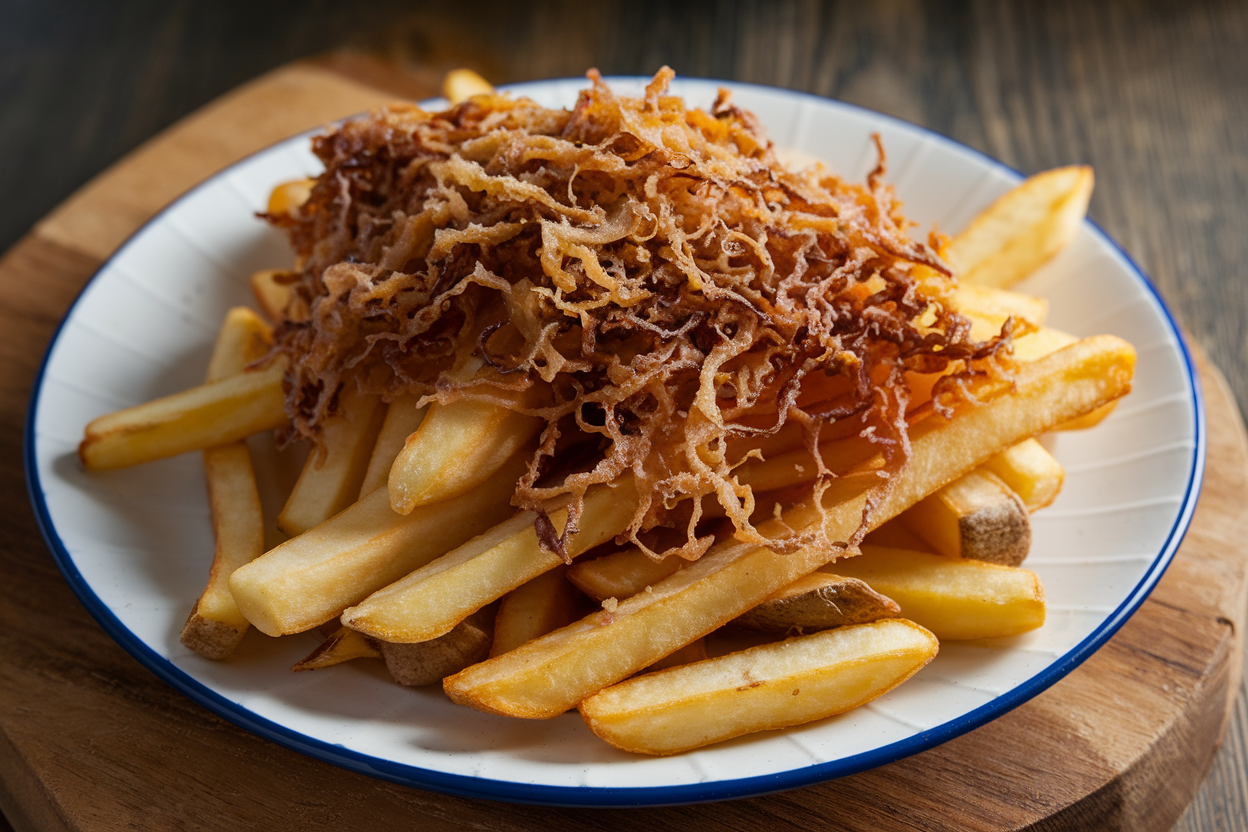
Everyone talks about “restaurant-style fries” like it’s some mythical unicorn. Spoiler: it’s not magic—it’s beef tallow. These fries hit with a shatter-crisp exterior, a fluffy center, and that subtle steakhouse flavor you can’t fake.
They’re rich without being greasy, nostalgic without being boring, and yes, dangerously snackable. If “ordinary fries” are a Honda Civic, Beef Fat Fries are a turbocharged V8. Ready to ruin boring fries forever?
What Makes This Special
- Beef tallow = old-school flavor. This is how classic steakhouses used to fry.
Expect deep, savory notes you won’t get from vegetable oil.
- Ultra-crispy texture. Tallow’s high smoke point and unique fat composition deliver epic crunch with less sogginess.
- Simple, three-ingredient magic. Potatoes, salt, fat. Minimal fuss, maximum payoff.
- Flexible method. Works in a Dutch oven, standard fryer, or air fryer (with a melt-and-toss approach).
- Surprisingly economical. Render your own tallow from trim or buy it jarred; a little goes a long way.
Ingredients
- 2 pounds Russet potatoes (high starch = crispier fries)
- 1.5–2 quarts beef tallow for deep frying (or 6–8 tablespoons for air fryer/oven method)
- 2 teaspoons kosher salt, plus more to taste
- Optional: 1 teaspoon white vinegar for the parboil water (helps structure), black pepper, garlic powder, or smoked paprika for finishing
Let’s Get Cooking – Instructions
- Prep the potatoes. Scrub and peel (or don’t—skin-on is rustic). Cut into 1/4–1/2 inch batons.
Keep sizes consistent for even cooking.
- Cold soak. Place fries in a bowl of cold water for 30–60 minutes to pull off surface starch. This means better crisp and less sticking.
- Parboil (key step). Drain and refill a pot with fresh water. Add 1 teaspoon salt and optional vinegar.
Simmer fries 5–7 minutes until just tender at the edges but not falling apart. They should bend without breaking.
- Dry thoroughly. Drain gently and spread on a baking sheet. Let steam evaporate.
Pat dry. Moisture is the enemy of crisp—don’t rush this.
- First fry (blanch) at 300°F/150°C. Heat tallow in a Dutch oven or fryer. Fry in small batches 3–4 minutes until pale and softened.
No color yet. Remove to a rack or paper towels.
- Rest the fries. Let them cool 15–30 minutes. This sets the structure.
You can refrigerate or even freeze for later—batch prep like a pro.
- Second fry at 375°F/190°C. Return fries to hot tallow 2–4 minutes until golden and deeply crisp. Shake the basket/pan to prevent sticking.
- Season immediately. Transfer to a bowl, sprinkle with kosher salt (and any optional spices) while hot so it adheres.
- Air fryer/oven option. Melt 6–8 tablespoons tallow. Toss parboiled, dried fries in melted tallow.
Air fry at 380°F/193°C for 15–22 minutes, shaking halfway, until golden. Oven: 450°F/232°C on a preheated sheet, 25–35 minutes, flipping once.
- Serve hot. These peak within minutes. Think: aioli, malt vinegar, or a peppery steak sauce.
Why not all three?
Storage Tips
- Par-cooked storage: After the first fry (or parboil for air fryer method), cool completely and refrigerate up to 2 days or freeze up to 2 months. Freeze in a single layer, then transfer to a bag to prevent clumping.
- Leftover cooked fries: Refrigerate in an open container for 30 minutes to vent steam, then seal. Reheat in an air fryer at 375°F for 4–6 minutes or in a 425°F oven for 8–10 minutes.
Skillet with a spoon of tallow also works.
- Tallow care: Strain used tallow through a fine mesh/cheesecloth once cool. Store in a jar in the fridge up to a month. If it smells off, toss it—simple.
Benefits of This Recipe
- Superior crisp and flavor. Tallow creates a glassy crust and a buttery, savory aroma.
It’s not subtle (in a good way).
- High smoke point. Less risk of burnt oil flavors and more consistent browning.
- Fewer ingredients, big payoff. Most of the “work” is just letting water evaporate and letting the fryer do its thing.
- Scales easily. Double the potatoes, same process. Great for parties, game day, or shameless solo feasts—no judgment.
Pitfalls to Watch Out For
- Skipping the dry phase. Wet fries steam and turn soggy. Moisture is the villain here.
- Overcrowding the fryer. Drops the oil temperature and ruins crispness.
Batch it out—patience pays.
- Wrong potato choice. Waxy potatoes don’t get as crisp. Russets (or Maris Piper in the UK) are your friends.
- Undersalting. Fries need more salt than you think. Season while hot so it sticks.
- Old or rancid tallow. If it smells weird, it will taste weird.
Fresh fat = clean flavor, IMO.
Alternatives
- Duck fat fries: Similar vibe with a slightly sweeter, richer aroma. Amazing with herby salts.
- Goose fat: Luxurious, festive, and stellar with rosemary. Pricey but worth it for special occasions.
- Peanut oil or rice bran oil: Neutral-tasting, high smoke point options if animal fats aren’t your thing.
- Sweet potato fries: Use the same method but shorten the blanch and final fry.
They brown faster due to sugars.
- Baked wedge version: Cut thicker, parboil, toss in melted tallow, roast hot. Less crisp than double-fried, still awesome.
FAQ
Do Beef Fat Fries taste “beefy”?
They have a subtle steakhouse depth rather than a literal beef flavor. Think savory and rich, not meaty or overpowering.
Is beef tallow healthy?
It’s a natural saturated fat with a high smoke point and no seed oil aftertaste.
Health is contextual—portion size matters. If you’re counting macros, log it and enjoy without spiraling, FYI.
Can I reuse tallow?
Yes. Strain it after cooling to remove crumbs and store in the fridge.
After 3–5 uses, the flavor can degrade—use your nose and common sense.
Do I have to parboil?
For best results, yes. Parboiling gelatinizes the starch so you can get that fluffy interior and crisp shell. Skipping it = higher risk of leathery fries.
What’s the best salt to finish with?
Kosher or flaky salt.
It distributes evenly and clings well to hot fries without dissolving instantly.
Can I make them gluten-free and dairy-free?
They’re naturally gluten-free. Beef tallow contains no dairy, so you’re good on that front too.
Why are my fries browning too fast?
Your oil might be dirty or too hot, or the fries weren’t dried properly. Also, sugars concentrate when potatoes are stored cold—use room-temp spuds when possible.
How do I render my own tallow?
Slowly simmer beef fat trimmings on low heat with a splash of water until the fat renders and cracklings separate.
Strain and cool. It should set creamy-white in the fridge.
In Conclusion
Beef Fat Fries (Tallow Fries) are the cheat code to next-level crisp and flavor. With a simple soak, a quick parboil, and a two-stage fry, you get fries that punch way above their weight.
They’re bold, nostalgic, and unfairly delicious—exactly what you want when “just okay” fries won’t cut it. Make a batch, watch them vanish, and pretend you’re sharing. Or don’t.
Your call.
Printable Recipe Card
Want just the essential recipe details without scrolling through the article? Get our printable recipe card with just the ingredients and instructions.