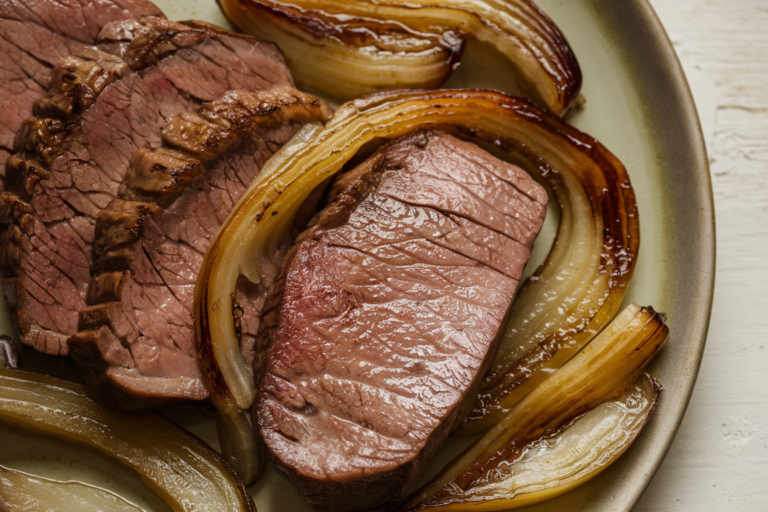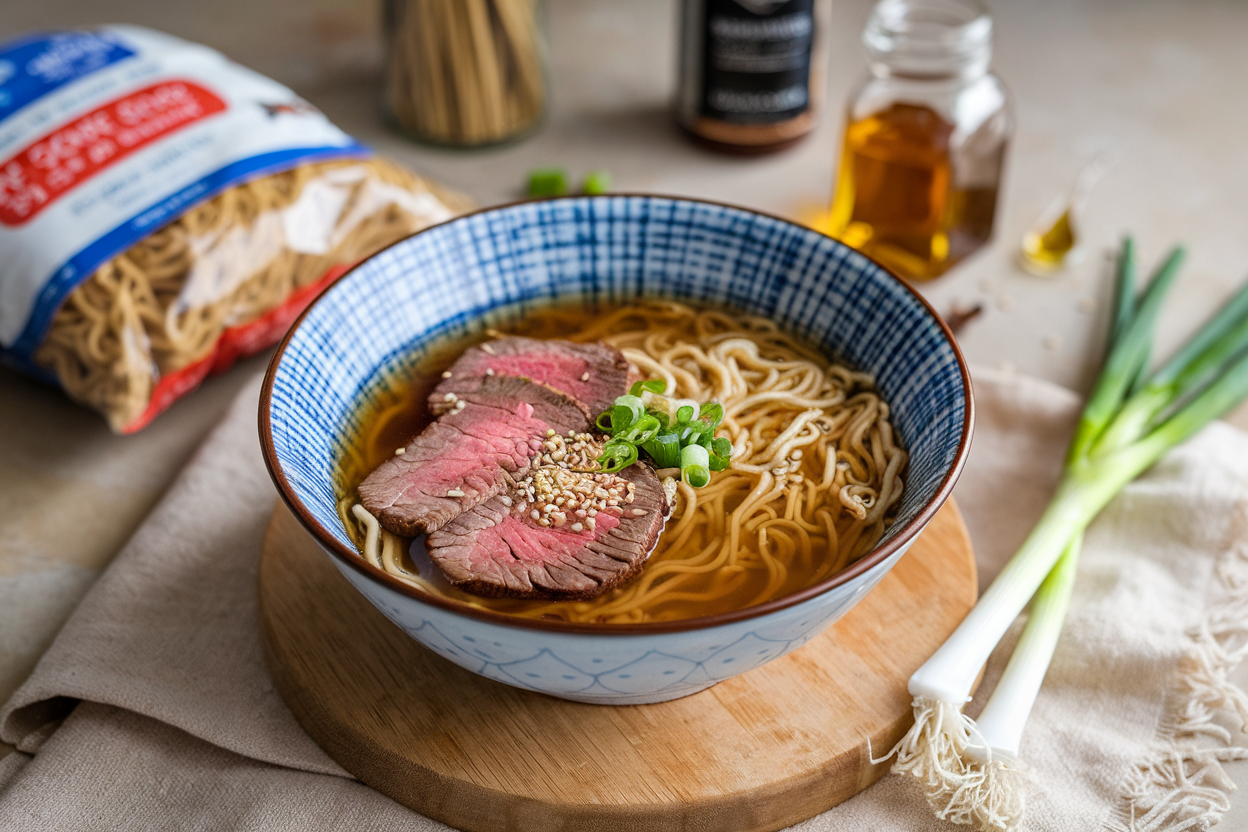
Beef Bone Broth Ramen That Tastes Like a Weekend Trip to Tokyo (Without Leaving Your Kitchen)
Picture this: a bowl so rich it could buy a sports team, steam curling up like a movie reveal, noodles bouncing with swagger, and a broth that hugs your soul. That’s Beef Bone Broth Ramen—the comfort food glow-up we didn’t know we needed. It’s primal, it’s elegant, and it flips the “instant ramen” stereotype on its head.
You’ll build flavor like a pro, with a few power moves and some humble ingredients. No gimmicks. Just discipline, heat, and bones doing their magic.
Why This Recipe Works
This ramen is powered by glutamate-rich beef bones that release collagen, marrow, and deep, roasted flavors.
We layer umami with kombu, shiitake, and soy to make the broth bigger than the sum of its parts. Roasting bones first brings caramelized depth; simmering low and slow pulls out the collagen for that silky mouthfeel. Finishing with tare (seasoning sauce) lets you control the final salt and punch like a chef—because you are today.
Shopping List – Ingredients
- Beef bones: 3–4 lb mixed marrow bones and knuckles (some meaty bones if available)
- Beef short rib or chuck (optional, 1 lb, for meat topping)
- Aromatics: 1 large onion (halved), 1 head garlic (halved), 2-inch piece ginger (sliced)
- Umami boosters: 1 piece kombu (4×4 inch), 4–6 dried shiitake mushrooms
- Tare (seasoning sauce): 1/2 cup soy sauce, 1/4 cup mirin, 2 tbsp sake, 1 tbsp sugar, 1 tbsp rice vinegar
- Neutral oil (for roasting and searing)
- Noodles: 4 portions fresh ramen noodles (or quality dried)
- Toppings: soft-boiled eggs, scallions, nori, chili oil, toasted sesame seeds, blanched bok choy or spinach, corn, menma (bamboo shoots)
- Salt (to taste)
- Optional: white pepper, miso (1–2 tbsp for a twist), a splash of fish sauce
The Method – Instructions
- Roast the bones like you mean it. Preheat to 425°F (220°C).
Spread bones on a sheet pan; drizzle lightly with oil. Roast 35–45 minutes until deeply browned. Flip halfway so every side gets love.
- Char the aromatics. In a dry skillet or under the broiler, char onion, garlic, and ginger until blistered edges form.
This adds smoky backbone. Don’t burn—just confident color.
- Rinse and load the pot. Quickly rinse roasted bones to remove bitter bits. Add bones to a large stockpot with charred aromatics.
Cover with cold water by 2–3 inches.
- Skim like a boss. Bring to a bare simmer over medium heat. As foam rises, skim diligently for 15 minutes. Clear broth equals clean flavor.
- Add the umami crew. Drop in kombu and dried shiitake.
Simmer gently (tiny bubbles) 2 hours. Remove kombu after 45–60 minutes so it doesn’t go swampy. Keep shiitake in.
- Low and slow. Continue simmering 4–6 more hours, adding hot water as needed to keep bones submerged.
You want extraction, not evaporation. The broth should become slightly opaque and silky.
- Optional meat topping. Season short rib or chuck with salt and sear in a hot pan until browned. Add to the pot for the last 1–2 hours, or braise separately in a small pan with a ladle of broth until tender.
Slice or shred for serving.
- Make the tare. In a small saucepan, combine soy, mirin, sake, sugar, and rice vinegar. Warm until sugar dissolves. Taste: balanced salty-sweet with a light tang.
Reserve.
- Strain and clarify. Strain broth through a fine mesh into a clean pot. If you want it extra clear, strain again through cheesecloth. Skim fat or chill to remove the fat cap.
Keep some fat for flavor—don’t go zero.
- Season to perfection. Bring strained broth to a gentle simmer. Stir in a few tablespoons of tare at a time until it sings. You’re aiming for savory, not salty.
Add a splash of fish sauce or a spoon of miso if you like—go easy.
- Noodles on standby. Boil ramen noodles in salted water according to package directions (usually 1–2 minutes for fresh). Drain well. Do not overcook unless mush is your brand (please no).
- Assemble with flair. Add 1–2 tablespoons tare to each bowl.
Portion noodles, ladle over hot broth. Top with sliced meat, halved soft-boiled egg, scallions, nori, bok choy, and a drizzle of chili oil. Finish with sesame seeds and a whisper of white pepper.
Preservation Guide
- Fridge: Broth keeps 4–5 days in sealed containers.
Store noodles and toppings separately to prevent sog.
- Freezer: Freeze broth in quart containers or ice cube trays for up to 3 months. Tare can be refrigerated 2 weeks or frozen for months.
- Reheat: Gently simmer broth to 165°F. Never microwave noodles in broth unless you enjoy sadness.
Warm noodles briefly in hot water instead.
- Fat cap trick: If chilled, leave the fat cap on top to protect flavor; remove some before reheating if you want it lighter.
Nutritional Perks
Beef bone broth brings collagen and gelatin, which help with satiety and that luxurious mouthfeel. You’ll also get minerals like calcium, magnesium, and phosphorus extracted from bones—small amounts, but still a win. Keeping toppings lean (greens, mushrooms, moderate meat) keeps it balanced while the broth does the heavy lifting.
FYI, sodium can creep up—your tare is the throttle, so you’re in control.
What Not to Do
- Don’t boil aggressively. You’ll emulsify fat and cloud the broth. Gentle simmer = refined flavor.
- Don’t skip roasting. Raw bones equal flat broth. The Maillard party is non-negotiable.
- Don’t overseason early. Salt expands during reduction.
Season at the end with tare for precision.
- Don’t cook noodles in the broth. Starch muddies the pot. Separate pots, separate destinies.
- Don’t forget to skim. Scum adds bitterness. Skim early, win later.
Mix It Up
- Miso beef ramen: Blend 1–2 tbsp white miso into your tare for creamy umami.
- Spicy tantan vibe: Add chili oil, a spoon of sesame paste or peanut butter, and ground beef sautéed with doubanjiang.
- Smoky twist: Char a tomato and add during the simmer for sweetness and body.
- Clean and bright: Finish with lemon zest and a squeeze of yuzu or lime.
Sounds odd, tastes elite.
- Veg-forward: Load with spinach, corn, and extra mushrooms; keep meat minimal and let the broth flex.
FAQ
Can I use a pressure cooker or Instant Pot?
Yes. Roast bones and aromatics as written, then pressure cook on high for 2–3 hours with natural release. You’ll get a gelatin-rich broth faster.
Still season with tare at the end for control.
What if I can’t find kombu or dried shiitake?
Use a splash of fish sauce and an extra onion to round out the umami. It won’t be identical, but the broth will still slap. IMO kombu is worth sourcing online if possible.
How do I get jammy eggs?
Simmer eggs 6.5–7 minutes, then ice bath immediately.
Peel gently under running water. Marinate in a little tare plus water for 2–12 hours if you want that ramen-shop glow.
Can I make it less fatty?
Chill the broth and remove most of the fat cap. Use knuckles and shanks over marrow-heavy bones.
Season lighter with tare and add more greens to balance.
What noodles work best?
Fresh alkaline ramen noodles are ideal. If using dried, choose thin, wavy styles that cook quickly and hold texture. In a pinch, high-quality instant noodles (discard flavor packet) can work.
How do I scale for meal prep?
Double the bones, make a big batch of broth and tare, then portion into freezer containers.
Cook noodles fresh each time—your future self will thank you.
In Conclusion
Beef Bone Broth Ramen is patience turned into flavor. Roast with intent, simmer with discipline, and season like a sniper. The result?
A bowl that’s rich, clean, and wildly satisfying. Make it once and your takeout app might start to wonder where you went.
Printable Recipe Card
Want just the essential recipe details without scrolling through the article? Get our printable recipe card with just the ingredients and instructions.