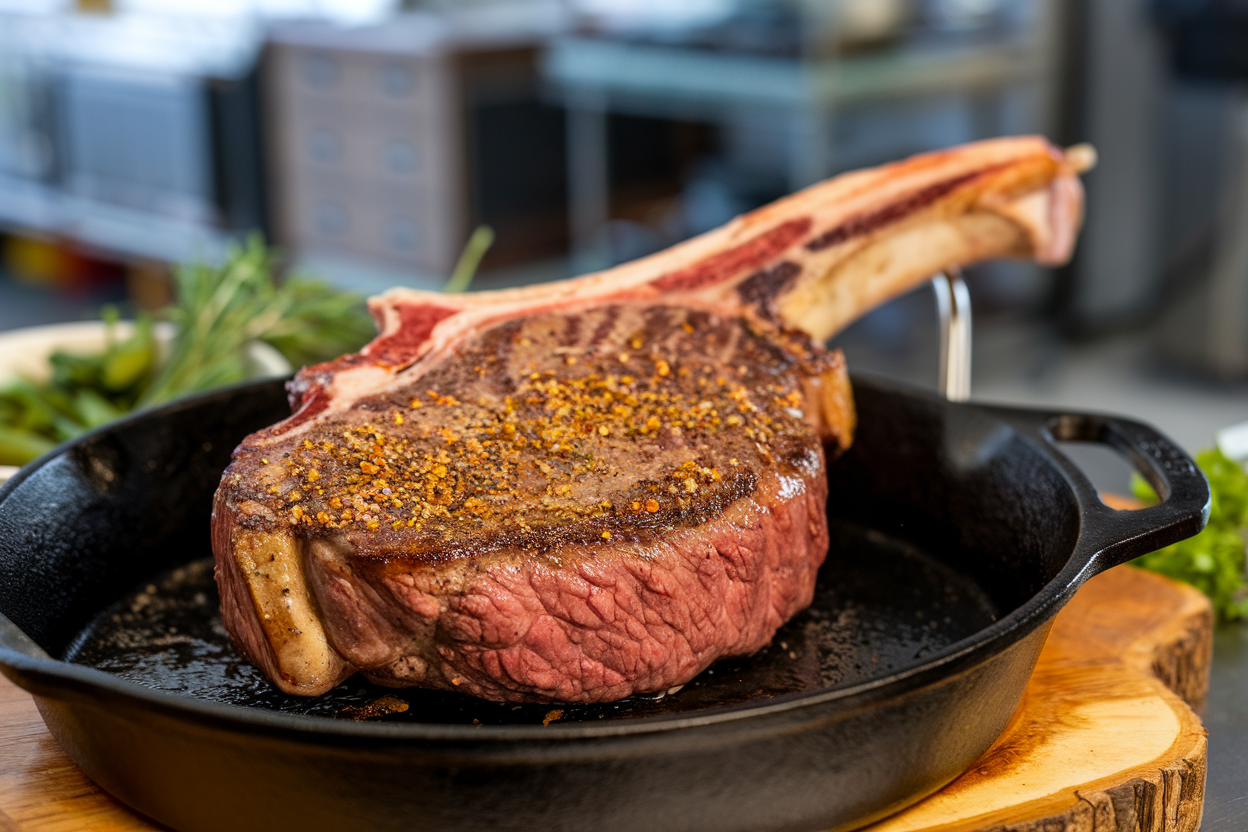
Reverse-Seared Tomahawk Steak: The 2-Step Power Move for a Ridiculous Crust and Melt-In Mouth Center
Forget restaurant theatrics. This is the home-cooked flex that makes your group chat go silent, then blow up. A reverse-seared tomahawk is the culinary equivalent of a mic drop: low-and-slow precision, then a 90-second flamethrower finish.
You don’t need fancy gear—just heat, patience, and the nerve to sear a dinosaur rib like you mean it. Hungry for a steak that cuts like butter and crunches like thunder? Buckle up.
Why You’ll Love This Recipe
- Edge-to-edge doneness: Reverse sear ensures a perfect pink gradient, not the gray ring of sadness.
- Insane crust: Finishing over ripping-hot heat creates that crackly, salty bark steakhouse chefs brag about.
- Foolproof timing: Gentle pre-cook gives you control; you decide exactly when to sear.
- Big flavor, simple steps: Salt, fat, heat, patience—no wizardry required.
- Feeds a crowd: A tomahawk is theatrical and sharable.
Yes, you’ll feel like a cartoon Viking.
What Goes Into This Recipe – Ingredients
- 1 tomahawk ribeye (2.5–3.5 lbs, 2–2.5 inches thick, bone-in)
- Kosher salt (2–3 teaspoons; adjust for size)
- Freshly cracked black pepper (1–2 teaspoons)
- Neutral high-heat oil (1–2 tablespoons; avocado, grapeseed, or canola)
- Unsalted butter (2 tablespoons)
- Garlic (3–4 cloves, smashed)
- Fresh herbs (2–3 sprigs thyme and/or rosemary)
- Optional finishers: flaky sea salt, lemon zest, chili flakes, or compound butter
Cooking Instructions
- Dry brine the steak (recommended): Pat the tomahawk dry. Season generously with kosher salt on all sides, including the fat cap. Place on a wire rack over a sheet pan and refrigerate uncovered for 8–24 hours.
Pepper later to avoid bitterness during the long warm-up.
- Preheat for the slow cook: Set your oven to 225–250°F (107–121°C). Alternatively, use a smoker at 225°F for a kiss of smoke.
- Warm it low and slow: Place the steak on a wire rack over a sheet pan. Insert a probe thermometer into the thickest part.
Cook until the internal temperature reaches 115°F for medium-rare finish, 120°F for medium. This typically takes 45–90 minutes depending on thickness and oven accuracy.
- Rest before the sear: Remove the steak and rest 10–15 minutes. This pause helps juices settle and lets you heat your searing device properly without racing the clock.
- Crank the heat for searing: Preheat a heavy cast-iron skillet or grill to raging hot (skillet lightly oiled; grill grates clean and pre-oiled).
You want 500–600°F surface temp. FYI, this is the moment neighbors start texting.
- Season with pepper: Pepper both sides now so it toasts, not burns, during the fast sear.
- Sear like you mean it: Sear 45–60 seconds per side, rotating for even browning. Don’t crowd the pan.
Render the fat cap by holding it against the pan with tongs for 30–45 seconds.
- Butter baste (optional but elite): Reduce heat slightly, add butter, garlic, and herbs. Tilt the pan and rapidly spoon the foaming butter over the steak for 30–45 seconds. This stacks aroma and gloss.
- Final temp check: Pull at 125–128°F for medium-rare, 130–133°F for medium.
Carryover heat will add 3–5°F.
- Rest briefly and finish: Rest 5–8 minutes. Sprinkle flaky salt and any finishers. Slice off the bone, then slice across the grain into thick ribbons.
Serve the bone to the most dramatic guest.
Preservation Guide
- Short-term storage: Cool to room temp, then refrigerate in an airtight container for up to 3 days.
- Freezing: Slice, wrap tightly in plastic and foil (or vacuum-seal), and freeze up to 2 months. Label the date. Future-you will high-five present-you.
- Reheating: Warm slices gently in a 250°F oven until just heated through, then hit a hot skillet with a drop of oil for 15–20 seconds per side to refresh the crust.
Avoid microwaving unless you like leather.
- Leftover ideas: Steak-and-egg breakfast, truffle steak salad, shaved ribeye sandwiches with horseradish, or taco night hero.
Nutritional Perks
- High-quality protein: Supports muscle repair and satiety. A 6–8 oz portion delivers 40–55g protein.
- Iron and B vitamins: Red meat provides heme iron and B12 for energy and cognitive function.
- Satiating fats: Helps flavor carry and keeps you full. Balance with veggies for a complete plate.
- Minerals: Zinc and selenium support immunity and antioxidant defenses.
Don’t Make These Errors
- Skipping the dry brine: Salting ahead boosts flavor and surface dryness for a killer crust.
Last-minute salt works, but it’s not the same.
- Searing in a lukewarm pan: If it doesn’t roar on contact, it won’t brown. Heat first, then steak.
- Overcooking the warm-up: Stop the low-and-slow early. You can always sear more; you can’t un-cook.
- Neglecting the fat cap: Render it against the pan for flavor and texture.
Nobody wants a cold, waxy bite.
- Too long a rest before sear: If you rest for 30+ minutes, the steak cools too much; your crust will suffer and timing gets awkward.
- Slicing with the grain: That’s a one-way ticket to chew-town. Always cut across the grain.
Alternatives
- Grill-only method: Cook indirect at 225–250°F to target temp, then finish over blazing-hot direct heat for the sear.
- Smoker twist: Use oak or hickory at 225°F. Sear in cast iron with butter and herbs to finish.
Smoke + butter = chef’s kiss.
- Compound butter upgrade: Mix softened butter with roasted garlic, parsley, lemon zest, and chili flakes. Dollop during rest.
- Rub variations: Try coffee and brown sugar, black garlic powder, or Aleppo pepper. Keep sugar modest to avoid burning.
- Different cuts: Use a thick cowboy ribeye or porterhouse.
The technique stays the same; adjust time to thickness.
- No cast iron? Use a heavy stainless skillet or preheated pizza steel in the oven, then finish with a quick broiler blast.
FAQ
Do I need a thermometer?
Yes, unless you’re clairvoyant. A probe or instant-read thermometer removes guesswork and transforms your steak from “pretty good” to repeatable excellence.
How long should I dry brine?
8–24 hours is ideal. Even 1–2 hours helps.
Longer brines equal deeper seasoning and a drier surface that sears better, IMO.
Can I cook from frozen?
You can, but don’t. Thaw in the fridge 24–48 hours for even cooking. If you must, start low-and-slow 20–30% longer, then sear hard.
Butter baste or not?
Optional.
Butter adds aromatics and flavor but isn’t required for an amazing crust. If using, keep it brief to avoid scorched milk solids.
What if I want rare?
Pull from the low cook at 110°F and finish the sear to 120–122°F final. Rare still deserves a crust—just sear fast and hot.
Is tomahawk better than regular ribeye?
Flavor-wise, it’s the same cut.
The tomahawk’s long bone brings drama and slower heat conduction, which is fun and photogenic. If price matters, a thick ribeye sans handle delivers the same taste.
Which oil should I use?
Use a high-smoke-point neutral oil like avocado or grapeseed. Olive oil can work, but it smokes faster and can get bitter at searing temps.
Can I reverse sear on a gas grill?
Absolutely.
Keep one side low (or off) for indirect cooking, then finish over the hottest burner with the lid open for the sear.
How do I keep the smoke alarm quiet?
Ventilation on max, windows open, and preheat your pan properly so searing is fast. A clean pan and minimal oil help, too. Or make peace with it—it’s the dinner bell.
The Bottom Line
The reverse-seared tomahawk is simple math: slow precision plus savage heat equals steakhouse results at home.
Salt early, track temps, sear hard, and slice right. You’ll get a blushing center, a shattering crust, and bragging rights that last longer than the steak—barely. Ready to make your kitchen the main character?
Fire it up.
Printable Recipe Card
Want just the essential recipe details without scrolling through the article? Get our printable recipe card with just the ingredients and instructions.