Black Pepper-Crusted New York Strip That Hits Like a Steakhouse Uppercut (Without the $80 Tab)
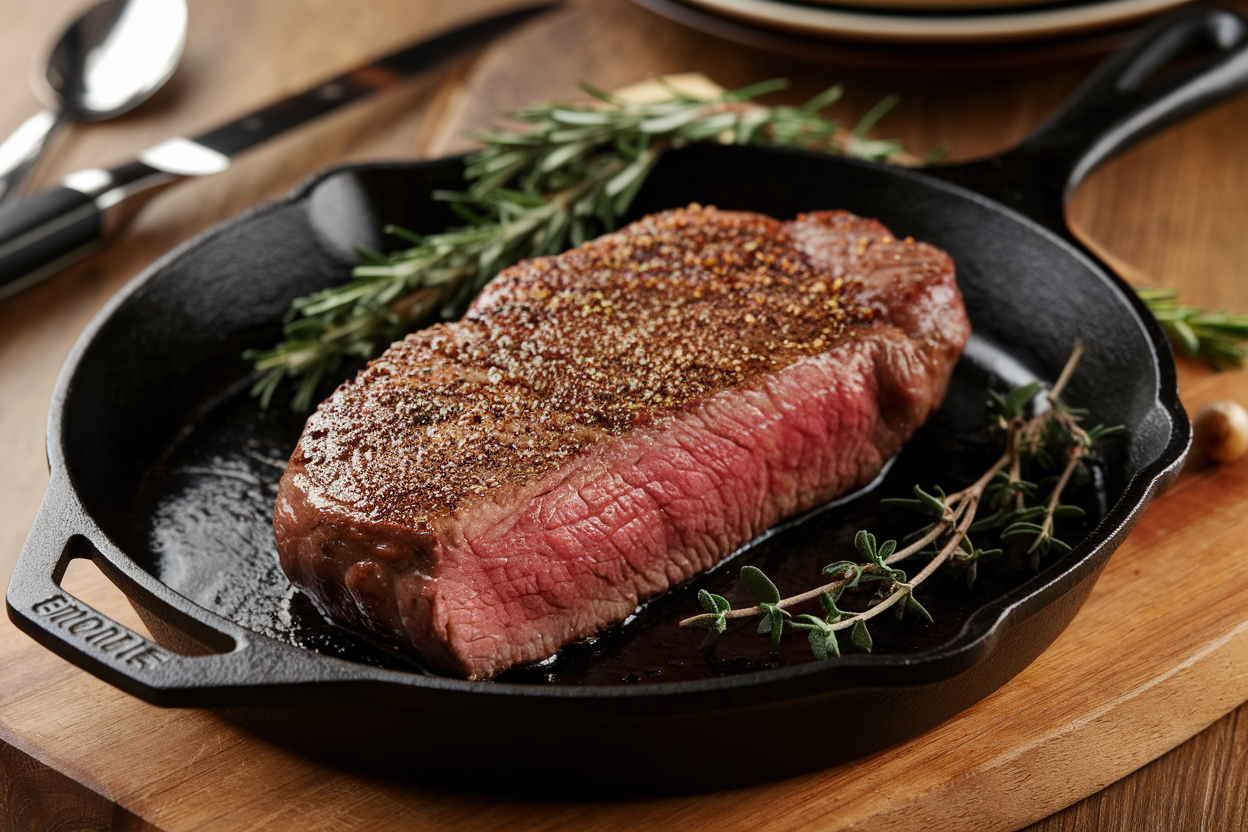
You know that steak you order when you want to feel like a CEO without a board meeting? This is that steak—minus the strange lighting and overpriced sides. The Black Pepper-Crusted New York Strip is all swagger: bold crust, juicy center, and a finish that makes you wonder why you ever chased marinades.
It’s simple enough for a Tuesday but impressive enough to flex on Saturday. Short ingredients list, big flavor—no culinary degree required.
Why This Recipe Works
This recipe is built on a simple truth: fat plus heat plus pepper equals flavor explosion. New York strip has just enough marbling to stay tender while developing a killer crust.
Coarse black pepper does the heavy lifting—its oils bloom in the heat, delivering a spicy, aromatic bark that’s irresistible.
We use a two-stage cook—sear then finish—so you get edge-to-edge doneness without burning the crust. Butter-basting with garlic and herbs adds a final roundhouse of richness. And resting?
That’s where the juice redistribution magic happens. Skip it and you’re just watering your cutting board.
What Goes Into This Recipe – Ingredients
- 2 New York strip steaks (1 to 1.5 inches thick, about 12 oz each), room temperature
- 2 tablespoons coarsely cracked black pepper (use a mortar and pestle or pepper mill on coarse setting)
- 2 teaspoons kosher salt
- 1 tablespoon high-heat oil (avocado, grapeseed, or canola)
- 3 tablespoons unsalted butter
- 3 garlic cloves, smashed
- 2 sprigs fresh thyme or rosemary
- Optional finish: flaky sea salt and a squeeze of lemon
Instructions
- Prep the steaks: Pat steaks very dry with paper towels. Moisture is the enemy of crust.
Season all sides with kosher salt. Let sit at room temperature for 30–45 minutes.
- Crack the pepper: Use a coarse grind—pieces should be rugged, not powdery. Press pepper generously into both sides of the steaks.
It’s a crust, not confetti.
- Heat the pan: Place a heavy skillet (cast iron preferred) over medium-high heat for 3–4 minutes. Add oil and heat until it shimmers and lightly smokes.
- Sear like you mean it: Lay steaks in the pan away from you. Don’t move them for 2–3 minutes.
When a deep brown crust forms, flip.
- Add the flavor squad: Reduce heat to medium. Add butter, smashed garlic, and herbs. Tilt the pan and baste the steaks with the foaming butter for 60–90 seconds per side.
- Finish to temp: Cook to your target doneness, flipping as needed.
Aim for 125°F for medium-rare, 135°F for medium. Use an instant-read thermometer—guessing is for game shows.
- Rest: Transfer to a warm plate and rest 5–8 minutes. Tent loosely with foil.
This locks in those juices you worked for.
- Serve: Slice against the grain. Add a pinch of flaky salt and a squeeze of lemon if you like that bright finish. Plate with pan drippings.
Chef’s kiss.
Keeping It Fresh
Leftovers? Lucky you. Store sliced steak in an airtight container with any pan juices for up to 3 days.
Reheat gently in a skillet over low heat with a pat of butter, or briefly in a 250°F oven until just warm. Microwaves are fine in a pinch, but go short bursts and cover—it’s steak, not a lava rock.
If you’re planning ahead, season with salt up to 24 hours in advance and leave uncovered in the fridge. This dry brine improves flavor and crust.
Add pepper just before cooking so it doesn’t lose aroma.
Benefits of This Recipe
- High reward, low complexity: Few ingredients, big-league flavor. Minimal kitchen drama.
- Steakhouse crust at home: Coarse pepper and butter-basting deliver that iconic bark.
- Customizable doneness: Thermometer-based cooking means you hit your ideal every time.
- Protein-forward and satisfying: Great for low-carb or high-protein goals, IMO.
- Versatile pairing: Works with potatoes, greens, salad, or just a fork and ambition.
What Not to Do
- Don’t start with cold steak: Cold centers lead to overcooked edges. Room temp helps even cooking.
- Don’t use fine pepper: It burns, tastes bitter, and kills the vibe.
Coarse only.
- Don’t crowd the pan: Two steaks max in a large skillet. Crowding = steaming, not searing.
- Don’t skip the rest: Cutting too soon drains the juices. Patience pays.
- Don’t cook in butter alone: Butter burns fast.
Start with oil, finish with butter for flavor.
Variations You Can Try
- Green Peppercorn Twist: Replace half the black pepper with crushed green peppercorns for a fragrant, less aggressive heat.
- Café de Paris Finish: Stir a dollop of compound butter (anchovy, herbs, mustard) into the pan for a luxe glaze.
- Smoky Edition: Add a pinch of smoked paprika to the pepper crust. Not traditional, but delicious.
- Grill Method: Sear over high heat 2–3 minutes per side, move to indirect heat to finish. Baste with herb butter at the end.
- Steak au Poivre Vibes: Deglaze pan with cognac or brandy, add cream, reduce to a silky sauce.
Fancy without the tux.
FAQ
What’s the best pan for this recipe?
Cast iron is ideal because it holds heat and encourages a strong sear. A heavy stainless-steel skillet works too. Nonstick can’t take the same heat and won’t develop the same crust.
How coarse should the pepper be?
Think gravel, not sand.
You want visible chunks that cling to the meat and withstand searing without burning. Use a coarse grinder setting or crush peppercorns in a bag with a rolling pin.
Can I use pre-ground black pepper?
You can, but you’ll sacrifice aroma and texture. Freshly cracked pepper contains more volatile oils, which bloom in the pan.
If pre-ground is all you have, use less and add it later in the cook to avoid bitterness.
How do I avoid overcooking?
Use an instant-read thermometer and pull the steak 5°F before your target since carryover cooking continues during rest. For medium-rare, remove at 125°F and let it rise to about 130°F.
Is salting overnight worth it?
Yes. Salting 12–24 hours ahead seasons deeper and helps the surface dry out, which means better browning.
Add the pepper just before cooking for max aroma, FYI.
What sides pair well?
Creamed spinach, roasted potatoes, charred asparagus, or a sharp arugula salad with lemon. Keep sides simple so the pepper crust stays the star.
Can I make this dairy-free?
Absolutely. Skip butter and baste with infused oil instead—warm oil with smashed garlic and herbs, then spoon over the steak during the last minute of cooking.
Why is my pepper crust falling off?
Steaks were either too wet or the pan wasn’t hot enough.
Pat dry thoroughly, press the pepper into the surface, and make sure the oil is shimmering before adding the steak.
What’s the difference between New York strip and ribeye?
Strip has a firmer bite and slightly less marbling, making it perfect for a pepper crust. Ribeye is richer and fattier with a looser texture. Both are great, but the strip holds a crust like a champ.
Can I sous vide first?
Yes.
Cook at 129°F for 1–2 hours, pat dry aggressively, crust with pepper, then sear in ripping-hot oil and butter for 45–60 seconds per side. You’ll get precision doneness with that signature bark.
The Bottom Line
This Black Pepper-Crusted New York Strip is proof that big flavor doesn’t need a long ingredient list or a steakhouse reservation. With coarse pepper, high heat, and a butter-baste finish, you get a crust that means business and a center that stays juicy.
Master this once, and you’ve got a go-to move for any dinner where you need to impress—or just eat like a boss at home.
Printable Recipe Card
Want just the essential recipe details without scrolling through the article? Get our printable recipe card with just the ingredients and instructions.