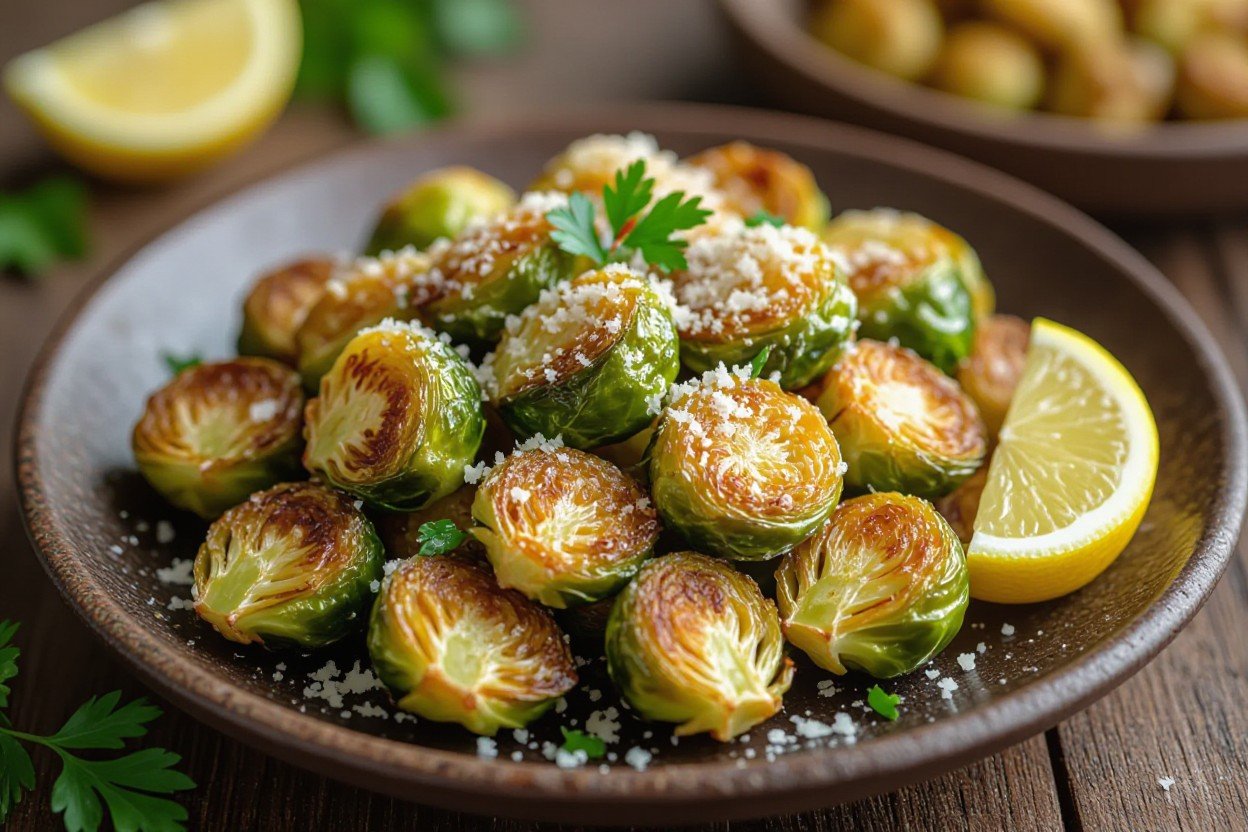
Crispy Parmesan Brussels Sprouts
Crispy, golden-brown Brussels sprouts coated with nutty Parmesan cheese will transform your perception of this often-misunderstood vegetable. You’ll discover that these bite-sized delights, when roasted to perfection, offer an irresistible combination of textures – a caramelized exterior giving way to a tender center. Whether you’re a seasoned home cook or just starting your culinary journey, this straightforward recipe will help you achieve restaurant-quality results in your own kitchen. Get ready to make Brussels sprouts your new favorite side dish.
Key Takeaways:
- Roasting Brussels sprouts at high heat (400-425°F) creates the perfect crispy exterior while maintaining a tender interior
- Adding Parmesan cheese in the last few minutes of cooking prevents burning while ensuring it melts and crisps properly
- Halving the sprouts before roasting exposes more surface area for better caramelization and crispiness
The Culinary Alchemy of Roasting
Roasting transforms humble Brussels sprouts into caramelized, crispy-edged delights through a remarkable process of heat and chemistry. The dry heat of your oven creates the perfect environment for developing complex flavors and textures that elevate these vegetables from simple side dish to crave-worthy creation.
Unlocking Flavor Through Caramelization
During roasting, the natural sugars in Brussels sprouts undergo the Maillard reaction – a chemical process between amino acids and sugars that produces hundreds of new flavor compounds. As temperatures rise above 285°F, the sprouts’ exterior begins to brown, creating those sought-after crispy edges while maintaining tender, flavorful centers.
The addition of Parmesan cheese introduces another dimension to the caramelization process. The proteins and fats in the cheese respond to heat by creating their own complex flavors and adding a savory umami element that perfectly complements the vegetable’s natural sweetness.
The Role of Temperature and Timing
Optimal Roasting Parameters
| Temperature Range | Expected Outcome |
|---|---|
| 375°F – 400°F | Crispy exterior, tender interior |
| 425°F – 450°F | Extra crispy, faster cooking time |
The sweet spot for roasting Brussels sprouts lies between 375°F and 425°F. At these temperatures, you’ll achieve the perfect balance between exterior crispiness and interior tenderness. Your total roasting time typically ranges from 20-30 minutes, depending on the size of your sprouts and desired level of caramelization.
Timing Indicators
| Visual Cue | Stage of Doneness |
|---|---|
| Light golden edges | Almost ready |
| Deep brown exterior | Maximum caramelization |
Monitoring the color development of your Brussels sprouts provides reliable indicators for achieving your desired level of doneness. The transformation from bright green to golden brown signals the development of those complex flavors you’re seeking. For maximum flavor impact, you’ll want to roast until you see deep golden brown edges while maintaining that perfect tender center.
Crafting the Perfect Coating
The Science of Crispy Textures
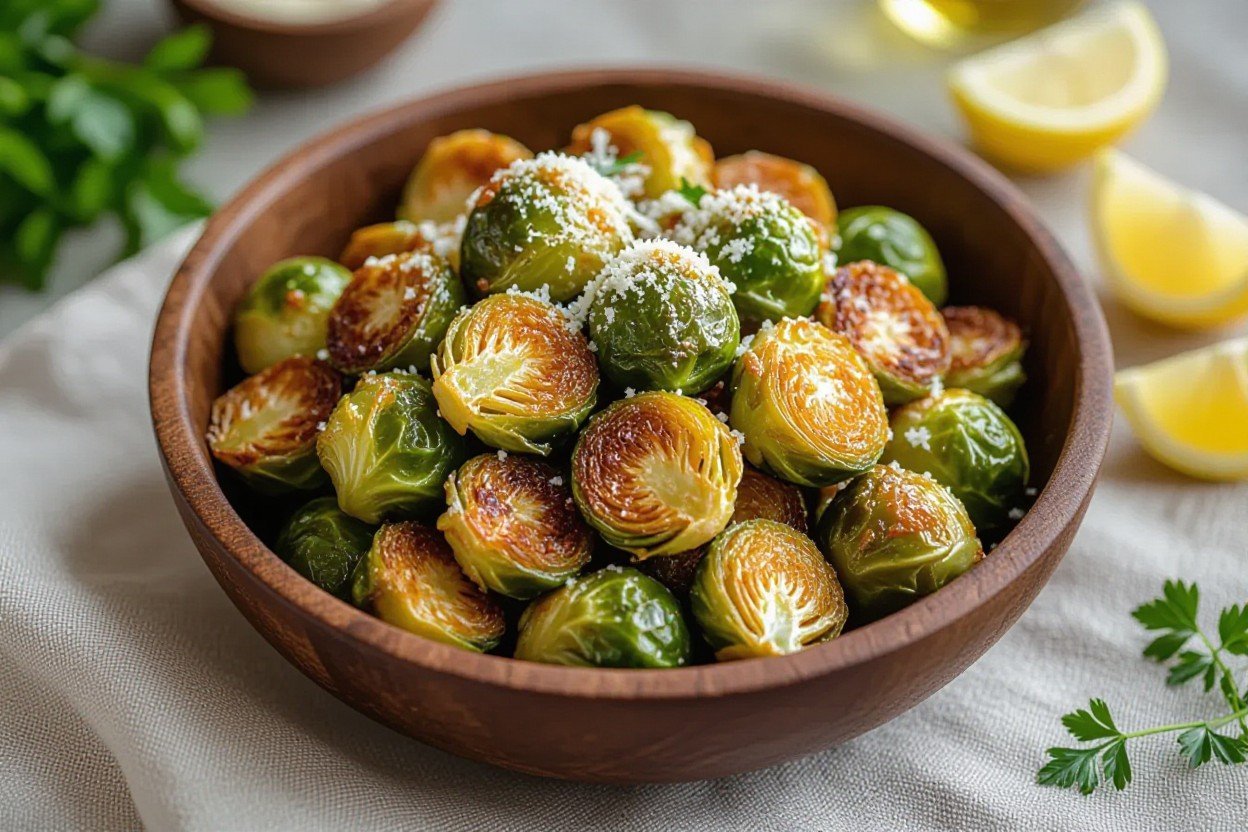
The magic of perfectly crispy Brussels sprouts happens through a delicate balance of moisture control and surface chemistry. Your sprouts need enough surface moisture to help the cheese and seasonings adhere, but not so much that they steam instead of crisp. By patting your halved sprouts completely dry before coating, you create the ideal foundation for that sought-after crunch. The natural oils released from the cheese during baking then work to create a golden-brown crust through the Maillard reaction – the same chemical process that gives a perfectly seared steak its delicious exterior.
Temperature control plays a vital role in achieving maximum crispiness. Roasting at 400°F (204°C) allows the exterior to develop a crunchy coating while maintaining tender centers. The high heat causes the cheese proteins to denature and form new bonds, creating that characteristic crispy texture you’re aiming for. Spreading the sprouts in a single layer with adequate spacing ensures even heat distribution and prevents unwanted steaming between pieces.
Choosing the Right Cheese: Parmesan vs. Other Varieties
Aged Parmesan Reggiano stands out as the superior choice for this dish due to its low moisture content (around 30%) and high concentration of flavor compounds. These characteristics allow it to create a crispier coating compared to younger cheeses. The aging process concentrates the proteins and fats, resulting in those coveted crispy bits that form during baking. Fresh-grated Parmesan performs significantly better than pre-grated varieties, as the exposed surfaces haven’t oxidized and will melt more evenly.
While Parmesan reigns supreme, other aged hard cheeses can offer interesting variations. Pecorino Romano provides a sharper, more assertive flavor profile, while aged Asiago delivers a nuttier finish. The key lies in selecting cheeses with moisture contents below 35% – anything higher will result in a softer, less crispy coating. Grana Padano offers a milder, more cost-effective alternative that still achieves the desired textural results.
The granular texture of these aged cheeses creates microscopically rough surfaces on your Brussels sprouts, increasing the surface area exposed to heat. This enhanced surface area promotes better browning and crisping, while also providing more points of contact for the cheese to bond with the vegetable. By combining different aged cheeses, you can create unique flavor profiles while maintaining the important crispy texture that makes this dish so appealing.
Elevating with Seasonings and Additions
Herbs and Spices: Beyond Basic Salt and Pepper
Fresh herbs transform your crispy Brussels sprouts from delicious to extraordinary. Thyme and rosemary release aromatic oils during roasting that infuse the sprouts with deep, woodsy notes. Sprinkle these herbs before roasting, allowing them to crisp slightly alongside the vegetables. For a Mediterranean twist, add oregano and sage – their robust flavors stand up beautifully to the nutty Parmesan coating.
Red pepper flakes or smoked paprika introduce heat that complements the natural sweetness brought out by roasting. Try dusting your sprouts with garlic powder or onion granules before they hit the oven – these aromatics become gorgeously caramelized during cooking. A pinch of nutmeg might sound unusual, but this warming spice enhances the natural nuttiness of both the sprouts and Parmesan.
Balancing Acidity and Sweetness
A splash of balsamic vinegar or fresh lemon juice brightens the entire dish, cutting through the richness of the cheese while amplifying the sprouts’ natural flavors. Add these acidic elements just before serving to maintain their vibrant impact. For sweetness, a drizzle of honey or maple syrup creates an irresistible contrast to the savory Parmesan crust.
The magic happens when you combine multiple flavor enhancers. A finishing touch of pomegranate molasses offers both sweet and tart notes, while a few drops of fish sauce introduces an umami depth that most guests won’t identify but will definitely appreciate. These subtle additions create layers of flavor that make your Brussels sprouts impossible to resist.
Transforming Brussels Sprouts: Nutritional Benefits
Superfood Status: Why You Should Care
These miniature cabbage-like vegetables pack a serious nutritional punch, delivering an impressive array of vitamins and minerals in each bite. A single cup of Brussels sprouts provides over 100% of your daily vitamin C needs, supporting immune function and skin health. They’re also loaded with vitamin K, which helps maintain strong bones and proper blood clotting, along with vitamin A for eye health and immune support.
Beyond vitamins, Brussels sprouts contain powerful antioxidants like kaempferol and quercetin, which help protect your cells from damage and may reduce inflammation. The high fiber content – about 4 grams per cup – supports digestive health and helps maintain steady blood sugar levels, making them an excellent choice for weight management and overall wellness.
The Healthy Swap: A Guilt-Free Indulgence
By transforming Brussels sprouts into crispy, Parmesan-coated bites, you’re creating a nutritious alternative to traditional fried snacks. While a serving of potato chips typically contains around 150 calories and 10 grams of fat, a generous portion of these Parmesan Brussels sprouts provides just 120 calories and 7 grams of healthy fats, plus all the added nutritional benefits.
The combination of high-quality Parmesan cheese and olive oil adds heart-healthy fats and protein to the mix, creating a more satisfying and nutritionally complete dish. These crispy sprouts deliver the same satisfying crunch and savory flavor you crave from less healthy alternatives, while supporting your body’s needs for crucial nutrients.
Your taste buds and body will thank you for this upgrade – the roasting process caramelizes the natural sugars in the Brussels sprouts, creating sweet, nutty notes that perfectly complement the salty Parmesan crust. This preparation method also helps retain more nutrients compared to boiling or steaming, ensuring you get maximum nutritional value from every serving.
Serving Suggestions That Impress
Incorporating Brussels Sprouts into Varied Meal Contexts
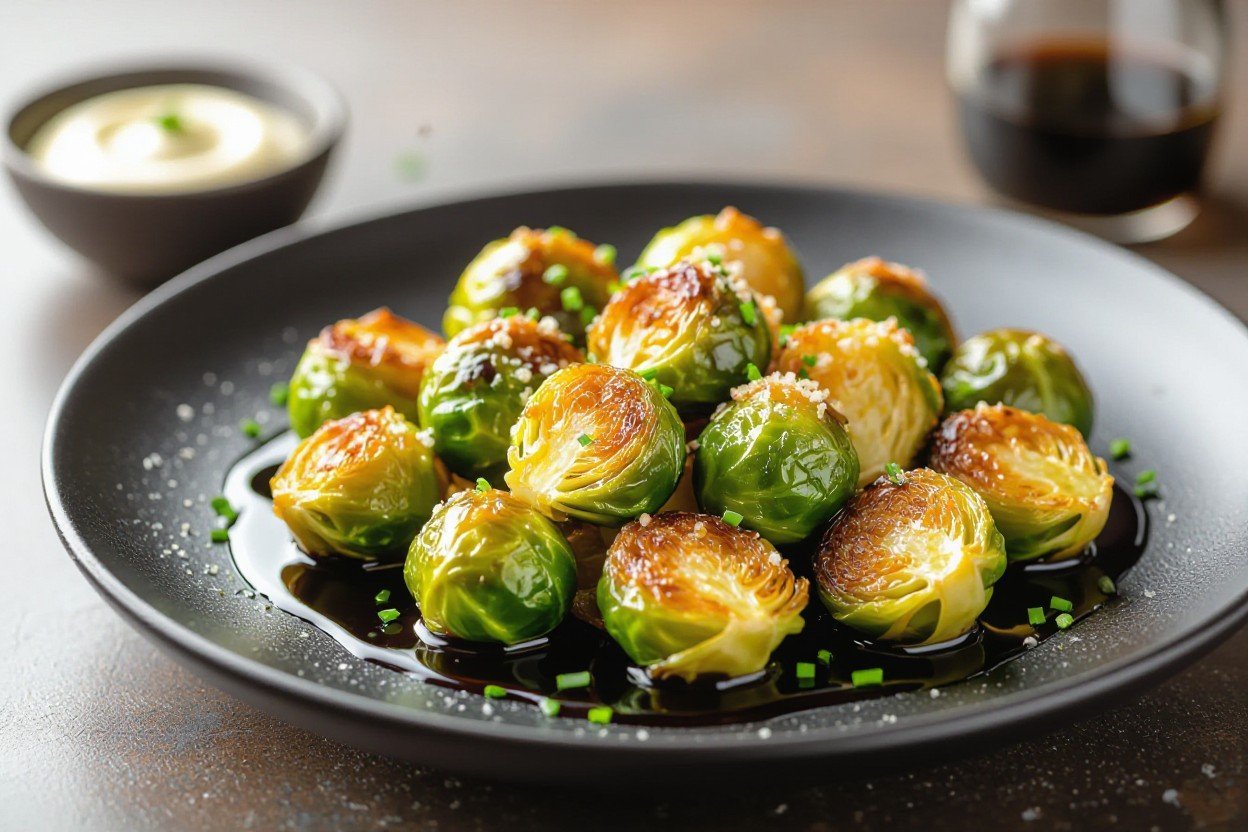
Transform your crispy Parmesan Brussels sprouts into a show-stopping appetizer by serving them on a sleek platter with toothpicks and a side of honey-mustard dipping sauce. For casual gatherings, pile them high in a rustic bowl as a shareable finger food that guests can easily grab between conversations. These versatile sprouts also work beautifully as a passed hors d’oeuvre at more formal events – just skewer each one individually and arrange them on a serving tray with a light dusting of extra Parmesan.
Your weeknight dinners can benefit from these sprouts as a substantial side dish that complements proteins like roasted chicken, grilled steak, or pan-seared salmon. For a vegetarian main course, scatter them over a bed of quinoa or farro, add some roasted chickpeas, and drizzle with a tahini dressing. The crispy texture and savory Parmesan coating make these sprouts an excellent addition to grain bowls and harvest-style salads.
Pairing Recommendations: Wines and Dishes
The nutty, savory notes of Parmesan-crusted Brussels sprouts pair exceptionally well with medium-bodied white wines. Try a California Chardonnay or an Italian Verdicchio, whose buttery qualities complement the cheese while their acidity cuts through the richness. For red wine enthusiasts, a light-bodied Pinot Noir offers enough structure without overwhelming the sprouts’ delicate flavors.
Consider serving these sprouts alongside herb-roasted turkey, garlic-studded prime rib, or even as part of your holiday spread. The crispy exterior and tender interior create a delightful textural contrast that elevates traditional meat-and-potato meals. For a complete flavor experience, pair them with other roasted vegetables like butternut squash or rainbow carrots, which share similar caramelized notes while offering complementary colors on the plate.
To wrap up
From above, you can see that creating irresistibly crispy Parmesan Brussels sprouts is both straightforward and rewarding. By following these preparation steps and cooking techniques, you’ll transform these often-overlooked vegetables into a crowd-pleasing side dish that your family and guests will request time and again. The combination of perfectly roasted sprouts with their crispy exterior, tender interior, and the nutty, salty finish of Parmesan cheese offers you a versatile dish that pairs well with almost any main course.