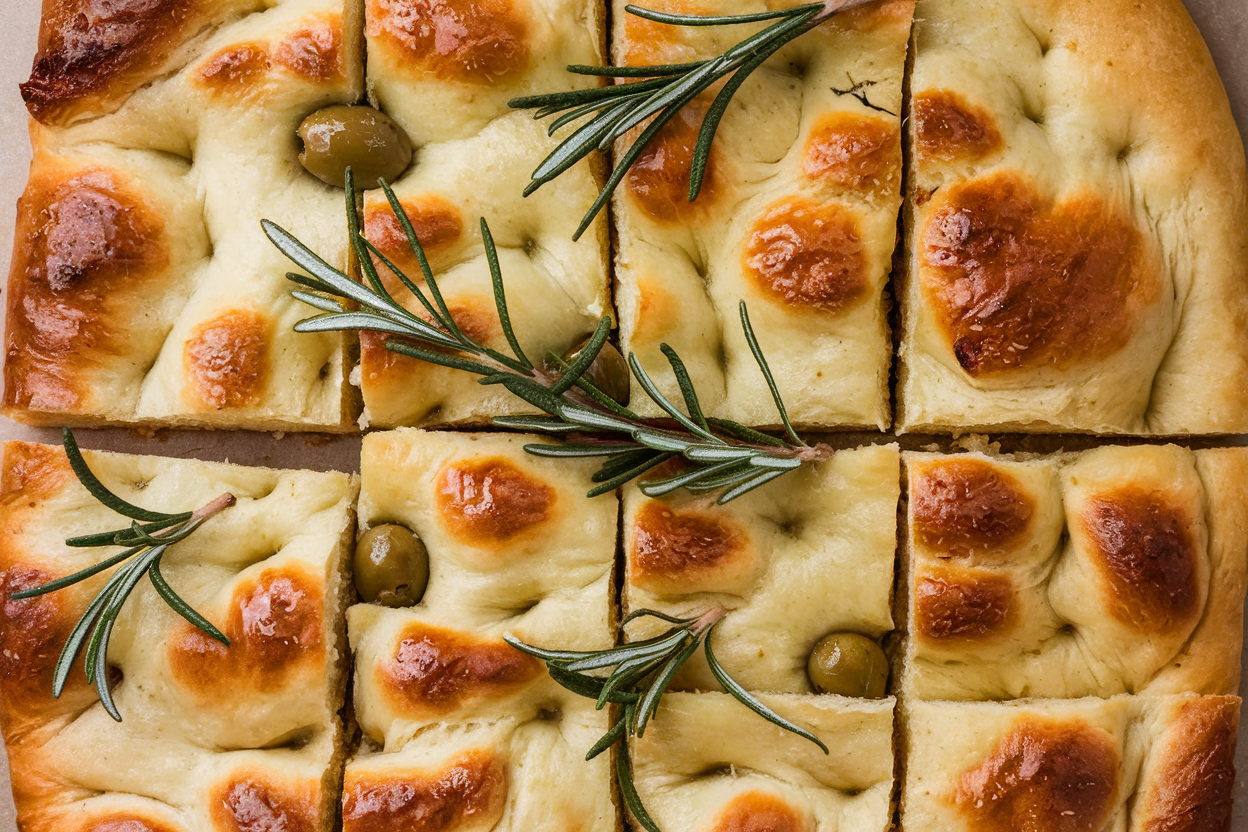
Rosemary Focaccia: The Crispy-Edge, Cloud-Soft Bread That Makes Butter Nervous
You know that friend who shows up to every party and steals the spotlight without trying? That’s rosemary focaccia. It’s simple, yes—but when it hits the table, you suddenly look like a culinary assassin.
Crispy at the edges, pillowy in the middle, salty, herby, and dangerously snackable. Serve it with soup, salad, or just olive oil and flake salt, and boom—instant main character energy.
Why You’ll Love This Recipe
- Ridiculously fluffy interior: Hydration and a slow rise create that signature airy crumb.
- Extra-crispy crust: A slick of good olive oil turns the base golden and crackly.
- Big flavor, low stress: Minimal kneading, no complicated shaping, and everyday ingredients.
- Flexible timeline: Make it today or cold-proof overnight for deeper flavor. Your schedule wins.
- Restaurant-level finish: Flaky salt, rosemary, and olive oil make it taste like you paid for it.
Ingredients Breakdown
- Strong white bread flour (500 g / about 4 cups): High protein for structure and chew.
All-purpose works in a pinch, but expect a slightly softer crumb.
- Warm water (375–400 g / 1⅔ cups): Aim for around 100°F/38°C. Higher hydration equals better holes. If you’re new to wet doughs, start at 375 g.
- Instant yeast (2¼ tsp) or active dry yeast (2½ tsp): Instant can go straight into the flour; active dry needs a 5–10 minute bloom in warm water.
- Kosher salt (2 tsp): Essential for flavor and gluten strength.
Don’t skimp.
- Olive oil (6–8 tbsp total): Some for the dough, the pan, and finishing. Use a peppery extra-virgin if you can.
- Fresh rosemary (2–3 tbsp, chopped): The star aroma. Strip the needles and chop lightly.
- Flaky sea salt (for topping): That final snap and sparkle.
Maldon or similar is perfect.
- Optional flavor boosts: 1 tsp honey for browning, 2 cloves thinly sliced garlic, a pinch of red pepper flakes, or halved cherry tomatoes pressed into the top.
The Method – Instructions
- Mix the dough: In a large bowl, whisk flour, salt, and instant yeast. Add warm water and 2 tbsp olive oil. Stir with a spatula until a shaggy, sticky dough forms.
It should look messy. Good.
- Initial rest (autolyse-lite): Cover and rest 15 minutes. This small wait makes the dough more cooperative and improves texture, no drama required.
- Strength building: With damp hands, perform 2–3 sets of stretch-and-folds every 5 minutes: grab an edge, stretch up, fold over; rotate the bowl.
After the last set, the dough should feel bouncy and smoother.
- Bulk ferment: Cover and let rise in a warm spot until doubled, 60–90 minutes. If your kitchen is cold, no worries—let it go longer, or use the oven light trick for gentle warmth.
- Pan prep: Generously oil a 9×13-inch pan (2–3 tbsp olive oil). Don’t be shy; this creates that beautiful fried bottom.
- Transfer and rest: Gently tip the dough into the pan.
Drizzle 1 tbsp oil over the top. Let it relax 15–20 minutes so it spreads without fighting back.
- Stretch to fit: With oiled fingers, coax the dough to the edges. If it springs back, give it another 10-minute timeout and try again.
- Second rise: Cover and proof 30–45 minutes until puffy.
You should see visible air bubbles—those are your money pockets.
- Dimple party: Preheat oven to 450°F (232°C). Drizzle 1–2 tbsp olive oil over the dough. Press your fingertips straight down to the bottom in a polka-dot pattern.
Sprinkle chopped rosemary and flaky salt over the top. Add garlic or tomatoes if using.
- Bake: Bake 20–25 minutes until deeply golden with slightly crisp edges. If using a dark pan, check at 18 minutes.
Rotate once for even color.
- Finish and cool: Brush or drizzle a bit more olive oil over the hot focaccia. Cool 10–15 minutes in the pan, then transfer to a rack to keep that bottom crust crisp.
- Serve: Slice into squares or tear rustically like you own a vineyard. Dip in olive oil and balsamic, or serve alongside soup, roast chicken, or a big salad.
Preservation Guide
- Room temperature: Store in a paper bag or wrapped loosely in parchment for up to 24 hours.
Avoid airtight containers—they soften the crust.
- Reheat: 375°F (190°C) for 5–8 minutes directly on the rack to revive crisp edges.
- Freezer: Slice, wrap tightly, and freeze up to 2 months. Reheat from frozen at 375°F for 10–12 minutes. Still amazing, no shame.
- Stale rescue: Cube for croutons, blitz into herby breadcrumbs, or pan-griddle with olive oil for next-level breakfast eggs.
Why This is Good for You
- Olive oil fats: Rich in monounsaturated fats and polyphenols—heart-supportive and flavor-carrying.
Win-win.
- Rosemary perks: Contains antioxidants like rosmarinic acid; traditionally linked to focus and memory. Plus, it smells like a Mediterranean vacation.
- Satisfying carbs: When paired with protein and veggies, focaccia rounds out a balanced meal and keeps you full longer.
- Homemade advantage: You control the salt, oil quality, and toppings—cleaner than most store-bought breads, IMO.
Don’t Make These Errors
- Skimping on oil: That oil isn’t just flavor—it’s your crispy crust insurance policy. Use enough in the pan and on top.
- Under-proofing: If you rush the rise, you’ll get dense bread.
Look for a puffy, jiggly dough before baking.
- Poking timidly: Dimple decisively to the bottom. Half-hearted prods equal uneven bubbles and sad pockets.
- Overloading wet toppings: Tomatoes and onions are great, but too many create soggy patches. Keep it balanced.
- Cutting too soon: Let it rest at least 10 minutes.
Hot steam will make the crumb gummy if you slice immediately. Patience, chef.
Alternatives
- Flour swap: Use half whole wheat for nuttiness; add 1–2 tbsp extra water to compensate.
- Herb variations: Thyme, oregano, or sage play well. Try a lemon-zest and rosemary combo for brightness.
- Topping ideas: Caramelized onions, olives, roasted garlic, thin potato slices with rosemary, or grapes for a Tuscan schiacciata vibe.
- Dairy twist: Press in feta or dollop ricotta post-bake with chili oil.
Dangerous in the best way.
- Gluten-free route: Use a quality gluten-free bread flour blend and increase olive oil by 1 tbsp; expect a denser but still delicious result.
- Overnight cold proof: After mixing, refrigerate 12–24 hours. The flavor deepens, and the dough becomes easier to handle. FYI: allow extra time to warm up before dimpling.
FAQ
Can I make this without a stand mixer?
Absolutely.
This dough thrives with just a bowl and spatula. Stretch-and-folds replace heavy kneading and build plenty of strength.
What if I only have active dry yeast?
Bloom it in part of the warm water with a pinch of sugar for 5–10 minutes until foamy, then proceed. Use the same total water amount.
How do I get bigger air pockets?
Use higher hydration (aim for 400 g water), avoid overhandling after the second rise, and dimple gently.
The overnight cold proof also helps build flavor and bubbles.
My dough is super sticky—did I mess up?
Sticky is normal and good here. Oil your hands, not the dough, and trust the process. Resist the urge to dump in extra flour, which tightens the crumb.
Which pan works best?
A metal 9×13 pan gives superior browning.
Cast iron also rocks for round focaccia. Glass works in a pinch but browns less aggressively.
Can I halve the recipe?
Yes. Use an 8×8 pan or a 10-inch skillet.
Bake time will be slightly shorter—start checking at 16–18 minutes.
How salty should the topping be?
A light sprinkle of flaky salt is key. If you’re salt-sensitive, reduce the dough salt by ¼ tsp and keep the flake finish minimal.
Is there a vegan version?
This recipe is already vegan as written—just olive oil, flour, water, yeast, and herbs. Plant-based wins again.
In Conclusion
Rosemary focaccia is that rare cheat code: minimal effort, maximum payoff, and scalable for any occasion.
With a few pantry staples and a good glug of olive oil, you’ll pull a golden, puffy slab from the oven that smells like confidence. Keep it classic with rosemary and flaky salt, or personalize it with toppings that match your mood. Either way, it’s the kind of bread that turns simple meals into events—and yes, it might make butter a little jealous.
Printable Recipe Card
Want just the essential recipe details without scrolling through the article? Get our printable recipe card with just the ingredients and instructions.