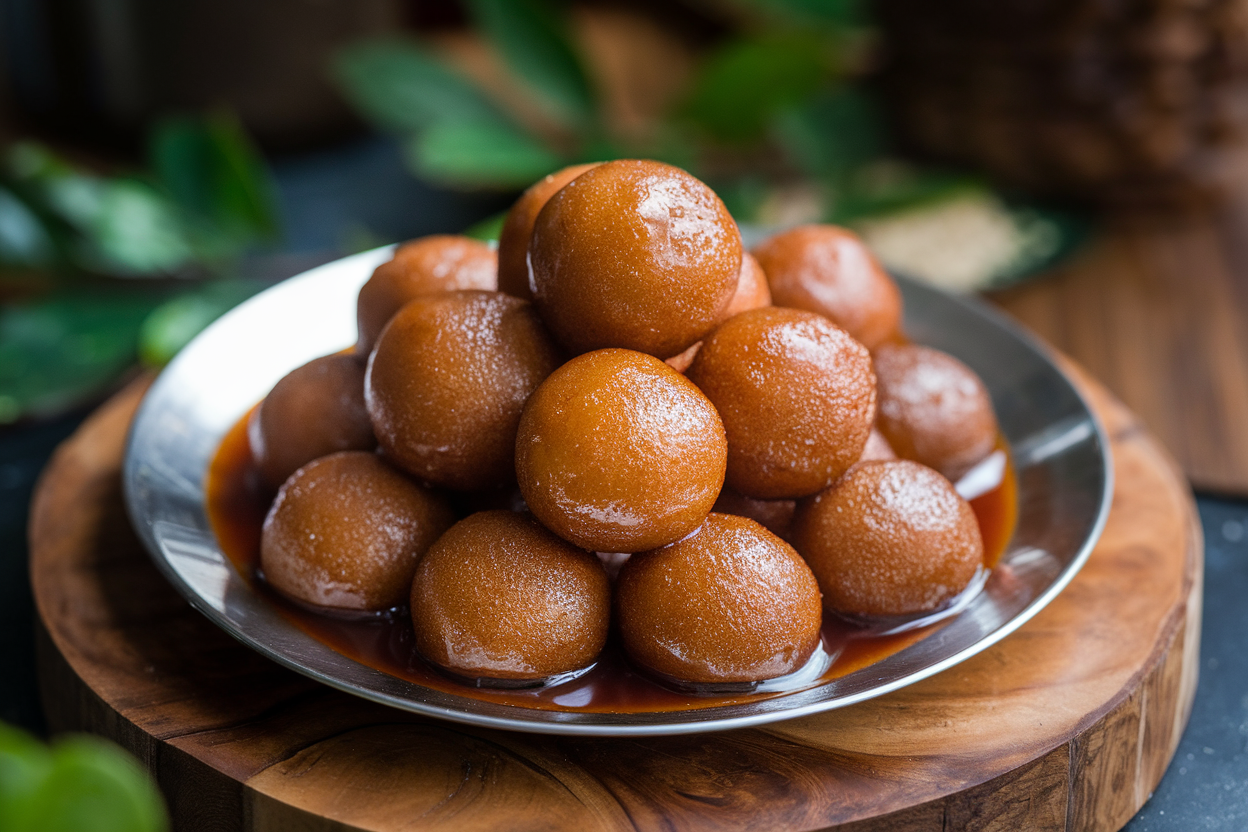
Indian Gulab Jamun: The Melt-in-Your-Mouth Sweet That Turns “Just One” Into “Where Did the Plate Go?”
Picture this: golden orbs, warm syrup, and that moment when the spoon cuts through like butter. That’s Indian Gulab Jamun—the dessert that casually steals the show at weddings, festivals, and frankly any Tuesday. You don’t need a pastry degree or a secret auntie recipe to nail it.
You just need a few pantry ingredients, a bit of patience, and this playbook. Ready to make your kitchen smell like Diwali in under an hour? Let’s go before someone else claims the last one.
What Makes This Recipe Awesome
- Restaurant-quality texture at home: Soft, spongy centers with a thin, caramel-kissed exterior that drinks up syrup like a champ.
- No stress ingredients: Milk powder, flour, ghee, sugar—stuff you either have or can grab anywhere.
- Beginner-friendly technique: Simple steps with clear markers—no guesswork, no dry rocks pretending to be dessert.
- Balanced sweetness: Lightly flavored syrup with cardamom, rose, and saffron so the sweetness doesn’t punch you in the face.
- Make-ahead magic: Keeps beautifully and actually tastes even better the next day.
Yes, leftovers are the hero (if you have any).
What You’ll Need (Ingredients)
- For the jamun (dough):
- 1 cup full-fat milk powder
- 1/4 cup all-purpose flour
- 1/4 teaspoon baking powder
- 1–2 tablespoons fine semolina (optional, for slight bite)
- 2 tablespoons ghee (melted)
- 1/3 to 1/2 cup milk, lukewarm (as needed to form a soft dough)
- 1/2 teaspoon cardamom powder (optional)
- Ghee or neutral oil for deep frying
- For the sugar syrup:
- 1.5 cups sugar
- 1.5 cups water
- 4–5 green cardamom pods, lightly crushed (or 1/2 teaspoon cardamom powder)
- 1 teaspoon rose water (or 1/2 teaspoon rose essence)
- A pinch of saffron strands (optional but elite)
- 1 teaspoon lemon juice (to prevent crystallization)
- For garnish:
- Chopped pistachios or almonds
- Edible silver leaf (varq), optional flex
Instructions
- Make the syrup first: In a saucepan, combine sugar, water, cardamom, and saffron. Bring to a gentle boil, then simmer 5–7 minutes until slightly sticky but not thick. Add lemon juice to keep it clear.
Turn off heat and stir in rose water. Keep warm—not boiling.
- Mix the dry ingredients: In a bowl, whisk milk powder, flour, baking powder, semolina, and cardamom powder.
- Add fat and liquid: Drizzle in ghee and rub into the dry mix until it resembles breadcrumbs. Add lukewarm milk gradually to form a soft, slightly tacky dough.
Do not knead hard; just bring it together.
- Rest the dough: Cover and let it sit for 5–10 minutes. This hydrates the milk powder and semolina, giving you pillowy texture.
- Shape the balls: Grease your palms. Pinch small portions and roll into smooth, crack-free balls about the size of large marbles.
If cracks appear, dab fingers with a tiny bit of milk and smooth them out.
- Heat the oil: In a deep pan, heat ghee or oil to medium-low (around 300–320°F / 150–160°C). Too hot and they burn; too cool and they soak oil. Test with a small dough speck—it should rise slowly with tiny bubbles.
- Fry low and slow: Slide in 6–8 balls at a time.
Stir gently and continuously for even browning. They’ll expand slightly and turn an even deep golden-brown in 6–8 minutes.
- Drain and soak: Remove and drain for 30 seconds. Add to warm syrup (not boiling).
Let them soak at least 45–60 minutes. They’ll plump and become syrupy through the center.
- Garnish and serve: Sprinkle pistachios, maybe a touch of silver leaf. Serve warm or at room temp.
If you go ice cream + warm jamun, that’s S-tier.
Preservation Guide
- Room temperature: Soaked jamuns keep 24 hours in syrup, covered.
- Refrigerator: Store in an airtight container with syrup for up to 5–7 days. Rewarm gently before serving (low heat on the stove or short microwave bursts).
- Freezer: Freeze without syrup for 1–2 months. Thaw, warm gently in fresh hot syrup for 15–20 minutes before serving.
- Syrup refresh: If the syrup thickens in the fridge, add a splash of hot water to loosen it.
Why This is Good for You
- Portion-controlled joy: Each jamun is a self-contained treat.
Two or three can satisfy cravings without a full sugar spiral (IMO).
- Cultural nourishment: Food is memory. Serving gulab jamun connects celebrations across generations like edible nostalgia.
- Quality control: Making it at home means better oil, less artificial flavor, and real spices. FYI, freshly ground cardamom beats bottled “dessert essence” any day.
- Energy boost: It’s a sweet—yes—but a legit pick-me-up post-dinner or after a long day.
Just don’t pretend it’s a salad.
Avoid These Mistakes
- Over-kneading the dough: Treat it gently. Tough dough = dense, rubbery jamuns that reject syrup like a bad date.
- Hot syrup or oil: Boiling syrup tightens the exterior and blocks absorption. Smoking oil scorches the outside while the inside stays raw.
- Cracked dough balls: Cracks lead to breakage while frying.
Smooth them with a touch of milk before frying.
- Crowding the pan: Temperature drops, jamuns absorb oil, and you get greasy sadness. Fry in small batches.
- Skipping the lemon juice: Syrup can crystallize and turn grainy. That tiny squeeze keeps it silk-smooth.
Recipe Variations
- Khoya Gulab Jamun: Replace milk powder with fresh khoya/mawa for ultra-rich, traditional flavor.
Adjust milk as needed.
- Stuffed Jamun: Tuck a pistachio, saffron-infused mawa, or a micro cube of milk chocolate in the center. Surprise factor: unlocked.
- Bread Jamun (quick fix): Use soft white bread crumbs mixed with milk and a bit of milk powder. Not purist-approved, but clutch in a pinch.
- Baked Jamun (lighter): Brush shaped balls with ghee, bake at 350°F/175°C until golden, then soak in hot syrup.
Texture is different but still delish.
- Rabri Jamun Fusion: Serve jamuns under a drizzle of thick, saffron rabri. Dessert flex level: legendary.
FAQ
Why did my gulab jamun turn hard?
Over-kneading, too little milk, or frying on high heat causes a tough exterior and raw center. Keep the dough soft, fry on medium-low, and let them soak in warm (not hot) syrup.
Why did the jamuns break in oil?
Cracks or too much baking powder can cause breakage.
Smooth each ball, avoid over-aerating the dough, and ensure the oil isn’t too hot.
How do I know the syrup is right?
It should be slightly sticky but not stringy—about 1/2-thread consistency. When you rub a drop between fingers, it should feel tacky, not thick.
Can I use milk instead of water in syrup?
Not recommended. Milk can curdle and shortens shelf life.
Use water, then add rose water and saffron for aroma.
What oil is best for frying?
Ghee gives classic flavor. Otherwise, use a neutral high-heat oil like peanut, sunflower, or canola. You can do a 50:50 ghee-oil blend for balance.
How big should I make the balls?
Smaller than you think—about 12–14 grams each or marble-sized.
They expand as they cook and soak syrup.
Can I make them ahead for a party?
Absolutely. Fry a day ahead and keep soaked in syrup in the fridge. Rewarm gently before serving and garnish fresh.
The Bottom Line
Indian Gulab Jamun is comfort dessert royalty: simple ingredients, maximum payoff, zero pretense.
Get the syrup right, fry patiently, and let them soak—those are your three golden rules. The result is a tray of glossy, syrup-laden stunners that disappear faster than you can say “save me one.” Make a batch, stash a few for yourself, and accept the compliments like the dessert boss you are.
Printable Recipe Card
Want just the essential recipe details without scrolling through the article? Get our printable recipe card with just the ingredients and instructions.