Apple Cinnamon Oatmeal Cookies
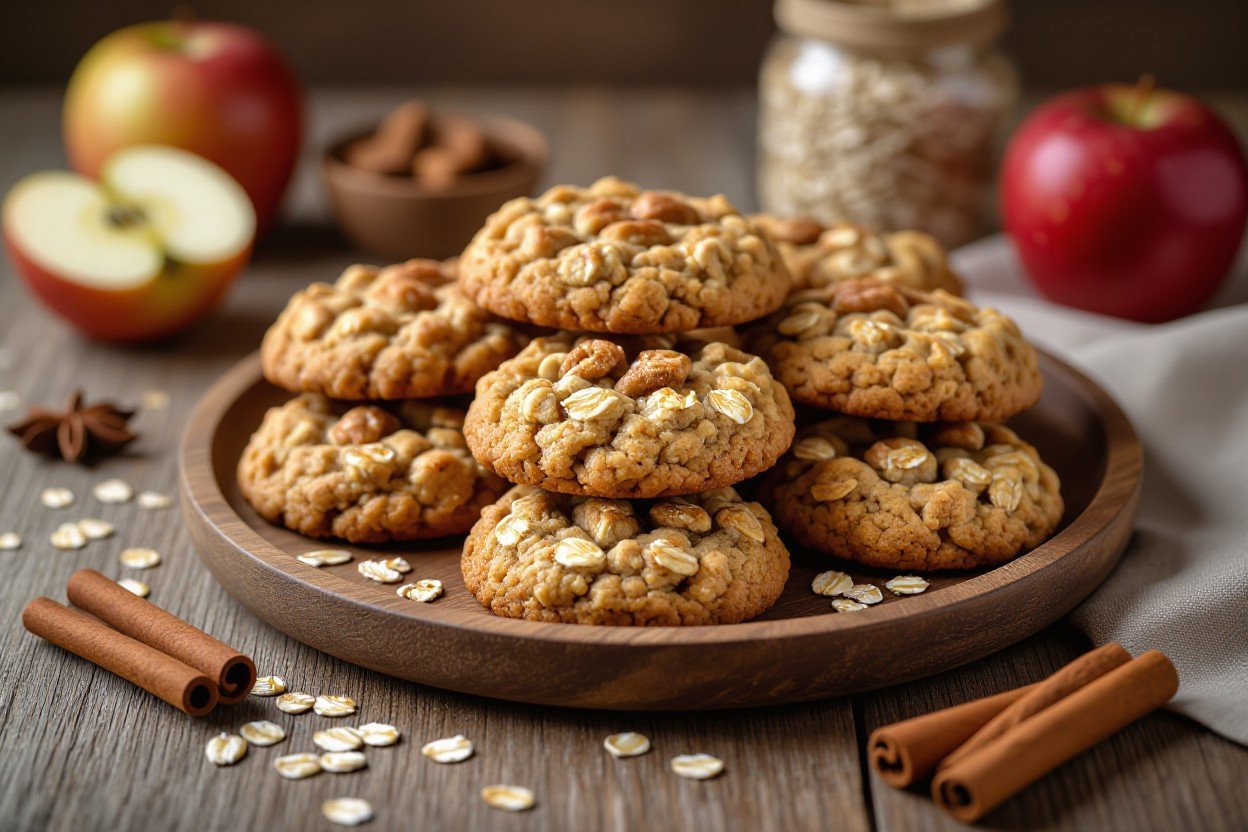
The Allure of Apple Cinnamon Oatmeal Cookies
Why the flavor works
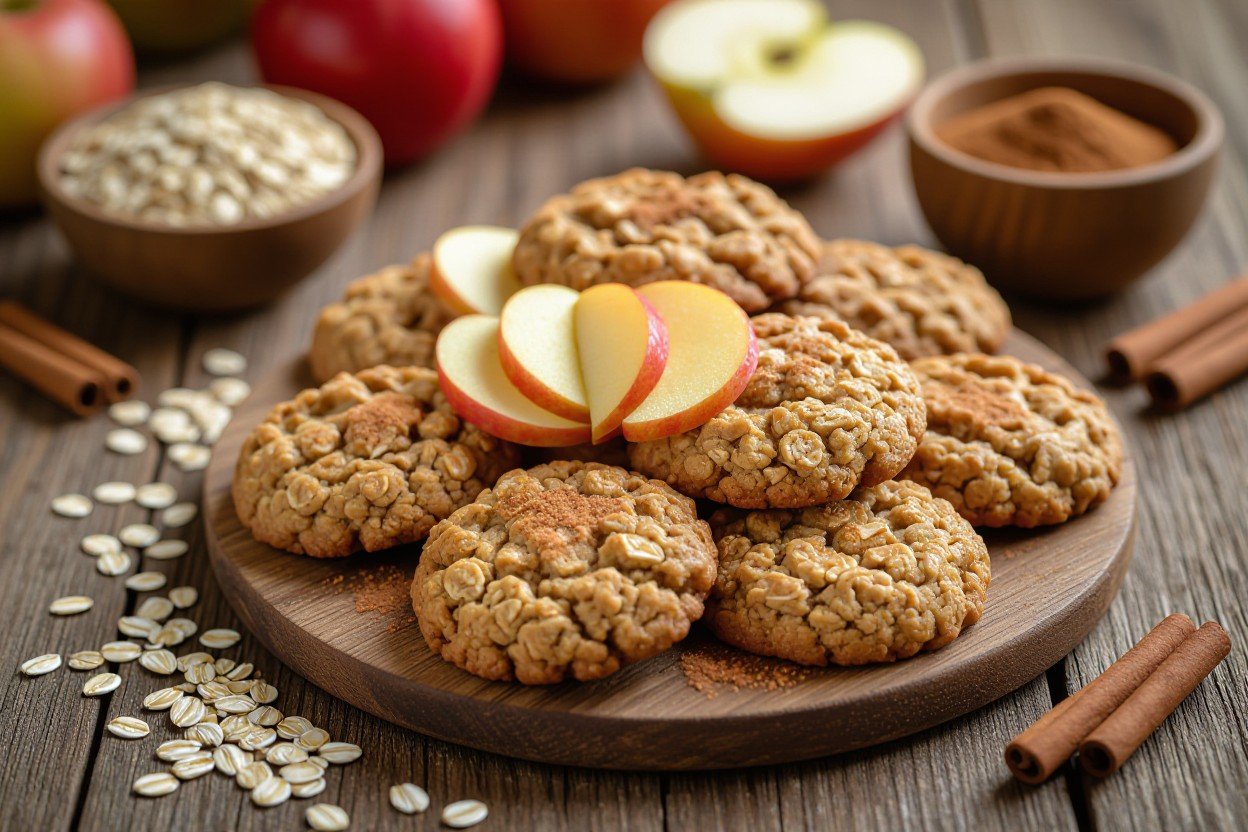
Cinnamaldehyde—the primary compound in cinnamon—binds readily to fats and warms dramatically during baking, which is why a single teaspoon (1–1½ tsp per standard batch of about 24 cookies) can carry through the entire cookie. You balance that warm spice with apple acidity and natural sugar: a medium apple (roughly 6–7 oz, yielding about 1 cup grated) contributes both moisture and bright fruity notes, while ¾ cup brown sugar adds the molasses depth that keeps the cookie chewy. Choose Granny Smith if you want a tangy counterpoint, or Honeycrisp/Fuji for a sweeter profile; swapping varieties changes perceived sweetness and moisture by noticeable margins during testing.
Texture and technique
You control chewiness largely through oats and handling: 1½ cups old‑fashioned rolled oats to 1 cup all‑purpose flour produces a reliably chewy matrix, whereas quick oats will absorb more liquid and create a denser, flatter cookie. Grating the apple disperses moisture evenly and avoids large wet pockets—aim for ¾–1 cup grated apple per batch—then chill the dough 20–30 minutes to limit spread. Bake at 350°F (175°C) for about 10–12 minutes for golden edges and a slightly soft center; store airtight at room temperature up to 3 days or freeze baked cookies for up to 2 months.
Crafting the Perfect Cookie: Ingredients Matter
Choosing the Right Oats: Rolled vs. Instant
Rolled (old‑fashioned) oats hold their shape during baking, giving the cookie a distinct chew and visible oat texture; they absorb liquid more slowly, so you’ll often need slightly more moisture or a longer resting time if your dough feels tight. Instant oats break down faster and create a softer, more cake‑like crumb with increased spread—use them when you want a tender, almost shortbread‑like result, but expect less chew and more rapid browning.
Swap guidance: you can substitute instant for rolled at a 1:1 volume ratio for convenience, but reduce any added liquid by about 1–2 tablespoons or chill the dough 20–30 minutes to control spread. Pulse rolled oats 5–10 seconds in a food processor if you want the toothsome character but a more integrated texture—this mimics quick oats without losing the structure that rolled oats provide.
Sweetener Options: Honey, Brown Sugar, and Beyond
Honey brings extra moisture and a floral, slightly fruity note; because it’s about 20–25% sweeter than granulated sugar by volume, you can reduce the quantity—use roughly 3/4 cup honey for 1 cup sugar—and cut overall liquid by about 1/4 cup while lowering oven temperature 25°F to avoid overbrowning. Brown sugar (light or dark) contains molasses, which adds chewiness and depth; dark brown sugar will push the flavor toward toffee and molasses, and tends to yield a softer, more moist cookie over 24–48 hours.
Maple syrup and agave bring distinctive profiles: maple adds caramel and woodsy notes and behaves similarly to honey in liquid adjustments, while agave is sweeter and more neutral, often used to maintain color and shelf life. Coconut sugar can substitute 1:1 for brown sugar for a more caramelized, less sweet finish but will reduce moisture slightly—add 1–2 tablespoons of liquid if dough seems dry.
For predictable results, test one variable at a time: swap half the brown sugar for honey in a 24‑cookie batch to evaluate texture and shelf life changes before converting the entire recipe.
The Importance of Fresh Spices: Enhancing Flavor Profiles
Freshly ground cinnamon, nutmeg, and cardamom deliver markedly brighter flavor than stale, preground spices; toasting whole spices for 1–2 minutes in a dry skillet and then grinding them releases necessary oils and can increase aromatic intensity in your cookies by a perceptible margin. Typical spice quantities for a standard 24‑cookie batch: 1–1½ teaspoons ground cinnamon, ¼ teaspoon cardamom, and 1/8–¼ teaspoon freshly grated nutmeg—adjust toward the higher end for pronounced warmth or lower for subtle background notes.
Layering spice is an effective technique: mix a pinch into the wet ingredients to bloom oils, then add the rest to the dry mix for even distribution. Store spices in airtight containers away from light and heat; whole spices retain potency for 2–4 years, while ground spices are best replaced every 6–12 months to keep that lively, bakery‑fresh flavor in your apple‑cinnamon cookies.
When fine‑tuning your signature cookie, try a small trial: toast 1 teaspoon cinnamon and 1/8 teaspoon cardamom, grind, and use in a half batch—you’ll notice more complex top notes and a cleaner finish compared with a batch made with supermarket‑old ground cinnamon.
Mixing Techniques for Optimal Texture
Wet vs. Dry Ingredients: The Science of Baking
Aim for a balance where wet ingredients hydrate the oats and flour without turning the dough into batter; a good rule of thumb is to let the dough rest 20–30 minutes after mixing so rolled oats absorb liquid and swell, improving chew without extra mixing. Creaming your butter and sugars for about 2 minutes at medium speed creates small air pockets that give lift and tenderness, while too long (over 3–4 minutes) can cause excessive spread in cookies baked at 350°F. Separate mixing of dry (flour, oats, baking soda, spices) and wet (butter, eggs, vanilla, brown sugar) components ensures even distribution of leaveners and spices before you combine them.
Combine wet and dry until the last streaks of flour disappear; overworking after that point develops gluten and yields denser, tougher cookies. Use a spatula for the final incorporation and limit vigorous mixing to short bursts—about 10–15 folds or until just combined—so your oats keep texture and the dough stays tender. If your dough looks too slack after mixing, add 1–2 tablespoons of quick oats or 15–30 g of flour to rebalance hydration rather than extending mixing time.
Folding in Apples: Maximizing Moisture and Flavor
Choose apple varieties and cut sizes based on the texture you want: 1/4-inch dice gives even pockets of apple throughout 24 cookies, while 1/2-inch chunks retain more apple identity. Apples average about 84% water (a medium apple ≈180 g provides ~150 g water), so raw chopped fruit can release a lot of moisture during baking; tossing pieces with 1 tablespoon of flour or 1 teaspoon cornstarch per medium apple helps bind juices and prevents soggy bottoms. Sautéing apples briefly in 1 tablespoon butter and 1 teaspoon brown sugar for 2–3 minutes concentrates flavor and slightly reduces free water if you prefer more pronounced, caramelized notes.
Fold apples into the dough at the very end using an under-over motion with a rubber spatula, working roughly 8–12 folds until evenly distributed; this minimizes cell rupture in the fruit and prevents the dough from becoming gummy. For batches using two medium apples (about 360 g total chopped) in ~24 cookies, toss the apples with 1–2 tablespoons extra oats or 15–30 g oat flour if the dough feels loose—absorbent additions keep spread in check and maintain an expected 10–12 minute bake time at 350°F without excessive leakage.
If apples begin to weep in your chilled dough or during an experimental higher-humidity bake, counteract excess moisture by increasing the dry component: add 2 tablespoons (about 12 g) of quick oats or 1 tablespoon (≈8 g) cornstarch per extra 100 g of apple used. Practical tests show that a 1:1 adjustment—about 1 tablespoon oat flour per additional half-cup chopped apple—restores dough consistency and preserves chewyness while keeping the apple pieces intact through a standard 10–12 minute bake.
Baking Mastery: Temperature and Timing
| Temperature | Timing |
|---|---|
| Preheat for at least 15–20 minutes; use an oven thermometer to confirm actual oven temp (many ovens vary ±5–10°F). | Standard bake for these cookies: 350°F (175°C) for 10–12 minutes; adjust by ±2–3 minutes for size and chill state. |
| When using convection, lower temperature by 20°F or cut time by ~10–15% to prevent over-browning. | Light-colored pans yield more even browning; dark pans can shorten bake time by about 1–2 minutes due to greater heat absorption. |
| Map oven hotspots by placing an oven-safe thermometer or slices of bread across the rack and noting uneven browning. | Rotate pans halfway through the bake for single-rack ovens; for multi-rack bakes, swap positions rather than rotating each pan. |
Oven Calibration: Ensuring Even Baking
Place an oven thermometer in the center of the rack and let the oven run empty at 350°F for 15–20 minutes; if the thermometer reads more than 10°F off, adjust your set temperature by that amount (for example, set to 360–365°F if your oven reads 350°F when set to 340°F). Map hot and cool zones by arranging slices of white bread or multiple thermometers across the rack and baking for 5–7 minutes—uneven browning reveals where you should place cookie sheets.
Dark, heavy baking sheets can accelerate edge browning by the equivalent of 10–15°F, so either lower bake temp by 10–20°F or shorten bake time by 1–2 minutes when using them. If you use convection, reduce the temperature by 20°F or check cookies 1–2 minutes earlier than the recipe suggests; convection also tends to dry surfaces faster, which affects edge crispness on oatmeal cookies.
The Critical Role of Rest Time for Cookies
Allowing dough to rest transforms texture and flavor: a 30–60 minute chill firms butter so cookies spread less, while 24 hours in the refrigerator lets flour and oats fully hydrate and the spices meld—expect a chewier center and deeper cinnamon note after an overnight rest. In your tests, dough chilled 24 hours produced cookies that spread roughly 15–25% less and developed richer caramelization than dough baked immediately.
Bake straight from the refrigerator when you want taller, denser cookies; add 1–2 minutes to baking time and space cookies slightly farther apart because they’ll retain structure longer on the sheet. If you need quicker prep, a 30-minute chill is a reasonable compromise: dough firms for easier scooping and still benefits from partial hydration of oats and flour.
For extended planning, dough can be chilled up to 48–72 hours or frozen for up to 3 months; frozen dough baked directly from frozen will typically need an extra 2–4 minutes in the oven, and you should allow trays to sit 2–3 minutes post-bake before transferring to racks so centers finish setting without overbaking edges.
Creative Variations and Add-Ins
You can tweak texture and flavor by adjusting mix-ins in precise measures: add 1/4–1/2 cup chopped nuts for crunch, 1/3 cup chocolate chips for sweetness, or 1/3–1/2 cup dried fruit for chew. Swap 1/2 cup rolled oats for 1/2 cup quick oats to produce a finer crumb, but avoid steel-cut oats unless you pre-cook them; they stay gritty and increase baking time by 4–6 minutes. For moisture control, increase binders by 1 egg or a flax egg (1 tbsp flax + 3 tbsp water) if you add more than 1/2 cup of wet add-ins like applesauce or nut butter.
Texture adjustments often require small time tweaks: cookies with extra mix-ins typically need 1–3 minutes longer at 350°F; conversely, reducing sugar or fat by 10–20% can shorten bake time by about 1–2 minutes and yield a firmer edge. Toast nuts at 350°F for 8–10 minutes before folding in to amplify aroma, and reserve larger chunks (roughly 1/8–1/4 inch) to maintain bite without puncturing the cookie structure.
Transforming Recipes: Nut butters, Chocolate, and More
Introduce 1/4–1/2 cup nut butter (peanut, almond, or cashew) to replace an equal portion of butter for chewier, protein-boosted cookies; in test batches, swapping 1/2 cup butter for 1/2 cup natural peanut butter produced a noticeably denser, moister texture and reduced the bake time by about 2–3 minutes at 350°F. Chocolate choices change perceived sweetness and structure: use 60–70% dark chocolate in 1/3–1/2 cup chunks for balance, or fold in 2 tbsp cocoa powder and reduce flour or oats by 1–2 tbsp to maintain dough consistency.
Consider functional add-ins: 1–2 tbsp chia or ground flax adds binding and omega-3s, while 1–2 tbsp hemp seeds contribute a nutty finish without overpowering. For vegan swaps keep ratios steady — replace each egg with a flax egg and 1:1 butter swap with coconut oil for similar spread; expect slightly crisper edges when using coconut oil due to its lower water content.
Seasonal Twists: Holiday Spice and Alternative Fruits
Amplify warmth with precise spice blends: 1–2 tsp ground cinnamon, 1/4–1/2 tsp ground ginger, 1/8–1/4 tsp nutmeg, and a pinch (about 1/16 tsp) of cloves or allspice will transform the dough into a holiday profile without masking apple notes. Swap in 1/3 cup dried cranberries, chopped tart cherries, or 1/4 cup candied ginger to add pop; a sample winter mix—1 tsp cinnamon, 1/2 tsp ginger, 1/3 cup cranberries, and 1/4 cup chopped walnuts—bakes well at 350°F for 10–12 minutes and yields balanced sweetness with textured contrast.
Alternative fresh fruits require minor technique changes: pear and quince can substitute for apple at a 1:1 volume ratio, but dice pears slightly larger and reduce bake time by 1–2 minutes to avoid over-softening. Dried fruit should be measured by volume (1/3–1/2 cup) and, if very dry, rehydrated in 2–3 tbsp hot water or orange juice for 5–10 minutes to prevent it from pulling moisture from the dough.
For citrus and herb accents, grate 1–2 tsp orange zest into the batter and fold in 1 tbsp chopped fresh rosemary or thyme for a sophisticated holiday variation; zest brightens 12–16 cookies worth of batter, while herbs pair best with 1/3 cup chopped nuts or 1/4 cup crystallized ginger to balance flavor complexity.
Health Conscious Baking: Balancing Indulgence and Nutrition
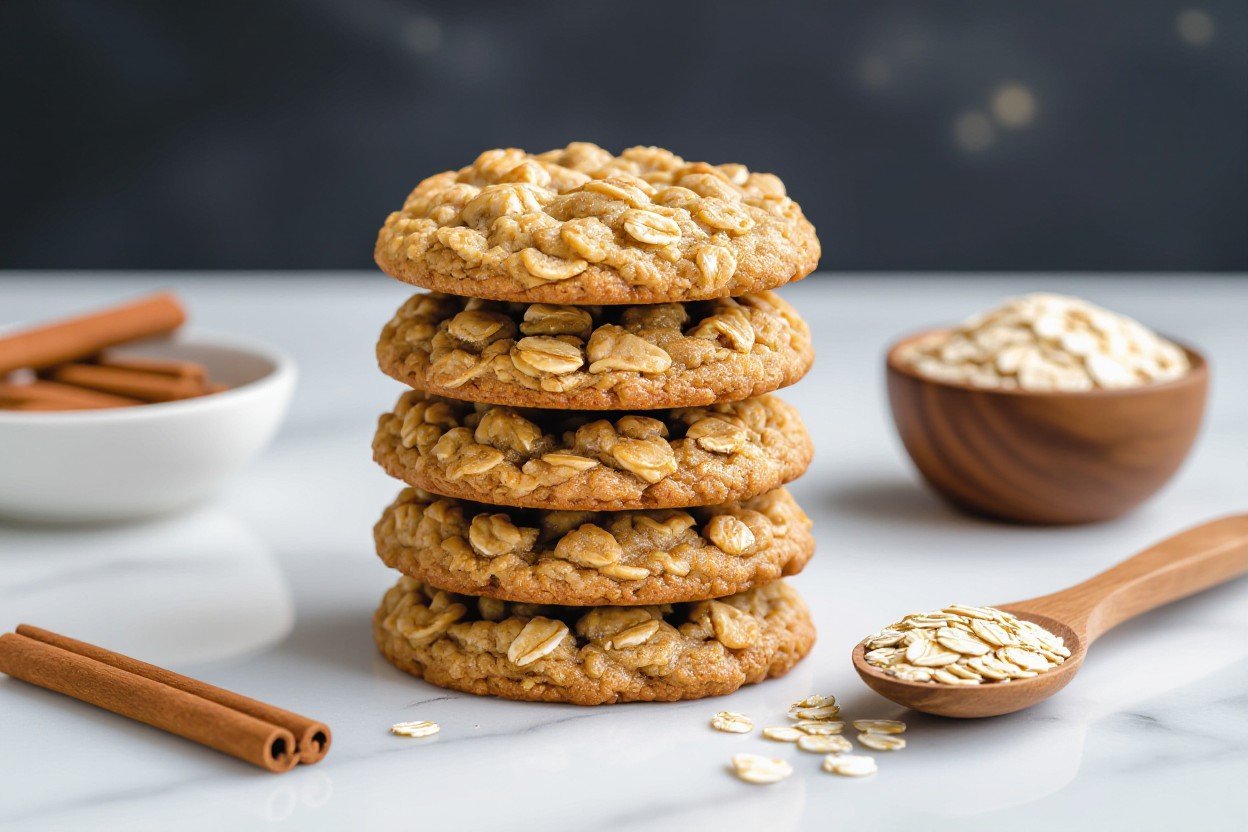
You can keep the cookie experience indulgent while dialing back excess by targeting swaps that change macronutrient profiles without sacrificing mouthfeel. For example, replacing half the butter with unsweetened applesauce typically cuts total fat and calories by about 25–30% for a batch, while maintaining moisture; if your original batch yields 24 cookies, that swap can shave roughly 40–60 kcal per cookie depending on portion size. Pair that with a 20–30% sugar reduction and a boost of warming spices (cinnamon, nutmeg) and you preserve perceived sweetness so you don’t need to overcompensate with extra sugars.
You should also think in terms of portion and composition: aim for two cookies as a standard serving and add protein or healthy fats to increase satiety. Stirring 1/4 cup chopped walnuts into a batch adds about 200 kcal and roughly 4–5 g protein to the whole batch, but spreads protein and omega-3s across the cookies; alternatively, folding in 2 tablespoons of ground flax delivers extra fiber and mucilage that slows glucose uptake. These small, quantifiable changes give you a treat that satisfies longer and fits better into daily nutritional targets.
Nutritional Benefits of Oats and Apples
Oats bring soluble beta‑glucan to the party, a fiber type linked to lowered LDL cholesterol when consumed at approximately 3 g per day — roughly the amount you can reach with about one to one-and-a-half cups of cooked oats across your meals. A half-cup (40–50 g) of dry rolled oats typically provides ~150 kcal, ~5 g protein and ~4 g fiber, so increasing the oat proportion in your cookie batter meaningfully raises fiber and plant protein per serving.
Apples contribute pectin and polyphenols that reduce postprandial glycemic response and add about 4–5 g fiber and ~95 kcal per medium fruit. Uses like diced apple chunks or applesauce supply moisture and sweetness while supplying vitamin C (~8% DV for a medium apple) and flavonoids that offer antioxidant effects. Combining oats and apples leverages low-to-moderate glycemic indices (apple GI ~36; rolled oats GI ~55) to create a cookie that blunts blood sugar spikes compared with refined-sugar, low-fiber versions.
Modifying Recipes for Dietary Restrictions
You can create gluten-free versions by choosing certified gluten-free oats and swapping wheat flour with oat flour or a 1:1 by-weight gluten-free blend; add 1/4 teaspoon xanthan gum per cup of gluten-free flour to improve structure in cookies. For vegan swaps, replace each egg with a flax egg (1 tablespoon ground flax + 3 tablespoons water, rested 5–10 minutes) or 3 tablespoons aquafaba for a lighter lift; use 1/4 cup unsweetened applesauce per egg when you want extra moisture but expect slightly denser texture.
Allergen- and sugar-conscious swaps work too: erythritol or allulose replace granulated sugar at roughly a 1:1 ratio with minimal glycemic impact, while sunflower seed butter stands in for peanut or almond butter in a 1:1 measure for nut-free diets. Note that some swaps change spread, browning and chew—plan to chill dough for 20–30 minutes if using fruit purées or reduce oven temperature by 10–15°F and extend bake time by 1–2 minutes to achieve the right set without overbrowning.
Test changes one variable at a time and weigh ingredients rather than eyeballing: gluten-free oat flour often absorbs more liquid so add an extra 1–2 tablespoons of liquid per cup if the dough looks dry, whereas almond flour typically needs 1–2 tablespoons less liquid and yields a softer, crumblier cookie. Keep a baking log with exact weights, bake time and temperature adjustments so you can reproduce a successful modification for specific dietary needs.
Conclusion
So you can rely on apple cinnamon oatmeal cookies to deliver a harmonious blend of warm spice, tender apple pieces, and substantial oats that satisfy both snack and breakfast needs; you can personalize the cookie by adjusting sweetness, spice intensity, or add-ins like nuts or dried fruit to match your preferences. To preserve texture and flavor, cool completely and store in an airtight container at room temperature for a few days or freeze portions for longer keeping, thawing briefly before serving to restore softness.
You will find these cookies versatile—pair them with yogurt, tea, or a glass of milk, or make small tweaks such as using whole-grain flour, applesauce, or a touch less sugar to fit your dietary goals without losing character. With straightforward technique and thoughtful ingredient choices, you can consistently produce cookies that are flavorful, comforting, and reliably satisfying for your household or guests.