Keto Roasted Veggie Power Bowl
Are you tired of bland, repetitive keto meals? Want to give up on healthy eating? A roasted veggie power bowl can change your keto diet experience.
Forget what you thought about low-carb eating. The keto power bowl is here to change your meals. It’s not just another diet dish. It’s a nutrient-packed, flavor explosion that will make you love your roasted veggie power bowl.
Imagine a meal that’s full of nutrition and flavor, perfect for your keto lifestyle. No more feeling deprived or eating the same foods over and over. Your taste buds are in for an exciting adventure.
Key Takeaways
- Discover a game-changing approach to keto meals
- Learn how to create a nutrient-dense power bowl
- Unlock the secret to flavorful low-carb eating
- Explore a versatile meal option that never gets boring
- Transform your relationship with healthy eating
Why Your Keto Diet Needs More Vegetables
Think the keto diet is all about meat and cheese? Think again. Vegetables are the unsung heroes of a successful low-carb diet. The right keto-friendly vegetables can supercharge your nutrition and help you feel your best.
Your body craves more than just fat and protein. Nutrient-dense vegetables provide essential vitamins, minerals, and fiber. They keep your digestive system running smoothly. These low-carb diet champions help prevent common issues like constipation and support your overall health.
Not all vegetables are created equal on a keto plan. Leafy greens, cruciferous vegetables, and low-carb options like zucchini and cauliflower are nutritional powerhouses. They offer minimal carbs while delivering maximum nutrition. By carefully selecting your veggie intake, you can maintain ketosis while giving your body the micronutrients it needs.
Worried about getting enough electrolytes? Keto-friendly vegetables are packed with potassium, magnesium, and other essential minerals. These nutrient-rich foods support your energy levels, mental clarity, and overall well-being throughout your low-carb diet journey.
Remember, vegetables aren’t just a side dish on keto—they’re a critical component of a balanced and sustainable approach to this transformative way of eating. Your body will thank you for making them a priority.
What Makes a Roasted Veggie Power Bowl Keto-Friendly
Making a keto-friendly roasted veggie power bowl is more than just mixing ingredients. It’s about finding the right balance of low-carb veggies and nutrients. You need to pick veggies that won’t raise your carb count too high.
Start with a base of low-carb veggies like spinach, kale, and broccoli. These greens are full of nutrients and low in carbs. Choose veggies with less than 10 grams of net carbs per serving to keep your body in ketosis.
Then, add healthy fats and quality protein to your bowl. Aim for a mix of 70-75% fat, 20-25% protein, and 5-10% carbs. This mix keeps you full, energized, and in ketosis.
Use visual portion control to guide you. Fill half your bowl with veggies, a quarter with protein, and top it with healthy fats like olive oil or avocado. This method makes tracking your diet easy and stress-free.
Learning to make a keto-friendly power bowl turns meal prep into a fun, healthy journey. It supports your health goals while tasting great.
Choosing the Best Low-Carb Vegetables for Your Bowl
Creating a keto-friendly veggie bowl starts with picking the right veggies. Not all vegetables are good for a low-carb diet. You need to know the net carb counts and nutritional values.
Broccoli is a top choice, with only 4g net carbs per cup. Cauliflower is another favorite, great for making rice, pizza crusts, and roasted sides. Zucchini is low in carbs, with just 3g net carbs, making it great for adding bulk to your meals.
Bell peppers add color and antioxidants, with 4-6g net carbs. Brussels sprouts are sweet when roasted, with 5g net carbs per serving. Asparagus is elegant and nutritious, with only 2g net carbs and a crunchy texture.
Radishes and mushrooms are hidden gems, adding flavor and texture. Eggplant is a hearty choice for those looking for more substantial veggies.
For the best vegetable roasting, choose fresh, firm veggies. Cut them into similar sizes for even cooking. Your cruciferous vegetables will taste amazing and be super nutritious when roasted right.
The Perfect Roasting Technique for Maximum Flavor
Learning how to roast vegetables keto-style can turn simple ingredients into something amazing. The key is to use high-heat cooking to caramelize and crisp your veggies just right.
When roasting for a keto diet, temperature is key. Aim for 425°F to get golden edges without burning. Make sure to spread your veggies out on a baking sheet. This prevents them from steaming instead of roasting, keeping them crispy.
Don’t forget about oil when roasting veggies keto. Use 1-2 tablespoons of healthy fats like olive or avocado oil per pound of veggies. This keeps them moist and adds a nice crispiness. Different veggies roast at different times: Brussels sprouts take 20-25 minutes, while zucchini only needs 15 minutes to stay crunchy.
Pro tip: Flip your veggies halfway through roasting for even caramelization. Add minced garlic in the last five minutes for extra flavor. Sprinkle fresh herbs just before serving to take your dish to the next level.
Building Your Protein Foundation
Starting a keto power bowl means picking the right protein. Your choice sets the stage for a meal that’s both tasty and healthy. Grilled chicken is a top pick for its lean protein and great taste.
But there’s more to poultry than just chicken breasts. Chicken thighs have more fat and a richer flavor, ideal for keto diets. Rotisserie chicken is great for quick meals. Turkey breast is another lean option for those looking for it.
Seafood lovers have plenty to choose from. Salmon is packed with omega-3s and protein. Shrimp cooks fast and tastes sweet. Cod is mild, and tuna is easy to fit into your keto diet, whether canned or fresh.
Red meat fans can try grass-fed beef, seasoned ground beef, or even lamb and bison. Vegetarians can go for tempeh, hemp seeds, or tofu for plant-based proteins.
Pro tip: Cook proteins in bulk. Grill several chicken thighs or bake a big salmon fillet. This way, you can mix and match throughout the week. It saves time and keeps your power bowls exciting.
Healthy Fats That Elevate Your Bowl
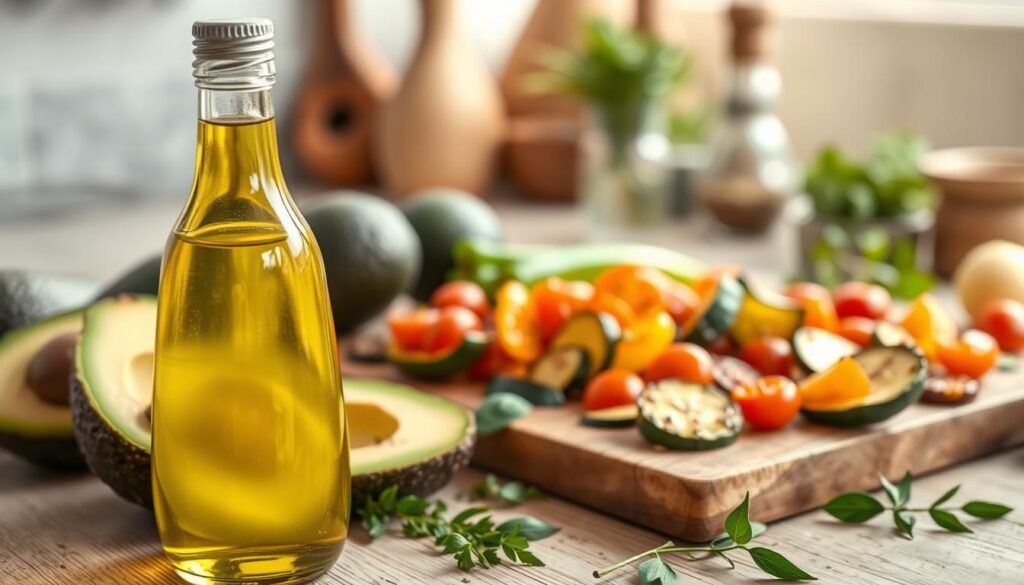
Adding healthy fats to your keto roasted veggie power bowl makes it irresistible. These fats not only meet your macros but also enhance the taste.
Begin with cooking fats that are both tasty and nutritious. Avocado oil is great for high-heat roasting. It has a neutral taste and can handle up to 520°F. After cooking, drizzle extra virgin olive oil for a fruity flavor and more fat.
For extra richness, add finishing fats that add texture and depth. Sliced avocado adds creamy goodness with 15g of healthy fats per half. Add toasted pepitas for crunch, kalamata olives for a salty taste, and crumbled feta cheese for a tangy contrast.
Make your own dressings to outdo store-bought ones. Try a creamy tahini-lemon vinaigrette or a spicy chipotle cream with full-fat sour cream. Use 2-3 tablespoons of added fats to keep in ketosis while boosting flavor.
Quality of fats is key. Opt for grass-fed butter, cold-pressed avocado oil, and wild-caught fish fats. They support ketosis, health, and lower inflammation.
Roasted Veggie Power Bowl
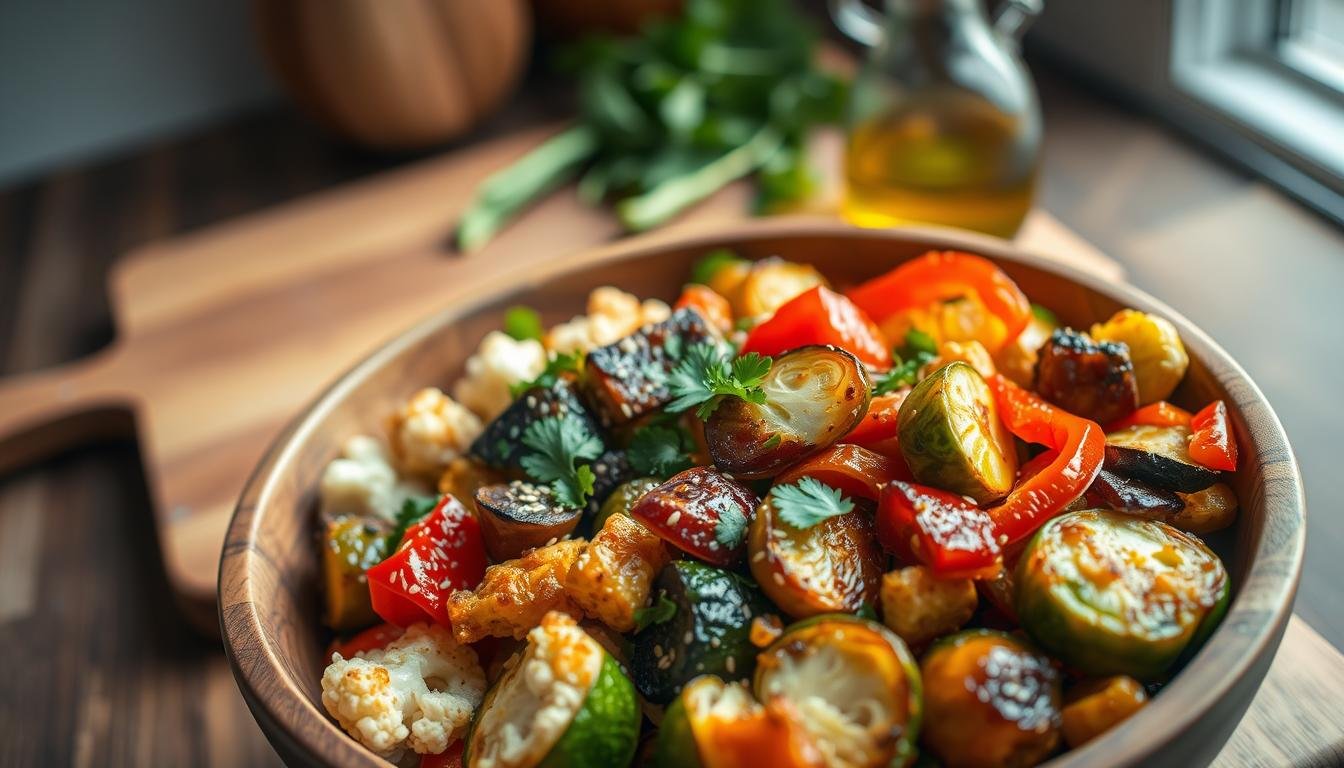
Your ultimate keto bowl recipe is here to change weeknight dinners. It’s a simple yet tasty meal that mixes roasted veggies with protein. It’s a low-carb feast ready in just 30 minutes.
To make your keto bowl, you’ll need broccoli, cauliflower, zucchini, red bell pepper, and Brussels sprouts. Also, grab some avocado oil, sea salt, black pepper, chicken thighs, and a fresh avocado. The steps are easy and perfect for beginners.
First, heat your oven to 425°F. Cut the veggies into equal sizes for even roasting. Toss them with avocado oil and spices, then spread on a baking sheet. Roast for 20-25 minutes, flipping halfway for the best caramelization.
While the veggies roast, prep your protein. Season the chicken thighs with oil, salt, and pepper. Grill or bake until done. Then, build your bowl with roasted veggies, protein, and sliced avocado on top.
Each serving has about 450 calories, 35g of fat, 30g of protein, and only 10g of net carbs. Your keto bowl recipe is now ready to enjoy!
Meal Prep Tips for Busy Weekdays
Make your keto meal prep quick and easy for busy weekdays. The key is to plan ahead and prep smart. Spend a few hours on Sunday to make meals that last all week.
Focus on batch cooking and organizing ingredients. Roast lots of low-carb veggies at once, using different pans. Let them cool before storing in glass containers to keep them fresh.
Keep your meal prep parts separate. Store veggies, proteins, and fresh ingredients in their own containers. This keeps them fresh and prevents them from getting soggy. Proteins like chicken or salmon stay good for 3-4 days, and veggies last 4-5 days.
Use shortcuts to make meal prep quicker. Try pre-cut veggies, rotisserie chicken, or double-batch dressings. Reheat veggies and proteins in the microwave for 90 seconds, then add fresh toppings for a fresh taste.
With these tips, you’ll save time, reduce stress, and always have tasty keto meals ready for your busy week.
Customizing Your Bowl for Different Dietary Needs
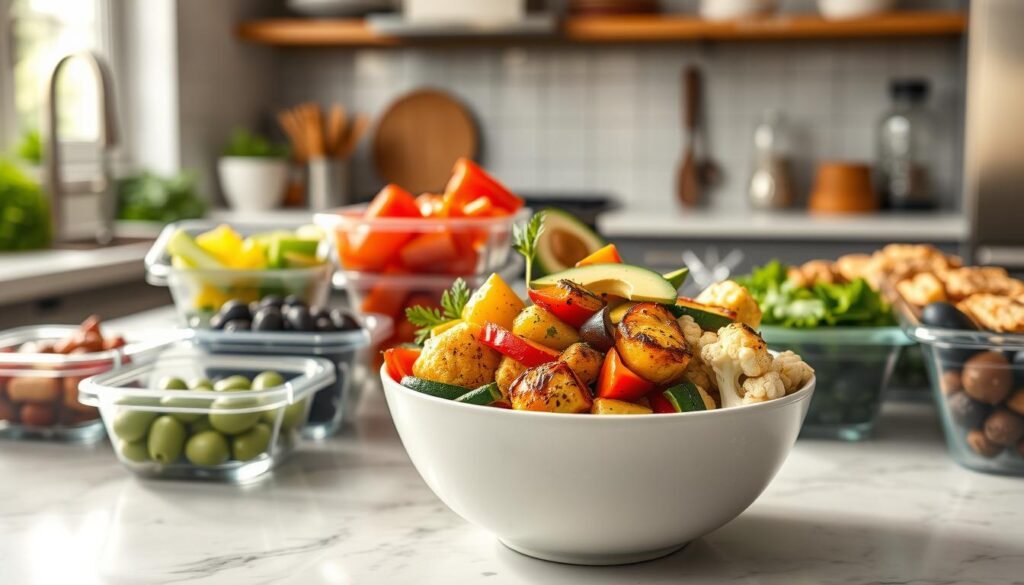
Adapting your low-carb meal prep to fit different diets is easy. Whether you’re on a strict keto diet or have health needs, your roasted veggie power bowl can be for everyone. It’s a versatile meal that suits many.
For those who avoid dairy on keto, try nutritional yeast for a cheesy taste. Use coconut cream in dressings and add healthy fats like avocado and nuts. If you can’t have nuts, use sunflower seed butter or pumpkin seeds instead.
Vegetarian keto dieters can make protein-rich bowls with tempeh, coconut aminos, hemp hearts, and tahini dressings. Paleo-keto folks might choose grass-fed proteins and whole foods for fats.
Athletes and active people can boost their bowls with more protein and some low-carb veggies. If you’re watching your budget, use frozen veggies, choose affordable proteins like chicken thighs, and make your own dressings.
The secret to great low-carb meal prep is being flexible. With these tweaks, your roasted veggie power bowl can meet many nutritional needs. It keeps you full and healthy, no matter your diet.
Common Mistakes to Avoid When Making Veggie Bowls
Making the perfect keto lunch ideas can be tricky. When you’re making veggie bowls, some common mistakes can mess up your meal. Knowing these mistakes helps you make tasty, healthy dishes that fit your keto diet.
One big mistake is overcrowding your roasting pan. When veggies are too close together, they steam instead of roast. This makes them soft and pale. To avoid this, use more than one sheet pan or roast in batches. This way, each veggie has room to get crispy and caramelized.
Choosing the right oil is key for keto meals. Using oils with low smoke points can make your veggies taste bitter. Not using enough oil can make them dry and stick to the pan. Use avocado or light olive oil, about one tablespoon for each pound of veggies.
Unevenly cutting veggies is another mistake. If the pieces are different sizes, some will burn while others stay raw. Take a little extra time to chop all your veggies the same size. This ensures they cook evenly.
Timing is important when adding certain ingredients. Garlic burns fast, fresh herbs lose their color, and leafy greens wilt quickly. Add these in the last few minutes of cooking or use them as fresh toppings. This keeps their flavor and texture intact.
Seasoning is an art in keto cooking. Don’t be shy with salt, and always taste your veggies before serving. Be careful of hidden carbs in dressings and sauces that could throw you out of ketosis. If unsure, make your own dressings to control what goes in.
Storage and Reheating Instructions
Keeping your keto dinner bowl fresh is key. Let roasted veggies cool down before storing them in airtight glass containers. A paper towel inside helps absorb moisture and keeps veggies crispy.
Store protein parts in separate containers. Keep your keto dinner bowl in the fridge at 40°F or below. Most ingredients stay good for 3-4 days. Freeze extra protein for up to 3 months.
To reheat, the microwave is fast. But for crispy veggies, use an oven or air fryer. Warm on a baking sheet at 350°F for 8-10 minutes. The air fryer does it in 5 minutes at 375°F.
Keep avocado and leafy greens fresh until you eat them. If you’re eating at work, pack cold parts in a separate container. Always reheat food only once for safety.
Conclusion
You’ve found a game-changing keto meal solution that makes nutrition exciting without losing flavor. The roasted veggie power bowl is more than a recipe. It’s a flexible, nutrient-rich way to eat low-carb that keeps meals fun and tasty.
Learning this simple yet versatile bowl opens up a world of cooking possibilities. Each bowl lets you express your taste, dietary needs, and health goals. Start with the basic recipe and then try new veggies, proteins, and spices to keep things fresh.
Meal prep has never been simpler. In just 30 minutes, you can prep a week’s worth of keto meals. Your kitchen will become a place of healthy cooking, where you can make restaurant-quality dishes that fit your diet. This strategy is great for both newbies and seasoned keto eaters, ensuring you’ll never get tired of your meals.
Remember, eating well is about enjoying your food. This roasted veggie power bowl shows that keto can be delicious, easy, and fit your lifestyle perfectly. So, preheat your oven, pick your favorite low-carb ingredients, and start making your meals better, one bowl at a time.
Printable Recipe Card
Want just the essential recipe details without scrolling through the article? Get our printable recipe card with just the ingredients and instructions.