Keto Parmesan Crusted Chicken
Chicken coated in golden Parmesan gives you a crunchy, low-carb entrée that satisfies both taste and ketogenic goals; this guide shows you how to select ingredients, achieve a crisp crust without breadcrumbs, control cooking times for juicy results, and adjust seasoning for your preferences. You’ll learn simple baking and pan-fry techniques, shortcut tips, and pairing ideas to make this dish reliably excellent every time.
Ingredients
Chicken Selection
Choose boneless, skinless chicken breasts for a lean, uniform crust-you’ll want pieces around 6-8 oz (170-225 g) each so they cook evenly; if using thighs, pick boneless thighs and trim excess fat for a similar thickness. Pound each breast to about 1/2 inch (1.3 cm) thickness so the Parmesan coating browns without the interior overcooking, and plan on an internal temperature target of 165°F (74°C) when testing doneness.
If you prefer deeper flavor, go with bone-in breasts or thighs but expect cooking time to increase by roughly 8-12 minutes and adjust oven or skillet heat accordingly; sourcing pasture-raised or air-chilled chicken will yield firmer texture and better flavor, and you should portion 3-4 pieces for a family of four depending on appetite and side dishes.
Parmesan Cheese
Use finely grated Parmigiano-Reggiano aged 12-24 months for the best balance of nuttiness and melting-aim for about 1 to 1 1/2 cups (100-150 g) of grated cheese to coat four medium breasts when combined with your low-carb binder. Parmesan is keto-friendly: a 1 oz (28 g) serving contains roughly 10 g protein and under 1 g net carbs, which helps the crust stay flavorful while keeping the recipe low-carb.
Avoid pre-grated tubs that contain anti-caking agents and cellulose, since these inhibit browning and create a dryer crust; instead, freshly grate from a wedge using a microplane or fine grater so the cheese adheres and melts into a crisp, golden layer. For a slightly crunchier profile, mix the grated Parmesan with 1/2 cup (50 g) almond flour and a tablespoon of finely chopped dried herbs-this combination yields a textured crust that browns in about 10-12 minutes under high oven heat or medium-high skillet heat.
Parmigiano-Reggiano carries a Protected Designation of Origin (PDO), and aging beyond 24 months increases the formation of tyrosine crystals that add a pleasant granular texture and intensified umami; store a wedge wrapped in parchment in the fridge for up to 6 months or freeze small portions of freshly grated cheese for up to 3 months to preserve peak flavor.
Preparation Steps
Marinating the Chicken
For four chicken breasts (about 1 to 1.5 lb) mix 2 tbsp olive oil, 1 tbsp lemon juice, 1 tsp Dijon mustard, 2 minced garlic cloves, 1 tsp Italian seasoning, and 1/2 tsp kosher salt per pound with 1/4 tsp black pepper. Place the chicken in a zip-top bag or shallow dish, pour the marinade over, squeeze out excess air, and massage the mixture into the meat so it coats evenly; this helps the flavors penetrate the surface within 30 minutes.
If you have time, let the chicken marinate 2-8 hours in the refrigerator for more pronounced flavor and slight tenderization; avoid exceeding 12 hours because acid can start to alter texture. When short on time, a 15-30 minute sit still improves seasoning uptake-score the thicker pieces once to let the marinade reach deeper-and always pat the chicken dry with paper towels before coating to ensure the crust adheres.
Coating Process
Beat 2 large eggs with 1 tbsp water for an egg wash, then prepare the dry mix: 1 cup finely grated Parmesan (Parmigiano-Reggiano preferred), 1/2 cup almond flour, 1 tsp garlic powder, 1/2 tsp onion powder, 1/2 tsp smoked paprika, 1/2 tsp salt, and 1/4 tsp black pepper. Dip each breast in the egg wash, let excess drip off, then press firmly into the Parmesan-almond mixture so the cheese binds to the meat; for the best adhesion press with your palms for 10-15 seconds.
Heat a skillet over medium-high with 2 tbsp butter and 1 tbsp neutral oil, sear the coated chicken 3-4 minutes per side until a deep golden brown, then finish in a 400°F (205°C) oven for 8-10 minutes or until the internal temperature reaches 165°F (74°C). For thin cutlets reduce oven time to 5-7 minutes; for an air fryer set 375°F (190°C) and cook 10-12 minutes, flipping halfway. Chill the coated pieces 10 minutes before cooking if you want a firmer crust that won’t shed in the pan.
Use finely grated Parmesan rather than pre-shredded varieties because anti-caking agents prevent proper melting and adhesion; if you want extra crunch, fold in 1/4 cup crushed pork rinds or 2 tbsp crushed roasted almonds to the dry mix. When the crust browns too quickly, lower the stove heat and rely more on the oven finish, and let the chicken rest 5 minutes after cooking so juices redistribute and the crust sets fully.
Cooking Methods
When you decide between oven baking and air frying, weigh batch size, texture, and time: the oven handles 4-6 breasts on a sheet pan more evenly, while the air fryer delivers a crisper crust in less time for 1-3 pieces. Aim for an internal temperature of 165°F (74°C) regardless of method, and adjust cooking times by thickness – a pounded 1/2″ cutlet will finish in roughly 12-18 minutes, whereas a 6-8 oz whole breast often needs 20-28 minutes.
For predictable results, use a probe thermometer and note appliance differences: standard ovens at 400°F (205°C) will produce steady browning, while convection ovens and air fryers reduce times by about 10-15% because of increased air circulation. If you track times and temps for your specific unit (for example, 22 minutes at 400°F in your oven vs. 14 minutes at 375°F in your air fryer for the same cutlet), you’ll dial in consistent outcomes quickly.
Oven Baking
Preheat your oven to 400°F (205°C) and set a wire rack on a foil-lined sheet pan so air moves around each breast; this setup gives a crisper Parmesan crust than laying pieces flat on the pan. Combine 1 cup finely grated Parmesan with 1/2 cup almond flour, 1 tsp garlic powder, 1/2 tsp smoked paprika, salt and pepper, and use one beaten egg (or 2 tbsp mayonnaise) to help the mixture adhere – bake 18-22 minutes for 1/2″ cutlets, 22-28 minutes for 6-8 oz breasts, checking for 165°F (74°C) internal temperature.
If you want additional browning, switch to broil for the last 60-90 seconds but watch closely to avoid burning the cheese; convection ovens should be set to 375°F and will typically finish in 16-20 minutes. Let your chicken rest 4-6 minutes before slicing to preserve juices and hold the crust intact when you cut into it.
Air Frying
Preheat the air fryer to 375°F (190°C) for 3-4 minutes, arrange pieces in a single layer with space between them, and lightly spray the crust with oil to promote even browning; cook for 12-15 minutes, flipping once at about the halfway mark, and target 165°F (74°C) internal temperature. For smaller 4 oz cutlets expect 8-11 minutes, and for thicker 7-8 oz breasts plan 14-16 minutes.
Because the air fryer concentrates hot air around each piece, you’ll get a more pronounced crunchy Parmesan exterior with less added oil compared to pan-frying, and you’ll likely reduce cooking time by about 20-30% versus a conventional oven for the same thickness. Avoid overcrowding the basket – cooking in two quick batches preserves the rapid airflow that creates the optimal crust.
Pressing the Parmesan-almond mix firmly into the chicken and chilling the coated pieces for 10 minutes before air frying improves adhesion and minimizes fallout in the basket; use perforated parchment or a lightly oiled basket and add 2-3 minutes if you start from refrigerated rather than room-temperature chicken.
Serving Suggestions
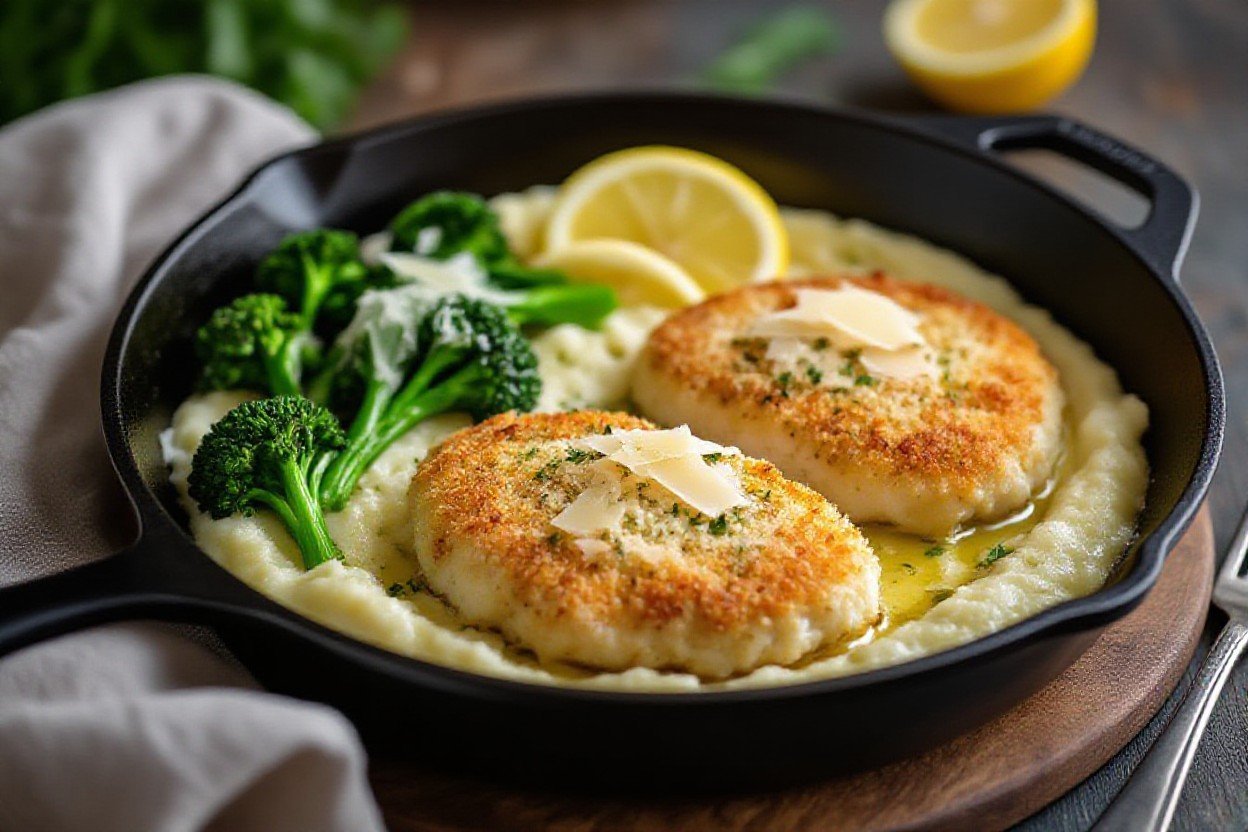
You can plate this Parmesan-crusted chicken as the centerpiece of a low-carb dinner for four-one 6-8 oz breast per person balances protein without overloading calories. Serve with a wedge of lemon and 1 tbsp chopped parsley per plate to cut through the richness; a 1/2-1 oz shaved Parmesan finish adds umami without adding meaningful carbs. If you’re tracking macros, aim for roughly 30-40 g protein and 20-30 g fat per serving by pairing the chicken with a 1-cup vegetable side and 1-2 tbsp sauce.
When serving a crowd or prepping meals, keep portions uniform and reheat gently: cover cooked breasts and warm at 325°F for 8-10 minutes or until internal temp reaches 140-145°F, finishing under the broiler 1-2 minutes for crispness. You can refrigerate leftovers up to 4 days; slice before reheating to speed warming and preserve the crust’s texture.
Side Dishes
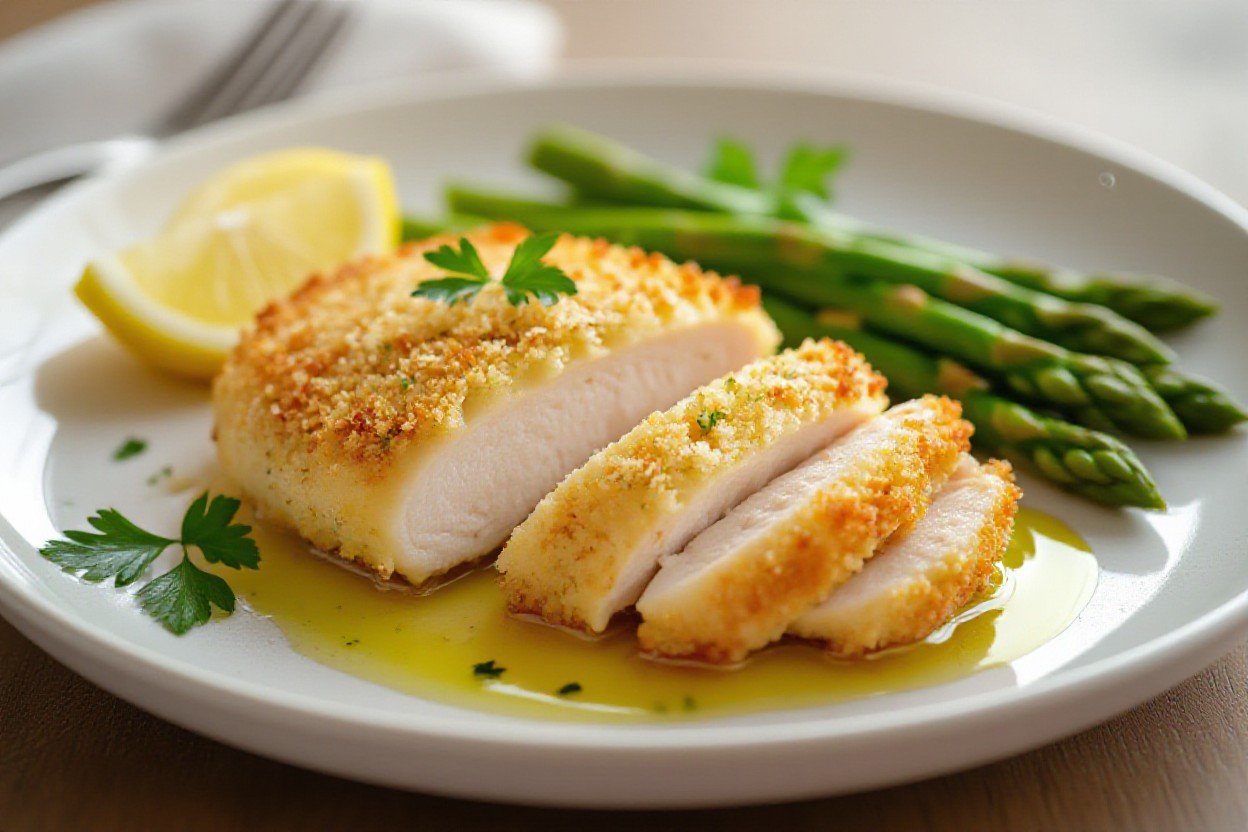
Roasted asparagus and cauliflower mash make classic companions: roast 1 lb asparagus tossed with 1 tbsp olive oil, 1/4 tsp salt and black pepper at 425°F for 10-12 minutes, and serve 4-5 spears per person. For a creamy cauliflower mash, steam one small head (about 3 cups florets) 8-10 minutes, then blend with 2 tbsp butter, 1/4 cup heavy cream and 1/4 cup grated Parmesan-one head yields ~4 servings with about 3-4 g net carbs per serving.
If you want greens, prepare 2 cups of peppery arugula per plate with 1 oz toasted walnuts and a lemon-olive oil vinaigrette (1 tbsp olive oil + 1 tsp lemon juice) for a 4-6 g additional carb load. For a heartier option, halve 1 lb Brussels sprouts, toss in 2 tbsp bacon fat or olive oil, season, and roast at 400°F for 20-25 minutes; serve 1 cup per person for roughly 6-7 g net carbs.
Sauces and Dips
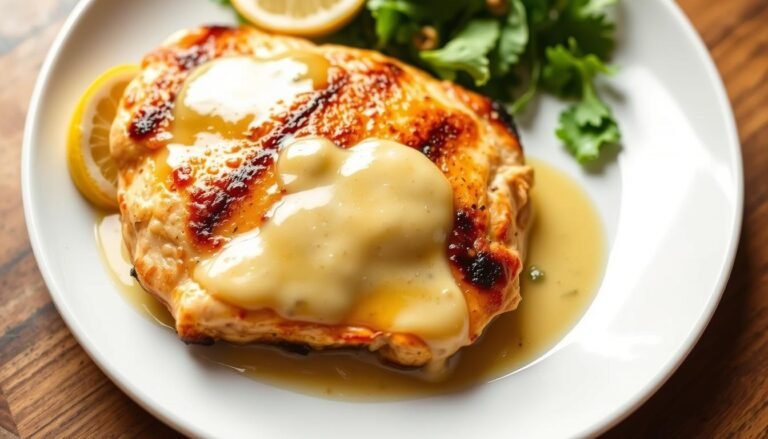
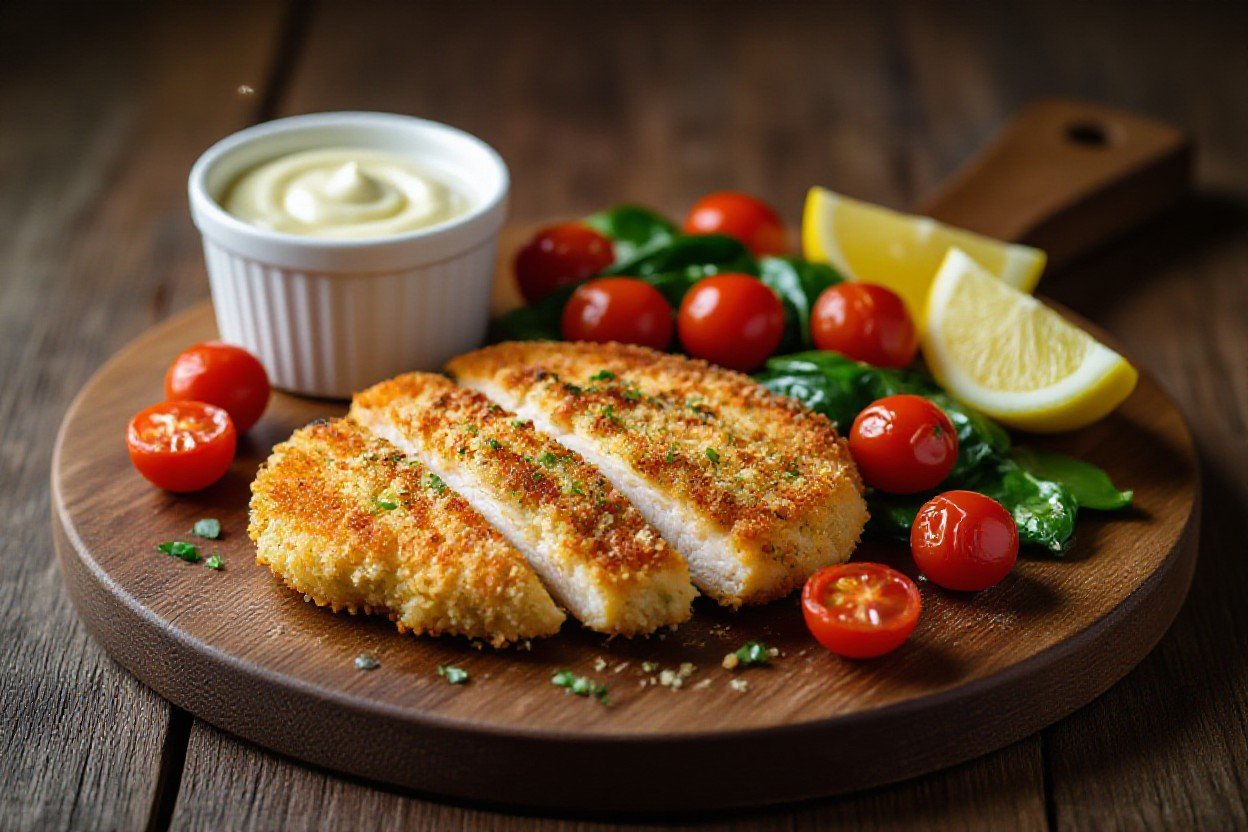
Lemon-butter sauce brightens the crust without adding carbs: melt 2 tbsp unsalted butter with 1 tbsp lemon juice and 1 tsp Dijon-use 2 tbsp per serving. Garlic aioli (1/2 cup mayo + 1 minced clove garlic + 1 tsp lemon juice) pairs well when you want richness; a 2-tbsp dollop delivers about 200 kcal and imperatively 0 g carbs if you use sugar-free mayo. For a tomato note, simmer a sugar-free marinara for 10-15 minutes and spoon 2-3 tbsp over the chicken for a bolder flavor.
To make a quick herb-cream pan sauce, deglaze the skillet with 1/4 cup chicken broth, add 1/2 cup heavy cream and 2 tbsp grated Parmesan, then simmer 3-4 minutes until it thickens-this yields enough for 3-4 servings and keeps carbs under 2 g per serving. If you prefer heat, blend 2 tbsp mayo with 1 tsp hot sauce and 1/2 tsp smoked paprika for a creamy spicy dip that’s shelf-stable for several days refrigerated.
For storage and handling, keep mayonnaise-based dips up to 5 days refrigerated in an airtight container and cream-based sauces up to 3 days; reheat cream sauces gently over low heat and add 1-2 tbsp water or broth to restore emulsion if they separate. When you need stabilization for make-ahead meals, add 1/8 tsp xanthan gum to 2 cups of sauce or 1 tsp Dijon as an emulsifier-both techniques help maintain texture during reheating and transport.
Nutritional Information
Caloric Content
For a typical serving made with a 6-ounce (170 g) cooked chicken breast, about 2 tablespoons almond flour, 2 tablespoons grated Parmesan, and 1 tablespoon olive oil for frying, you’ll land around 530-540 calories: chicken ~281 kcal, almond flour ~90 kcal, Parmesan ~43 kcal, olive oil ~119 kcal. Portion size is the biggest driver; a 4-ounce breast drops the total by roughly 100-120 calories, while a larger breast or extra oil can push the dish toward 650 kcal or more.
If you want to trim calories without changing the flavor profile much, swap the tablespoon of oil for a nonstick spray (saving ~80-100 kcal) or bake the cutlets instead of pan-frying. Conversely, increasing fat for additional satiety on keto is straightforward: adding 1 tablespoon of butter or extra olive oil adds roughly 100-120 calories and 11-14 g of fat per tablespoon.
Macronutrient Breakdown
Using the same example serving (6 oz chicken, 2 tbsp almond flour, 2 tbsp Parmesan, 1 tbsp olive oil), expect about 60 g protein, 31 g fat, and roughly 2-4 g net carbohydrates. In calorie terms that’s about 240 kcal from protein (45%), 279 kcal from fat (53%), and single-digit kcal from carbs (≈1-2%), making this a high-protein, moderate-to-high-fat, very low-carb meal that fits well within most ketogenic macros.
To shift those macronutrients to match your targets, adjust the fat and protein sources: adding a tablespoon of butter or an extra tablespoon of olive oil increases fat by ~11-14 g (≈100-120 kcal) and pushes the ratio further toward fat, while using a smaller breast or trimming added fats lowers total protein and calories. Parmesan also contributes meaningful micronutrients – about 10 g grated Parmesan adds roughly 120 mg of calcium – and almond flour provides vitamin E and magnesium, so your choices will affect both macro and micro profiles.
Tips and Variations
Pound chicken to an even thickness of about 1/2 inch so each piece reaches 165°F at roughly the same time; a 6-8 oz breast typically finishes at 165°F after a 2-3 minute sear per side and 8-10 minutes in a 375°F oven. Use an instant-read thermometer and let the chicken rest 4-5 minutes to allow juices to redistribute, which keeps the crust crisp and the interior juicy. For the crust mix, a reliable ratio is 1 cup finely grated Parmesan to 1/2 cup almond flour (or 3/4 cup crushed pork rinds for extra crunch); press the mixture firmly onto the chicken and use 1-2 tablespoons of avocado oil or melted butter in the pan to promote browning.
Scale quantities for batch cooking: four 6-8 oz breasts will use roughly 1½ cups total crust blend and take about 22-25 minutes total cook time (sear + oven). You can prepare the dry crust mix 2-3 days ahead in the refrigerator or freeze single portions for up to 1 month; thaw in the fridge overnight before using. Use a parchment-lined sheet for baking and a hot oven-safe skillet for finishing to get the best Maillard color and maintain keto-friendly fat choices while minimizing added carbs.
- Pound to an even 1/2 inch thickness so every piece cooks evenly and stays tender.
- Target an internal temperature of 165°F; insert the thermometer into the thickest part of the breast.
- For extra crunch, replace up to 25-30% of the almond flour with crushed pork rinds or 2 tablespoons of grated Pecorino.
- Any leftover crust mix can be stored airtight in the fridge for 3 days or frozen for up to 1 month.
Spice Additions
You can layer flavor directly into the crust by adding measured spices to the cheese-almond blend: 1 teaspoon smoked paprika, 1 teaspoon garlic powder, and 1 teaspoon Italian seasoning per cup of Parmesan gives a balanced profile for four servings. If you want heat, start with 1/4 teaspoon cayenne per cup of crust and increase to 1/2 teaspoon for medium heat; for a smoky kick, substitute 1/2 teaspoon chipotle powder. Dry-toast whole spices (15-30 seconds) before grinding to intensify aroma, then incorporate them into the dry mix so they distribute evenly.
If you prefer bright citrus notes, add 1 teaspoon of lemon zest per cup of crust and combine with 1 tablespoon Dijon mustard as a binder on the chicken before dredging. You can also fold in 1-2 tablespoons finely chopped fresh herbs (parsley, thyme, or oregano) after cooking to keep their color and freshness. For adherence, whisk one large egg with 1 tablespoon heavy cream per pound of chicken to replace or supplement an oil wash when you want a thicker, more uniform crust.
Alternative Cheeses
Pecorino Romano and aged Asiago are excellent substitutes or complements to Parmesan: Pecorino is saltier and sharper-use it 1:1 but reduce added salt in the recipe by about 25%-while Asiago brings a nuttier, slightly milder profile. For a more indulgent crust, try 3/4 cup finely grated Parmesan mixed with 1/4 cup grated aged cheddar; that blend adds depth without compromising the crisp texture. Use freshly grated blocks for best browning and adhesion; pre-grated cheese often contains anti-caking agents that hinder crust crispness.
If you want a lower-salt option, use part Parmesan and part finely grated low-sodium cheddar or young Gouda at a 2:1 ratio (Parmesan to mild cheese) to maintain structure while reducing sodium by roughly 15-20%. For a stretchy, melty element (best for skillet finish rather than oven-only crusts), add 1/4 cup finely shredded low-moisture mozzarella to the blend, but be aware it will brown differently and can soften the exterior slightly.
When grating, chill the cheese blocks 10-15 minutes to firm them; a microplane yields the best fine texture for adhesion and even browning. Store freshly grated blends airtight for up to 2 weeks in the refrigerator or freeze portions flat in zip-top bags for up to 3 months-thaw in the fridge before using to maintain texture and flavor.
Summing up
To wrap up, Keto Parmesan Crusted Chicken gives you a straightforward way to enjoy a crispy, flavorful entrée while keeping carbs low and protein high. Use finely grated Parmesan with a keto-friendly binder like almond flour or crushed pork rinds, cook at moderate-high heat for a golden crust, and rest briefly so your chicken stays juicy.
You can scale and customize this recipe for weeknight meals, meal prep, or entertaining-adjust herbs and spices to suit your palate without compromising your macros. With consistent technique you’ll reliably deliver a satisfying keto main that pairs well with salads, roasted vegetables, or cauliflower mash.
Printable Recipe Card
Want just the essential recipe details without scrolling through the article? Get our printable recipe card with just the ingredients and instructions.