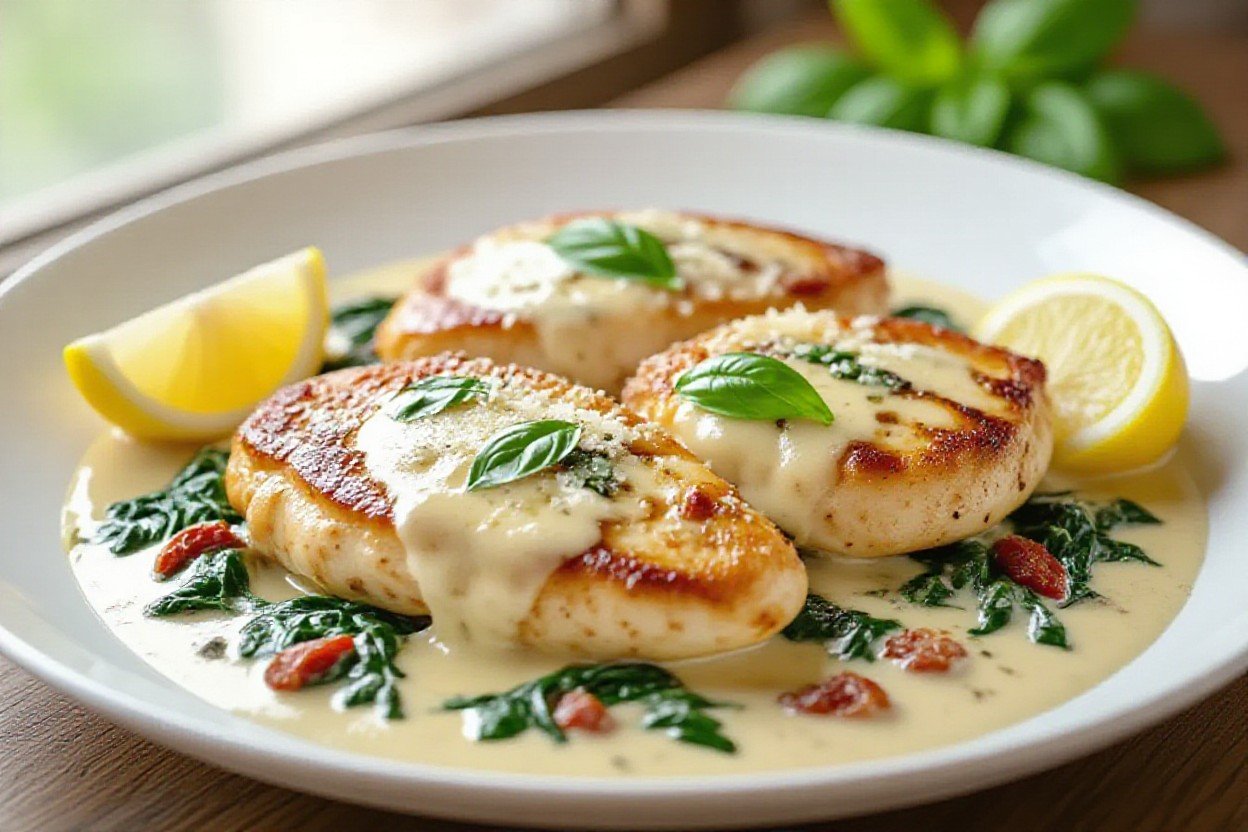
Keto Creamy Tuscan Chicken
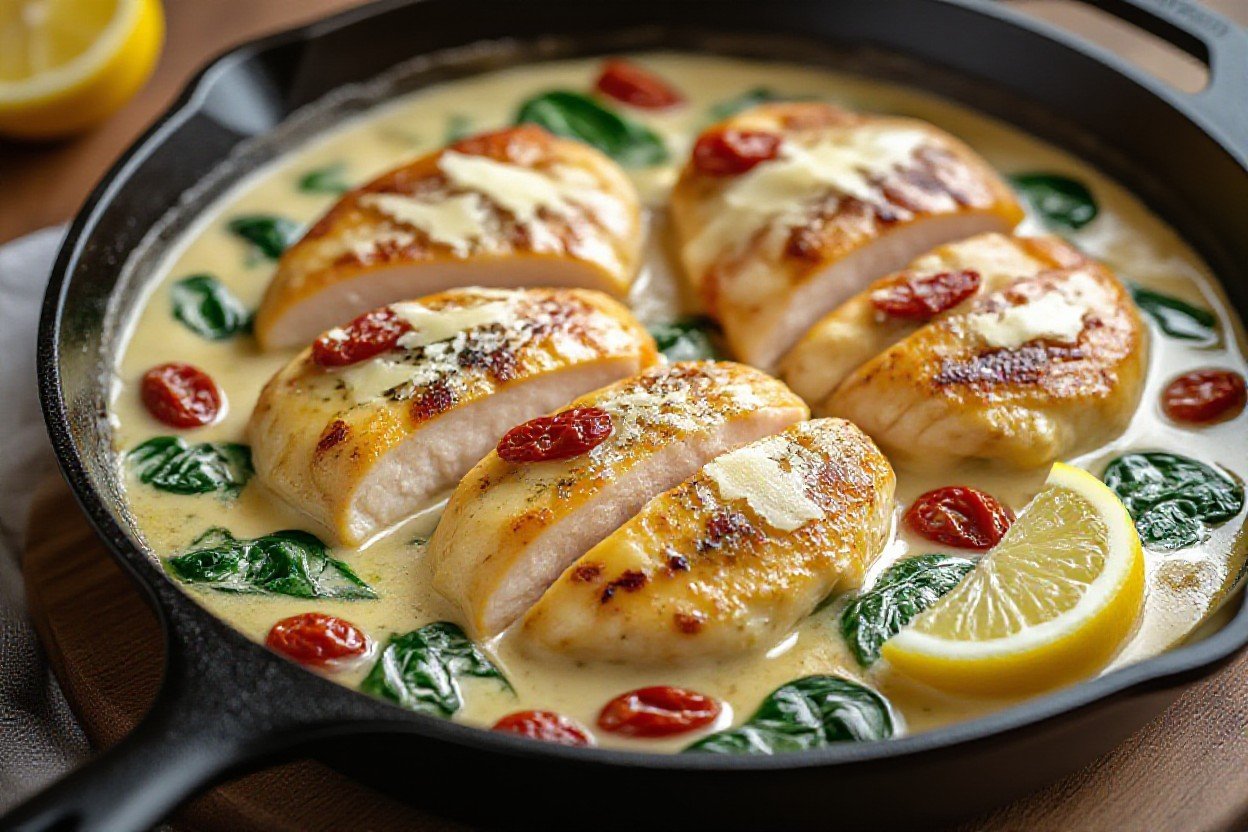
With a rich cream and Parmesan sauce studded with sun-dried tomatoes and spinach, Keto Creamy Tuscan Chicken gives you a satisfying, low-carb dinner that fits your ketogenic goals. You’ll use simple pantry ingredients and sear chicken for a quick, restaurant-quality meal that delivers high fat, moderate protein and minimal carbs. Follow straightforward techniques to keep the sauce velvety and the flavors balanced while you accurately track macros for consistent results.
Ingredients
Chicken Selection
You’ll get the best results using boneless, skinless chicken breasts or thighs depending on how rich you want the dish: aim for 1 to 1.5 lb (450-680 g) total for 3-4 servings. Breasts give a leaner bite and slice nicely for plating, while thighs deliver more fat and flavor and tolerate longer searing without drying out.
If you choose breasts, pound them to an even ¾-inch (2 cm) thickness for uniform cooking and sear 3-4 minutes per side before finishing in a 375°F (190°C) oven for 8-12 minutes depending on size. With bone-in or thicker pieces, factor an extra 8-12 minutes of oven time and keep an instant-read thermometer handy-pull at 160°F (71°C) since carryover will reach 165°F (74°C).
Creamy Sauce Components
Measure your base: 1 cup (240 ml) heavy cream (36% fat or higher) provides stability and mouthfeel, paired with 4 oz (110 g) softened cream cheese for body and ½ cup (50 g) finely grated Parmesan for umami and thickness. Use ½ cup (120 ml) low-sodium chicken broth to thin if needed, and add 1/3 cup chopped sun-dried tomatoes (oil-packed drained or rehydrated) plus 3 minced garlic cloves and one small minced shallot for aromatic depth.
Start by sautéing garlic and shallot in 1-2 tbsp olive oil or 1 tbsp butter over medium heat, then deglaze with the chicken broth before adding cream and cheeses; simmer gently for 2-4 minutes to meld flavors and reach a glossy, clingy sauce. Keep the heat low once dairy is in to prevent separation-if the sauce looks too thin after 3-4 minutes, reduce it uncovered for another 2-5 minutes depending on desired thickness.
For texture control, soften cream cheese fully at room temperature and whisk it into warm broth before adding heavy cream to avoid lumps; if you prefer a thicker keto-safe option, stir in 1-2 tbsp grated Parmesan or 1 tsp xanthan gum gradually to thicken without diluting fat content.
Fresh Herbs and Seasonings
Fresh basil and flat-leaf parsley are your primary finishers-use about 2 tbsp chopped basil and 1 tbsp parsley for 3-4 servings to add bright contrast to the rich sauce. Add a modest pinch (¼ tsp) of red pepper flakes if you like a mild kick, plus 1 tsp lemon zest to lift the overall profile without adding carbs.
Integrate dried herbs early (½ tsp dried oregano or ¼ tsp dried thyme) so they bloom into the sauce, and save delicate herbs for the end so their volatile oils remain vibrant. Season incrementally: start with ¾-1 tsp kosher salt and ¼-½ tsp freshly ground black pepper, then adjust to taste after the sauce has reduced and the cheese has been incorporated.
If you need substitutions, use 1 tsp dried herb for about 1 tbsp fresh (a 1:3 conversion by volume); chopped frozen basil works in a pinch but add it earlier in the simmer so it loses excess water, and reserve fresh parsley as a final garnish to preserve color and texture.
Preparation Steps
Cooking the Chicken
Pat 4 boneless, skinless chicken breasts (about 6 oz each) to an even 1/2-inch thickness, then season with salt, pepper and 1 tsp Italian seasoning; this ensures even cooking and a consistent sear. Heat a 10-12 inch skillet over medium-high with 2 tbsp olive oil and 1 tbsp butter until shimmering, then sear the breasts 3-4 minutes per side until deeply golden and a quick-read thermometer reads about 155-160°F for carryover finish.
If your breasts are thicker, finish them in a 375°F oven for 8-12 minutes until the internal temperature reaches 165°F; alternatively, cook thinner cutlets entirely on the stovetop but lower the heat after searing to medium and watch the temp closely. Rest the chicken 5 minutes on a plate tented loosely with foil before slicing or returning to the pan – the pan drippings become the base for the sauce, so don’t discard them.
Making the Creamy Sauce
Lower the skillet to medium, add 1 tbsp butter, then sauté 1 small minced shallot and 3 minced garlic cloves for 1-2 minutes until translucent; deglaze with 1/3 cup dry white wine or chicken broth, scraping up browned bits. Stir in 1 cup heavy cream, 1/2 cup freshly grated Parmesan and 2 oz cream cheese (optional) and simmer gently, whisking, until the sauce thickens about 4-6 minutes.
Fold in 1/3 cup chopped sun-dried tomatoes (oil-packed, drained) and 3 cups baby spinach, cooking until the spinach wilts; finish with the juice of 1/2 lemon, 1 tsp Italian seasoning, and salt and pepper to taste. If you track macros, note that 1 cup heavy cream adds roughly 800 kcal and 80 g fat to the whole sauce; divided into four servings that’s about +200 kcal and +20 g fat per serving.
To keep the sauce silky, keep the heat at medium-low and add grated Parmesan slowly so it melts evenly – pre-shredded cheese can resist melting because of anti-caking agents, so freshly grated is preferable. If the sauce threatens to break, whisk in 1 tbsp cold heavy cream or a very small pinch (1/16-1/8 tsp) of xanthan gum off the heat to stabilize and thicken without overcooking.
Combining Ingredients
Return the rested chicken to the skillet, nestling each breast into the sauce and spooning the sauce over the top; simmer on low for 3-5 minutes so flavors meld and the chicken reaches the final safe temperature of 165°F. Slice the breasts against the grain before serving if you prefer even coverage of sauce, and finish with an extra tablespoon of grated Parmesan and 1-2 tbsp chopped parsley for contrast.
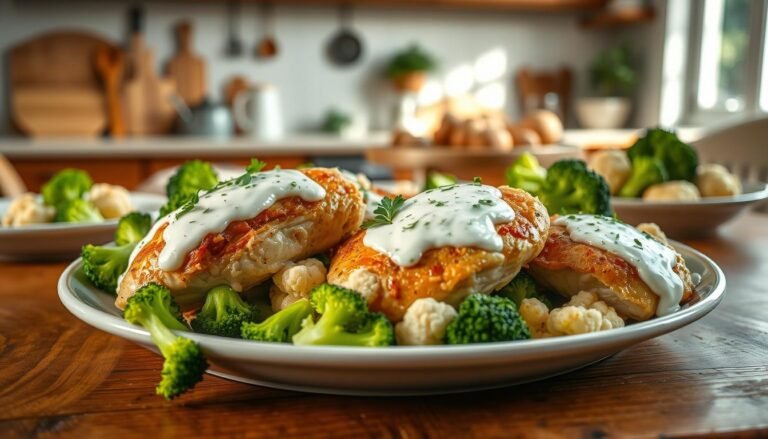
For meal prep, store chicken and sauce separately in airtight containers for up to 3 days, then reheat gently over low heat with a splash (1-2 tbsp) of chicken broth or cream to loosen the sauce. Serve with cauliflower mash, roasted broccoli, or zucchini noodles to keep the dish keto while adding volume and fiber.
If your chicken is on the thin side, combine it with the sauce only briefly to avoid drying out – 2-3 minutes on low is often enough; conversely, thicker breasts benefit from a 4-5 minute low simmer to let heat penetrate without overcooking the exterior.
Serving Suggestions
Side Dishes
You can keep things simple with classic low‑carb companions: cauliflower mash (about 6-8 g net carbs per generous cup) pairs with the sauce’s creaminess, while zoodles – 1 to 1½ cups per person – add volume without many carbs. Roasted asparagus (425°F / 220°C for 10-12 minutes) and garlic‑buttered mushrooms offer contrasting textures and savory depth that cut through the richness.
Portion strategically so each plate feels balanced: aim for roughly ½ to ¾ cup of sauce and 1 cup of a vegetable side, or split servings family‑style so guests take what they want. A crisp salad of 2 cups peppery arugula, 1 tbsp olive oil, lemon juice, and shaved Parmesan provides acidity to brighten the dish. Recognizing how texture and acidity change perception of richness helps you avoid a heavy, one‑note plate.
- Cauliflower mash – steam 10-12 minutes, blend with 2 tbsp cream cheese and 1 tbsp butter for a silky finish.
- Zoodles – salt and drain for 10 minutes, then sauté 1-2 minutes on high to avoid sogginess.
- Roasted asparagus – toss with 1 tbsp olive oil and a pinch of sea salt, roast until tips are tender (10-12 minutes).
- Sautéed spinach – cook 2-3 minutes with garlic and finish with a squeeze of lemon.
- Quick‑pickled red onion – slice thin and steep in vinegar for 20 minutes to add sharp contrast.
Presentation Tips
Slicing the chicken on the bias and fanning it over a shallow pool of sauce immediately improves perception; the long slices show the moist interior and let the sauce cling. Sprinkle 1-2 tbsp grated Parmesan and 1 tbsp chopped sun‑dried tomatoes per plate, then tear fresh basil or scatter microgreens for color – a little green and red goes a long way against the pale cream sauce.
Serve on warm plates to keep the sauce glossy and avoid plating too early; if you must hold plates for a few minutes, set them in a 150°F (65°C) oven while you finish. When reheating leftovers, warm gently over low heat for 2-3 minutes to prevent the emulsion from breaking, and thicken slightly with 1/4 tsp xanthan gum if it separates. Recognizing that temperature and timing affect both texture and appearance will help your plates look as polished as they taste.
For a restaurant‑style finish, use negative space: leave a 1-2 inch border around the food, place a lemon wedge at 2 o’clock for balance, and apply sauce with a ladle in two small pools rather than drowning the plate. If you’re serving family‑style, transfer the skillet to the table and garnish at the last moment so each person gets hot sauce and vivid herbs. Recognizing how small visual cues – a glossy sauce, warm plate, or a bright herb – change diners’ expectations will elevate a simple weeknight meal into an occasion.
- Garnish timing – add herbs and cheese just before serving to keep color and texture fresh.
- Plate temperature – warm plates preserve gloss and steam; cold plates flatten the sauce.
- Saucing technique – spoon beneath the chicken, then a light drizzle on top for depth.
- Color contrast – use a green herb and a pop of red (sun‑dried tomato or chili flakes) to make the dish pop.
- Finish with acid – a single lemon wedge per plate brightens each bite without extra carbs.
Nutritional Information
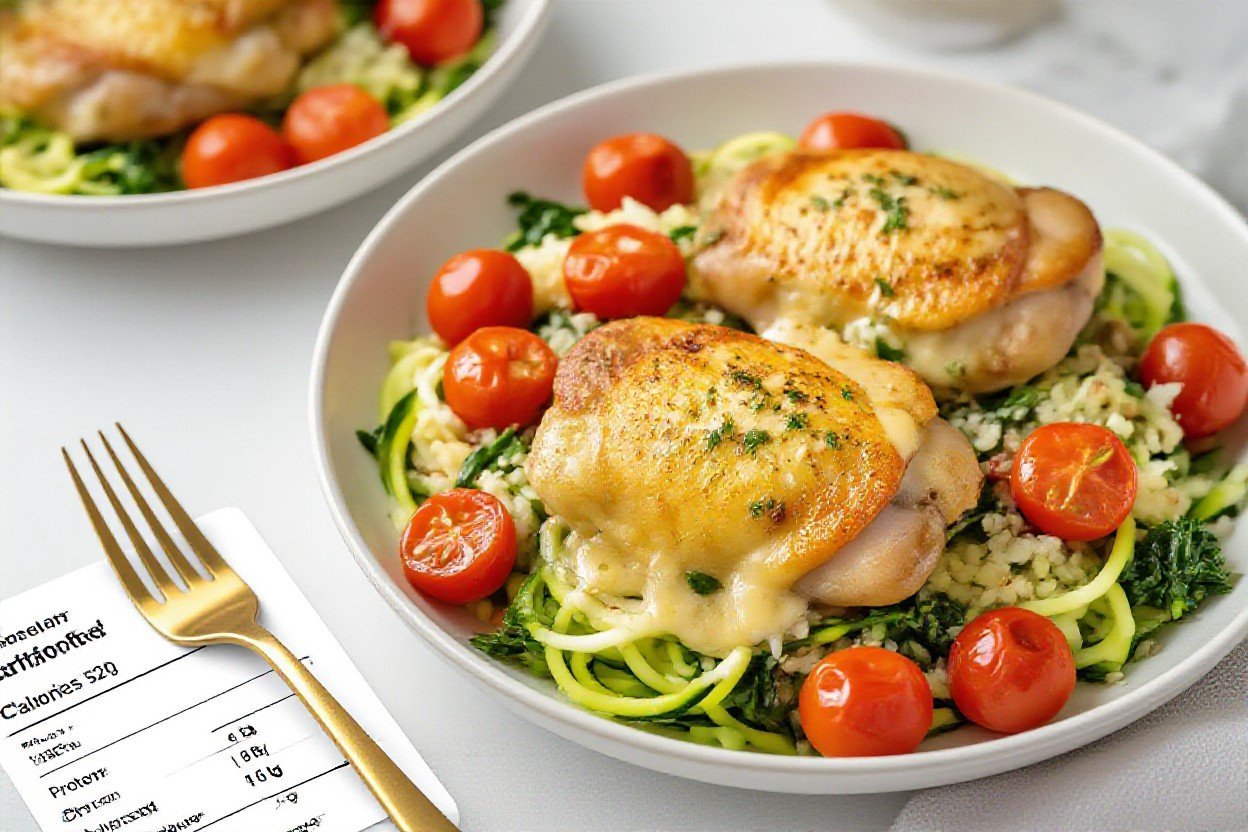
This serving of Keto Creamy Tuscan Chicken is designed to fit a low-carb, high-fat plan: roughly 500 kcal per plate, about 35 g fat, 40 g protein, and roughly 5 g net carbs (with ~1 g fiber), based on one medium chicken breast with the full cream-and-cheese sauce. You can scale portions to hit your daily targets-halving the sauce lowers fat and calories substantially, while adding extra olive oil or butter will push the meal further into a higher-fat profile if that suits your goals.
Macronutrient Breakdown
Fats provide the majority of calories here (≈64% of total kcal), coming principally from heavy cream, olive oil, and Parmesan; protein accounts for about 32% (primarily from the chicken); carbohydrates make up the remaining ≈4%, mostly from sun‑dried tomatoes and a small amount in the cream. If you track macros, log ~35 g fat, 40 g protein, and 5 g net carbs per serving-this gives you a clear snapshot for fitting the dish into a ketogenic daily allotment and for swapping sides like cauliflower rice or roasted broccoli to preserve low carbs.
Health Benefits of Keto Diet
You’ll notice that meals like this support sustained satiety and stable blood glucose by minimizing postprandial carbohydrate spikes, which is one reason many people experience weight loss on low‑carb regimens. Clinical data show low‑carbohydrate approaches often reduce fasting triglycerides by roughly 20-30% and increase HDL cholesterol by several percent within weeks to months, and they can lower hemoglobin A1c in individuals with type 2 diabetes by about 0.5-1.0% in short‑term interventions.
For practical application, if your target is a 1,800 kcal day with a 70% fat / 20% protein / 5% carb split, this dish supplies about 25% of your daily fat (35 g of 140 g), ~44% of your daily protein (40 g of 90 g), and ~22% of your daily carbs (5 g of ~23 g). You can increase the meal’s ketogenic alignment by adding an extra tablespoon of olive oil (adds ~14 g fat) or reduce fat and calories by swapping half the cream for chicken stock and a tablespoon of Greek yogurt to keep protein high while lowering total fat.
Variations
Ingredient Substitutions
If you want richer fat without changing technique, swap boneless skinless chicken breasts for thighs – use 6-8 ounces per serving and reduce sear time to 3-4 minutes per side because thighs take less time to stay juicy. For the cream, replace 1/2 cup heavy cream with 4 ounces softened cream cheese plus 1/4 cup chicken broth to keep the sauce thick and keto-friendly; for dairy-free, use 1/2 cup coconut cream and omit Parmesan or use a 1:1 ratio of nutritional yeast for umami. When you need a low-carb thickener, 1/4 teaspoon xanthan gum whisked into 1 cup of sauce works cleanly, or use 1 tablespoon almond flour for a nuttier finish.
You can also swap vegetables and add-ins to fit what you have: 3 cups baby spinach (about 3 ounces) will wilt into the sauce without adding water, while 1/4 cup roasted red peppers provides a milder, lower-sugar alternative to sun-dried tomatoes. If you want more fat and flavor, crumble in 6 ounces of Italian sausage (cook before adding the sauce) or crisp 2 ounces of pancetta for about 4 minutes and fold it through. For herbs, use 1 teaspoon dried herb for every 1 tablespoon fresh to adjust intensity without altering balance.
Flavor Enhancements
Searing correctly and layering aromatics transforms the base quickly: sear the chicken 3-4 minutes per side to build fond, then sauté 3 crushed garlic cloves and 1 small shallot (about 2 tablespoons) for 1-2 minutes before deglazing. Add 1/2 teaspoon smoked paprika and 1/4-1/2 teaspoon red pepper flakes for depth and heat, and finish the sauce with 1 teaspoon lemon zest plus 1 tablespoon lemon juice to brighten-those small acid notes cut richness without adding carbs.
To boost umami, fold in 1 tablespoon sun-dried tomato paste or 1 teaspoon anchovy paste (dissolved) while the sauce simmers; alternatively, add 1-2 tablespoons capers or 2 tablespoons grated Pecorino Romano in place of some Parmesan. If you use wine, deglaze with 1/2 cup dry white wine and reduce it for 2-3 minutes before adding cream, which concentrates flavor and evaporates alcohol. For a smoky, savory experiment, crisp 2 ounces of pancetta or bacon (about 4 minutes) and stir it into the finished sauce.
As a finishing technique, always adjust salt after cheese and try a small knob (1 tablespoon) of cold butter whisked in off-heat to emulsify and round the sauce; add acid last-start with 1 teaspoon lemon juice or 1 tablespoon white wine vinegar-and increase in 1/4-teaspoon increments until the balance pops. If you want more heat, add 1/4 teaspoon cayenne, and if you prefer herb-forward notes, stir in 1 tablespoon chopped fresh basil or 1 tablespoon chopped flat-leaf parsley right before serving to preserve brightness.
Common Mistakes
You often overcook the chicken by relying on time instead of temperature; aim for an internal temperature of 165°F (74°C) and remove the chicken from the pan when it hits 160°F, letting carryover finish the job. You also risk steaming instead of searing when you crowd the pan – give each breast 2 inches of space so you get a golden crust, which usually means cooking in batches for 4 servings.
Another frequent error is adding dairy too early or using low‑fat substitutes that split under high heat; for a silky sauce use about 1/2-3/4 cup heavy cream for four servings and add it once the aromatics are softened and the pan has been deglazed with roughly 1/4 cup chicken broth or white wine. You can avoid a thin, watery sauce by simmering 3-5 minutes to reduce and by finishing with 1-2 tablespoons of grated Parmesan to both thicken and stabilize the emulsion.
Cooking Tips
You’ll get the best sear using a heavy skillet (cast iron or stainless steel) preheated over medium‑high heat and about 1-2 tablespoons of oil. You should pat chicken dry and season just before it hits the pan to optimize browning and flavor development.
- Pat the chicken completely dry and season both sides with salt and pepper; for a 6-8 oz breast use about 1/2 teaspoon salt per side.
- Do not crowd the pan – cook 2 medium breasts at a time in a 10-12 inch skillet to preserve pan temperature and get a reliable 3-4 minute sear per side on medium‑high heat.
- Use an instant‑read thermometer and pull breasts at 160°F (71°C) to reach 165°F (74°C) after resting; thighs can be taken to 175°F (79°C) for tender results.
- Deglaze with 1/4 cup chicken broth or dry white wine, scraping up browned bits for more flavor, then add 1/2 cup heavy cream and simmer until the sauce coats the back of a spoon.
- Assume that you should add delicate ingredients like fresh spinach and grated cheese at the end and turn off the heat before serving to avoid a grainy sauce.
Ingredient Considerations
You’ll notice texture and flavor shift depending on the cream and cheese you pick: stick to heavy cream (1/2-3/4 cup for four servings) for a stable, rich sauce, or use canned coconut cream as a dairy‑free swap but expect a coconut note. Freshly grated Parmesan (about 1/4 cup) blends better than pre‑grated powders, which can leave a gritty mouthfeel and won’t melt as smoothly into the sauce.
If you use sun‑dried tomatoes, oil‑packed varieties yield more intensity and you can reserve a tablespoon of that oil for cooking; use roughly 1/4 cup chopped sun‑dried tomatoes for four servings. For greens, 2 cups fresh spinach wilts down to about 1/2 cup – frozen chopped spinach (6-8 oz, thawed and squeezed) is an easy, consistent alternative.
When choosing chicken, boneless skinless thighs deliver more forgiving results (cook 5-7 minutes per side depending on thickness) while breasts need pounding to an even 1/2 inch for uniform cooking and will typically sear 3-5 minutes per side; low‑sodium broth lets you control salt, especially if you’re using sun‑dried tomatoes or salted cheeses.
Summing up
With this in mind, you can rely on Keto Creamy Tuscan Chicken to deliver rich, restaurant-quality flavor while keeping carbohydrates low and preparation straightforward. The seared chicken paired with a garlicky, sun-dried tomato, spinach, and cream-parmesan sauce gives you satisfying fat and protein that supports your ketogenic goals without sacrificing taste.
You can confidently adapt the dish to your needs-serve it over cauliflower rice or zucchini noodles, double the sauce for meal prep, or swap dairy options if needed-and store portions in airtight containers for 3-4 days or freeze for longer. These simple choices let you keep your meals varied, convenient, and aligned with your low-carb plan.
Printable Recipe Card
Want just the essential recipe details without scrolling through the article? Get our printable recipe card with just the ingredients and instructions.