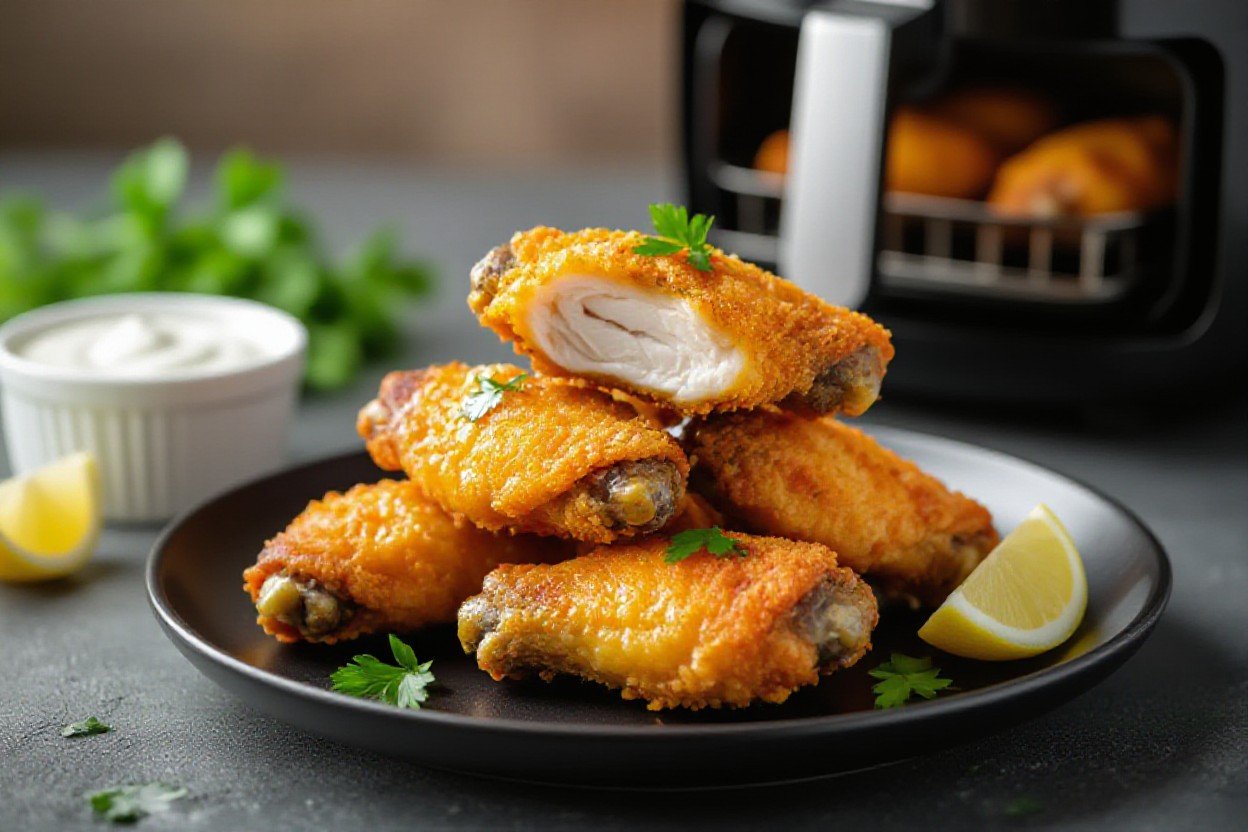
Crispy Air Fryer Keto Chicken Wings
With the right seasoning and air-frying method, you can make consistently crispy, low-carb chicken wings that fit your keto goals; this guide explains timing, temperature, and simple coating techniques so your wings deliver golden skin and tender meat every time while keeping carbs and added sugars minimal. You’ll learn quick prep steps, smart oil choices, and troubleshooting tips to perfect texture and flavor for busy weeknights or entertaining.
Benefits of Air Frying
Healthier Cooking Methods
You cut the amount of added oil dramatically-air frying typically uses 1-2 tablespoons (or none) versus the 1-2 cups required for traditional deep frying, which can reduce the total fat content of wings by as much as 60-80% depending on the recipe. That often translates to roughly 30-50% fewer calories per serving when you compare a standard deep-fried wing to an air-fried version, giving you more control over macros while staying within a keto framework.
You also control the type of fats you include, so you can choose heart-healthy options like avocado oil spray or a light brushing of olive oil to add monounsaturated fats without the excess. In addition, air frying limits prolonged oil degradation and splatter, which reduces exposure to oxidized fats and may lower formation of some harmful frying byproducts compared with repeated deep-frying in the same oil.
Enhanced Flavor and Texture
Hot circulating air creates intense surface browning via the Maillard reaction, so you get crisp, golden skin without submerging the wings in oil; a reliable benchmark is 400°F (200°C) for 20-25 minutes with a shake or flip every 5-7 minutes, producing skin that rivals deep-frying while leaving the interior juicy. You still achieve color and caramelization because dry heat concentrates flavors-spice rubs and aromatics crisp up and become more pronounced.
Sauces and glazes behave differently in an air fryer, which you can use to your advantage: reserve sticky buffalo or barbecue sauces for the final 1-3 minutes of cooking to set a glossy coating without burning, or toss the wings in sauce immediately after cooking so the heat helps the sauce cling. Target an internal temperature of 165°F (74°C) for food safety, then finish with a brief high-heat blast or broil-like cycle for extra sheen.
Small technique tweaks amplify the effect-drying the skin before cooking, avoiding overcrowding so air flows around each wing, and using a light dusting of baking powder (about 1-2 teaspoons per pound) to raise skin pH will make your crust blister and crisp faster. Preheating the basket for 3-5 minutes and arranging wings in a single layer with space between pieces ensures even browning and repeatable, restaurant-quality texture.
Keto Diet Overview
What is a Keto Diet?
It shifts your metabolism from using glucose to burning ketones, produced when carb intake drops to roughly 20-50 grams of net carbs per day; typical macronutrient targets are about 70-75% fat, 20-25% protein and 5-10% carbs. You enter nutritional ketosis at blood ketone levels around 0.5-3.0 mmol/L, which most people reach within 2-4 days when carbs are kept under ~20 g and protein is moderated to avoid excess gluconeogenesis.
In practical terms, you build meals around high-quality fats (olive oil, butter, avocado), moderate protein, and very low‑carb vegetables – that’s why foods like air‑fried chicken wings fit well into your plan. You should expect a rapid initial loss of 1-4 kg (2-8 lb) of water weight during the first week as glycogen depletes, and plan for extra electrolytes and hydration to ease that transition.
Importance of Low-Carb Diets
Lowering carbohydrate intake directly reduces the insulin response to meals, so you experience fewer post‑meal blood sugar spikes and often greater satiety, which helps you adhere to calorie goals without constant hunger. Keeping your carbs in the 20-50 g/day window commonly produces faster improvements in fasting glucose and triglycerides versus high‑carb diets, making low‑carb patterns especially useful if you’re managing insulin resistance or metabolic syndrome.
As a practical example, swapping a carb‑heavy snack for four air‑fried wings (skin‑on, no breading) can keep you well within a 20-30 g daily carb limit while delivering the fats and protein needed to sustain ketosis and blunt appetite; sustained adherence to this approach helps preserve lean mass during weight loss and stabilizes energy through the day.
Ingredients for Crispy Air Fryer Keto Chicken Wings
Chicken Wing Selection
Choose skin-on, bone-in wings for the best texture and flavor; the skin renders fat during air frying and crisps up far better than skinless pieces. Aim for wings that weigh roughly 2.5-3.5 ounces each so cooking times stay consistent-smaller wings can take 16-18 minutes at 375°F, while larger pieces may need 20-24 minutes. If you buy whole wings, you can split them at the joint into drumettes and flats to get more even cooking and an easier presentation.
If you have access to pasture-raised or organic wings, select those for a richer mouthfeel and a better omega-3 to omega-6 ratio in the fat. Avoid pre-breaded or heavily sauced wings; extra coatings add carbs and prevent the skin from drying properly. Pat the wings thoroughly dry with paper towels before applying any seasoning to maximize contact and promote browning.
Seasonings and Marinades
Dry rubs are the simplest keto route: a base of kosher salt (about 1 teaspoon per pound), 1 teaspoon garlic powder per pound, 1 teaspoon smoked paprika per pound, and ½ teaspoon onion powder per pound provides a balanced starting point. For extra lift in crispiness, add aluminum-free baking powder-use about 1 tablespoon per 2 pounds of wings; it raises the pH of the skin and helps browning without adding carbs. If you like heat, ¼ teaspoon cayenne per pound will give noticeable kick without altering carb counts.
Wet marinades work well if you limit low-carb liquids: combine 2 tablespoons avocado oil with 1 tablespoon apple cider vinegar and 1 teaspoon Dijon mustard per pound, plus a clove of minced garlic, and marinate for 30 minutes to 2 hours-any longer and the acid can begin to change texture. After air frying, toss wings in a sugar-free sauce or 1-2 tablespoons of melted butter mixed with Franks-style hot sauce (most are 0-1 g carbs per tablespoon) and return to the fryer for 1-2 minutes to set the glaze without sogginess. For a dry-brine technique, sprinkle the dry rub and baking powder, then refrigerate uncovered for 1-24 hours to dry the skin for maximum crunch.
Preparing the Chicken Wings
Cleaning and Drying
Trim any excess skin and wing tips with kitchen shears and separate drumettes from flats if you prefer even cooking; for a 1 kg (2.2 lb) batch you’ll typically end up with 18-22 pieces. After trimming, avoid rinsing under water to reduce cross-contamination-pat each piece thoroughly with paper towels until the surface is visibly dry, which helps the skin crisp up in the air fryer.
If you want extra-crispy skin, set the wings on a wire rack uncovered in the refrigerator for 4-12 hours; this dry-air exposure removes surface moisture and raises the chance of a golden, crackling finish. Alternatively, you can let wings sit at room temperature for 20-30 minutes after patting to remove chill before seasoning, but do not leave raw poultry out longer than 2 hours for food safety.
Marinating Process
Choose between a dry-brine or an oil-based spice rub for keto-friendly flavor. For a reliable baseline on 1 kg (2.2 lb) wings, toss with 1 tbsp olive oil, 1.5 tsp kosher salt, 1 tsp aluminum-free baking powder, 1 tsp garlic powder, 1 tsp smoked paprika, and ½ tsp black pepper; add ¼-½ tsp cayenne if you like heat. Use a large bowl or a zip-top bag, coat each wing thoroughly, and spread the seasonings into seams and under skin where possible to maximize flavor penetration.
Timing matters: a dry-brine or spice rub works best if refrigerated for 1-12 hours, with 4-8 hours being a practical sweet spot for most kitchens; oil-based marinades follow the same window. If your marinade contains acid (lemon juice, vinegar) limit contact to 30-60 minutes to avoid the meat becoming mealy, and always keep marinated wings at or below 4°C (40°F) while resting.
For faster, more even coverage use a zip-top bag and press out excess air before massaging the wings for 30-60 seconds; flip the bag once halfway through the marinating period to redistribute juices and spices. When using baking powder to boost crispiness, stick to about 1 tsp per 450 g (1 lb) of wing-more can leave a metallic taste- and note that aluminum-free baking powder yields the most neutral flavor.
Cooking Process in the Air Fryer
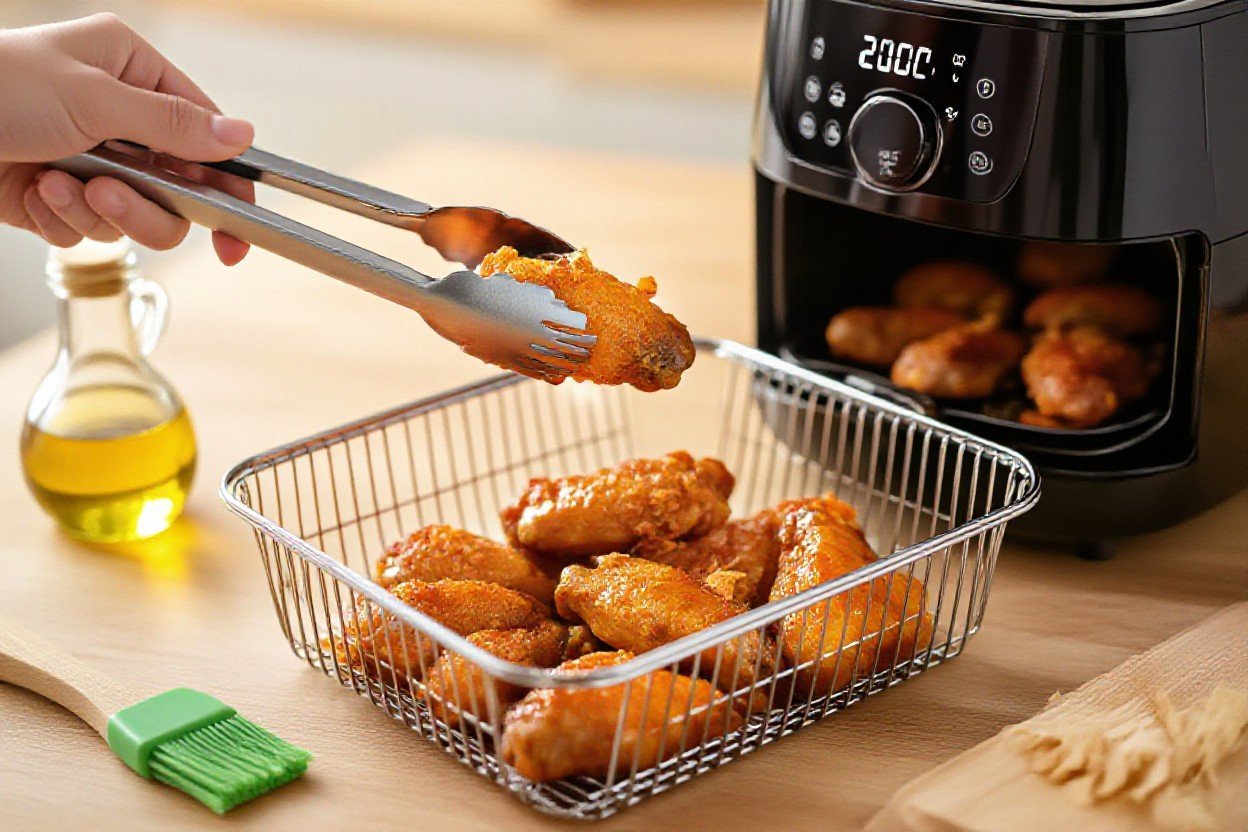
You should preheat the air fryer for 3-5 minutes to stabilize temperature and ensure immediate crisping when the wings hit the basket; 380°F (193°C) is a reliable baseline for fresh, bone-in wings. Arrange wings in a single layer with space between pieces so air can circulate-overcrowding increases total cook time and yields uneven browning. Aim for a flip or shake at the halfway mark (roughly 10-13 minutes into a 22-26 minute cook) to develop an even crust on both sides.
Use an instant-read thermometer to verify doneness: 165°F (74°C) is the safe minimum, but raising the internal temperature to about 175-180°F (79-82°C) breaks down collagen and gives a juicier result if you prefer tender meat. When saucing, toss wings briefly after they reach your desired crisp level, then give glazed wings a 1-2 minute return to the fryer if you want the sauce to set without softening the skin too much.
Temperature and Timing
Practical timings depend on whether wings are fresh or frozen and on their size; the table below distills common scenarios into actionable settings so you can adjust on the fly.
Temperature & Timing at a Glance
| Scenario | Setting & Notes |
|---|---|
| Fresh, bone-in wings | 380°F (193°C) for 22-26 minutes; flip at 12-13 minutes. Target 175-180°F for best texture. |
| Frozen wings (not pre-cooked) | 400°F (204°C) for 25-30 minutes; shake every 8-10 minutes. No thawing required; add 2-3 minutes if extra-large. |
| Drumettes (larger pieces) | Increase time by 2-4 minutes at same temp (380°F) or start at 400°F for last 3-5 minutes for extra browning. |
| Flats (smaller pieces) | Reduce overall time by 2-3 minutes; check at 18-20 minutes. Flats crisp faster due to surface area. |
When aiming for extra surface crisp, finish fresh wings with a 2-4 minute blast at 400°F after the main cook; that concentrated heat firms the skin without overcooking the interior if you monitor temperature closely.
Tips for Maximum Crispiness
You can get a noticeably crisper skin by starting with very dry wings-pat them with paper towels and, if possible, let them air-dry in the fridge uncovered for 30-60 minutes. A light dusting of 1 teaspoon baking powder (aluminum-free) per pound combined with ¼-½ teaspoon kosher salt helps draw moisture from the skin and encourages Maillard browning without changing flavor.
Apply a very light spray of neutral oil (avocado or canola) to promote even browning, but avoid heavy coatings that create sogginess. Space wings so hot air can circulate freely, and flip or shake at least once; an even 12-13 minute midpoint turn for a 22-26 minute cook is a practical rule of thumb.
- Pat wings thoroughly dry-surface moisture is the enemy of crispness.
- Use 1 tsp baking powder per pound and toss evenly with your dry rub; this raises crisp potential without altering taste.
- Preheat the fryer 3-5 minutes so wings start crisping immediately.
- Cook in a single layer and avoid overcrowding; work in batches if necessary.
- After allow wings to rest 3-5 minutes so the crust firms and juices redistribute.
For an alternate method, you can do a two-stage cook: 12-15 minutes at 360-375°F to render fat, then 3-5 minutes at 400°F to finish the skin-this balances rendered fat and surface browning while keeping meat juicy.
- Render fat first by starting at 360-375°F for 12-15 minutes, then finish hotter for color.
- If saucing, toss only after the crust forms; return for 1-2 minutes if you want the sauce to set.
- Use an instant-read thermometer and pull at 175-180°F for tender results rather than only 165°F.
- After allow a short rest so the exterior re-crisps as it cools slightly.
Serving Suggestions
Dipping Sauces
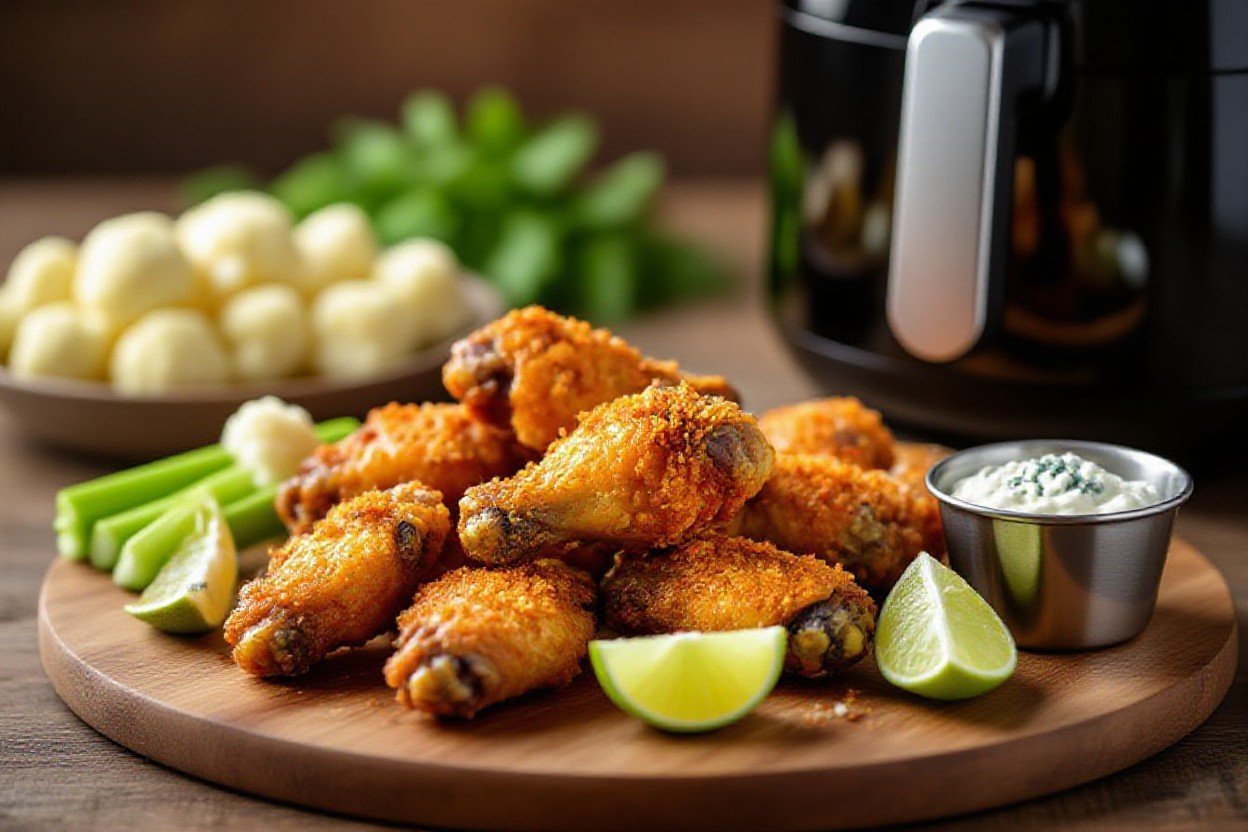
You can elevate these wings with a handful of low‑carb sauces that complement the crisp skin without adding sugar. Try a classic buffalo made by whisking 1/3 cup hot sauce with 2 tablespoons melted butter and a pinch of cayenne-this yields a tangy, keto‑friendly glaze with necessaryly zero added carbs per serving. If you prefer creamy, mix 1/2 cup sour cream, 1/4 cup mayo, 2 tablespoons crumbled blue cheese and 1 teaspoon lemon juice for a thick dip; one 2‑tablespoon serving will typically stay under 2-3 g net carbs when you use full‑fat bases.
For variety, make a garlic‑parmesan sauce by stirring 2 tablespoons melted butter with 1 teaspoon garlic powder and 2 tablespoons finely grated Parmesan, or whisk a cilantro‑lime crema using 1/2 cup Greek yogurt, 1 tablespoon lime juice and a quarter cup chopped cilantro. You can batch these ahead: each sauce stores 3-5 days in the fridge, so prepare 1 cup of each to serve a small group and refill as needed during a game or family meal.
Side Dish Recommendations
Pair the wings with low‑carb sides that add texture and color without competing for attention. Cauliflower rice is an ideal base-one cup (~2-3 g net carbs) soaks up sauces and can be tossed with garlic and parsley in 5 minutes. Roasted broccoli or Brussels sprouts deliver char and bulk; roast at 425°F for 15-20 minutes with 1-2 tablespoons olive oil and a sprinkle of sea salt. Zucchini noodles tossed in 1 tablespoon olive oil and a squeeze of lemon provide a lighter option that pairs well with tangy sauces.
If you need a heartier accompaniment, make a cheesy cauliflower mash using 1 head cauliflower steamed and mashed with 2 ounces cream cheese and 1/4 cup grated cheddar-serves 3-4 and reheats well. For cravings that mimic traditional wing sides, serve 2-3 stalks of celery and 6-8 cucumber slices per person; both are zero to very low in net carbs and refresh the palate between spicy bites.
When planning quantities, calculate 6-8 wings per adult as a main (for a party, plan 24-32 wings for four people) and portion sides accordingly: prepare 2 cups cauliflower rice or 1 pound roasted vegetables per four people, and keep an extra 1/2 cup of each sauce on hand to accommodate heavier eaters or repeat helpings.
To wrap up
Summing up, you can produce reliably crispy, keto-friendly chicken wings in the air fryer by starting with dry, skin-on wings, tossing them in a light coat of oil and a pinch of baking powder plus your preferred salt and spices, and cooking at high heat (about 400°F) until the skin is golden and the internal temperature reaches 165°F. This method keeps carbs minimal, emphasizes healthy fats, and lets you control seasoning and sauces so the wings stay within your keto goals.
With consistent technique-patting dry, avoiding sugary marinades, shaking or flipping halfway, and checking doneness-you ensure repeatable results that rival oven or deep-fried wings while using less oil and less cleanup. Once you refine timing for your air fryer model and wing size, you’ll have a dependable, fast way to enjoy satisfying, crunchy wings that fit your keto lifestyle.