Keto Cheese-Stuffed Bell Peppers
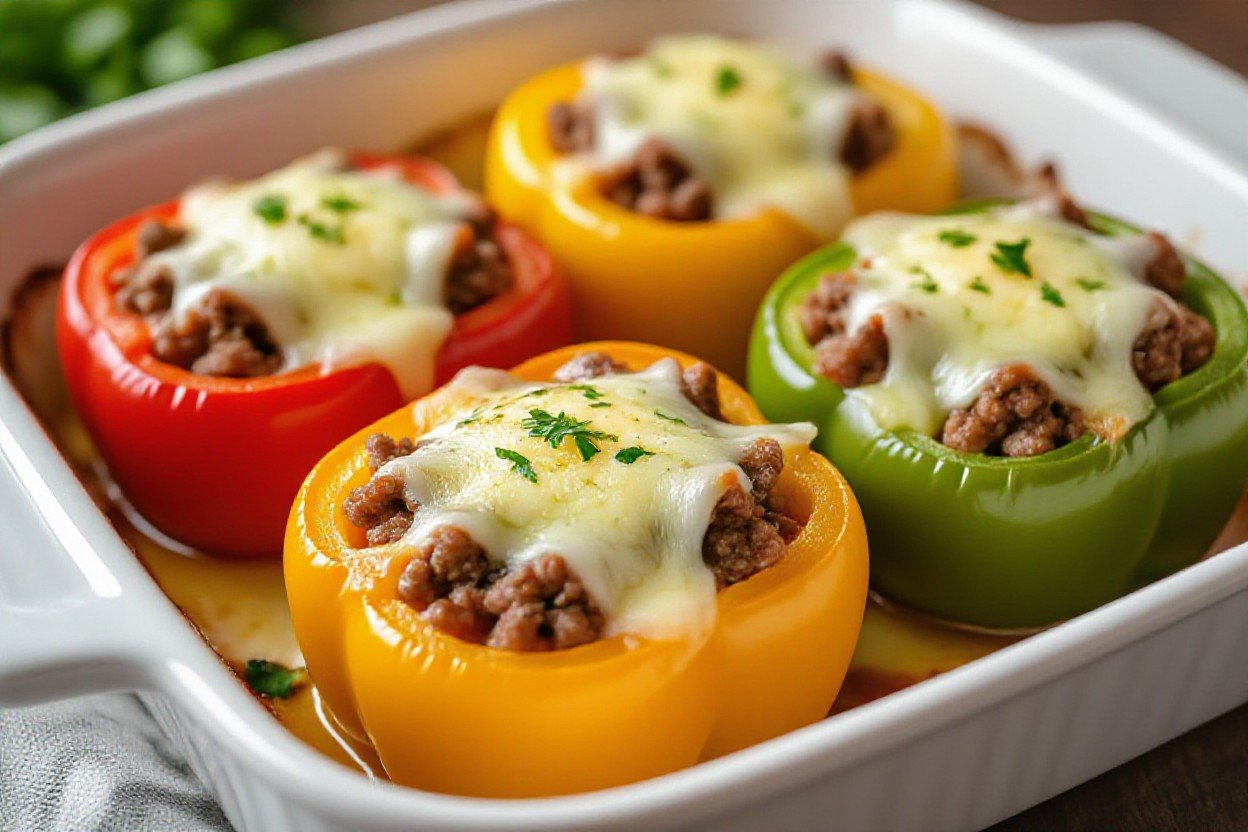
Peppers make an ideal vehicle for a keto-friendly, cheese-stuffed dish that balances low carbs with satisfying fats; you can fill them with cream cheese, shredded cheddar, and ground meat or cauliflower rice to suit your macros. You’ll learn how to select peppers, adjust fillings for flavor and texture, and bake or air-fry for perfect melt and tenderness, with storage and reheating tips to keep your meals convenient and ketogenic-compliant.
Ingredients
Bell Peppers
Choose large, thick-walled bell peppers-about 6-8 oz (170-225 g) each-so they hold up when filled; four peppers will typically serve 4 people if stuffed as a main. Green peppers have slightly fewer sugars than red or yellow, but red peppers offer more vitamin C and visual appeal, so pick a mix if presentation matters. A medium bell pepper contains roughly 6 g net carbs, so factor that into your meal planning when counting daily carbs.
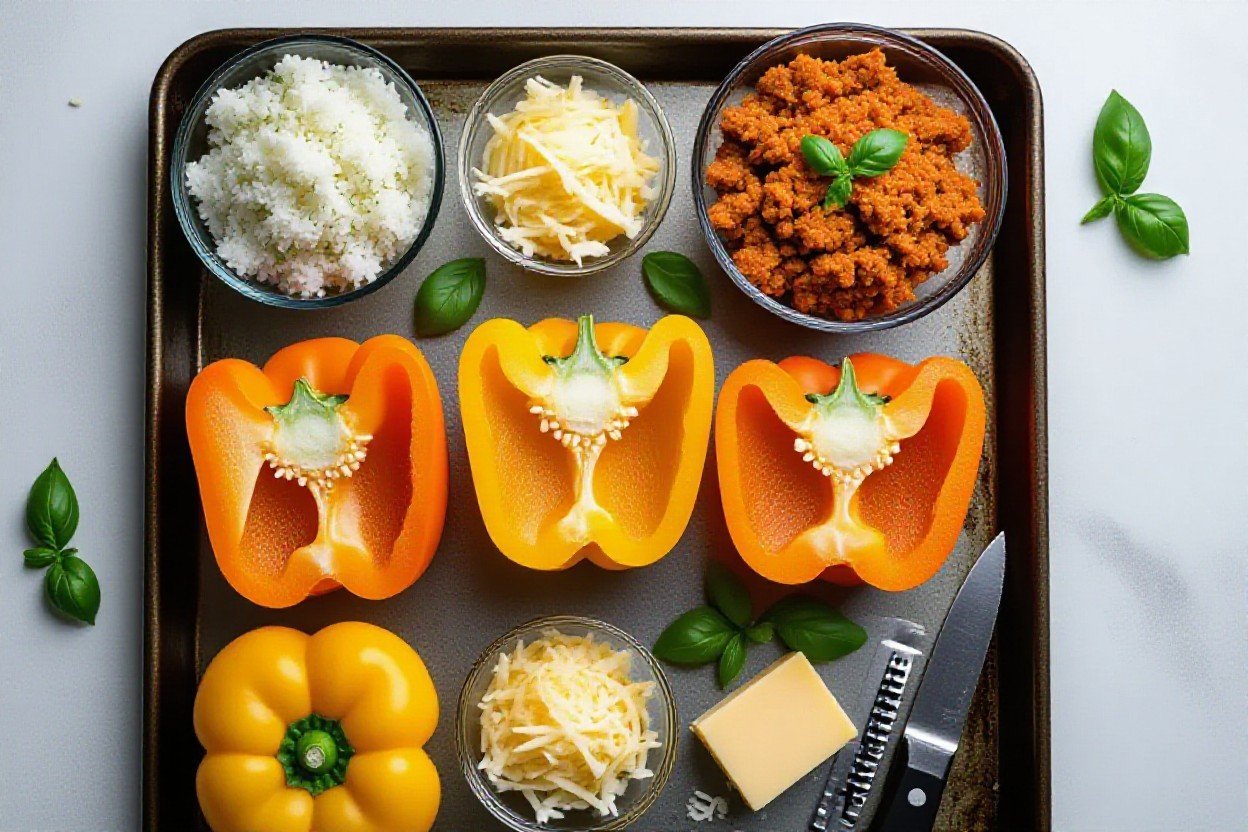
Prepare peppers by slicing off the tops or halving lengthwise and removing membranes and seeds, leaving about a 1/4-inch wall to prevent leaks. Par-bake them at 375°F (190°C) for 8-10 minutes or microwave each for 2-3 minutes to soften and dry the interior before stuffing; this minimizes excess moisture that can turn the filling soggy during baking.
Cheese Options
Pick cheeses based on melt and flavor: low-moisture mozzarella provides stretch, sharp cheddar delivers tang, and cream cheese gives a silky binder-combine them for texture contrast. Aim for roughly 1-2 cups of shredded cheese total for four peppers (1 cup ≈ 4 oz / 113 g shredded); a good starting ratio is 1 cup shredded cheese plus 4 oz cream cheese to achieve both melt and creaminess in the filling.
Use full-fat, block cheeses wherever possible-most aged cheeses contain under 1 g net carbs per ounce and give better melting and flavor than pre-shredded varieties, which often include starches. To help the filling set, whisk in one large egg per 2 cups of prepared filling; this creates a firmer, sliceable texture after baking.
When you consider melt behavior, low-moisture, high-fat cheeses like aged cheddar and low-moisture mozzarella brown and bubble well at 375°F, while cream cheese prevents oil separation and keeps the filling cohesive; finishing under the broiler for 1-2 minutes crisps the top-use grated Parmesan as a final sprinkle for umami and a golden crust.
Seasonings and Add-ins
Season boldly but judiciously: for a pound of cooked filling use about 1 tsp garlic powder, 1/2 tsp onion powder, 1 tsp smoked paprika or chili powder, 1 tsp salt, and 1/2 tsp black pepper as a baseline. Fresh herbs like 1 tbsp chopped parsley or basil per 4 peppers brighten the dish; crushed red pepper at 1/4 tsp adds heat if you want it. Add-ins that keep carbs low while boosting volume include cooked ground beef, pork, or turkey (2-3 oz / ~60-85 g cooked per pepper), sautéed spinach, or 1/2 cup cauliflower rice per two peppers.
Always pre-cook high-moisture add-ins: sauté mushrooms for 2-3 minutes until they release and evaporate liquid, and squeeze excess moisture from cooked spinach to prevent a watery filling. If you use tomato-based ingredients like a teaspoon of tomato paste for depth, limit quantity-1 tsp per batch-to avoid pushing carbs higher.
For flavor templates, pairings work well: use cumin, chili powder, and cilantro with cheddar for a Tex‑Mex version; garlic, oregano, and basil with mozzarella and Parmesan for Italian-style peppers; or feta, olives, and oregano for a Greek twist. Adjust salt and acid (a splash of lemon or a teaspoon of vinegar) to brighten the filling without adding significant carbs.
Preparation
Get your timing down so the peppers and filling finish together: preheat the oven to 375°F (190°C) and set a shallow baking dish ready; for four medium peppers expect about 10-15 minutes of active prep, 10-15 minutes to soften the peppers (parboil or roast), and 20-25 minutes of baking after stuffing. You should have all cheeses measured, any proteins cooked and chopped, and herbs minced before you start cutting into the peppers – that single-minded mise en place saves 10-20 minutes and keeps the filling from cooling while you assemble.
Assemble your tools too: a sharp paring knife, a spoon for hollowing, a small mixing bowl or food processor for the cheese blend, and a silicone spatula for scraping. If you plan to crisp the tops under the broiler, position a rack about 6 inches from the element so you can slide the dish straight in after baking without reordering pans.
Prepping the Bell Peppers
Trim the tops about 1/2 inch below the stem and remove seeds and white ribs with a small spoon or your fingers; aim to keep at least a 1/4-1/2 inch wall for structure so the peppers hold the filling without collapsing. If you want the peppers to sit flat, level the base carefully by shaving a sliver off the bottom – typically removing 1/8-1/4 inch is enough for a 6-7 ounce (170-200 g) pepper.
You can parboil whole hollowed peppers for 3 minutes in rapidly boiling water and plunge into an ice bath to preserve color and texture, or roast them at 425°F (220°C) for 12-15 minutes after brushing with 1 tsp olive oil each to deepen flavor. Save the trimmed tops and any flesh you cut away – roughly 1/2 cup from four peppers – to chop into the cheese mixture or a quick salsa so nothing goes to waste.
Preparing the Cheese Mixture
For four peppers a reliable ratio is: 8 oz (225 g) softened cream cheese, 1 cup (100 g) shredded mozzarella, and 1/2 cup (50 g) grated Parmesan, plus one large egg to bind and 1-2 tbsp chopped fresh herbs (parsley, chives, or basil). Mix in cooked add-ins like 4 slices of chopped bacon or 1 cup wilted and squeezed spinach; add 1/2 tsp garlic powder, 1/4 tsp onion powder, and a generous grind of black pepper, then taste and adjust – Parmesan adds punch, so start light on salt.
Work the cheeses at room temperature for a uniformly smooth texture: soften cream cheese for 30-45 minutes, grate mozzarella from a block (pre-shredded cheese with anti-caking agents won’t melt as well), and pulse the whole mixture in a food processor for 20-30 seconds if you want ultra-creamy consistency. After mixing, chill the filling 5-10 minutes if it feels too loose; it firms up slightly and makes stuffing the peppers neater and faster.
Cooking Method
Baking
Preheat your oven to 375°F (190°C) and set the stuffed peppers in a snug baking dish with about 1/4 cup (60 ml) of water or tomato sauce in the bottom to create steam; this prevents the pepper walls from drying while the filling reaches a safe internal temperature of 165°F (74°C). Cover the dish with foil for the first 15 minutes to trap heat and melt the cheese, then remove the foil and bake another 10-15 minutes to allow the tops to brown-plan on a total bake time of 25-30 minutes for medium peppers, 30-35 minutes for very large ones.
If you want a crispier top, switch the oven to broil for 1-2 minutes at the end, watching closely to avoid burning. Use freshly shredded cheeses (e.g., 1 cup shredded mozzarella + 2 oz cream cheese) for a better melt than pre-shredded, and consider folding in one beaten egg per 2 cups of filling to improve texture and holding power when slicing.
Grilling
Set your grill for two-zone cooking-one side at medium-high (about 400°F / 204°C) and the other at medium (around 350°F / 177°C)-so you can blister skins over direct heat and finish over indirect heat without charring the filling. Place the peppers on the cooler side in a foil-lined pan or on a cast-iron griddle, close the lid, and cook for roughly 12-18 minutes, turning every 4-5 minutes; target an internal filling temperature of 165°F (74°C).
To get attractive char marks and a smoky flavor, briefly sear each side over direct heat for 2-3 minutes before moving to indirect heat to finish melting the cheese. Add soaked wood chips (hickory or applewood, 20-30 minutes soak) to your smoker box or charcoal to impart a mild smoke; keep filling relatively dry (drain excess liquid) to avoid flare-ups and soggy peppers.
Use an instant-read thermometer to confirm doneness and let the stuffed peppers rest 5 minutes off the heat so the filling firms up and slices hold together; if you need extra containment on the grill, cook them in a shallow disposable foil pan or use a grill basket to prevent tipping and to catch any melting cheese.
Serving Suggestions
Serve peppers hot from the oven so the cheese is gooey and the edges are slightly charred; plan 1 whole pepper per person or 1 large pepper halved for smaller appetites. If you’re plating for a weeknight meal, reheat at 350°F (175°C) for 10-12 minutes, or microwave a single pepper for 60-90 seconds to retain texture-these timings preserve cheese melt and keep the pepper firm.
Pairing should favor low-sugar beverages and bright contrasts: a dry Sauvignon Blanc or a Brut sparkling wine typically contains about 1-2 g residual sugar per 5 oz glass, and sparkling water with a squeeze of lime keeps carbs negligible. Expect roughly 6-8 g net carbs per stuffed pepper when using a beef-and-cheese filling, so you can adjust side choices and portion sizes to keep your total plate within your targeted daily net-carb limit.
Garnishes
Bright, acidic finishes lift the richness-sprinkle 1 tbsp chopped cilantro or chives per pepper, add a teaspoon of lime zest, and finish with a 1 tbsp dollop of sour cream or crème fraîche for creaminess without much added sugar. You can also scatter 1 tbsp crumbled cotija or feta for a salty bite, or 2 tbsp diced avocado (about 1-2 g net carbs) to boost healthy fats and make the dish more satiating.
You can add texture with crisped bacon bits or 1 tbsp toasted almond slivers; toast almonds 3-4 minutes in a dry pan until fragrant. A small drizzle (about 1 tsp) of extra-virgin olive oil or a few drops of chili oil will elevate aroma and mouthfeel while keeping carbs close to zero.
Side Dishes
Complement peppers with low-carb vegetable bases you can prep quickly: cauliflower rice (1 cup ≈ 3 g net carbs) sautéed with garlic and 1 tbsp ghee for 5-7 minutes is a fast, filling choice; zucchini noodles (1 cup ≈ 3 g net carbs) tossed with pesto and toasted pine nuts adds flavor and 6-8 minutes of cook time preserves bite. Roasted asparagus-8-10 spears tossed with olive oil and roasted 10-12 minutes at 400°F-pairs well for about 2 g net carbs per serving.
You should use greens for volume and micronutrients-sautéed spinach or kale (1 cup cooked ≈ 1-3 g net carbs) with lemon and red-pepper flakes takes 3-5 minutes and contributes fiber without pushing carbs. A small side of fermented vegetables, like 2 tbsp kimchi, supplies probiotics and usually adds less than 1-2 g net carbs depending on the brand.
To scale for a family or batch-cooking, double cauliflower rice to 4 cups and cook in a large skillet for 8-10 minutes, finishing with 2 tbsp butter and 2 minced garlic cloves; that yields roughly 4 servings and stores well refrigerated for 3-4 days. Prioritize sides that add fat and fiber-avocado halves, olives, or a simple olive-oil vinaigrette salad-so you maintain satiety while keeping the meal under 15-20 g total net carbs if that’s your target.
Nutritional Information
Macronutrients
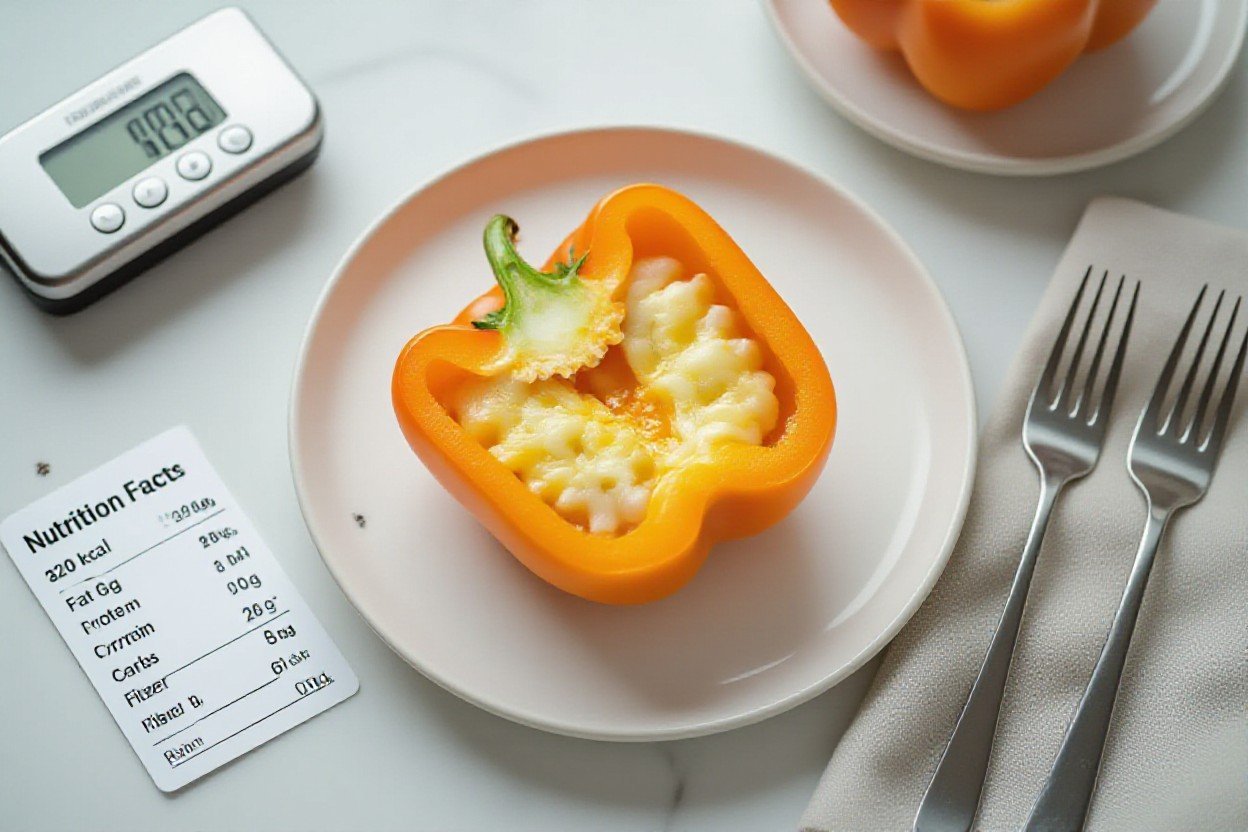
Per stuffed pepper (one medium bell pepper filled with ~4 oz cooked ground beef, about 1 oz cheddar, a tablespoon of cream cheese and an egg binder) you can expect roughly 400-450 kcal, ~30-35 g fat, 25-30 g protein and about 5-7 g net carbs (10-11 g total carbs, 3-4 g fiber). Sodium commonly lands between 700-900 mg depending on cheese and added salt, so the exact numbers will shift with ingredient choices.
That composition typically yields roughly 60-70% of calories from fat, 25-30% from protein and under 10% from carbs – well within standard ketogenic ratios. If you swap 80/20 ground beef for 93/7 or use ground turkey, expect calories to drop by roughly 80-120 kcal and fat to fall by about 10-15 g while protein stays similar; using part-skim mozzarella instead of cheddar lowers saturated fat and sodium, and adding extra chopped spinach or cauliflower rice raises fiber with minimal carb impact.
Health Benefits
Beyond macros, these stuffed peppers pack micronutrient advantages: a medium red bell pepper typically supplies about 100-150 mg vitamin C (exceeding adult daily needs) and meaningful beta‑carotene for vitamin A; an ounce of cheddar contributes roughly 200 mg calcium (about 15-20% of daily value); and a 4 oz portion of beef gives you around 2-3 mg of heme iron. Those nutrients support immune function, bone health and oxygen transport while the high fat and protein content promotes satiety and helps stabilize blood glucose.
These effects can help you manage appetite and reduce snacking between meals, which is one mechanism by which low‑carb, high‑fat meals often support short‑term weight loss. At the same time, be mindful of saturated fat and sodium: if you have hypertension or elevated LDL, favor leaner proteins, lower‑sodium cheeses or reduce added salt to balance benefits with cardiovascular considerations.
For more practical impact, prioritize tweaks that amplify nutrient density: add extra non‑starchy greens (spinach, chard) to boost fiber and potassium, choose leaner mince or a 50/50 beef‑turkey mix to cut saturated fat, and measure portions so you can log macros – swapping to 93/7 meat and part‑skim cheese typically lowers per‑serving calories and fat substantially while preserving protein, making the dish friendlier for both ketosis and long‑term heart health.
Variations
If you want to shift the dish toward different tastes or macros, swapping fillings and cheeses gives you a lot of control: choose higher-fat cheeses like mascarpone or double-cream ricotta to boost calories and satiety, or swap to part-skim mozzarella and extra vegetables to lower fat and keep net carbs under roughly 8 g per pepper. Adjust baking time by 5-10 minutes when using wetter fillings-pre-roasting the peppers for 8-10 minutes at 400°F (200°C) helps them hold shape and prevents a watery bake.
Portioning matters for macros and meal prep: one large bell pepper halves typically serves one person, and 1 pound (450 g) of filling generally stuffs four large halves. If you’re tracking targets, weigh fillings before stuffing (about 100-125 g per half is a reliable guideline) so you can calculate protein and fat precisely.
Vegetarian Options
Try a cauliflower-rice and ricotta mix: pulse 2 cups riced cauliflower until tender, sauté it for 4-5 minutes with 1 tablespoon olive oil, then fold in 1 cup whole-milk ricotta, ½ cup grated Parmesan, 1 beaten egg, and a pinch of nutmeg; that ratio gives you creamy texture and roughly 10-12 g protein across four stuffed halves while keeping net carbs low. You can also use 3 ounces cream cheese plus ½ cup shredded sharp cheddar as a higher-fat alternative that melts into a sauce-like filling when baked at 375°F (190°C) for 20-22 minutes.
For extra protein without meat, add 2 tablespoons ground flaxseed, 3 tablespoons hemp seeds, or ¼ cup chopped toasted walnuts to the filling-each adds 3-6 g protein and healthy fats per serving. If you want a fresher profile, stir in 2 tablespoons basil pesto or 2 teaspoons lemon zest before baking; both cut through richness and keep the dish vibrant while adding under 2 g net carbs per pepper.
Meat-Loaded Alternatives
Use 1 pound (450 g) of ground meat to fill four large pepper halves: 85% lean ground beef gives you a fattier, classic keto profile, while ground turkey or chicken with added olive oil will reduce saturated fat. Brown the meat 6-8 minutes with 1 small diced onion and 2 cloves garlic, then season with 1 teaspoon smoked paprika, 1 teaspoon dried oregano, and ½ teaspoon black pepper; drain excess fat if you want to control calories, but leaving some fat improves mouthfeel and keeps the filling moist.
For sausage-forward versions, swap half the beef for 8 ounces (225 g) Italian or chorizo sausage-this raises flavor intensity and salt, so cut added salt by half. Mix in 1 cup shredded cheese (cheddar, Monterey Jack, or a Mexican blend) and 2 tablespoons almond flour or 3 tablespoons crushed pork rinds as a binder to absorb juices; bake at 375°F (190°C) for 20-25 minutes until the cheese is bubbling and the peppers are tender.
To make these meat versions meal-prep friendly, let stuffed peppers cool completely, then store in airtight containers in the fridge for up to 4 days or freeze for up to 3 months; reheat frozen peppers in a 350°F (175°C) oven for 20-25 minutes or microwave individual portions for 2-3 minutes, adding 1-2 tablespoons water if they’ve dried out.
To wrap up
Hence you have a satisfying, low‑carb meal that pairs melty cheese with seasoned protein and the natural sweetness of bell peppers, delivering rich flavor while keeping net carbs minimal to support your ketogenic goals. The dish provides a strong balance of fat, protein, and fiber so you can manage hunger and maintain stable energy without compromising taste.
You can easily tailor fillings, cheeses, and spices to hit your personal macros, bake until peppers are tender for best texture, and use an air fryer or oven to reheat for maximum crispness. Store leftovers in an airtight container in the refrigerator for several days or freeze portions for longer-term meal prep, then thaw overnight and reheat gently to preserve flavor and texture.