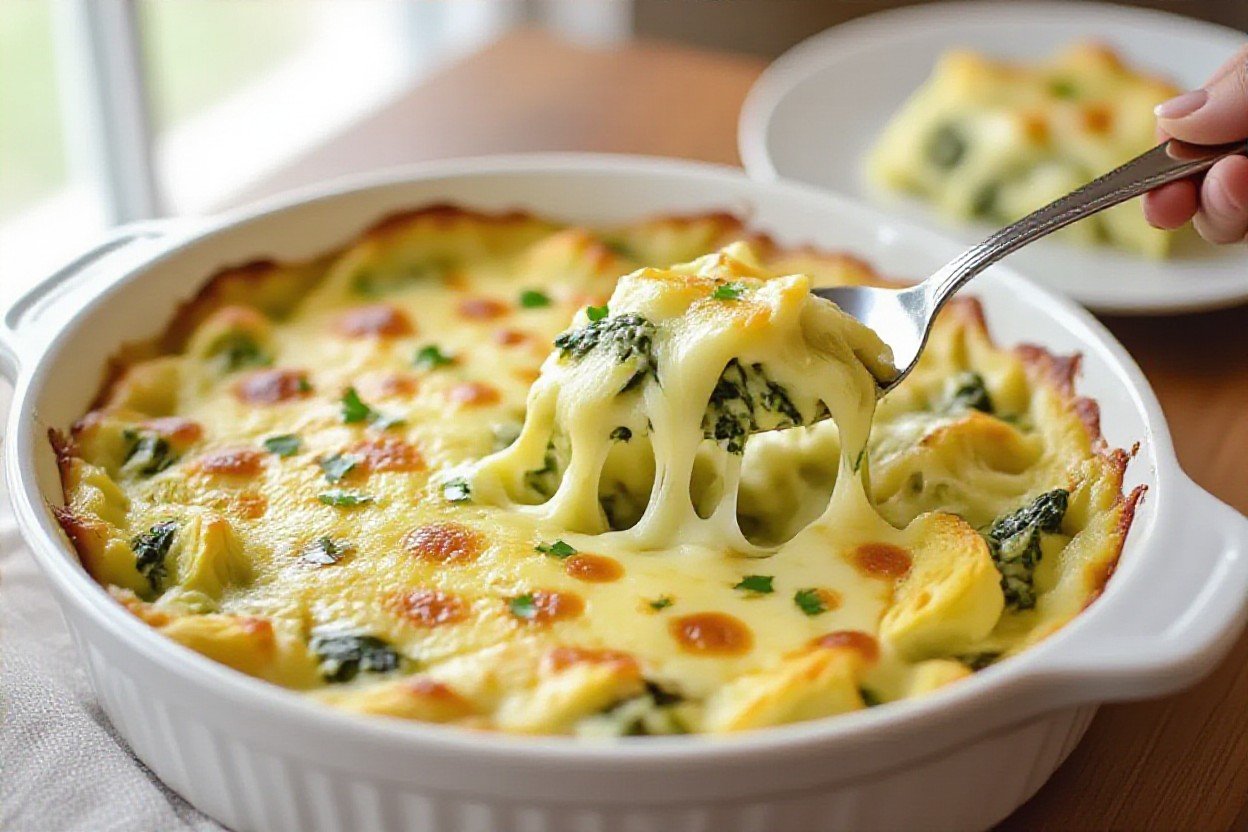
Keto Spinach Artichoke Casserole
With a focus on low-carb ingredients and high-fat flavor, you can make a satisfying Keto Spinach Artichoke Casserole that supports your goals without sacrificing taste. This casserole blends spinach, marinated artichokes, cream, and cheeses to deliver fiber and micronutrients while keeping carbs minimal; follow precise ratios and bake time to preserve texture and macronutrient balance.
Ingredients
When you gather ingredients, aim for the specified balances: 10 oz frozen chopped spinach (thawed and well-drained), one 14 oz can of quartered artichoke hearts (drained and chopped), 8 oz cream cheese softened, 1 cup full‑fat sour cream, 1 cup shredded mozzarella, 1/2 cup grated Parmesan, and 2 large eggs to help set the casserole. Season with 1 tsp garlic powder, 1/2 tsp onion powder, 1 tbsp olive oil or butter for sautéing, plus salt and black pepper to taste. Using full‑fat dairy keeps the fat-to-protein ratio keto‑friendly and yields a creamier texture than low‑fat alternatives.
If you prefer a crisp top, plan for 1/4 cup almond flour or 1/3 cup finely crushed pork rinds as a low‑carb topping, and reserve 1/4 cup extra mozzarella to sprinkle on top. This recipe yields about 6 servings; you can expect roughly 4-6 g net carbs per serving using only the core ingredients (actual carbs vary by brands and add‑ins). For fresh spinach, start with 10-12 oz raw and sauté down to approximate the volume of thawed frozen spinach.
Key Ingredients
Spinach and artichokes form the base: you want the spinach as dry as possible to avoid a watery bake, so squeeze thawed frozen spinach in a towel or use a salad spinner after wilting fresh leaves. Artichoke hearts contribute both flavor and texture-choose canned hearts in water rather than marinated in oil or vinegar if you need lower carbs and sodium; one 14 oz can, chopped, gives the recommended bite for six portions.
Dairy and eggs provide structure and richness. Cream cheese (8 oz) gives body, sour cream (1 cup) adds moisture and tang, mozzarella (1 cup) brings melt and pull, and Parmesan (1/2 cup) supplies umami and browning. Two large eggs bind everything so the casserole slices cleanly; swap in mascarpone for cream cheese if you want a silkier mouthfeel, or add an extra egg white if you need more lift without adding fat.
Optional Add-ins
Feel free to boost protein and flavor with add-ins like 1-1½ cups shredded cooked chicken (about 6-8 oz), 4 slices cooked and chopped bacon, or 1/2 cup sautéed mushrooms. For heat or brightness, add 1-2 diced jalapeños or 1/4 cup sliced green onions; for a Mediterranean twist, include 1/4 cup chopped Kalamata olives or 1/4 cup sun‑dried tomatoes (note: the latter raises carbs slightly). Keep portions modest-adding 6-8 oz of chicken changes the macro split in favor of protein, while bacon increases both fat and sodium.
Watch moisture and seasoning when you add vegetables or cured meats: sauté mushrooms and wilt additional greens first to avoid a soggy center, and cut back on added salt if you include salty ingredients like bacon or olives. If you want a crunch without grains, 1/4 cup toasted pine nuts or 1/3 cup crushed pork rinds on top provides texture while keeping carbs low.
When you incorporate optional add-ins, fold them gently into the cheese‑spinach mixture so distribution is even; reserve a small handful of shredded mozzarella for the surface to promote golden browning. Also consider how each choice affects bake time-extra protein or frozen additions may require 5-10 more minutes in a 350°F oven, and you’ll know it’s done when the center is set and the edges are bubbling.
Preparation
Prepping the Vegetables
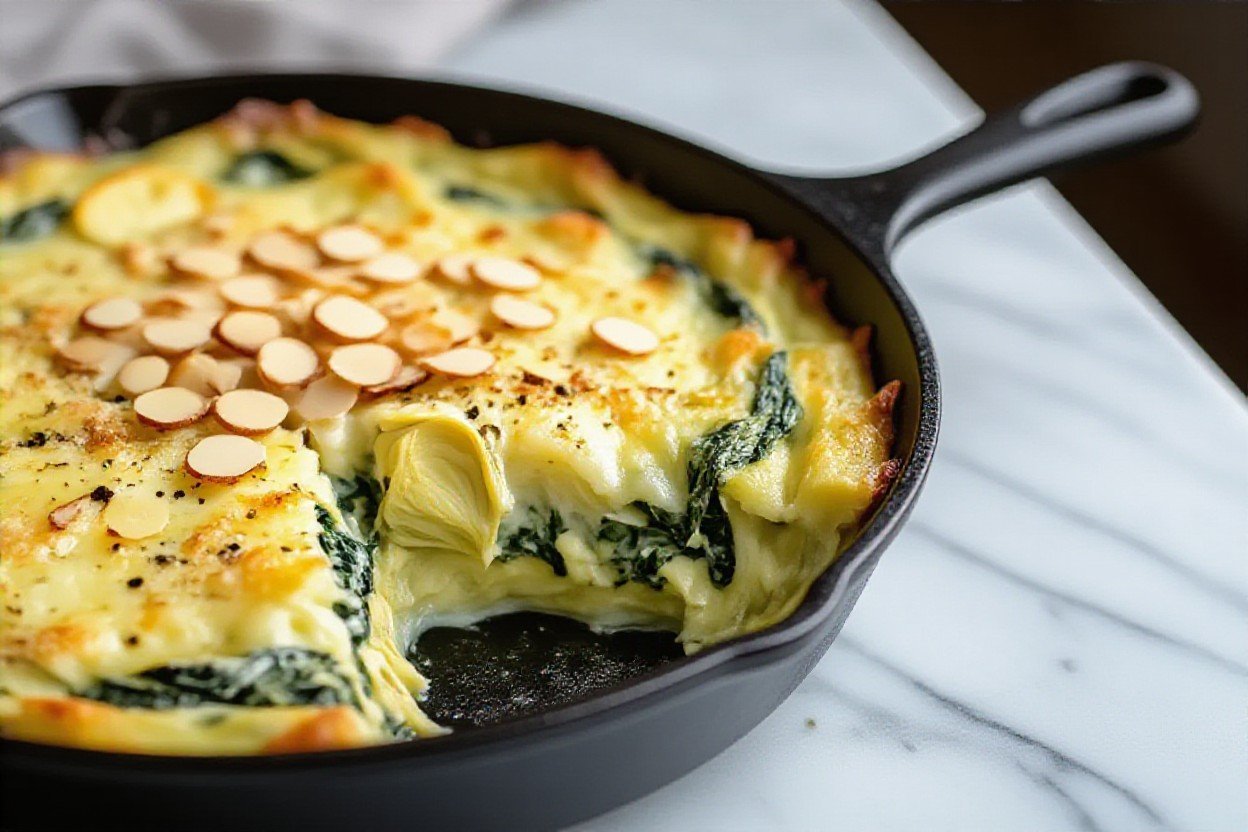
If you’re using frozen spinach, thaw it overnight in the refrigerator or microwave on defrost until pliable, then squeeze out as much water as you can-expect to remove roughly 1 to 1½ cups of liquid from a 10 oz bag, leaving about 1 packed cup of spinach for the casserole. For fresh baby spinach, wash thoroughly, remove any thick stems, and wilt in a hot skillet with 1 tablespoon of olive oil for 2-3 minutes; cool and squeeze to a similar packed volume so the filling isn’t watery. Quartered artichoke hearts from a 14 oz jar or can should be drained and patted dry; if you want deeper flavor, sauté them 4-5 minutes until edges brown slightly.
Chop one small yellow onion (about ¾ cup) and mince 2-3 garlic cloves; sauté these in 1 tablespoon butter for 3-4 minutes until translucent and fragrant, then let them cool before combining with eggs or dairy to avoid cooking the mixture prematurely. If you use additional mix-ins-sun‑dried tomatoes (2-3 tbsp, finely chopped), chopped bacon (3 slices cooked and crumbled), or mushrooms (½ cup sautéed)-prepare and drain them the same way so the final casserole maintains the intended texture and consistency.
Mixing the Casserole
Use a large mixing bowl (3-4 qt) so you can fold ingredients without overworking them. Whisk 2 large eggs with 1 cup heavy cream or a ½ cup heavy cream + ½ cup full‑fat Greek yogurt for a tangy option; season this base with ½ tsp kosher salt, ¼ tsp black pepper, ¼ tsp garlic powder and ¼ tsp onion powder. Stir in 1½ cups shredded cheese (for example 1 cup mozzarella + ½ cup grated Parmesan) until melted into the custard, then fold in the cooled spinach, drained artichokes and sautéed onion/garlic-aim for a homogenous mixture that’s thick but still slightly pourable.
If the mixture feels too loose, add 1-2 tablespoons almond flour or 1 extra beaten egg to improve binding-each large egg will effectively bind about 1 cup of wet ingredients, so adjust if you scale the recipe. Transfer the mixture to a greased 9×9-inch or 2‑quart casserole dish, smooth the top, sprinkle an additional ½ cup cheese for a golden finish, and press lightly to remove large air pockets for even baking.
Before you bake, perform a quick seasoning test: microwave a tablespoon of the mixture for 20-30 seconds and taste; add 1 tablespoon lemon juice or ½ teaspoon Dijon mustard if the flavor needs brightness, or another pinch of salt if muted. Maintaining cool fillings when you mix preserves egg structure and prevents curdling, and squeezing excess moisture from the spinach-aiming for that 1 packed cup from a 10 oz frozen bag-will keep the casserole from becoming watery as it bakes.
Cooking Instructions
Baking Time and Temperature
Preheat the oven to 375°F (190°C) for a standard 9×13 or 8×8 casserole. Bake covered for 20-25 minutes to allow the filling to heat through and the fats to meld, then remove the cover and continue baking for 5-10 minutes until the top is golden and bubbling; total bake time normally falls between 25-35 minutes depending on pan depth. Use a thermometer to check that the center reaches 165°F (74°C) for food-safety and optimal set; thin 8×8 pans often need 3-5 minutes less, while deeper or glass pans typically require 5-8 minutes more.
If you prefer a browned, slightly crisp top, broil on high for 1-3 minutes at the end-watch closely to avoid burning. For convection ovens reduce temperature by 25°F and cut bake time by about 5-8 minutes; frozen or very wet fillings can add 10-15 minutes, so start checking doneness at the lower end and adjust accordingly.
Baking Guide
| Oven / Pan | Time & Notes |
| Conventional 9×13 or 8×8 | 375°F (190°C): 20-25 min covered, 5-10 min uncovered |
| Deep dish (glass or ceramic) | 375°F: add 5-8 min; check center temp |
| Convection | 350°F (175°C): 18-22 min covered, 3-6 min uncovered |
| Frozen ingredients | Add 10-15 min; keep foil on longer to prevent over-browning |
| Finish (browning) | Broil 1-3 min; watch closely to avoid burning |
| Doneness target | Center 165°F (74°C); edges should be bubbling |
Tips for Perfect Cooking
You should squeeze cooked spinach until it yields almost no water-aim for roughly 1/4 cup packed spinach per cup cooked-so the casserole isn’t watery. Drain and chop a 14 oz can or jar of artichoke hearts and press them on paper towels until the excess oil or liquid is gone; that single step often reduces bake time variability by 5-10 minutes in practice. Use full-fat cream cheese (8 oz) at room temperature and about 1-1¼ cups shredded mozzarella plus 1/2 cup grated Parmesan to keep texture smooth and the top well-browned.
If you want a firmer set, let the casserole rest uncovered for 8-12 minutes after removing it from the oven-carryover heat continues to cook the interior and makes slicing cleaner. For a nuttier crust without carbs, mix 1/4 cup crushed pork rinds with 1-2 tablespoons melted butter and sprinkle over the top before the final 5 minutes of uncovered baking or before broiling for 1-2 minutes.
- Blot spinach and artichokes thoroughly to avoid a runny filling.
- Use room-temperature cream cheese so it folds in smoothly with fewer lumps.
- When reheating individual portions, microwave 60-90 seconds or bake at 350°F for 8-10 minutes until warm through.
- Assume that residual heat will continue to set the casserole for 5-10 minutes after you remove it from the oven.
You can adapt cooking times if you swap equipment: cast-iron retains heat and may need an extra 3-5 minutes, while a shallow metal pan finishes faster by about 3-5 minutes. For precision, check the center temperature at the deepest point-hitting 165°F ensures safe reheating and proper texture without overbaking; if the top browns too quickly, tent loosely with foil and finish to temperature.
- Rotate the pan halfway through baking for even browning if your oven has hot spots.
- Place the rack in the middle position; too low risks overbrowning the bottom, too high can burn the top during broil.
- Let slices rest 8-12 minutes before serving so portions hold together when plated.
- Assume that cutting into the casserole immediately will cause the filling to be loose and harder to portion cleanly.
Serving Suggestions
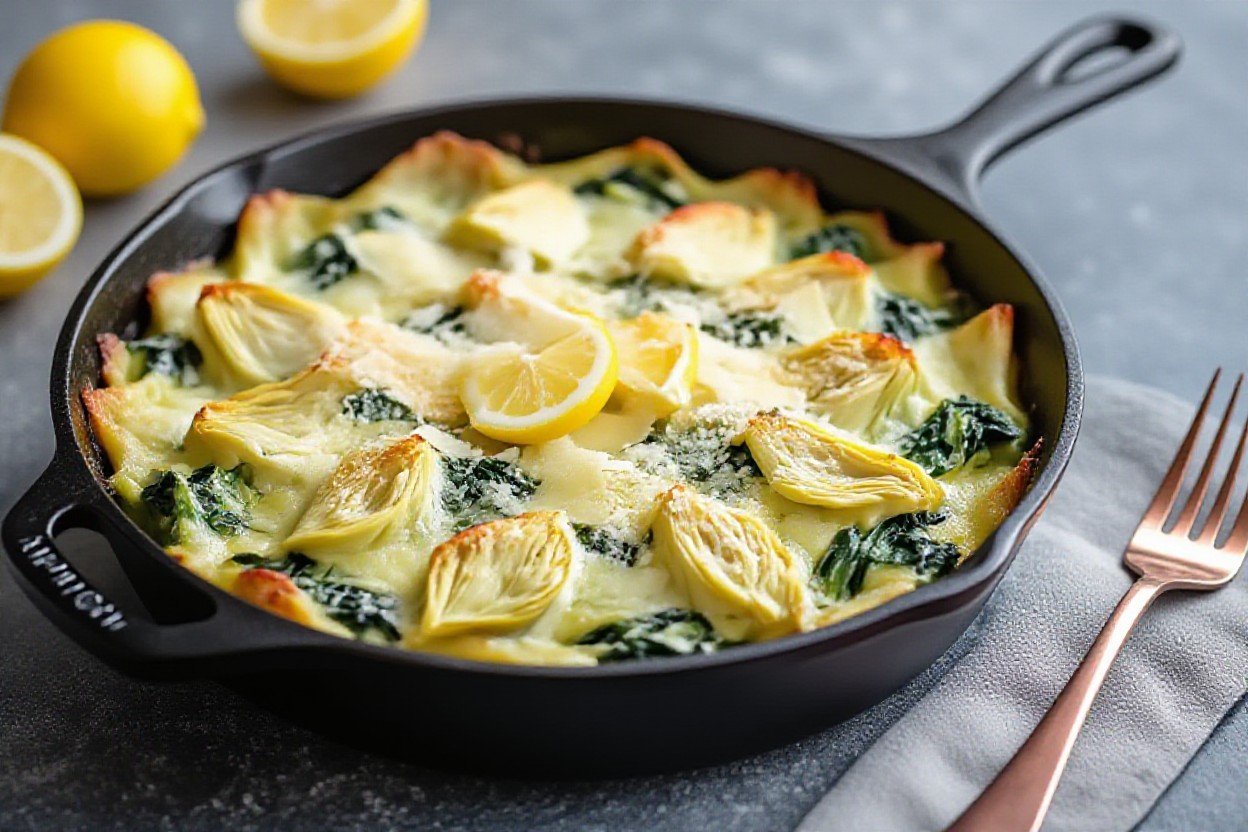
You can serve the casserole family-style straight from the baking dish, cutting it into 6-8 portions so each person gets a generous helping without overeating. For weeknight dinners, plate a 1/6-1/8 slice alongside a 4-6 oz portion of protein and a cup of low-carb vegetables to keep the meal balanced and filling.
If you want to control temperature and texture, remove the casserole from the oven and let it rest for 5-10 minutes before serving so it sets and slices cleanly. Reheat leftovers in a 350°F oven for 12-15 minutes or in individual 8-10 minute microwave bursts to preserve creaminess; finish under the broiler 1-2 minutes if you want the top crisped.
Ideal Pairings
Pair the casserole with simple proteins that cut through the richness: a 4-6 oz grilled salmon fillet, thinly sliced roasted chicken breast, or 3-4 seared scallops provide contrasting textures and 20-30 g of protein per portion. For a lighter option, add a citrus-dressed arugula salad (2 cups arugula with 1 tbsp lemon vinaigrette) to refresh the palate between bites.
On the beverage side, choose dry wines such as a Sauvignon Blanc or an unoaked Chardonnay-both have acidity that balances the dish’s fat-serving about 5 oz per glass. If you prefer non-alcoholic options, sparkling water with a lemon twist or unsweetened iced tea complements the creamy flavors without adding carbs.
Presentation Ideas
For individual servings, spoon the casserole into shallow ramekins and broil 1-2 minutes to brown the top; garnish each with 1 tsp chopped chives and a small lemon wedge for color and brightness. When plating a family-style meal, transfer the dish to a warm cast-iron skillet and scatter 2-3 thin prosciutto shards or a handful of toasted pine nuts across the top for visual contrast and crunch.
At gatherings, turn portions into low-carb appetizers by scooping 2-3 tablespoon-sized bites onto endive leaves or mini bell pepper halves; plan on 3-4 bites per guest and arrange on a platter with toothpicks for easy serving. Use small labels indicating “Keto Spinach Artichoke” to guide guests who track macros.
To add extra texture before serving, mix 1/4 cup almond flour with 1 tbsp grated Parmesan and 1 tbsp melted butter, sprinkle over the casserole, and broil 3-4 minutes until golden; alternatively, use 1/3 cup crushed pork rinds for a crisp, zero-carb topping that browns in 2-3 minutes under the broiler.
Nutritional Information
Per 1-cup serving (recipe divided into six portions), you’re looking at roughly 320 kcal, 26 g fat, 14 g protein, 6 g total carbohydrates and about 3 g fiber – yielding approximately 3 g net carbs. Those numbers assume full‑fat cream and standard amounts of cream cheese and cheese; using lower‑fat or lower‑cheese versions will reduce calories and fat while only slightly changing carbs and protein.
If you’re tracking macros for ketosis, this casserole fits comfortably: a 3 g net‑carb serving is about 15% of a 20 g daily net‑carb limit. Small swaps change the math quickly – for example, adding an extra 1/2 cup of artichoke hearts across the casserole can raise total carbs by roughly 2-3 g per serving, while cutting heavy cream in favor of unsweetened almond milk can shave tens of calories and several grams of fat per serving.
Macronutrient Breakdown
Fat is the dominant macro here, coming mainly from cream cheese, heavy cream and shredded cheeses; expect roughly 26 g fat per serving, with about 10-12 g of that as saturated fat depending on the cheese choices. Monounsaturated fats from olive oil (if used) and the combination of dairy fats help keep the texture rich and make the dish both satiating and energy‑dense.
Protein sits near 14 g per serving, supplied by eggs and cheeses, which supports muscle maintenance and satiety. Carbohydrates are low and concentrated in the artichoke hearts, cooked spinach and any onion or garlic you add – total carbs ≈6 g with around 3 g fiber, so net carbs are low enough for most ketogenic plans while still providing some fermentable fiber for gut microbes.
Health Benefits
Spinach delivers significant micronutrients: per serving you get a meaningful boost of vitamin A precursors, folate and iron, along with vitamin K that supports bone metabolism. Cheese and fortified dairy contribute calcium – this casserole can supply roughly 15-25% of your daily calcium needs depending on cheese amounts – which helps support bone health when combined with regular dietary sources.
Because the dish combines high fat and moderate protein with very low net carbs, it promotes prolonged satiety and a relatively flat post‑meal glucose response; for someone limiting net carbs to 20 g/day, a single serving uses only a small fraction of that allowance and helps you stay within targets while getting nutrient density from leafy greens and artichokes.
Clinical and metabolic studies on low‑carb, higher‑fat eating patterns show short‑term improvements in fasting glucose and triglyceride levels for many people, and incorporating nutrient‑rich, vegetable‑forward recipes like this one makes adherence easier. If you have specific health conditions or are on medication for blood sugar or lipids, adjust portions and consult your provider to align this casserole with your individualized plan.
Variations and Substitutions
Dairy-Free Options
If you swap the cream cheese and heavy cream, use an 8‑oz block of full‑fat dairy‑free cream cheese (brands like Kite Hill or Miyoko’s work well) as a straight 1:1 substitute, or make a cashew cream by soaking 1 cup raw cashews for 4 hours then blending with 1/2 cup water, 1 tbsp lemon juice and a pinch of salt to yield about 1 cup of silky cream. For a lower‑carb alternative choose canned full‑fat coconut cream-replace 1/2 cup heavy cream with 1/2 cup coconut cream and add 2-3 tbsp nutritional yeast to recover cheesy depth; coconut cream tends to keep net carbs lower than cashew‑based creams. To help set texture without dairy, whisk 2 large eggs into the filling and use 1/8-1/4 tsp xanthan gum per 2 cups of dairy‑free base to prevent separation during baking.
If you need nut‑free, blend 8 oz silken tofu with 1 tbsp lemon juice and 2 tbsp nutritional yeast for a neutral, protein‑forward base, then boost fat to keto levels with 2 tbsp olive oil or melted coconut oil. Drain frozen spinach thoroughly (squeeze until dry), and, when using canned or marinated artichokes, rinse and pat them dry to avoid a watery casserole; bake at 350°F for 25-30 minutes covered, then uncover for 5-8 minutes to brown the top-those small technique tweaks keep texture comparable to the dairy version.
Other Flavor Enhancements
Smoking and spice lift this casserole: stir in 1 tsp smoked paprika and 1/2 tsp garlic powder, or fold roasted garlic (3 cloves, mashed) into the cheese base for a deeper savory profile. If you want brightness, add 1 tsp lemon zest and 1 tbsp lemon juice; for heat, 1/4 tsp crushed red pepper or 1/2 tsp harissa paste accents well without overwhelming the artichokes and spinach. To bulk up the dish into a full meal, fold in 2 cups shredded rotisserie chicken or 8 oz cooked shrimp-either adds roughly 20-25 g protein per serving when the casserole serves six-and crisp 4-6 slices of bacon, chopped, for a smoky crunch; swap toppings between 1/2 cup grated Parmesan for extra crust or 1/2 cup crushed pork rinds for a keto, dairy‑free crisp.
Balance is key when you amp flavors: add acidic elements (1 tbsp lemon juice or 1-2 tsp white wine vinegar) at the end of mixing so they brighten without breaking the emulsion, and reduce other liquids by about 2 tbsp if you introduce wetter ingredients like pesto or sun‑dried tomatoes. Taste the filling before baking-canned artichokes and bacon add salt, so you may need to dial back added salt-and keep a notepad of successful combos (for example: 1 tsp smoked paprika + 3 cloves roasted garlic + 2 tbsp pesto yielded the best results in a test batch) so you can reproduce the version you loved.
To wrap up
Following this keto spinach artichoke casserole, you gain a reliable low‑carb dish that delivers rich, satisfying flavors while keeping your macros in check; you can use it as a main or a hearty side and rely on its creamy texture and bright vegetable notes to satisfy appetite without excess carbs.
You should portion for meal prep, store in the refrigerator for 3-4 days or freeze for up to 2 months, and reheat thoroughly when serving; you can also adapt the recipe by adding cooked chicken, bacon, or different cheeses to match your preferences and dietary goals.
Printable Recipe Card
Want just the essential recipe details without scrolling through the article? Get our printable recipe card with just the ingredients and instructions.