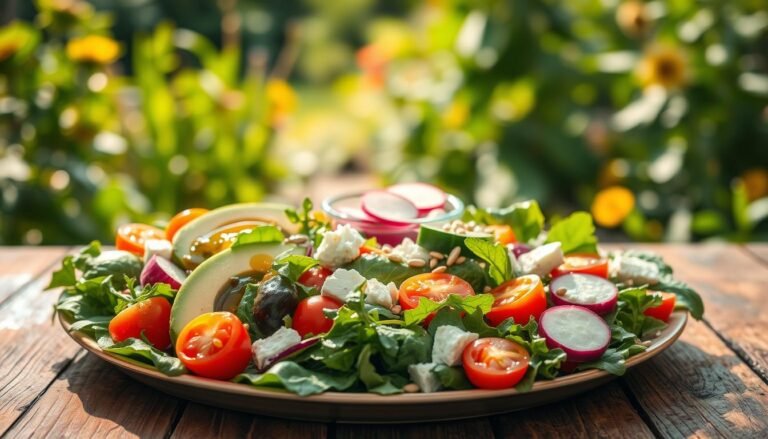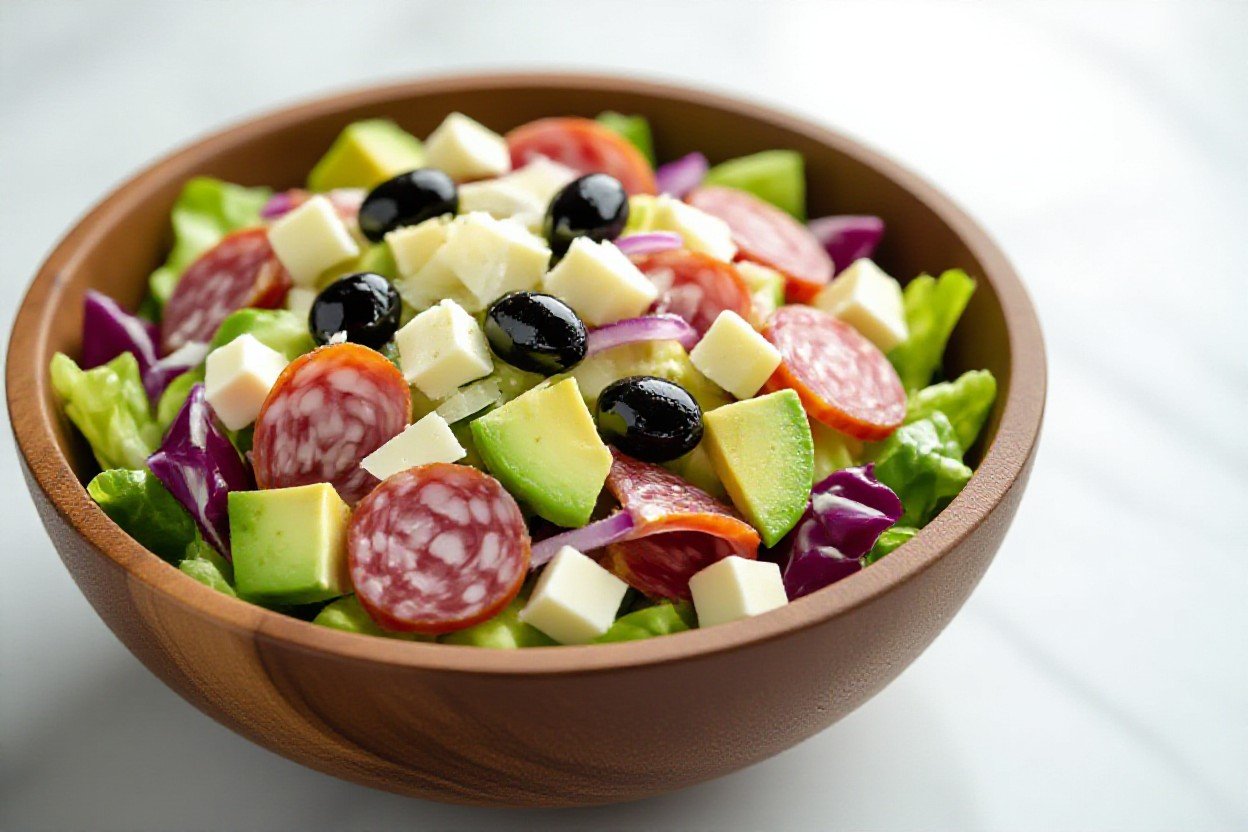
Keto Zesty Italian Chopped Salad
Most keto-friendly meals get a flavor boost from this Keto Zesty Italian Chopped Salad, where you combine crisp romaine and radicchio, peppery arugula, marinated artichoke hearts, salami, Parmesan, olives, and a zesty sugar-free Italian dressing so you keep carbs low without sacrificing bold, savory taste. You’ll learn how to chop ingredients for optimal texture, adjust seasoning for your macros, and prepare a make-ahead dressing that preserves freshness and crunch.
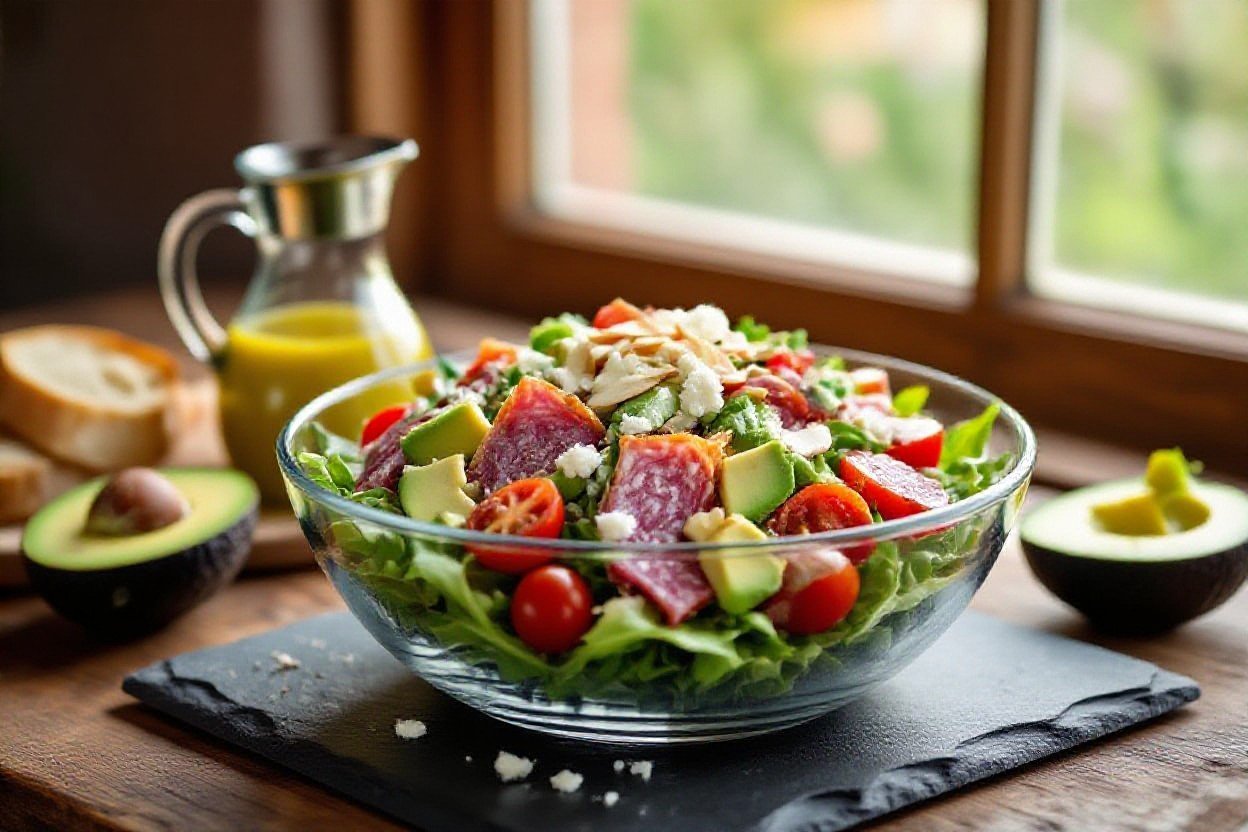
Overview of Keto Diet
You shift your daily calories toward fat and away from carbohydrates so your body runs primarily on ketones instead of glucose; most people target 20-50 grams of net carbs per day to enter and maintain nutritional ketosis. Typical macro targets you’ll see are roughly 70-75% fat, 20-25% protein and 5-10% carbs, though individual needs vary by activity level, body composition and metabolic health.
Adaptation usually takes days to weeks: many people notice reduced appetite and steady energy after 2-4 weeks, while ketone levels (0.5-3.0 mmol/L in blood) confirm metabolic shift if you test. You’ll also need to manage electrolytes and water balance early on, and adjust portions and food quality rather than just hitting macro percentages.
Principles of the Keto Diet
Emphasize whole-food fats-olive oil, avocado, nuts, fatty fish and butter-while minimizing refined carbs and added sugars; the quality of fats matters because monounsaturated and omega‑3 fats support inflammation and lipid profiles more favorably than excess industrial seed oils. Keep protein moderate: aim for a level that preserves lean mass (around 0.6-1.0 g per lb of lean body mass for many people) without oversupply that could drive gluconeogenesis and blunt ketone production.
Track net carbs (total carbs minus fiber and sugar alcohols) and use that number to guide vegetable and fruit choices-leafy greens, crucifers and berries fit well. Pay attention to practical tools: meal plans, food scales, and apps that log macros help you confirm targets; if you’re managing diabetes or taking medications, coordinate changes with your clinician to adjust dosing safely.
Benefits of Low-Carb Eating
You can expect weight loss benefits driven by reduced appetite, lower insulin secretion and increased satiety from higher fat intake; randomized trials and meta-analyses often show low‑carb approaches produce 1-3 kg greater weight loss at 6 months compared with low‑fat diets, with differences narrowing at 12 months. Improvements in blood glucose control are commonly reported-people with type 2 diabetes frequently see HbA1c reductions in the range of 0.5-1.0% in short‑term trials when carbs are substantially lowered.
Cardiometabolic markers tend to improve: triglycerides typically decline markedly (often 20-50%), HDL cholesterol usually rises by 5-15%, while LDL cholesterol responses are variable-some people see increases and others shifts toward larger, less atherogenic particles. You should monitor lipids and symptoms, since individual responses determine whether adjustments to fat types or total intake are needed for long‑term risk management.
For practical application, your keto zesty Italian chopped salad can be a high‑value meal: by choosing full‑fat cheese, olive oil-based dressing and protein (grilled chicken, salmon or tuna), you keep carbs low while delivering the fats and moderate protein that sustain ketosis; a typical composed serving often contains under 10 g net carbs, making it easy to stay within daily targets while getting micronutrients and fiber from nonstarchy vegetables.
Ingredients for Zesty Italian Chopped Salad
You can build this salad around a base of 4-6 cups chopped leafy greens (about 4 servings) and then add 6-8 ounces of assorted low-carb toppings to hit texture and flavor targets. Aim for a balance: roughly 60-70% vegetables, 20-25% protein/cheese, and 10-15% high-fat add-ins like olives and avocado to keep net carbs in the 5-8 g range per serving depending on your choices.
Quantities that work well: 4 cups romaine, 1 cup chopped cucumber, 1/2 cup sliced radish or bell pepper, 4 oz salami or grilled chicken, 3 oz mozzarella or 1/3 cup grated Parmesan, plus 1/4-1/2 cup olives and 1/2 an avocado if you want extra creaminess. Those proportions deliver about 18-24 g total carbs for the whole bowl, with net carbs typically under 8 g per serving when you pick lower-carb vegetables and a keto dressing.
Fresh Vegetables
You should prioritize leafy greens like romaine, arugula, and baby spinach because they provide bulk with minimal carbs-expect roughly 1-1.5 g net carbs per cup of romaine. Add cucumbers and celery for crunch; a 1/2-cup serving of cucumber is only about 1-1.5 g net carbs, while 1/2 cup sliced celery is nearly negligible at under 1 g.
Use higher-sugar items sparingly: a small handful of cherry tomatoes (about 5) contributes around 2-3 g net carbs, and 1/2 cup sliced bell pepper adds roughly 3 g. Rotate in radishes (≈1 g net carb per 1/2 cup) or shaved fennel for variety without blowing your carb target.
Keto-Friendly Dressings
You’ll want a zesty Italian dressing built from high-fat, low-carb ingredients: a 3:1 oil-to-vinegar ratio is a dependable starting point (for example, 3 tbsp extra-virgin olive oil to 1 tbsp red wine vinegar). For a batch that serves four, whisk together 3/4 cup extra-virgin olive oil, 1/4 cup red wine vinegar, 2 tsp Dijon mustard, 1 minced garlic clove, 1 tsp Italian seasoning, 1/2 tsp salt and a pinch of crushed red pepper; that keeps carbs at ~0-1 g per tablespoon.
If you buy store dressings, check nutrition labels for added sugars-many “Italian” dressings contain 2-4 g sugar per 2-tablespoon serving. Brands marketed for low-carb diets (for example, avocado-oil or olive-oil based dressings with 0 g sugar per serving) are convenient and typically preserve the zesty profile without adding hidden carbs.
To make a creamier variation, blend 1/3 cup mayonnaise (or avocado oil mayo) with the same vinegar and seasoning ratios; mayonnaise adds about 0-1 g carbs per tablespoon while increasing satiety. Store homemade dressing refrigerated up to 7 days and shake or re-whisk before using; nutritionally, expect roughly 120 kcal and 14 g fat per tablespoon of oil-based dressing.
Nutritional Breakdown
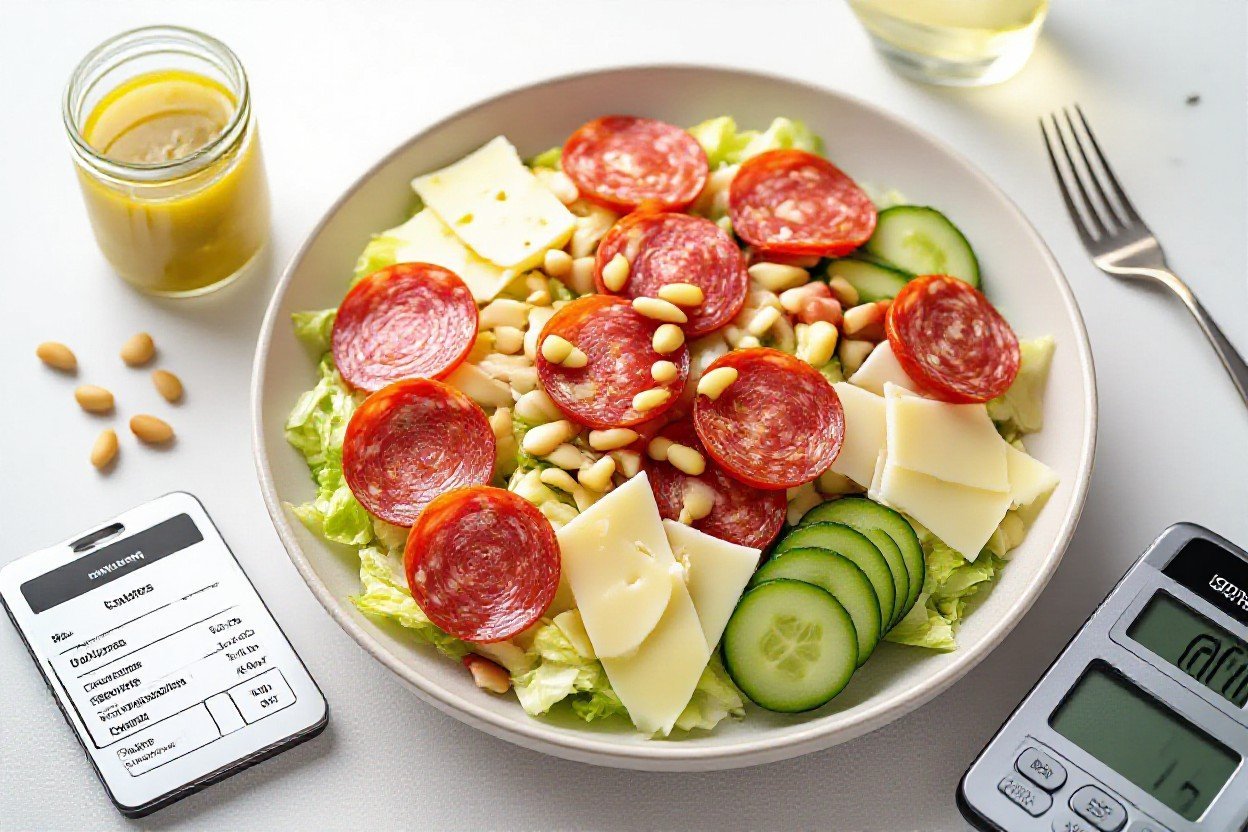
Per serving, this Keto Zesty Italian Chopped Salad typically provides roughly 450-520 kcal, with about 40-45 g fat, 18-24 g protein, and 5-9 g total carbohydrates – usually translating to 3-6 g net carbs after subtracting fiber (around 2-4 g). Exact numbers shift with your portions and ingredient choices: swapping salami for grilled chicken raises protein by ~6-8 g and cutting cured meats lowers sodium substantially, while increasing olive oil or cheese will push calories and fat higher.
You also get meaningful micronutrients: a single serving delivers vitamin K (from leafy greens), vitamin C (from peppers/tomatoes), potassium (from tomatoes and avocado, if used) and calcium (from cheese). Be aware that cured Italian meats and olives can raise sodium into the 700-1,200 mg range per serving depending on amounts, so you’ll want to adjust those components if you’re monitoring blood pressure or daily sodium intake.
Macronutrient Composition
Most of your calories come from fat – roughly 75-80% of total calories – primarily monounsaturated fats from extra-virgin olive oil and some saturated fat from cheese and cured meats. In a typical plate with 42 g fat, about 25-30 g will be monounsaturated (oleic acid), roughly 8-12 g saturated, and 3-5 g polyunsaturated; that balance favors stable ketone production and satiety without large swings in insulin.
Protein usually sits around 18-24 g per serving, coming from salami, mozzarella or other cheeses and any added meats; that delivers 15-20% of calories and supports muscle maintenance while you’re in ketosis. Carbohydrates remain low – most of the 5-9 g are from veggies and dressings – so your net carbs commonly land under 6 g. If you want higher protein with similar carbs, replace a portion of cured meats with 3-4 oz grilled chicken (adds ~20-25 g protein, ~0 g carbs).
Health Benefits
Because the salad is low in digestible carbs and high in healthy fats, it helps blunt postprandial glucose excursions and supports maintenance of nutritional ketosis when paired with your overall daily carb limit – a single serving’s ~3-6 g net carbs fits well into most ketogenic meal plans. The high fat and moderate protein content also increase satiety, which can reduce overall calorie intake across the day and aid weight management.
Beyond macronutrient effects, the ingredients supply anti-inflammatory and cardiovascular-supporting compounds: extra-virgin olive oil brings polyphenols and oleic acid, tomatoes contribute lycopene, and leafy greens provide folate and vitamin K for bone and vascular health. At the same time, you should balance these benefits against sodium from processed meats; choosing lower-sodium alternatives or adding more fresh herbs can preserve flavor while reducing risk.
For further benefit, prioritize extra-virgin olive oil (which contains roughly 70-80% oleic acid) and include small amounts of nuts or avocado to boost omega-3 precursors and fiber; the combination of fat plus fiber meaningfully lowers the glycemic response to the meal and increases absorption of fat-soluble vitamins, while cheese and cured meats deliver calcium and vitamin B12 that support bone and nervous system health.
Preparation Steps
Chopping Techniques
You should aim for consistent pieces so every bite has the same balance: dice Roma tomatoes and cucumber into 1/4-inch cubes, slice red onion paper-thin (use a mandoline or a sharp chef’s knife for 1-2 mm slices), and cut bell pepper into 1/2-inch strips or dice. For cured meats and cheeses, stack thin slices and cut into 1/4-inch ribbons or 1/2-inch cubes so they mingle with the greens instead of settling at the bottom.
When working with wet ingredients, drain and pat them dry to keep the dressing from becoming diluted – halve cherry tomatoes and salt cucumbers briefly for 5-10 minutes, then squeeze out excess moisture and blot with a towel. Tear sturdy greens like romaine into 1-1.5 inch pieces rather than shredding, and chiffonade basil or parsley into fine ribbons to distribute aroma evenly; a sharp knife and a steady hand save texture and prevent bruising.
Mixing and Dressing
For a reliably emulsified zesty Italian: whisk or shake together 3/4 cup extra-virgin olive oil, 1/4 cup red wine vinegar (3:1 oil-to-acid), 1 teaspoon Dijon mustard, 1 minced garlic clove, 1 teaspoon dried Italian seasoning, 1/2 teaspoon kosher salt and a generous pinch of crushed red pepper. Emulsify for at least 30 seconds by hand or 10 seconds in a blender – the mustard helps bind the oil and vinegar so the dressing clings to ingredients instead of pooling.
Assemble the salad in layers to encourage even coating: start with the greens, add salami and cheese, then the chopped vegetables and olives, and pour about 3-4 tablespoons of dressing per 4-cup salad (roughly 2 tablespoons per serving) before tossing. Use tongs to lift and fold the salad 3-4 times-this minimizes bruising while ensuring every piece gets a thin, even glaze; letting the salad rest 5-10 minutes allows flavors to meld without wilting the lettuce.
If you make the vinaigrette ahead, store it refrigerated in a jar for up to 5-7 days and re-emulsify by shaking or whisking before use; to stabilize it further for make-ahead meals, add 1/8 teaspoon xanthan gum or grate in 1 tablespoon Parmesan for body, and reserve a couple tablespoons to finish the salad just before serving so the dressing stays bright and the greens remain crisp.
Serving Suggestions
For a side, plan on 1.5-2 cups of the chopped salad per person; as a main, aim for 3-4 cups plus 3-6 oz of protein to hit roughly 25-40 g of protein per meal. Dress about 1 tablespoon of the zesty Italian dressing per 2 cups of salad-1 tablespoon of extra-virgin olive oil contains ~120 kcal and 14 g fat, so measure to keep your macros consistent.
Serve it chilled and build visual contrast by placing sliced protein across the top and sprinkling 1-2 tablespoons of shaved Parmesan or toasted pine nuts for texture. For gatherings, you can scale the base easily: 4 servings uses about 6 cups chopped greens and 1/3 cup dressing, while multiplying by 2 or 3 feeds 8-12 without losing flavor balance.
Pairing with Proteins
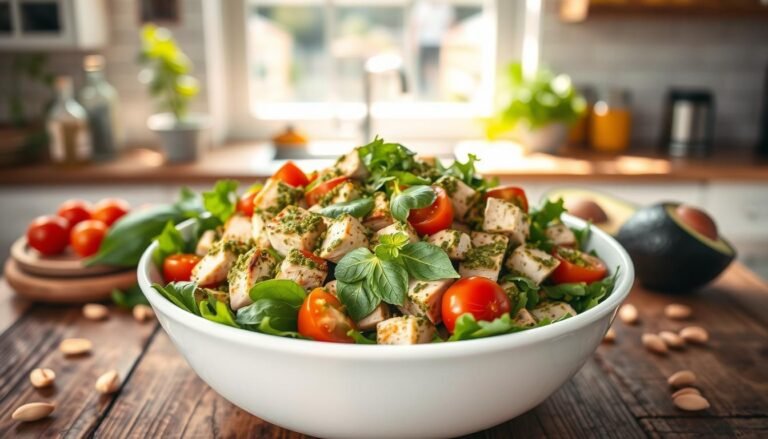
Lean grilled chicken breast (4 oz cooked ≈ 30-35 g protein) pairs naturally with the Italian herbs and bright vinaigrette; lemon-oregano chicken or garlic-sage thighs work especially well. Fatty fish like salmon (4 oz ≈ 22-24 g protein) brings omega-3 richness that complements the salad’s acidity-pan-sear and finish with capers for a classic match.
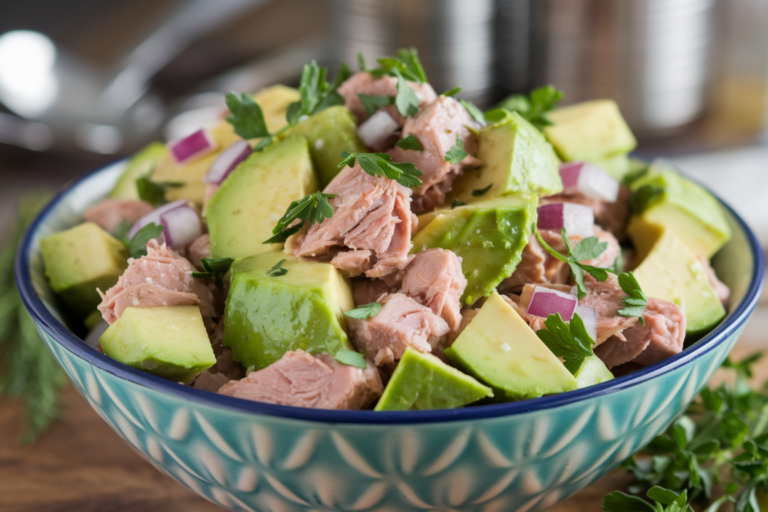
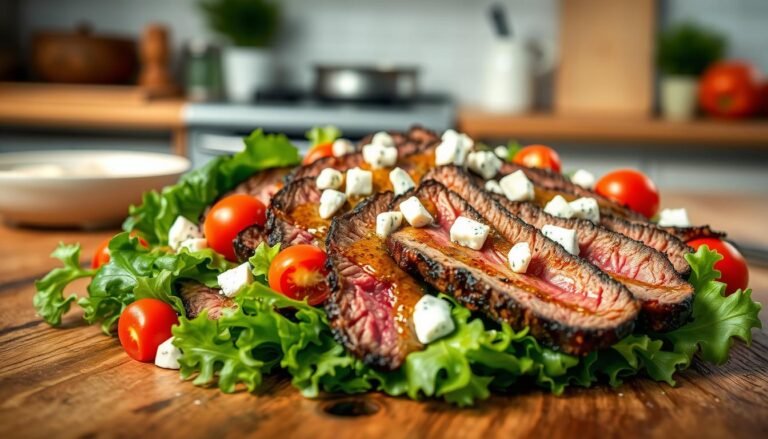
Shrimp (3 oz ≈ 18-20 g protein) tossed with chili flakes and garlic adds a quick, high-protein option, while 6 oz of flank steak (≈ 40-44 g protein) dressed in cracked pepper provides a hearty contrast. For quick meals you can use 3 oz canned tuna (≈ 20 g protein), 2 hard-boiled eggs (≈ 12 g), or thin slices of prosciutto/salami to keep prep under 5 minutes while still hitting your target macros.
Meal Prep Ideas
When prepping the salad base, chop durable ingredients (cabbage, peppers, cucumbers) and store them in airtight containers for 3-5 days; chopped romaine will stay crisp about 3-4 days if dried thoroughly. Keep the dressing in a separate jar for 7-10 days refrigerated and add it just before serving to prevent wilting.
Batch-cook proteins on the weekend: grill 1-2 pounds of chicken to yield six to eight 4-oz servings, store portions in meal containers for up to 4 days in the fridge or freeze for 2-3 months. Reheat proteins briefly (45-60 seconds in a microwave or 1-2 minutes in a skillet) and assemble the salad in under 5 minutes for a fast weekday lunch or dinner.
A sample weekly plan: make a 4-serving base with 6 cups chopped romaine, 1 cup halved cherry tomatoes, 1/2 cup diced cucumber, 1/3 cup shaved Parmesan, 1/4 cup sliced pepperoncini, and 1/4 cup kalamata olives. Whisk a dressing of 1/3 cup extra-virgin olive oil, 3 tablespoons red wine vinegar, 1 teaspoon Dijon, and 1/2 teaspoon Italian seasoning-this yields roughly 8-9 tablespoons, about 2 tablespoons per serving, so you can portion, top with a 4-oz protein, and eat fresh in under 5 minutes.
Variations and Customizations
You can shift the salad toward a protein-forward meal by adding 4 oz (113 g) of grilled chicken, 6 large shrimp (about 85 g), or 2 oz (56 g) of chopped salami; each will keep the carbs low while increasing satiety. Alternatively, swap romaine for 2 cups (60 g) of baby spinach or arugula to change texture and micronutrient profile without altering the dressing or prep time.
To make it heartier for meal prep, pack the chopped greens and vegetables separately from the dressing and add-ins, then portion 3-4 oz (85-113 g) of your chosen protein and 1/2 avocado (≈75 g) per serving; this yields a balanced plate that holds up well for 2-3 days refrigerated.
Add-ons and Substitutes
You can introduce crunch and fat by sprinkling 2 tbsp (14-18 g) of chopped almonds, walnuts, or toasted sunflower seeds, or swap croutons for 1/4 cup crushed pork rinds or homemade cheese crisps for a zero-carb alternative. If you prefer more cheese, 1/4 cup (30 g) of crumbled feta or shaved Parmesan adds savory depth while keeping carbs minimal.
For dressing swaps, whisk 3 tbsp extra-virgin olive oil with 1 tbsp red wine vinegar (a 3:1 ratio), 1 tsp Dijon mustard, and 1/4 tsp garlic powder for a quick, keto-friendly vinaigrette; you can replace vinegar with 1 tbsp fresh lemon juice for brighter acidity. Vegetables like cucumbers or bell peppers can replace tomatoes if you want to lower glycemic impact-use 1/2 cup diced cucumber or 1/3 cup diced bell pepper per serving.
Flavor Enhancements
You can amplify Italian flavors by folding in 1 tbsp chopped fresh basil, 1 tbsp chopped flat-leaf parsley, and 1 tsp dried oregano, or boost umami with 1-2 tsp of drained capers and 4-6 chopped kalamata olives. For heat, stir in 1/4 tsp crushed red pepper flakes or 1 tsp pickled jalapeño finely diced; small amounts go far and let you control the spice level precisely.
To perfect balance, use the classic 3:1 oil-to-acid ratio-3 tbsp olive oil to 1 tbsp vinegar-and add 1 tsp Dijon to help emulsify; taste for salt and adjust with flaky sea salt and 1/8-1/4 tsp black pepper. A tiny pinch (1/8 tsp) of granulated erythritol can round out acidity without adding carbs, and a few drops of lemon zest or 1 tsp finely grated Parmesan stirred into the dressing will lift the overall aroma and mouthfeel.
Summing up
Considering all points, the Keto Zesty Italian Chopped Salad gives you a satisfying, low‑carb option that balances crisp vegetables with high‑fat elements like olive oil, cheese, and avocado to support ketosis while keeping flavor bold. You can rely on it as a quick, versatile meal that scales for meal prep, adapts to dietary needs, and delivers fiber and micronutrients without excess carbs when you choose a sugar‑free dressing and avoid starchy add‑ins.
To maximize benefits, you should control portions, track macros for dressings and processed toppings, and use nutrient‑dense ingredients to keep your meals filling and sustainable. With straightforward swaps and careful ingredient choices, your Keto Zesty Italian Chopped Salad becomes a practical, flavorful staple that supports weight and blood‑sugar goals while staying enjoyable day to day.
Printable Recipe Card
Want just the essential recipe details without scrolling through the article? Get our printable recipe card with just the ingredients and instructions.