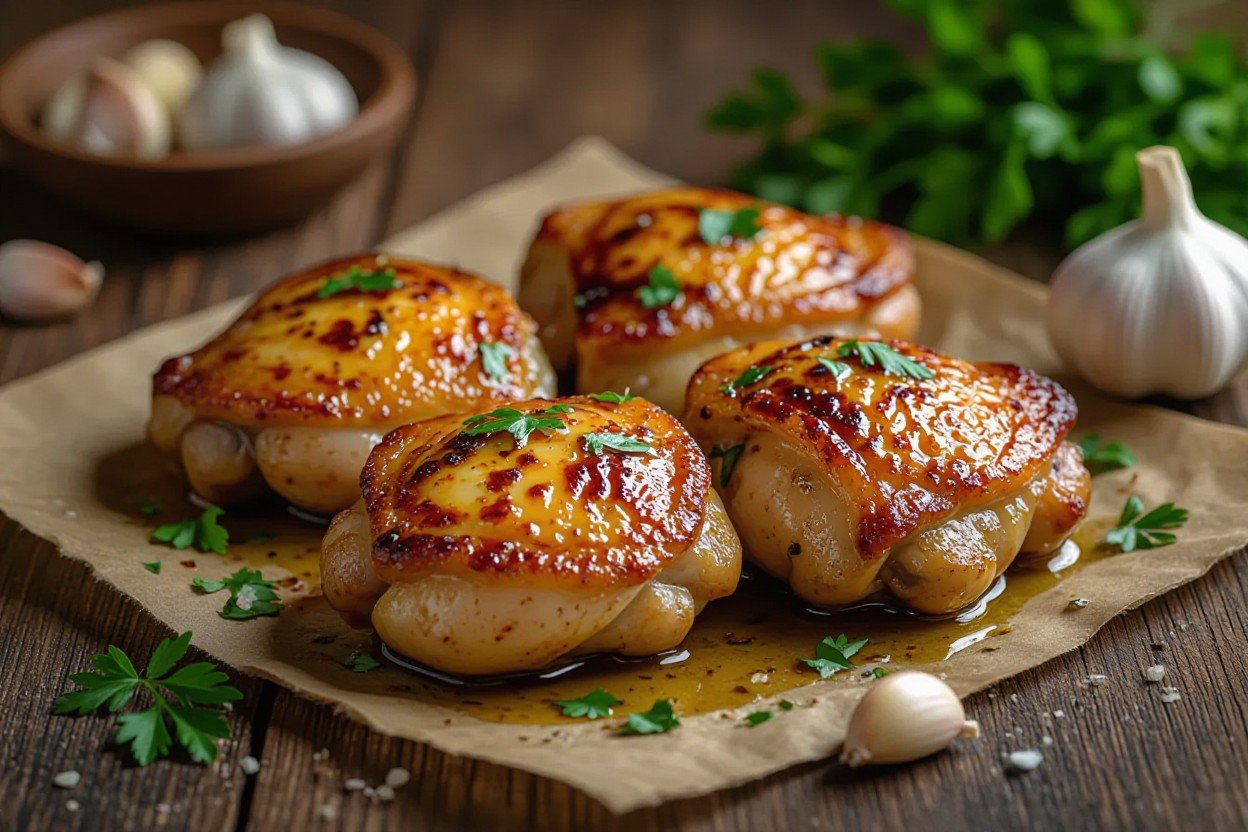
Chicken Thighs with Garlic Butter
It’s time to elevate your weeknight dinner with this simple yet impressive dish that combines juicy chicken thighs with rich, aromatic garlic butter. You’ll discover how this recipe delivers restaurant-quality results in your own kitchen, requiring minimal ingredients and effort. The natural fat content in chicken thighs keeps the meat tender and flavorful, while the garlic butter creates a luxurious sauce that complements every bite. Whether you’re cooking for your family or entertaining guests, this dish offers the perfect balance of convenience and sophistication that will have everyone asking for seconds.
Key Takeaways:
- Chicken thighs stay moist and flavorful due to their higher fat content compared to chicken breasts, making them ideal for garlic butter preparations
- The garlic butter sauce can be made by combining softened butter with minced garlic, fresh herbs like parsley or thyme, and a squeeze of lemon juice for brightness
- For best results, sear the chicken thighs skin-side down first to achieve crispy skin, then finish cooking in the oven while basting with the garlic butter
Ingredients
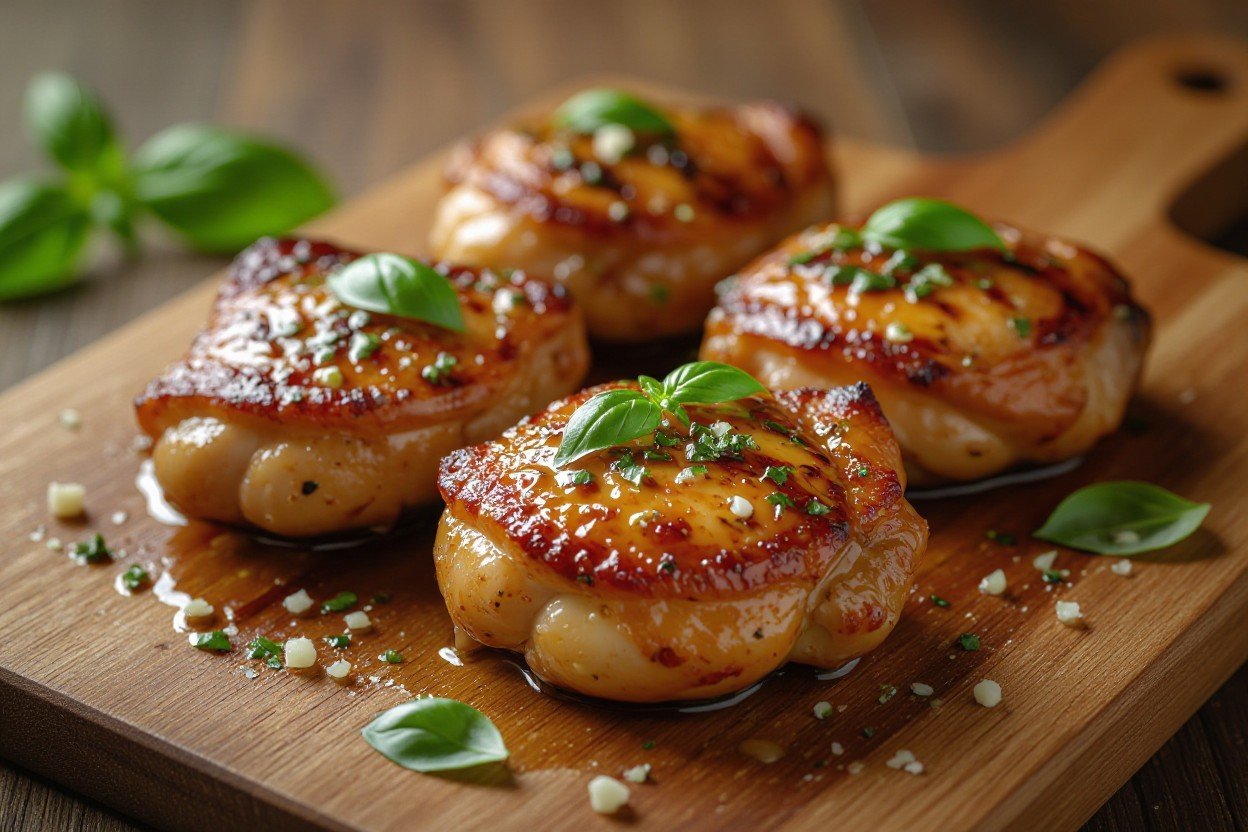
The beauty of this recipe lies in its simplicity—you need fewer than ten ingredients to create a restaurant-quality dish. Bone-in, skin-on chicken thighs form the protein base, while unsalted butter serves as the foundation for your garlic-infused sauce. Fresh garlic cloves deliver the signature punch of flavor, and you’ll want at least six to eight cloves for four thighs. Fresh herbs like thyme and rosemary add aromatic depth, though dried versions work in a pinch at half the quantity.
Your pantry staples round out the ingredient list: kosher salt, freshly ground black pepper, and a neutral oil with a high smoke point like avocado or grapeseed oil. Some cooks add a splash of white wine or chicken stock to deglaze the pan, creating extra sauce for spooning over sides. Lemon juice brightens the richness at the end, though this remains optional based on your taste preferences.
Chicken Thighs
Bone-in, skin-on chicken thighs weighing between 5 to 7 ounces each give you the best results for this preparation. The bone conducts heat evenly throughout the meat while cooking, and the skin crisps into a golden-brown shield that locks in moisture. You’ll find these cuts contain approximately 26% fat compared to chicken breasts at 3%, which means they stay tender even if you accidentally overcook them by a few minutes.
Look for thighs with intact skin that covers most of the meat, avoiding packages with torn or missing patches. The meat should appear pink with a slight sheen, never gray or dull. Plan on two thighs per person for standard servings, though heartier appetites might appreciate three. Pat them completely dry with paper towels before cooking—excess moisture prevents proper browning and creates steam instead of that coveted crispy skin.
Garlic and Herbs
Fresh garlic cloves transform into sweet, mellow nuggets when cooked in butter, losing their sharp bite while maintaining aromatic intensity. You’ll need six to eight large cloves for four chicken thighs, sliced thin rather than minced—slices hold their shape better during cooking and provide bursts of garlic flavor in every bite. Minced garlic burns more easily in hot butter, turning bitter and acrid within seconds.
Fresh thyme and rosemary complement garlic’s pungency with earthy, woodsy notes that enhance poultry without overwhelming it. Strip three to four sprigs of fresh thyme to yield about one tablespoon of leaves, and use one sprig of rosemary, finely chopped. These Mediterranean herbs contain oils that release gradually during cooking, infusing both the butter sauce and the chicken meat itself.
Timing matters with your herbs—add hardy rosemary early in the cooking process so it has time to soften and mellow, while delicate thyme goes in during the last few minutes to preserve its subtle flavor. You can substitute dried herbs at a ratio of one teaspoon dried for every tablespoon of fresh, though the flavor profile becomes more concentrated and less nuanced.
Butter and Seasonings
Unsalted butter gives you complete control over the salt level in your finished dish, and you’ll need four tablespoons (half a stick) for four chicken thighs. European-style butter with 82% butterfat content creates a richer, more luxurious sauce compared to standard American butter at 80% fat. The butter should be cold when you add it to the pan—this allows it to emulsify gradually with the pan drippings rather than separating into greasy pools.
Kosher salt and freshly ground black pepper form your base seasoning layer, applied generously to both sides of the chicken before it hits the pan. Kosher salt’s larger crystals distribute more evenly than table salt and don’t create overly salty spots. You’ll need approximately one teaspoon of kosher salt and half a teaspoon of pepper per pound of chicken.
Black pepper develops more complex flavors when it meets hot butter, releasing aromatic compounds that smell almost floral. Grind it fresh from whole peppercorns right
Preparation
Marinating the Chicken
You’ll want to start by patting your chicken thighs completely dry with paper towels, as any excess moisture will prevent the marinade from properly adhering to the meat. Mix together olive oil, lemon juice, salt, black pepper, and a teaspoon of smoked paprika in a large bowl. Place the chicken thighs in the mixture, turning each piece to ensure every surface gets coated. The acid in the lemon juice works to tenderize the meat while the oil helps carry flavors deep into the tissue.
Cover the bowl with plastic wrap and refrigerate for at least 30 minutes, though 2-4 hours will give you significantly better results. If you’re pressed for time, even 15 minutes of marinating will add some flavor, but studies show that chicken absorbs approximately 60% more seasoning when marinated for two hours compared to immediate cooking. You can marinate overnight, but avoid going beyond 12 hours as the acid can break down the proteins too much, resulting in a mushy texture rather than tender meat.
Preparing the Garlic Butter
Take half a cup of unsalted butter and let it soften at room temperature for about 20 minutes—it should be soft enough to easily press your finger into but not melted or greasy. Mince 6-8 cloves of fresh garlic as finely as possible; the smaller pieces will distribute more evenly throughout the butter and mellow during cooking. Add the garlic to your softened butter along with two tablespoons of fresh parsley, a pinch of red pepper flakes, and half a teaspoon of sea salt.
Use a fork to thoroughly combine all ingredients, mashing and stirring until the garlic and herbs are evenly distributed throughout the butter. You can prepare this mixture up to three days in advance and store it covered in the refrigerator, bringing it back to room temperature before use. The butter will serve double duty in this recipe—you’ll use half for basting during cooking and reserve the other half to spoon over the finished chicken thighs.
Professional chefs often prepare compound butters in larger batches and freeze them in logs wrapped with parchment paper, slicing off medallions as needed. Your garlic butter will keep in the freezer for up to three months, giving you a head start on weeknight dinners. Shape any extra into a cylinder, roll it tightly in plastic wrap, and label it with the date before freezing.
Cooking Method
The beauty of chicken thighs with garlic butter lies in their versatility across different cooking methods. You’ll find that both stovetop and oven techniques deliver exceptional results, though each brings distinct advantages to your final dish. The key difference comes down to texture and time—pan-searing creates a deeply caramelized crust in under 15 minutes, while baking produces evenly cooked meat with minimal hands-on effort.
Your choice of cooking method should align with what you’re serving alongside the chicken. If you’re preparing a quick weeknight dinner with sides that cook separately, pan-searing gives you speed and control. For one-pan meals where you want to roast vegetables alongside your protein, the oven method transforms your entire dinner into a cohesive dish where flavors meld together beautifully.
Pan-Seared Chicken
Start with a heavy-bottomed skillet heated over medium-high heat until a drop of water sizzles on contact. You’ll want to pat your chicken thighs completely dry with paper towels—any surface moisture prevents proper browning and creates steam instead of that coveted golden crust. Place the thighs skin-side down without moving them for 6-7 minutes. Resist the urge to peek or adjust; the skin will release naturally from the pan once it’s properly seared. This undisturbed cooking time allows the Maillard reaction to work its magic, creating hundreds of flavor compounds that give your chicken its rich, savory taste.
Flip the thighs only once, then reduce your heat to medium and add your garlic butter directly to the pan. As the butter melts and froths, tilt your skillet and use a spoon to baste the chicken continuously for 4-5 minutes. This technique, borrowed from French cooking, ensures the garlic infuses every bite while keeping the meat incredibly juicy. Your chicken reaches perfect doneness at an internal temperature of 165°F, though pulling it at 160°F and letting it rest allows carryover cooking to finish the job without drying out the meat.
Baking Techniques
Preheat your oven to 425°F for optimal results—this temperature strikes the perfect balance between rendering fat and crisping skin. Arrange your seasoned chicken thighs in a single layer on a rimmed baking sheet or cast-iron skillet, leaving at least an inch between each piece to promote air circulation. You can start with the garlic butter mixture already on top, or add it halfway through cooking at the 15-minute mark. The latter approach prevents the garlic from burning while still allowing enough time for the flavors to penetrate the meat.
The total baking time runs 35-40 minutes, depending on the size of your thighs. Bone-in pieces weighing 5-6 ounces typically need the full 40 minutes, while smaller 4-ounce thighs finish closer to 35 minutes. You’ll know they’re done when the juices run clear and the skin turns a deep mahogany color with crispy, bubbling edges.
For extra-crispy skin, finish your baked chicken under the broiler for 2-3 minutes. Position your oven rack 6 inches from the heating element and watch closely—the difference between perfectly crisped and burnt happens in seconds. This final blast of high heat also caramelizes any remaining garlic butter, creating those irresistible browned bits that cling to the skin.
Serving Suggestions
Pairing with Sides
You’ll want to choose sides that complement the rich, buttery sauce without competing with the garlic’s bold flavor. Creamy mashed potatoes work beautifully here, soaking up every drop of that golden garlic butter like a sponge. Roasted vegetables—particularly Brussels sprouts, green beans, or asparagus—add a pleasant textural contrast and a slight bitterness that balances the dish’s richness. A simple arugula salad dressed with lemon vinaigrette cuts through the fat content while adding a peppery note that enhances the garlic.
Starchy options like rice pilaf, buttered egg noodles, or crusty bread serve a practical purpose beyond taste—they capture the sauce that pools on your plate. Studies show that approximately 30% of home cooks cite sauce absorption as their primary consideration when choosing sides for pan-seared proteins. You can also go lighter with cauliflower rice or zucchini noodles if you’re watching your carbohydrate intake, though you’ll miss out on some of that satisfying sauce-soaking action.
Garnishing Tips
Fresh herbs transform your plated chicken thighs from simple to restaurant-worthy in seconds. Chopped parsley remains the classic choice, adding a bright green pop and fresh flavor that counterbalances the garlic’s intensity. Thyme sprigs laid across the top introduce an earthy, aromatic quality that pairs exceptionally well with butter-based sauces.
- Sprinkle flaky sea salt over the finished dish for textural interest and flavor bursts
- Add lemon zest ribbons to brighten the overall taste profile
- Scatter thinly sliced scallions for a mild onion flavor and visual appeal
- Any microgreens you have on hand will add sophistication and a delicate crunch
The timing of your garnish application matters more than you might think. You should add fresh herbs after plating rather than during cooking, as heat diminishes their vibrant color and aromatic compounds by up to 40% within the first minute of exposure to high temperatures. A light drizzle of extra virgin olive oil around the plate’s edge creates a professional presentation, while a few whole roasted garlic cloves placed strategically add visual interest and give your guests an option for even more garlic flavor.
- Dust with smoked paprika for a subtle smoky note and rust-colored accent
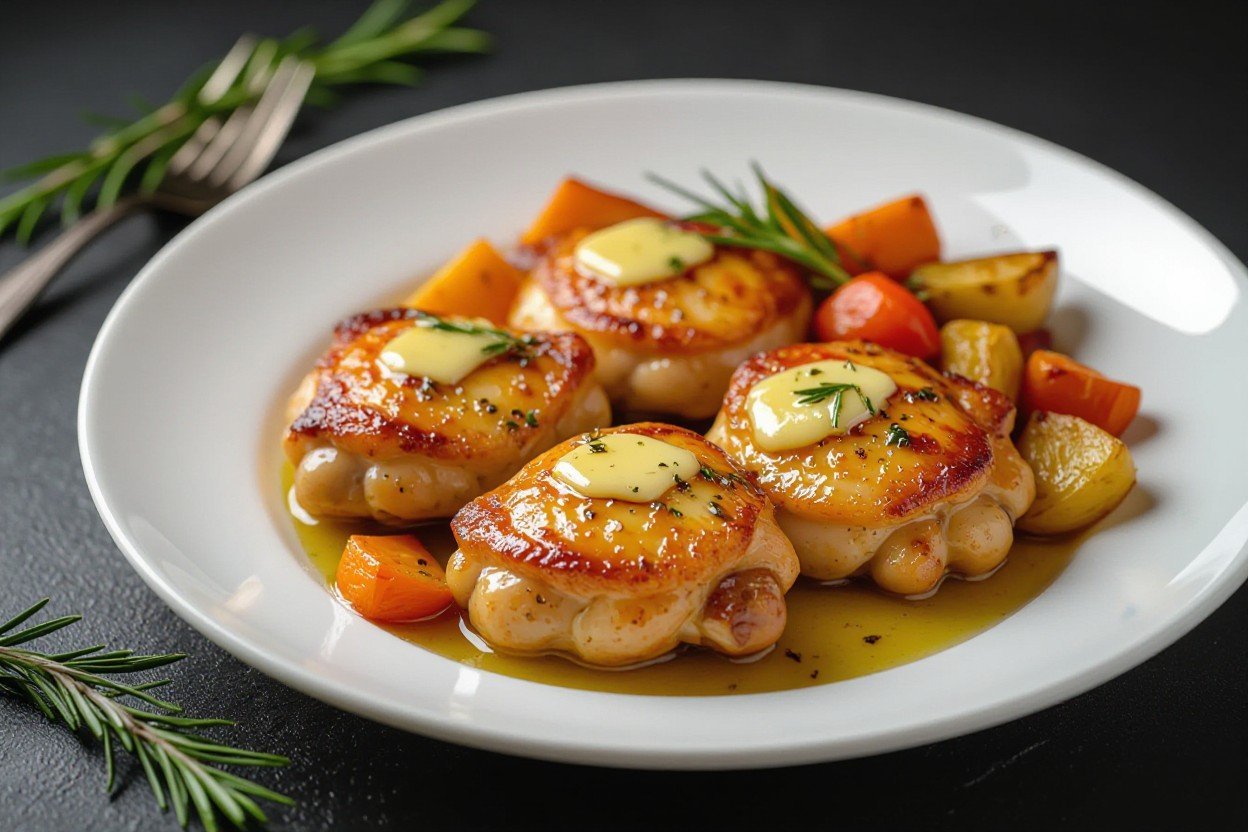
- Place a pat of compound butter on top to melt slowly as you serve
- Add cracked black pepper for a sharp, spicy finish
- Any edible flowers from your garden will elevate the presentation to special-occasion status
Nutritional Information
A single serving of garlic butter chicken thighs (approximately 4 ounces with skin) delivers around 285 calories, 18 grams of protein, and 23 grams of fat. The garlic butter adds roughly 50-70 additional calories per serving, depending on how generously you apply it. You’ll find that bone-in, skin-on thighs contain more calories than their skinless counterparts, but they also provide superior flavor and moisture retention during cooking.
The macronutrient profile breaks down to approximately 25% protein, 73% fat, and 2% carbohydrates. Your sodium intake will vary based on seasoning preferences, typically ranging from 300-500mg per serving. The dish provides significant amounts of selenium (55% of your daily value), zinc (15% DV), and B vitamins, particularly niacin and B6, which support energy metabolism and nervous system function.
Caloric Breakdown
The majority of calories in this dish come from the naturally occurring fats in chicken thighs, which contain both saturated and unsaturated fatty acids. Dark meat provides about 7 grams of saturated fat per serving, while monounsaturated fats account for roughly 9 grams. Your butter addition contributes an extra 4-5 grams of saturated fat, bringing the total to approximately 11-12 grams per serving. These fats help your body absorb fat-soluble vitamins A, D, E, and K present in the meal.
Protein content remains substantial at 18-20 grams per thigh, providing vital amino acids your muscles need for repair and maintenance. The minimal carbohydrate content (1-2 grams) comes primarily from the garlic, making this dish naturally compatible with low-carb and ketogenic eating patterns. You can reduce the overall calorie count by 80-100 calories if you remove the skin after cooking, though you’ll sacrifice some of that coveted crispy texture.
Health Benefits
Dark meat chicken delivers higher levels of iron and zinc compared to white meat, with a single thigh providing approximately 1.3mg of iron (7% DV) and 2.4mg of zinc (15% DV). These minerals support immune function, wound healing, and oxygen transport throughout your body. The selenium content stands out particularly, offering antioxidant properties that protect your cells from oxidative stress and support thyroid hormone metabolism.
Garlic brings its own impressive nutritional credentials to the dish, containing allicin and other sulfur compounds that have demonstrated antimicrobial and anti-inflammatory properties in numerous studies. You’ll benefit from garlic’s ability to support cardiovascular health by potentially helping to regulate blood pressure and cholesterol levels. The combination of chicken thighs and garlic also provides taurine, an amino acid that supports heart function and may help regulate blood sugar levels.
Your body utilizes the B-vitamin complex in chicken thighs—particularly B3 (niacin), B6, and B12—to convert food into usable energy and maintain healthy brain function. One serving provides approximately 60% of your daily niacin needs and 30% of your B6 requirements. The phosphorus content (approximately 170mg per serving) works alongside calcium to maintain strong bones and teeth, while also playing a role in how your body stores and uses energy.
Common Variations
You can transform this basic garlic butter chicken recipe into dozens of different dishes by adjusting the herb profile and aromatics. Fresh rosemary and thyme create a classic French bistro flavor, while adding smoked paprika and cumin shifts the dish toward Spanish territory. For an Italian twist, toss in sun-dried tomatoes, fresh basil, and a splash of balsamic vinegar during the last few minutes of cooking. Asian-inspired versions work beautifully too—swap half the butter for sesame oil and add ginger, soy sauce, and a touch of honey to the garlic base.
The garlic butter sauce itself offers plenty of room for experimentation. You can increase the garlic to eight or even ten cloves if you’re a serious garlic lover, or mellow it out by roasting the garlic first before adding it to the pan. Mixing in Dijon mustard creates a tangy depth that cuts through the richness, while a tablespoon of capers adds briny complexity. Some cooks like to finish the sauce with a squeeze of lemon juice and lemon zest, which brightens the entire dish and helps balance the butter’s richness.
Flavor Enhancements
Adding white wine or chicken stock to the pan after searing creates a more substantial sauce that coats the thighs beautifully. Pour in about half a cup of liquid once you’ve browned the chicken, scraping up the fond from the bottom of the pan—those caramelized bits contain concentrated flavor that would otherwise go to waste. The liquid reduces by about half during cooking, concentrating the flavors while keeping the meat incredibly moist.
Finishing touches make a significant difference in the final presentation and taste. A handful of baby spinach or arugula wilted into the hot pan just before serving adds color and a slight peppery note. Heavy cream stirred in during the last two minutes transforms the dish into something restaurant-worthy, creating a velvety sauce that clings to each piece of chicken. You can also sprinkle freshly grated Parmesan cheese over the top, letting it melt into the garlic butter for an extra layer of savory richness.
Alternative Cooking Methods
Grilling chicken thighs with garlic butter produces excellent results, especially during summer months when you want to keep the heat outside. Marinate the thighs in melted garlic butter for at least two hours, then grill them over medium-high heat for six to seven minutes per side. Brush additional garlic butter on the thighs every few minutes to build up layers of flavor and create an appealing caramelized exterior. The grill marks add visual appeal while the direct heat renders the fat beautifully, creating crispy skin without drying out the meat.
Your slow cooker offers a hands-off approach that works particularly well for boneless, skinless thighs. Place the thighs in the slow cooker with garlic cloves, butter, and your choice of herbs, then cook on low for four to five hours. The meat becomes fork-tender and practically melts in your mouth, though you’ll sacrifice the crispy skin that pan-searing provides. For a compromise, you can finish the slow-cooked thighs under the broiler for three to four minutes to add some color and texture to the surface.
Air fryers have become increasingly popular for this recipe because they deliver crispy skin similar to traditional pan-searing but with less oil. Brush the thighs with melted garlic butter, place them in a single layer in the air fryer basket, and cook at 380°F for twenty-two to twenty-five minutes, flipping halfway through. The circulating hot air crisps the skin evenly while the interior stays juicy, and you can baste the thighs with additional garlic butter during the final five minutes of cooking for maximum flavor impact.
To Wrap Up
Now that you’ve mastered the art of preparing chicken thighs with garlic butter, you have a versatile dish that works for any occasion. This recipe delivers restaurant-quality results with minimal effort, making it perfect for busy weeknights or when you want to impress dinner guests. The combination of crispy skin, juicy meat, and rich garlic butter creates layers of flavor that satisfy even the most discerning palates. You can easily customize this dish by adjusting the garlic intensity, adding fresh herbs like thyme or rosemary, or incorporating a splash of white wine to the butter sauce.
Your success with this dish depends on using quality ingredients and proper cooking techniques. When you select bone-in, skin-on chicken thighs, you ensure maximum flavor and moisture retention. The garlic butter not only enhances the taste but also helps achieve that golden-brown exterior you’re looking for. Don’t hesitate to experiment with side dishes—these chicken thighs pair beautifully with roasted vegetables, mashed potatoes, or a simple green salad. With this recipe in your cooking repertoire, you’ll find yourself returning to it time and again for its simplicity, flavor, and consistent results.