Party Buffalo Chicken Meatball Skewers
Over the years, buffalo chicken has become a party favorite, and these Party Buffalo Chicken Meatball Skewers take that beloved flavor to new heights. You’ll discover how these bite-sized appetizers combine tender, juicy chicken meatballs with the perfect balance of spicy buffalo sauce and cooling ranch or blue cheese dip. Whether you’re hosting game day gatherings, birthday celebrations, or casual get-togethers, these skewers offer you a convenient, mess-free way to serve crowd-pleasing food. Your guests will appreciate the bold flavors and easy-to-eat presentation that makes these skewers an instant hit at any event.
Key Takeaways:
- These skewers combine the bold flavors of buffalo chicken with the convenience of bite-sized meatballs, making them perfect for game day gatherings and parties
- The presentation on skewers allows guests to easily grab and enjoy without utensils, while also creating an attractive display on your appetizer table
- You can adjust the heat level of the buffalo sauce to suit your crowd’s preferences, and pair with cool ranch or blue cheese dressing for dipping
Ingredients
Chicken and Meatball Components
You’ll need one and a half pounds of ground chicken for this recipe, preferably a mix that contains both white and dark meat for optimal moisture and flavor. The dark meat provides fat content that keeps your meatballs tender even after threading them onto skewers and exposing them to direct heat. Add half a cup of panko breadcrumbs to bind everything together – these Japanese-style breadcrumbs create a lighter texture than regular breadcrumbs because they absorb less moisture. Two large eggs act as your primary binder, while two minced garlic cloves and half a cup of finely diced celery bring authentic buffalo wing flavors directly into the meatball mixture.
Your dry seasonings include one teaspoon each of onion powder and smoked paprika, plus half a teaspoon of salt and a quarter teaspoon of black pepper. The smoked paprika adds depth that complements the buffalo sauce without competing with it. You’ll also want one-third cup of crumbled blue cheese or feta mixed directly into the meat – this creates pockets of tangy, creamy surprise in every bite. For assembly, grab twenty wooden skewers (soaked in water for thirty minutes) and two cups of cherry tomatoes to alternate with your meatballs.
Buffalo Sauce and Glaze
Your buffalo sauce starts with three-quarters cup of Frank’s RedHot Original Cayenne Pepper Sauce, which contains 450 SHU (Scoville Heat Units) – hot enough to deliver that signature tang without overwhelming your guests. Mix this with six tablespoons of melted unsalted butter to create the classic buffalo sauce ratio that’s been used in Buffalo, New York since the 1960s. The butter doesn’t just add richness; it helps the sauce cling to your meatballs instead of sliding off during cooking.
Two tablespoons of honey balance the heat and acidity while encouraging caramelization under the broiler or on the grill. Add one tablespoon of white vinegar to brighten the flavors and one teaspoon of Worcestershire sauce for umami depth. This combination creates a glaze that’s thick enough to coat each meatball with a glossy finish but liquid enough to brush on easily during the final cooking stage.
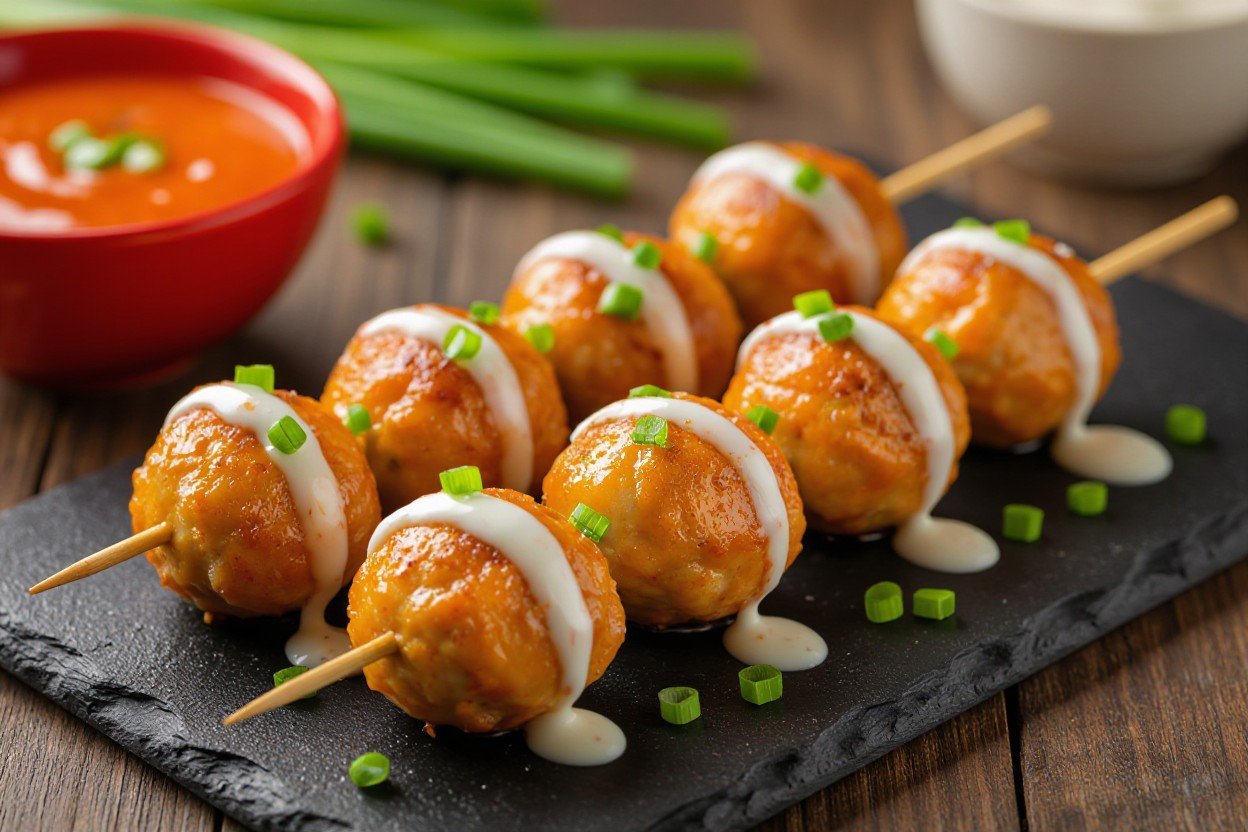
The sauce divides into two portions for this recipe – you’ll toss half with the cooked meatballs before skewering, then reserve the remaining half for brushing during the final broil or grill. This double-application method builds layers of flavor and creates that sticky, caramelized exterior that makes these skewers irresistible at parties.
Preparation
Getting your ingredients ready before you start mixing will make the entire process smoother and more efficient. Pull your ground chicken from the refrigerator about 15 minutes before you begin—slightly cool meat holds its shape better during mixing than ice-cold protein straight from the fridge. Measure out your buffalo sauce, breadcrumbs, and seasonings into small prep bowls, and finely mince your garlic and celery. This mise en place approach prevents you from scrambling mid-recipe and ensures your meatballs maintain consistent texture and flavor throughout the batch.
Set up your workspace with three distinct zones: one for mixing, one for shaping, and one for the finished meatballs. Line a baking sheet with parchment paper and keep it within arm’s reach. If you’re making these for a party, you can prepare the meatballs up to 24 hours in advance—just cover them tightly with plastic wrap and refrigerate until you’re ready to cook. This advance preparation actually improves the flavor as the seasonings have more time to meld together.
Meatball Mixing and Shaping
Combine your ground chicken with the buffalo sauce, breadcrumbs, egg, minced garlic, celery, and seasonings in a large bowl. Use your hands to mix everything together, but stop as soon as the ingredients are just incorporated—about 30 seconds of gentle mixing. Overworking the meat develops too much protein structure, resulting in tough, dense meatballs instead of the tender, juicy texture you want. The mixture should feel slightly sticky and hold together when you press it, but it shouldn’t look paste-like or overly compressed.
Shape each meatball to approximately 1.5 inches in diameter, roughly the size of a golf ball. You’ll get about 24-28 meatballs from a standard batch using 1.5 pounds of ground chicken. Keep a small bowl of water nearby to dampen your hands between rolling—this prevents the meat from sticking to your palms and helps you achieve smooth, uniform spheres. For perfectly consistent sizing, use a small cookie scoop or portion scoop, which ensures even cooking and professional presentation on your skewers.
Skewering Techniques
Thread three meatballs onto each 6-inch wooden or metal skewer, leaving about a quarter-inch of space between each one. This spacing allows heat to circulate evenly around all sides during cooking, ensuring you don’t end up with raw spots where the meatballs touch. Push the skewer through the center of each meatball to keep them stable—off-center threading causes them to spin and potentially fall off when you’re flipping them. If you’re using wooden skewers, soak them in water for at least 30 minutes beforehand to prevent charring and splintering during cooking.
Alternate your meatballs with small chunks of celery or cherry tomatoes if you want to add visual appeal and extra crunch to your skewers. These vegetables also provide natural breaks that make it easier for guests to slide the meatballs off onto their plates. For an upscale presentation at your party, arrange the finished skewers standing upright in a tall glass filled with rice or beans as a stable base, creating an eye-catching vertical display on your buffet table.
Metal skewers offer the advantage of being reusable and conducting heat directly into the center of your meatballs, which can reduce cooking time by 2-3 minutes. They’re particularly useful if you’re grilling these skewers outdoors, as they won’t burn or break like their wooden counterparts. Just warn your guests that metal skewers retain heat long after they come off the grill or out of the oven.
Cooking Methods
Baking Instructions
Preheat your oven to 400°F and line a large baking sheet with parchment paper or a silicone mat to prevent sticking. Thread 3-4 meatballs onto each skewer, leaving about half an inch of space between them to ensure even heat circulation. Arrange the skewers on your prepared baking sheet, making sure they don’t touch each other, and brush them generously with melted butter mixed with your buffalo sauce. Bake for 18-22 minutes, rotating the pan halfway through to promote uniform browning.
At the 15-minute mark, pull out your baking sheet and brush on an additional layer of buffalo sauce for that signature tangy coating. The meatballs are done when they reach an internal temperature of 165°F and display a golden-brown exterior with slightly crispy edges. Let them rest for 3-4 minutes before serving, which allows the juices to redistribute throughout the meat and prevents your first bite from being scalding hot. You can keep these warm in a 200°F oven for up to 30 minutes if you’re waiting for guests to arrive.
Grilling Tips
Set up your grill for two-zone cooking by heating one side to medium-high heat (around 375-400°F) while keeping the other side at low heat or off completely. This dual-zone approach gives you flexibility to move skewers away from direct flames if they’re browning too quickly. Oil your grill grates thoroughly with a paper towel dipped in vegetable oil to create a non-stick surface that won’t tear apart your meatballs when you flip them.
- Place skewers perpendicular to the grates to prevent them from falling through
- Flip every 4-5 minutes for even charring on all sides
- Apply buffalo sauce during the last 3 minutes only to avoid burning
- Use metal skewers or soak wooden ones for 30 minutes beforehand
- Recognizing when grill marks turn from golden to black means you need to move your skewers to the cooler zone immediately
The beauty of grilling these skewers lies in the smoky char that complements the spicy buffalo coating, creating layers of flavor you simply can’t achieve in an oven. Your total grill time should hover around 12-15 minutes, though this varies based on your grill’s heat output and the size of your meatballs. Keep a spray bottle filled with water nearby to tame any flare-ups from dripping fat, and resist the urge to press down on the meatballs with your spatula—this squeezes out precious juices and leads to dry, tough meat. If you’re cooking for a crowd, you can prepare batches on the cooler side of the grill while serving the finished skewers hot.
- Check internal temperature in the center meatball of each skewer
- Allow 2-3 minutes of resting time after removing from heat
- Brush with extra sauce right before plating for a glossy finish
- Add a final sprinkle of blue cheese crumbles while they’re still hot
- Recognizing the difference between caramelized sauce and burnt coating comes down to watching for bubbling versus blackening on the surface
Serving Suggestions
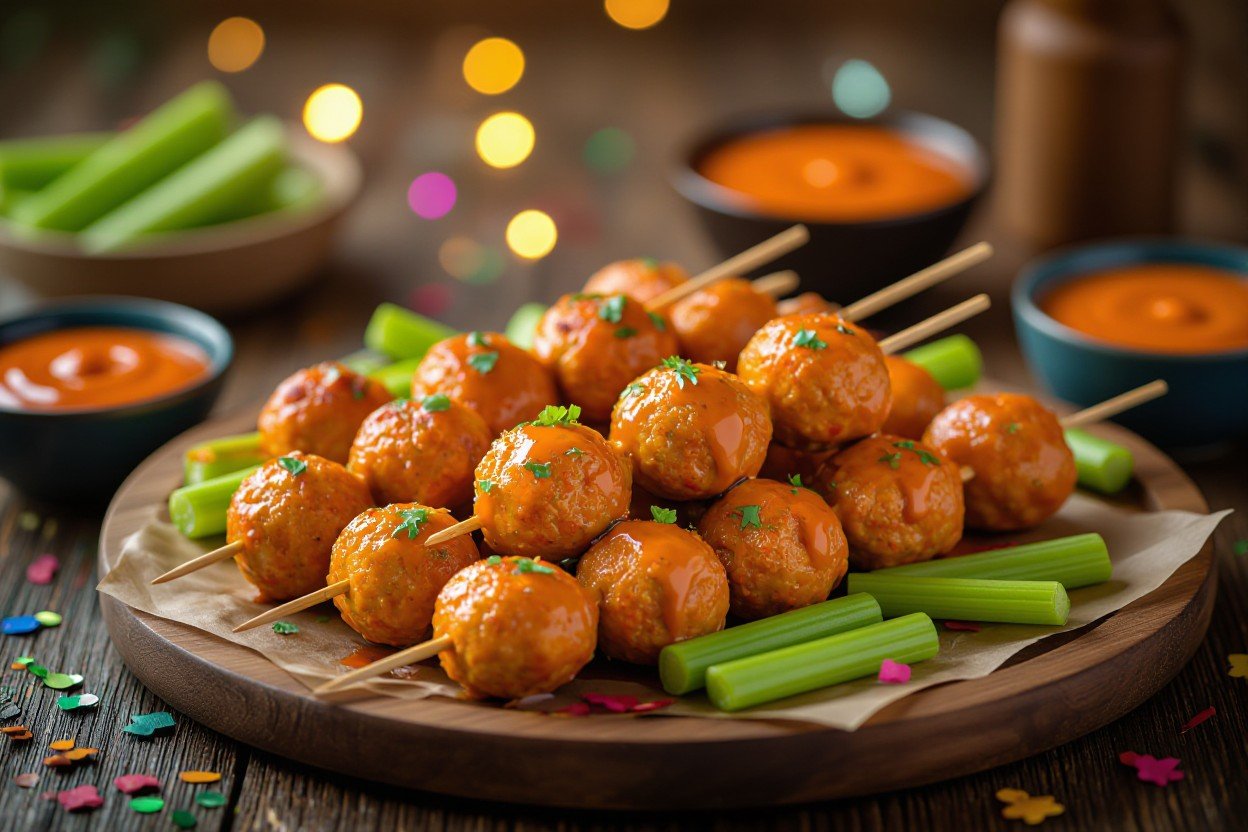
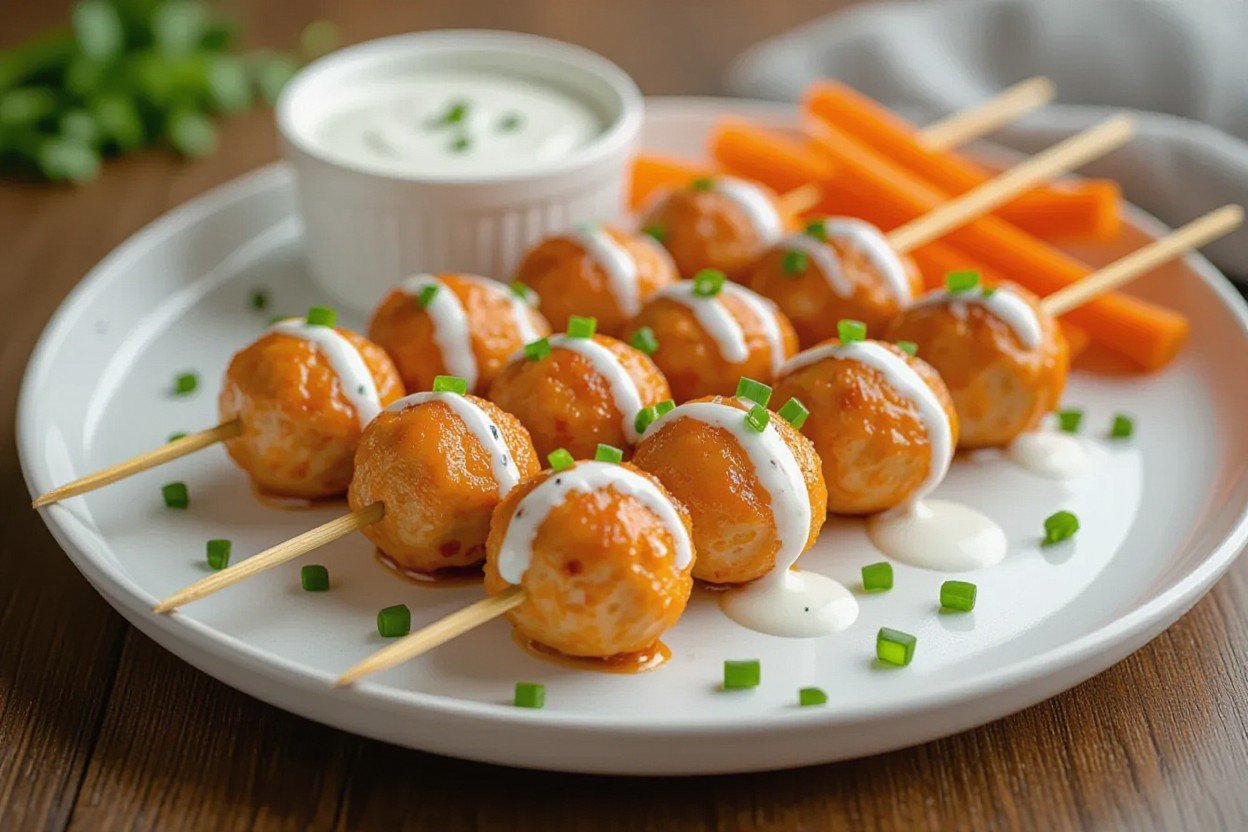
Your buffalo chicken meatball skewers shine brightest when presented on a large white platter or wooden board, allowing the vibrant orange-red coating to take center stage. Arrange the skewers in a fan pattern or stack them log-cabin style for visual impact at your gathering. For parties of 8-12 guests, plan on 3-4 skewers per person as an appetizer, or 6-8 if you’re serving them as the main attraction. The beauty of these skewers lies in their grab-and-go convenience, so keep them accessible on your buffet table with plenty of napkins nearby—the buffalo sauce can get delightfully messy.
Temperature matters significantly with these meatballs. Serve them hot, ideally within 15 minutes of glazing with the buffalo sauce, when the exterior maintains its slight stickiness and the interior stays juicy. If you’re hosting a longer event, keep backup skewers warm in a 200°F oven and rotate them out every 20-30 minutes. You can also use a slow cooker on the “warm” setting, though you’ll want to add the skewers just before serving to prevent the sticks from absorbing moisture and becoming soggy.
Dipping Sauces
Ranch dressing stands as the classic companion to anything buffalo-flavored, and you’ll want to provide a generous bowl—at least 2 cups for every dozen skewers. The cool, creamy tang cuts through the heat perfectly, and homemade ranch elevates the experience exponentially. Mix together buttermilk, sour cream, mayonnaise, fresh dill, chives, garlic powder, and a squeeze of lemon juice for a version that puts store-bought options to shame. Blue cheese dressing offers a bolder alternative that buffalo wing purists will appreciate, with its sharp, funky notes creating an intense flavor combination that’s not for the faint of heart.
Beyond the traditional choices, consider offering a cooling cucumber yogurt sauce made with Greek yogurt, grated cucumber, mint, and a touch of garlic. This Mediterranean-inspired option provides a lighter counterpoint that won’t weigh down your guests. A honey-lime crema also works beautifully, combining sour cream with honey, lime juice, and a pinch of cayenne—the sweetness tempers the buffalo heat while the lime adds brightness. Set out 2-3 different sauces in small bowls around your serving area, giving guests the freedom to experiment with different flavor profiles throughout the evening.
Accompaniments and Pairings
Fresh celery and carrot sticks provide the vital crunchy contrast your meatball skewers need, staying true to the buffalo wing tradition while adding nutritional balance to your spread. Cut them into 3-4 inch batons and keep them submerged in ice water until serving time for maximum crispness. A simple mixed green salad dressed with champagne vinaigrette offers a refreshing palate cleanser between skewers, especially if you’re serving these as a main course. For heartier appetites, consider adding a tray of garlic bread or toasted baguette slices that guests can use to soak up any extra buffalo sauce.
Beverage pairings make or break the buffalo chicken experience. Cold beer remains the go-to choice—light lagers and pilsners work best because they won’t compete with the bold flavors, while their carbonation cleanses the palate between bites. An ice-cold wheat beer or hefeweizen offers a slightly more sophisticated option with complementary citrus notes. For wine drinkers, reach for an off-dry Riesling or Gewürztraminer; the subtle sweetness balances the heat beautifully. Sparkling water with lemon or lime wedges gives non-drinkers a refreshing option that still cuts through the richness.
Your side dish selection should lean toward cooling and neutral flavors that won’t fight for attention. A creamy coleslaw with a vinegar-based dressing adds crunch and tang without heaviness, while a simple potato salad brings comforting starch to round out the meal. Corn on the cob brushed with herb butter or a quinoa salad with cucumber and feta
Variations
Flavor Modifications
You can easily adjust the heat level by mixing different hot sauces into your buffalo coating. Frank’s RedHot delivers a classic tangy kick with moderate spice, while Cholula adds a subtle smoky note. For parties with mixed heat preferences, prepare three batches: mild (2 tablespoons hot sauce to 4 tablespoons butter), medium (equal parts), and extra hot (4 tablespoons hot sauce to 2 tablespoons butter). Adding 1 teaspoon of honey or maple syrup to your buffalo sauce creates a sweet-heat combination that appeals to guests who typically avoid spicy foods.
Ranch seasoning mixed directly into the meatball mixture transforms these skewers into buffalo ranch bites. Blend 2 tablespoons of ranch seasoning powder per pound of ground chicken, then proceed with your standard recipe. You can also experiment with Asian-inspired buffalo by incorporating 1 tablespoon of sesame oil and a sprinkle of sesame seeds into the sauce, or go Mediterranean by adding crumbled feta cheese and fresh oregano to the meatball base before forming them.
Dietary Adjustments
Ground turkey serves as an excellent lean alternative, though you’ll need to add 2 tablespoons of olive oil per pound to prevent dryness during cooking. The mixture should feel slightly moist but still hold together when you form the meatballs. For gluten-free versions, swap breadcrumbs with almond flour or crushed pork rinds at a 1:1 ratio, which actually creates a crispier exterior when baked. Paleo enthusiasts can use coconut flour combined with an extra egg to bind the mixture, though you’ll only need half the amount since coconut flour absorbs more moisture.
Plant-based versions work surprisingly well using crumbled tempeh or finely chopped cauliflower mixed with chickpea flour as a binder. The key is squeezing excess moisture from the cauliflower using cheesecloth before combining it with 1/2 cup chickpea flour and your seasonings. These vegetarian meatballs need 5-7 minutes longer in the oven at 375°F to achieve proper firmness.
Dairy-free guests can enjoy these skewers when you substitute the butter in your buffalo sauce with ghee or plant-based butter alternatives like Miyoko’s or Earth Balance. The sauce maintains its signature glossy coating and rich mouthfeel regardless of which fat you choose. Blue cheese dressing becomes dairy-free when you blend soaked cashews with nutritional yeast, lemon juice, and a touch of apple cider vinegar until smooth and creamy.
Tips for Success
The secret to perfectly moist meatballs lies in your meat-to-binder ratio. You’ll want to use 1 pound of ground chicken mixed with 1/3 cup of breadcrumbs and one egg. This combination prevents the meatballs from becoming dense or dry while keeping them firm enough to stay on the skewers. If you’re working with extra-lean ground chicken (99% lean), add 2 tablespoons of mayonnaise to the mixture to compensate for the lack of fat.
Threading your meatballs onto skewers requires a gentle touch and the right timing. Let the cooked meatballs rest for 3-4 minutes before skewering – this allows the proteins to set and reduces the chance of them breaking apart. Use flat metal skewers or double-pronged bamboo skewers for better stability, and pierce through the center of each meatball where it’s most structurally sound. Your buffalo sauce should be applied in two stages: brush half onto the meatballs before the final broil, then toss them in the remaining sauce just before serving for maximum flavor impact.
- Chill your meat mixture for 15 minutes before forming meatballs for easier shaping
- Use a 1.5-inch cookie scoop to ensure uniform size and even cooking
- Line your baking sheet with parchment paper to prevent sticking and simplify cleanup
- Keep your buffalo sauce warm in a small saucepan for better coating consistency
- Knowing the internal temperature should reach 165°F ensures your chicken is safely cooked without overdoing it
Common Mistakes to Avoid
Overmixing your meatball mixture creates a tough, rubbery texture that no amount of sauce can fix. Mix your ingredients just until combined – about 30 seconds of gentle folding with your hands or a fork. You’ll notice the mixture still looks slightly shaggy rather than completely smooth, and that’s exactly what you want. Many home cooks also make the mistake of using pre-shredded cheese, which contains anti-caking agents that prevent proper binding. Shred your own cheddar or blue cheese from a block for meatballs that hold together beautifully.
Skipping the broiling step at the end robs your meatballs of that caramelized, slightly crispy exterior that makes them party-worthy. Position your oven rack 6 inches from the broiler and watch carefully during those final 2-3 minutes – the difference between perfectly charred and burnt happens in seconds. Another frequent error is drowning the meatballs in sauce too early. Apply your buffalo coating after baking and just before serving to maintain the textural contrast between the crispy outside and tender inside.
Storage and Reheating Advice
Store your cooked meatballs and buffalo sauce separately in airtight containers to prevent them from becoming soggy. The meatballs will stay fresh in your refrigerator for up to 4 days, while the sauce keeps for a full week. For freezing, arrange the cooled meatballs on a parchment-lined baking sheet and freeze until solid (about 2 hours), then transfer them to a freezer bag. This flash-freezing method prevents them from sticking together and lets you grab exactly the amount you need. Your frozen meatballs maintain their quality for up to 3 months.
Reheat refrigerated meatballs in a 350°F oven for 10-12 minutes, placing them on a wire rack over a baking sheet to allow air circulation on all sides. This method restores their exterior texture far better than microwaving, which tends to make them rubbery. For frozen meatballs, add an extra 5-7 minutes to the reheating time without thawing first. Warm your buffalo sauce separately in a small saucepan over low heat, then toss the hot meatballs in the sauce just before serving.
You can also reheat these meatballs in an air fryer at 375°F for 5-
Summing Up
Considering all points, Party Buffalo Chicken Meatball Skewers offer you an exceptional combination of bold flavors, practical preparation, and crowd-pleasing appeal that makes them an outstanding choice for your next gathering. You can prepare these skewers ahead of time, customize the heat level to match your guests’ preferences, and serve them with minimal effort during your event. The versatility of this dish allows you to adapt it for various occasions, from casual game day parties to more refined cocktail events, while the familiar buffalo chicken flavor profile ensures broad appeal across different age groups and taste preferences.
When you incorporate these skewers into your party menu, you’re choosing a dish that delivers both visual impact and satisfying taste without requiring extensive culinary expertise. Your guests will appreciate the convenient handheld format, and you’ll benefit from the straightforward cooking process that frees you up to focus on other hosting responsibilities. Whether you’re serving them as your main appetizer or as part of a larger spread, these buffalo chicken meatball skewers provide you with a reliable, flavorful option that consistently performs well at social gatherings.
Printable Recipe Card
Want just the essential recipe details without scrolling through the article? Get our printable recipe card with just the ingredients and instructions.