Beef Wellington
Ever wondered what makes a meal truly special? Beef Wellington is a dish that can take your cooking to new heights. It’s a gourmet delight that will impress anyone who tries it.
This classic dish wraps tender beef tenderloin in a golden puff pastry. It’s filled with rich mushroom duxelles. Starting your Beef Wellington journey here will make your meals unforgettable.
Get ready to make a dish that rivals restaurant quality. You’ll learn how to pick the best ingredients and master the techniques. This guide will turn you into a Beef Wellington pro.
Key Takeaways
- Learn the art of creating a show-stopping Beef Wellington
- Understand the critical techniques behind this gourmet beef dish
- Discover how to select and prepare the perfect beef tenderloin
- Master the essential components of a traditional Beef Wellington
- Gain confidence in creating a restaurant-quality meal at home
What Makes Beef Wellington So Special
Beef Wellington is a culinary masterpiece that captures the hearts of food lovers everywhere. It combines rich flavors with stunning presentation, making it a true showstopper. The history of Beef Wellington is filled with culinary innovation and sophistication.
Originally, Beef Wellington was linked to the Duke of Wellington. Over time, it has become a global gourmet sensation. Celebrity chefs, like Gordon Ramsay, have made it even more popular. Now, it’s a must-try recipe for cooking enthusiasts.
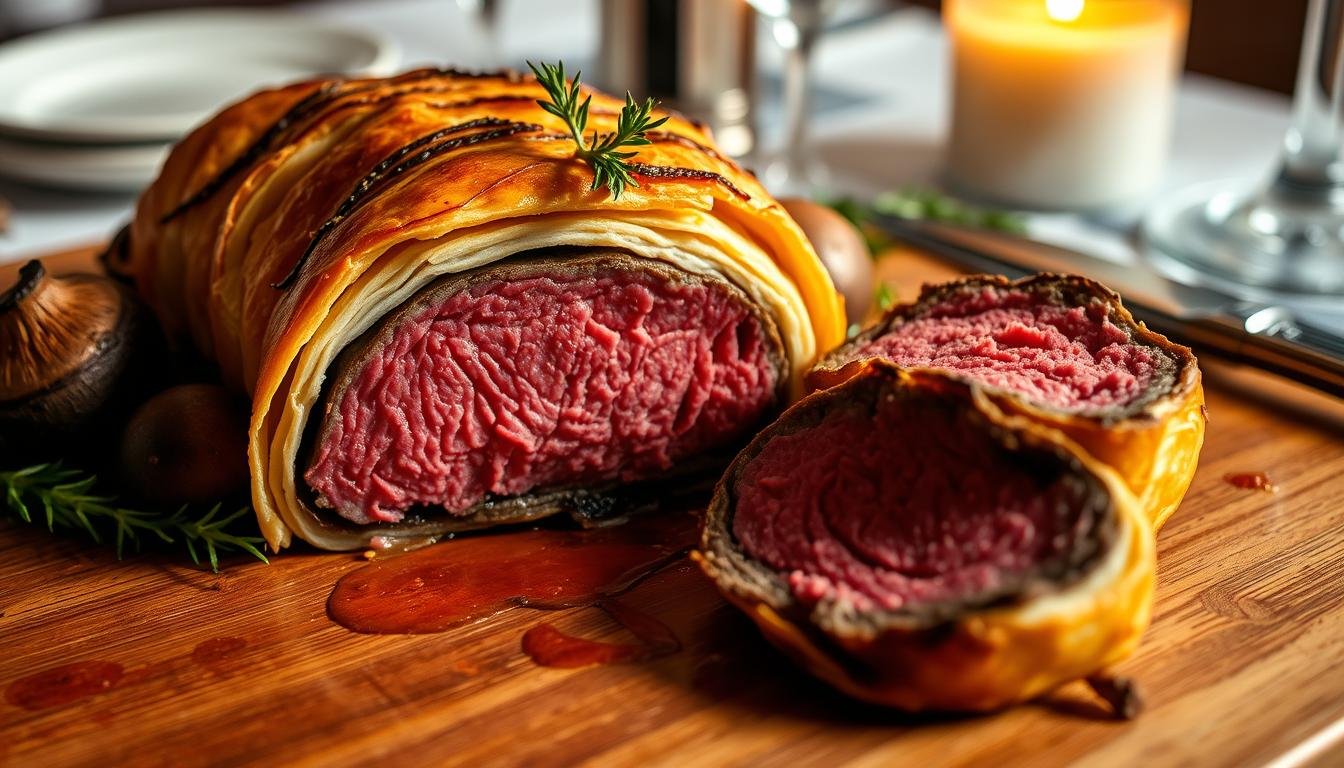
Beef Wellington is special because of its amazing combination of textures and tastes. The tender beef tenderloin is wrapped in mushroom duxelles and prosciutto. Then, it’s covered in golden, flaky puff pastry. Each bite offers a perfect mix of crispy outside and soft inside.
Beef Wellington is more than just a meal. It’s a culinary experience that shows skill, tradition, and creativity. Its complex preparation and luxurious ingredients highlight the art of high-end cooking.
Essential Ingredients for the Perfect Beef Wellington
Creating a top-notch Beef Wellington begins with picking the best ingredients. Your beef tenderloin is the main attraction. Choose a high-quality cut with lots of marbling and a rich taste. Opt for a center-cut tenderloin that’s even in shape and has little fat or gristle.
Mushroom duxelles are key to the dish’s flavor. They’re finely chopped mushrooms that add a deep, earthy taste. Use fresh cremini or button mushrooms, minced and sautéed until they’re moist and flavorful.
Puff pastry is the golden, flaky crust that makes your dish stand out. Choose an all-butter puff pastry for the best taste and texture. Frozen puff pastry works well, but thaw it properly before using. Roll it thin and handle it gently to keep its delicate structure.
Adding prosciutto or chicken liver pâté can add more flavor. These optional ingredients can also help keep the meat and pastry moist. Your aim is to make a Beef Wellington that looks great and tastes amazing.
Selecting and Preparing Your Beef Tenderloin
Choosing the right beef tenderloin is key for a great Beef Wellington. Look for a high-quality piece with little fat and a straight shape. A center-cut tenderloin cooks evenly and looks good.
Start by trimming the beef carefully. Remove the silver skin and any extra fat with a sharp knife. Make sure the meat is clean and even. Then, tie the tenderloin with twine at 1-inch intervals to keep its shape.
Searing the beef is important for flavor and looks. Heat a heavy skillet until it’s very hot. Dry the tenderloin with paper towels and season with salt and pepper. Sear it on all sides for 2-3 minutes each side, until it’s golden brown.
Let the beef cool down before wrapping it in mushroom duxelles and puff pastry. This step stops the pastry from getting soggy. Your beef tenderloin will be the highlight of your Beef Wellington, making your meal unforgettable.
Mastering the Mushroom Duxelles
The heart of a great Beef Wellington is its mushroom duxelles. This French classic turns simple mushrooms into a flavor explosion. It makes your dish stand out like a restaurant’s.
Choose the best mushrooms for your duxelles. Cremini or white button mushrooms are great. But adding wild mushrooms like porcini or shiitake adds more flavor. Chop them finely to get a uniform texture.
To make a top-notch mushroom duxelles, remove excess moisture. Cook the mushrooms in a hot pan with butter until they dry out. Stir often until it’s thick and paste-like. Add minced shallots, fresh thyme, and white wine for extra taste.
Pro tip: Cool your duxelles completely before using it. This step prevents soggy pastry and ensures a perfect Beef Wellington. With practice, your mushroom duxelles will elevate any dish to new heights.
Working with Puff Pastry: Tips and Techniques
Mastering puff pastry is key for a perfect Beef Wellington. The right steps can make your dish amazing. Start by keeping your pastry cold and firm. Cold pastry makes those flaky layers that are a delight to eat.
When rolling out your pastry, be gentle. Avoid pressing too hard to keep the layers from getting squished. Use flour on your work surface to stop it from sticking. Roll from the center outwards in smooth strokes. Aim for a thickness of about 1/8 inch for the best crispiness.
Keeping the temperature right is important. Work in a cool kitchen or chill your pastry between steps. If it gets too warm, it won’t puff up right. A quick 10-minute chill in the fridge can improve your pastry’s texture.
Sealing your pastry needs care. Use egg wash to stick the edges together. Brush them carefully for a tight seal. Trim off excess pastry and decorate the edges with a fork or knife. These details can turn your Beef Wellington into a restaurant-quality dish.
Don’t worry if it’s not perfect the first time. Every time you work with puff pastry, you’ll get better. Keep practicing, and you’ll become more confident in handling this delicate ingredient.
Step-by-Step Assembly Guide
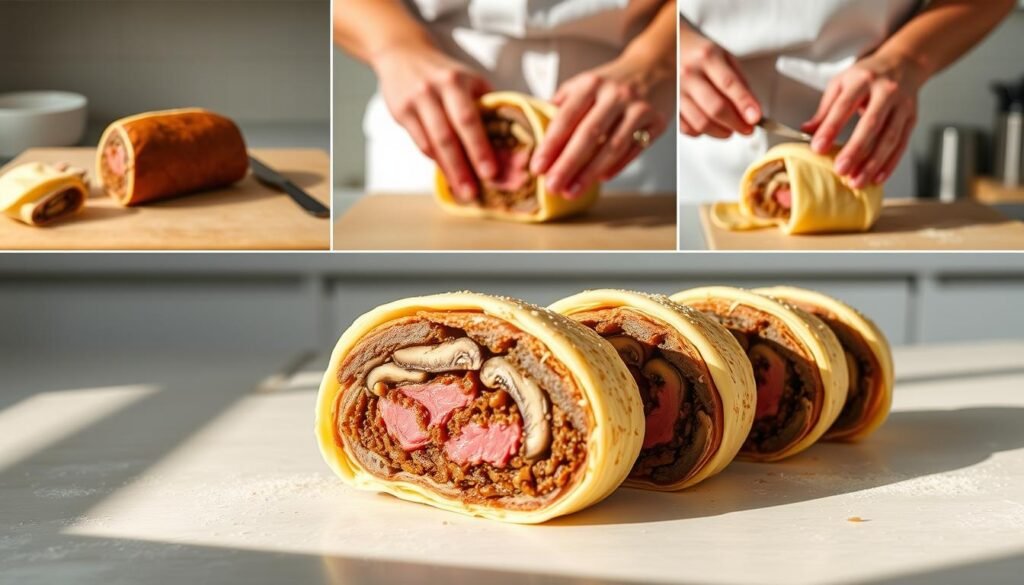
Mastering beef wellington assembly needs precision and patience. Start by setting up a clean work area. Make sure all your ingredients are ready and within reach. Your perfectly seared beef tenderloin will be the main attraction.
Begin by spreading a thin layer of mushroom duxelles on a sheet of prosciutto. This layer acts as a moisture barrier for your pastry. Place the cooled beef tenderloin in the center of the prosciutto.
Wrap the prosciutto around the beef tightly. Then, roll out your puff pastry on a floured surface. The pastry should be thin to wrap around the beef without being too thick.
When wrapping the beef in pastry, be gentle to avoid tears. Fold the pastry edges over the meat and trim any excess. Seal the edges with a fork or your fingers. Add a decorative pattern by scoring light lines on top.
Brush the pastry with an egg wash for a golden, glossy finish. This step will make your beef wellington look like it was made by a professional chef. Chill the wellington for at least 15 minutes before baking to keep its shape.
Common Mistakes to Avoid When Making Beef Wellington
Beef Wellington can be tricky, even for experienced cooks. The first step in beef Wellington troubleshooting is to know the common mistakes. One big mistake is overcooking the beef, making it tough and dry.
Temperature control is key when making this dish. Many cooks forget to use a meat thermometer, leading to overcooked beef. To avoid this, cook the beef to 125-130°F. This ensures it stays juicy.
Moisture is also important for a successful Beef Wellington. A soggy bottom can ruin your dish. To prevent this, spread a thin layer of mustard or duxelles on the beef before wrapping. This keeps the pastry crisp.
Sealing the pastry is vital to stop filling leakage. Seal the edges tightly and make a small vent for steam. Brushing the pastry with egg wash gives it a golden, crisp look.
Preparation and patience are essential to avoid common mistakes. Chill the Wellington before baking to keep the pastry from shrinking. With these tips, you’ll make a dish that will wow your guests.
Perfect Side Dishes and Wine Pairings
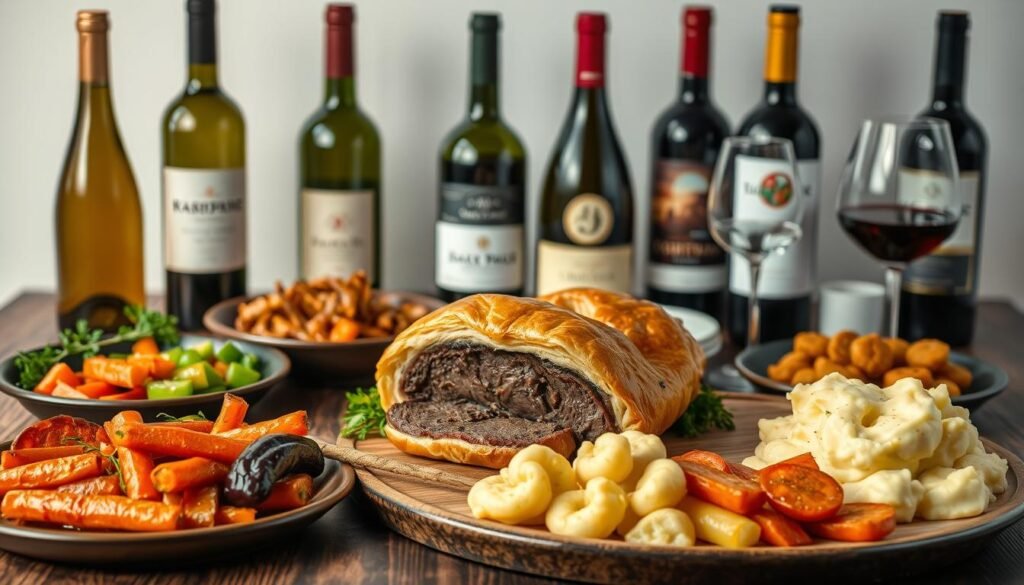
Choosing the right sides for beef wellington is key. Roasted root vegetables like parsnips and carrots pair well with the beef. They balance the flavors nicely.
Crispy roasted potatoes with fresh rosemary add a nice crunch. This contrasts well with the soft meat wrapped in pastry.
Green vegetables add a fresh touch. Try asparagus with lemon butter sauce or green beans with almonds. These sides offer a clean taste that cuts through the richness.
For wine, reds are best with beef wellington. A full-bodied Cabernet Sauvignon is great. Bordeaux blends or Syrah also work well, thanks to their complex flavors.
Look for wines with strong tannins to match the meat’s bold taste. This will enhance the overall experience.
Lighter reds like Pinot Noir are good too. They’re perfect if your beef wellington has a delicate mushroom filling. The wine’s subtle fruit notes will enhance the earthy mushroom flavors without overpowering the dish.
Conclusion
Making a perfect homemade Beef Wellington is more than a recipe. It’s a journey that turns your kitchen into a gourmet spot. You’ve learned techniques that will make your cooking stand out and impress everyone.
Every step in making Beef Wellington boosts your cooking confidence. You’ve learned to pick the best beef, make mushroom duxelles, and work with puff pastry. These skills are valuable for many dishes, not just this one.
Don’t worry if your first Beef Wellington isn’t perfect. With each try, you’ll get better. Keep learning, trying new flavors, and making the dish your own.
With time and effort, you’ll become a skilled chef. Your Beef Wellington will wow your loved ones, showing off your cooking skills. You’ll be able to make dishes that taste like they’re from a restaurant.